treatments
The past, present and future of psychiatric diagnosis and beliefs about treatment in every culture and pocket of society.
Personalizing Ketamine Doses: Why Body Composition Matters
In recent years, ketamine has emerged as a powerful tool in the treatment of depression, PTSD, anxiety, and chronic pain. Yet one of the most overlooked elements in its administration is how body composition can dramatically influence the effectiveness of each dose.
By Richard Baileyabout a year ago in Psyche
The Difficulty Of Freedom
In the US, many people Celebrate today as a Day of Freedom from Tyranny. Now, if you go into the History of the US, there are Challenges that Exist, and some may say this is not accurate, or that it is a day about the "Possibility" of Freedom.
By H.E. Dr. Cody Dakota Wooten, COIE, DFM, DHMabout a year ago in Psyche
The Sewing Box
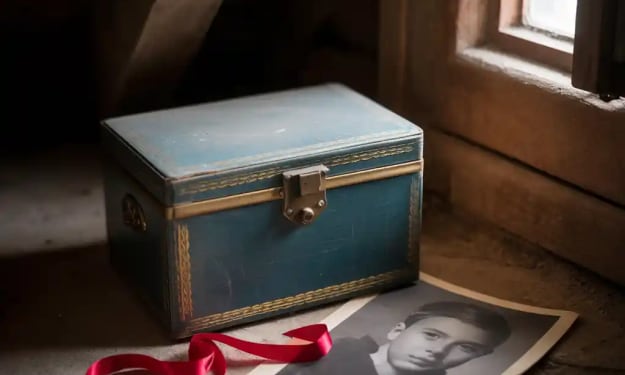
The box had been there for years — untouched, unspoken, and always in the same corner of Nana’s old attic. Covered in lace that had long since yellowed, it waited like a quiet witness. When Nana passed away that winter, I returned home after seven years to settle her affairs — not entirely ready for what I would find. I hadn’t been back since I was sixteen. Back then, I ran away more than I visited. Back then, Nana was already growing forgetful, calling me by my mother’s name, or sometimes by her own sister’s. But she never forgot about the sewing box. She’d always say, “Don’t touch it, Isla. That’s not for you — not yet.” -- The funeral was small. Nana never had many friends left. It was just me, the priest, and the mailwoman who brought her groceries during her final years. The house felt too quiet when I returned — like it had been waiting just for me. I slept in the guest room that night, but I didn’t really sleep. I kept thinking of the sewing box. It wasn’t just nostalgia. Something about it tugged at me — like it had its own heartbeat. -The attic The next morning, I climbed the attic stairs, flashlight in hand. The switch hadn’t worked in years. The air was thick with dust and lavender. Nana always loved lavender. It masked the scent of mothballs and age. I walked past old suitcases, brittle magazines, faded photographs with crinkled edges. And there it was — in the far left corner, exactly where I remembered. The sewing box. It was a faded green, with golden thread-like trim and a broken hinge. A cracked ceramic bird perched on top, its wing chipped. I sat cross-legged in front of it, just like I used to. But this time, I didn’t hesitate. Inside, there were spools of thread, needles, buttons in little paper envelopes. But underneath, tucked beneath a swatch of blue satin, was something else. Letters. Dozens of them, tied with red ribbon, yellowed with age. The top one had my mother’s name — Claire. My heart thumped against my ribs. I opened the first letter. Dear Claire, I know you won’t understand now, but I hope one day you will forgive me. I didn’t have a choice. You were only a baby when he left, and I couldn’t risk it — not again. I had to keep you safe. Nobody believed me back then, but he wasn’t who he said he was. He wasn’t just “James from the library.” He had a darkness I didn’t see — not until it was too late. You have his eyes, you know. I hated them for years, but now… now I wonder if maybe you deserved to know. There’s more in this box than thread, darling. There are truths I never dared speak aloud. — Mother froze. James? My grandfather? I’d never heard anything about him. My mom rarely spoke of her childhood, and when she did, it was always about the happy things — summer at the lake, Sunday cakes, Nana’s lullabies. But not once had she mentioned her father. I read another letter. And then another. Each one was more detailed than the last. Each one filled with fear, and regret, and love twisted in grief. My Nana had been hiding the truth for decades. Not just from my mother — but from the world.
By Arshad khanabout a year ago in Psyche
Reputation Burnout: Why Managing Your Image Is Draining Your Soul. AI-Generated.
In the era of personal branding, authenticity is sacrificed at the altar of perfection. It starts with a profile picture. Not just any photo, but one taken from the right angle, under the right lighting, filtered just enough to say, "I woke up like this," without revealing the hours of staging it actually took. Then comes the bio. Short, witty, confident. You want to seem competent but not boastful. Unique, but not weird. Approachable, yet aspirational.
By Ahmet Kıvanç Demirkıranabout a year ago in Psyche
Prisoner of Memories
Dr. Eliza Hart, a renowned psychologist in downtown Boston, had spent years helping others escape the prisons of their pasts. Yet, she herself remained silently shackled by memories she had long buried under the weight of logic and reason. Her office was a soft blend of warm tones, calming lights, and shelves filled with books on trauma, healing, and human behavior. Patients left feeling understood, perhaps even a little lighter. But Eliza — she carried a secret darkness, one she never spoke of. One cold November morning, a new patient walked in. His name was Caleb Moore. Thirty-three, tall, quiet, and distant. His file read: “Recurring nightmares, memory lapses, emotional withdrawal.” But what stood out most was his reason for coming: "I don’t know who I am anymore." From the very first session, something about Caleb unsettled her. The way he looked around the room, the way he hesitated before speaking, and especially the way he described his dreams — always a house on fire, a child screaming, a locked door he couldn't open. His trauma was severe, buried deep. But so was something else. Something familiar. Week after week, they dove deeper. Caleb spoke of feeling disconnected from reality, as if part of him was missing. He would freeze during certain memories — like the sound of a piano or the scent of lavender. Eliza noted the triggers, guided him gently, all while suppressing a strange sense of déjà vu. One session, Caleb brought an old photo. A burned corner, faded colors. It showed a woman holding a little girl — and in the background, a boy who looked eerily like Caleb. The woman’s face was partially visible. Eliza's hands trembled. That was her mother. And the girl — was her. Her heart pounded in disbelief. How could this be? She hadn’t seen that photo in decades. It had vanished the night of the fire. The memories returned like a flood — the flames, the screaming, her baby brother banging on the door, the smoke, the guilt. She was only ten. She’d escaped. He didn’t. Or so she thought. Tears welled up in her eyes, but she composed herself. She couldn’t tell Caleb — not yet. She needed to be sure. In the following sessions, she carefully tested the memories, asking subtle questions. Caleb recalled a fire in a rural home, a sister he could never quite see, a name he always forgot… “Ellie.” Eliza broke down that night. He was Caleb Hart — her brother. Somehow, he had survived. Adopted by another family, his memories fractured by trauma. She now faced the greatest ethical dilemma of her career — should she tell him the truth? Or continue the treatment, slowly guiding him to remember on his own? She chose compassion over control. The next week, she handed him the same photograph — uncut, unburned, the original. On the back, she had written: > “We were never meant to be strangers. Your sister, Eliza.” Caleb stared at it for minutes. Silence filled the room. Then came a whisper: > “Ellie?” He looked at her — really looked — and something in his eyes lit up. A crack in the prison wall. A sliver of recognition. He broke down. So did she. They embraced like siblings reuniting after lifetimes apart — because in many ways, they were. In the weeks that followed, Caleb’s mind began to rebuild. Memory by memory, he pieced together the life that had been taken from him. Eliza helped not just as a therapist, but as family. They grieved, healed, and learned how to live again — not as victims, but survivors. The mind, she now believed, was a fragile yet miraculous thing. It hides what we cannot bear. But sometimes, the very person who needs healing… is the one holding the key to someone else’s cage. --- Moral: Some memories imprison us. But in remembering, there is also the power to break free. Would you
By Movies Channelabout a year ago in Psyche
Flawed, Fierce, and Full of Glitter: A Story of Reclamation
There’s a special kind of audacity required to reclaim your worth when the world has spent years convincing you you shouldn’t. It’s like walking into a party you weren’t invited to, grabbing the mic, and belting out a power ballad while maintaining unbroken eye contact with everyone who ever doubted you. Which, let’s be honest, is exactly the kind of energy we should all be cultivating.
By Beautiful Disasterpieceabout a year ago in Psyche
Why Do Young Men Hesitate to Seek Mental Health Support?
Mental health issues among young men and boys Mental health issues among young men and boys are on the rise, yet they are less likely to seek help compared to their female counterparts. According to a 2023 study from the United States, approximately 40% of men do not seek help for mental health issues. The *European Child and Adolescent Psychiatry Journal* highlights that suicide rates among adolescent boys and young men are increasing, while their tendency to seek psychological support remains low. This raises critical questions: why do young men hesitate to seek mental health support, and what can schools, parents, and policymakers do to address this issue?
By Muhib Ullah about a year ago in Psyche
Moringa: Nature’s Best Brain Food.. AI-Generated.
Feeling foggy, anxious, or just mentally drained? You’re not alone. In our fast-paced world, mental fatigue, low mood, and burnout have become all too common. But instead of turning to yet another cup of coffee or an energy drink, many people are turning to something completely natural—and surprisingly powerful called Moringa Powder.
By Edward Smithabout a year ago in Psyche