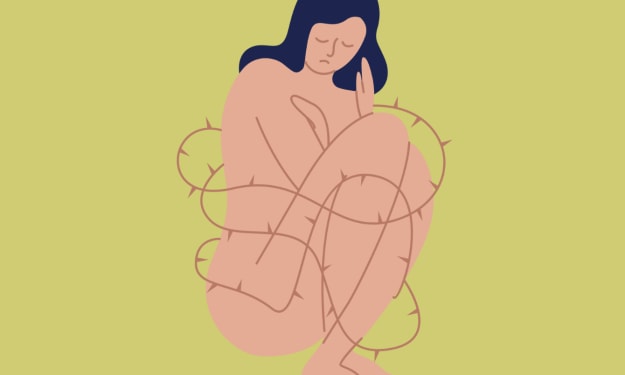
trauma
At its core, trauma can be thought of as the psychological wounds that persist, even when the physical ones are long gone.
Healing the Inner Child
Have you ever felt like no matter how hard you try, the same painful patterns keep resurfacing in your life? Maybe it’s a sense of unworthiness, constant anxiety, or the weight of always needing to please others. If you’re here, it’s likely because you’ve wondered why these feelings linger and how you can finally break free. You’re not alone. So many women carry the invisible scars of generational trauma, passed down like family heirlooms we never asked for. But the good news is, healing is possible. And it starts with reconnecting with the part of you that’s been hurting the longest — your inner child.
By Raquel Ortega2 years ago in Psyche
Does Your Psychological Diagnosis Mean Much Today?
Psychology's delayed reaction to the inhumanity of unitary dominance over collective collaboration has resulted in considerable personal and systemic harms to multiple intersections of race, gender, ability, and social status.
By writemindmatters2 years ago in Psyche
Why Do We Feel Envy Toward Success?
There’s a moment we’ve all experienced. We cross paths with someone who seems to have it all—achievements that shine like polished gold, milestones that feel light-years ahead of our own. And in that instant, a pang of envy seeps into our hearts. It doesn’t matter if their success was earned with grit and integrity. It doesn’t matter if there’s no hint of favoritism or shortcuts. The feeling is there, undeniable and uninvited. Why does envy take the lead? Why is it the first emotion to surface when we see someone thriving? These questions aren’t just about the person we’re observing—they’re about us. They tap into something deeper, something raw and vulnerable. Let’s explore that. The Mirror of Comparison When we encounter success, it holds up a mirror. And that reflection? It doesn’t just show us who we are—it shows us who we aren’t. It reminds us of the goals we’ve postponed, the dreams we’ve shelved, the paths we didn’t take. That mirror can feel harsh. It forces us to reckon with our insecurities, to confront the ways we might feel “less than.” And rather than sit with those feelings—rather than examine them—we turn our gaze outward. Envy becomes the armor we wear to protect ourselves from the sting of self-doubt. The Scarcity Mindset Envy thrives in a mindset of scarcity, a belief that success is a limited resource. It’s as if we think there’s only so much achievement to go around, and someone else’s gain diminishes our chances. But here’s the truth: Success isn’t pie. One person’s accomplishments don’t take away from the possibility of our own. Yet, when we see someone excelling, it’s easy to fall into that trap. We start asking the wrong questions: “Why them and not me?” “What do they have that I don’t?” These questions don’t empower us—they imprison us. They keep us focused on what we lack, rather than what we can build. The Weight of Our Stories We all carry stories about who we are and who we’re supposed to be. These stories are shaped by our upbringing, our culture, and the messages we’ve absorbed along the way. They’re the silent scripts playing in the background of our lives. When we see someone achieving more, those stories can feel threatened. “If they’ve reached that height,” we think, “what does it say about me? Have I fallen short?” It’s not just about their success—it’s about how their success challenges the narrative we’ve constructed for ourselves. A Closer Look at Envy Envy isn’t inherently bad. It’s a signal, a flare that tells us where our desires lie. When we feel envy, it’s often because we see something we want for ourselves. The problem isn’t the feeling—it’s what we do with it. We can let envy fester, turning it into resentment or self-pity. Or we can use it as a catalyst, a reminder of what matters to us. When we feel that pang, we can choose to ask, “What is this trying to teach me? What dream is this pointing me toward?” Moving From Envy to Empowerment The journey from envy to empowerment isn’t about ignoring our feelings. It’s about embracing them with curiosity and compassion. 1. Pause and Reflect: When envy strikes, resist the urge to act on it immediately. Instead, take a moment to sit with it. Ask yourself, “What’s underneath this? What am I really feeling?” 2. Celebrate Their Success: This might feel counterintuitive, but celebrating someone else’s achievements can shift your mindset. It reminds you that success is possible—and that it’s worth striving for. 3. Refocus on Your Path: Envy pulls our attention outward, but growth happens inward. Use that energy to double down on your own goals, your own journey. What’s one step you can take today to move closer to your dreams? 4. Practice Gratitude: Gratitude is the antidote to scarcity. When you focus on what you have, rather than what you lack, envy loses its grip. Reclaiming the Narrative Feeling envy doesn’t make us bad people—it makes us human. It’s a natural response to a world filled with comparisons and expectations. But we don’t have to let it define us. When we encounter success, we have a choice. We can see it as a threat, or we can see it as an invitation. An invitation to dream bigger. To dig deeper. To redefine what success means for us. So, the next time envy whispers in your ear, listen closely. Not to the voice of doubt, but to the voice of possibility. Let it remind you of your potential, your resilience, your power. Because someone else’s success isn’t a reflection of your limits—it’s a reflection of what’s possible.
By Seymour Soza2 years ago in Psyche
Still here. Content Warning.
I wrote when I first got sick nearly 5 years ago, “What if that one week that turned into seven months turns into me?” Honestly, I think I wrote it like a dare. Casting my worst fear out into the world detach it from me. To write it down, to share it, was perhaps to conquer it.
By Rebecca Sunberry2 years ago in Psyche
Car Number 121. Content Warning.
Imagine a nice, mild wintery day on a country road. There's some snow on the wide, open fields, but not too much. It's cool as opposed to cold, so a nice, warm jacket will do. There are no leaves on any trees; no shrubs or tall grass. And it's sunny because there are very few clouds in the sky.
By Richard Soulliere2 years ago in Psyche
Fragile Narcissists Are More Dangerous Than The Grandiose.
"A narcissist's criticism is their autobiography" - M. Wakefield. Grandiose or Vulnerable? You can easily identify a grandiose narcissist (GN) after a while, but a fragile/vulnerable narcissist (VN) goes the extra mile to disguise the false-self because their self-worth is so diminished that even the slightest risk of exposure sets them on a tailspin.
By writemindmatters2 years ago in Psyche
Truly Criminal Relaxtion. Content Warning.
For a moment I can’t tell if the connection is poor or if my therapist is concentrating on keeping a “neutral” face. Even I know that a neutral face in response to a personal interest you share with your therapist is not a good sign. My words are slowing down and I get quiet. “ I’m listening, go on” my therapist fishes for the rest of the concerning details. “You’re gonna tell me that I have to stop huh?” I wait on the other end of the video call bracing myself for impact. “I will say that this could be contributing to your night terrors and to rule it out… you should probably take a break.” Now logically I know she’s right but I can’t be the only one who loves to grab a snack, some wine, and deep dive into true crime. I know that I’m not.
By Nicole Walker2 years ago in Psyche
Mental Health: A Journey with Depression and Anxiety
Mental health is something that can often be overlooked, and for a long time, it was something you probably didn’t fully understand or even recognize in yourself. You may have felt sad or overwhelmed for long stretches of time and pushed those feelings aside because it seemed like everyone else was “getting by” just fine. But one day, something changed. You realized that what you were going through wasn’t just a rough patch—it was something deeper, something that needed to be addressed. If you're reading this right now, chances are you’re going through or have gone through something similar. And that’s why I’m here to share my journey, my struggles with depression and anxiety, and the lessons I’ve learned along the way. I want to remind you that you’re not alone in this. There’s hope, and there’s a way forward, no matter how difficult it seems right now. The Quiet Spiral: Realizing You’re Not Okay At first, it might not have been obvious that you were struggling. Maybe it started with small moments of feeling overwhelmed or irritated, days when you felt sad but didn’t know why. You could have brushed it off, thinking it was just stress or temporary exhaustion. But then, before you knew it, those moments piled up, and one day you looked around and realized that the weight was too much to carry. Depression and anxiety don’t often announce themselves with dramatic signs—they creep in quietly. You might have found it harder to get out of bed, to focus on work, or to enjoy the things that once brought you joy. Anxiety made even the smallest tasks feel like insurmountable obstacles. And depression made you feel like you were fading into the background, disconnected from yourself and everyone around you. It’s terrifying to realize that you’re no longer in control of your emotions. It feels like you’ve lost touch with who you used to be. You might be going through the motions, but internally, you’re battling something much bigger than yourself. And the scariest part? You’re not sure how to stop the spiral. The Fear of Asking for Help For so long, you might have avoided asking for help. It’s easy to convince yourself that reaching out is a sign of weakness, that you should be able to handle everything on your own. After all, society often tells us to be strong, to push through, to act like everything’s fine when it’s not. You’ve probably felt that pressure to "just get over it." But here’s the truth: Asking for help is not a weakness. It’s one of the bravest things you can do. Whether it’s talking to a friend, a family member, or reaching out to a professional—asking for help is the first step toward healing. I know it’s not easy. It might take everything inside you to make that call, to send that text, to admit that you’re struggling. But once you do, you open the door to a world of support. You don’t have to do this alone, and that realization can be incredibly liberating. I wish I’d known sooner how much strength it takes to reach out. Therapy: Unpacking the Weight of It All Once you’ve reached out for help, one of the most powerful tools you have in your healing journey is therapy. At first, it may feel uncomfortable to talk about your feelings, to put words to the swirling chaos in your mind. But over time, therapy becomes a safe space, a place where you can unpack everything without fear of judgment. You’ll learn that depression isn’t just sadness—it’s an overwhelming feeling of emptiness. It’s losing interest in things you once loved, feeling like you’re walking through life in a fog. Anxiety, on the other hand, is that constant companion whispering worst-case scenarios in your ear, making even the smallest decisions feel like life-or-death choices. But here’s something important to remember: depression and anxiety are not failures. They are real conditions, and seeking help is part of the process of managing them. Therapy gives you the tools to separate yourself from these feelings. You’ll come to understand that you are not your depression or anxiety. They are things you experience, but they do not define who you are. This realization alone can be freeing—it gives you space to heal and start taking small, intentional steps toward a better place. Small Wins: Healing Happens in Baby Steps One of the most challenging things to accept is that healing is not immediate. You might have days when you feel like you’re getting worse instead of better. It’s easy to think that nothing will ever change, that you’ll always feel this way. But the truth is, healing is a journey, and it happens in small, incremental steps. Celebrate those small wins. Maybe you got out of bed today, even when it felt impossible. Maybe you made it through a conversation without feeling overwhelmed. Or maybe you managed to go for a short walk outside. These are victories. Each small step is progress, and it’s a reminder that you’re moving forward—even if it doesn’t always feel that way. Healing isn’t about perfection—it’s about progress. Even when things feel stagnant, you’re still moving in the right direction. Each day you choose to take care of yourself, to seek help, or to do something small to improve your mood, you’re on the path to healing. Routine and Structure: Finding Control in Chaos Depression and anxiety love to take away your sense of control. They can make you feel like life is spinning out of your hands. But there’s something grounding about routine. Establishing a sense of structure in your day—no matter how small—can help you regain control over your life. Start small. Maybe you wake up at the same time each day. Maybe you focus on eating regular meals or taking short breaks when you can. Even something as simple as making your bed in the morning can give you a sense of accomplishment and purpose. Routine doesn’t cure depression, but it gives you a sense of normalcy in a time of chaos. It’s a tool that can help you fight back against the overwhelming feelings that often come with these mental health struggles. Self-Compassion: A Key to Healing If there’s one lesson I want you to take away from this, it’s this: be kind to yourself. Depression and anxiety can lead to negative self-talk. You might blame yourself for feeling the way you do or wonder why you can’t just “snap out of it.” But here's the truth: it’s okay to not be okay. You don’t need to have it all together right now. Healing takes time, and it’s okay to go at your own pace. When you stop beating yourself up, when you allow yourself the grace to feel what you’re feeling, you begin to heal. You begin to embrace the fact that you’re doing the best you can, and that’s enough. Advice for You: Healing is Possible If you're struggling with depression and anxiety right now, I want you to know that healing is not only possible, it’s already starting the moment you decide to take care of yourself. Here’s my advice for you: • Talk to someone: Reach out. You don’t have to go through this alone. Whether it’s a therapist, a friend, or a family member, talking is the first step toward feeling heard and supported. • Start small: Don’t expect to change everything at once. Celebrate small victories—getting out of bed, taking a walk, having a good conversation. Each one is a step forward. • Create a routine: Build small routines into your day to give yourself structure and control. It will help you regain some sense of normalcy. • Be kind to yourself: Stop criticizing yourself for feeling this way. It’s okay to struggle. You are worthy of love and compassion, especially from yourself. • Seek professional help: Therapy can provide the support and tools you need to understand and cope with what you’re going through. There’s no shame in asking for help. Final Thoughts: You’re Not Alone No matter how alone you feel right now, you’re not alone in this. There are so many others who have been where you are and are on their own journey toward healing. You can get through this, even if it feels impossible at times. Healing is a process, not a destination, and it’s one step at a time. You are worthy of healing, peace, and joy. Don’t ever forget that. You've got this.
By Samrah Sayyed2 years ago in Psyche