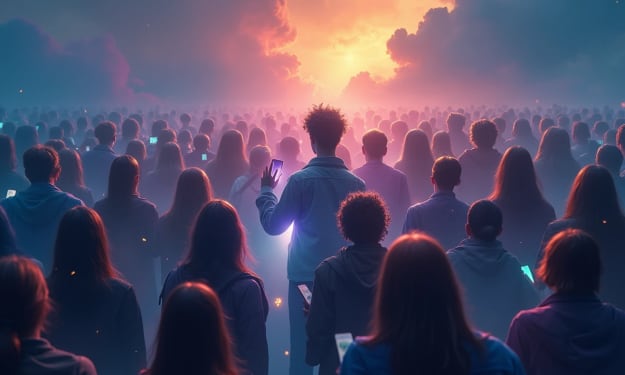
social media
Social media dramatically impacts our offline lives and mental well-being; examine its benefits, risks and controversies through scientific studies, real-life anecdotes and more.
Why Social Media Affects Your Mental Health (And How to Manage It)
Social media is a big part of our daily lives. We use it to connect with friends, share our thoughts, watch videos, and stay updated on the latest news. But while social media has many benefits, it can also have a negative impact on our mental health. In this article, we will explore why social media affects mental health and how you can manage it better.
By Syira Husairi about a year ago in Psyche
The Hidden Psychology of Connection
In a world more digitally connected than ever, loneliness is paradoxically thriving. As we scroll through social media feeds and interact with AI companions, we find ourselves surrounded by virtual connections that, in reality, leave us feeling more isolated than before. Eric Solomon, Ph.D., explores this paradox and reveals how the very tools meant to keep us connected might be deepening our sense of isolation. The Paradox of Digital Connection Loneliness is not a new phenomenon, but it has evolved alongside our technological advances. With smartphones, social media, and now AI companions, we have access to constant streams of communication. Yet, despite the illusion of constant connection, many of us feel more isolated than ever. This paradox becomes strikingly clear when we look around in public spaces like New York’s Union Square. People, once engaged in face-to-face conversation, are now engrossed in their phones, disconnected from the world around them. The same technology that promised to bridge the gap between us seems to have only widened it. As Solomon points out, the rise of AI chatbots and virtual assistants, like ChatGPT, reflects a new attempt to address this loneliness. These tools can simulate emotional availability, offering comfort and companionship. However, while they provide solace, they do so without reciprocity. The lack of genuine human interaction makes these digital companions seem comforting at first, but over time, they can leave us feeling even emptier and more disconnected. How Loneliness Affects Our Brain Understanding the psychological impact of loneliness is crucial. Our brains are wired for real, emotionally attuned connections. Attachment theory tells us that from birth, we crave secure relationships, and these connections are essential for our emotional and psychological well-being. But in today’s world, much of our interaction is mediated through screens, and these interactions are often brief, shallow, and performative. The result? We enter an insecure attachment loop. As we feel more isolated, we withdraw further, making it harder to trust others and open ourselves to vulnerability. This isolation becomes a vicious cycle: the lonelier we feel, the more difficult it becomes to connect, leading to even deeper isolation. The Role of Technology in Deepening Isolation Technology, though not entirely to blame, plays a significant role in exacerbating this issue. AI companions, while appearing to fulfill emotional needs, do not offer real connection. Our nervous systems, tricked into believing that these virtual interactions provide the warmth and understanding we seek, end up reinforcing our sense of emptiness. Studies have shown that those who rely heavily on chatbots for emotional support often experience greater loneliness and fewer meaningful real-life interactions. The very tools we turn to for comfort—smartphones, social media, and AI—are intensifying the loneliness they are meant to alleviate. The Collapse of Flourishing A recent Global Flourishing Study, involving over 200,000 people from more than 20 countries, reveals a disturbing trend: young adults—especially those aged 18 to 29—are struggling with mental, emotional, and social well-being. Unlike previous generations, their well-being doesn’t improve as they age. Instead, it remains stagnant, or even worsens, leading to what researchers call "the collapse of flourishing." In many parts of the world, the happiness curve that typically dips in midlife and then rises in later years has flattened entirely for this age group. The problem is not just that they are alone, as Robert Putnam’s seminal work "Bowling Alone" suggested. It’s that many young people aren't participating in social activities at all. The shift towards productivity, comparison, and digital engagement has undermined the sense of community and connection that once served as a foundation for well-being. Breaking the Cycle of Isolation So, what can we do about it? The first step is recognizing that digital detoxes won’t solve the problem. Shaming ourselves for spending too much time on our phones or social media may feel like a solution, but it’s only a temporary fix. Real change begins with acknowledging the root cause of our loneliness: the breakdown of genuine, secure human connections. Solomon emphasizes that loneliness is not simply a feeling but a neurological and behavioral issue. The more we isolate ourselves, the more our brains adapt to this isolation, making it harder to connect with others. However, there is hope. Small, consistent acts of human connection can help rewire our nervous systems. Reaching out to someone for a real conversation, attending social gatherings, or simply taking the time to be present with others can help rebuild trust and emotional resilience. The Importance of Human Connection In a world where technology is advancing faster than our ability to process its impact on our mental health, it’s easy to overlook the power of genuine human connection. While AI and digital tools can provide temporary comfort, they cannot replace the deep, meaningful bonds that come from real-life interactions. Even as technology continues to shape our lives, we must remember that true flourishing is rooted in connection with others. It’s not enough to have endless digital interactions or AI companions. We need to rebuild the emotional infrastructure of our lives—one that values vulnerability, trust, and real-time, face-to-face interactions. By doing so, we can begin to heal the psychological wounds that loneliness has inflicted on us. Conclusion As we navigate the complexities of the digital age, the challenge of loneliness looms larger than ever. Yet, as Eric Solomon’s insights reveal, there is a path forward. It may require stepping away from the digital world, even if just for a moment, to engage in the raw, imperfect, and beautiful connections that make us human. In these moments, we can find the antidote to loneliness—a deep sense of belonging that no screen or chatbot can ever replicate.
By SophiaSosoabout a year ago in Psyche
The Hidden Cost of Always Being “Busy”
We wear “busy” like a badge of honor. Back-to-back meetings. Overflowing inboxes. Endless to-do lists. We say things like: “I’ve just been so busy lately.” “There’s never enough time.” “I’ll rest when I’m done.” But here’s the hard truth: **Busy doesn’t always mean productive.** And it definitely doesn’t mean fulfilled. In fact, constantly being busy might be the very thing draining your energy, dulling your creativity, and stealing your joy. Let’s unpack the truth behind hustle culture — and how to finally break free. --- ### Why We’re Addicted to Busy There’s a reason you feel uncomfortable doing nothing. Society has taught us that *worth = productivity*. If you’re not working, grinding, improving, you’re “falling behind.” We’ve been conditioned to equate rest with laziness, stillness with failure. So we: - Say yes to every request - Fill every gap in our schedule - Check our phones even during “downtime” - Feel guilty when we relax - Post our hustle online to feel valid It’s not that we enjoy being overwhelmed. It’s that we fear what it means if we’re not. Because when you finally slow down, you're forced to face the thoughts you’ve been avoiding: “Am I doing what I love?” “Do I even know who I am without my work?” That’s scary. So we stay busy instead. --- ### The Illusion of Productivity Here’s the trap: being busy **feels** like progress. You check off tasks, respond to emails, stay in motion. But at the end of the day, you wonder: “What did I actually accomplish?” That’s because **not all work is equal**. There’s a difference between: - Motion and progress - Urgency and importance - Activity and alignment True productivity isn’t about doing more. It’s about doing *what matters* — with focus, clarity, and energy. And constant busyness kills all three. Busyness keeps you reacting instead of creating. It keeps you working *in* your life instead of *on* your life. --- ### The Real Cost of Always Being On Let’s be honest: hustle comes with a price. It costs you: - Mental clarity - Sleep and rest - Presence with loved ones - Time for hobbies, joy, or reflection - Physical and emotional health - Your ability to think long-term Worse, it numbs your ability to feel. To think deeply. To dream. If you’re always reacting, you never have space to reflect. And without reflection, life becomes a blur — fast, full, but strangely empty. That’s how people wake up one day — successful, wealthy, and utterly lost. --- ### Reclaiming Your Time (and Life) Escaping hustle culture doesn’t mean you stop being ambitious. It means you start being **intentional**. Here’s how: 1. **Redefine success** Ask yourself: what actually matters to *you*? Not society, not your peers — *you*. Let that define your priorities. 2. **Create space on purpose** Block time for rest, thinking, and joy. Don’t wait for free time — schedule it like it matters (because it does). 3. **Do less, better** Focus on high-impact tasks. Say no more often. Delegate. Automate. Eliminate busywork disguised as importance. 4. **Disconnect to reconnect** Put your phone down. Take a walk. Have a real conversation. Let your brain breathe. Creativity lives in silence. 5. **Rest without guilt** Recovery isn’t a reward — it’s a requirement. You’re not a machine. Stop treating yourself like one. 6. **Audit your energy** Notice which tasks drain you vs. energize you. Start organizing your day around energy, not just time. 7. **Say no more often** Every “yes” to something misaligned is a “no” to something meaningful. Guard your time like your life depends on it — because it does. --- ### Final Thoughts: Busy Isn’t a Flex — It’s a Warning Being constantly busy might impress others. But at what cost? A burnt-out body. A scattered mind. A life full of motion but empty of meaning. You deserve more than that. You deserve depth. Focus. Peace. Clarity. And those don’t come from doing *more*. They come from doing *less* — with intention. So the next time you feel the urge to pack your schedule or say “yes” out of guilt, pause. Ask yourself: “Is this aligned with the life I actually want?” Because real success isn’t how busy you are. It’s how **free** you feel.
By SHADOW-WRITESabout a year ago in Psyche
Why So Many People Feel Lost (And How to Find Purpose Again)
We live in the most connected time in human history. We can access endless information, talk to anyone across the globe, and choose any lifestyle we want. So why do so many people wake up feeling empty? Why does life, even when it's “fine,” still feel meaningless? This isn’t just a bad mood or a rough week. It’s something much deeper — a silent epidemic: the lack of purpose. --- ### The Modern Crisis of Meaning Decades ago, life came with a built-in roadmap. People knew what was expected — get a job, start a family, contribute to your community. It wasn’t perfect, but it gave life structure and direction. Today, that structure is gone. And while freedom is great, it also means many people don’t know where to begin. We’re told we can be anything. But no one tells us how to choose. Or what truly matters. So we: - Compare ourselves to others online - Chase goals that aren’t ours - Distract ourselves with dopamine and drama - Feel like we’re constantly “behind” in life And when the excitement fades, we’re left with a dull ache that whispers, “What’s the point of all this?” --- ### How Lack of Purpose Shows Up You might not say it out loud, but you feel it in your daily life: - You wake up tired even after sleeping - You stay busy but never feel fulfilled - You envy people who seem driven or excited - You lose interest in the things that once brought you joy - You feel a low-level dread that never fully goes away You’re not lazy. You’re not broken. You’re just living without alignment — without something meaningful to guide your energy, attention, and choices. --- ### The Purpose Myth Here’s what makes it worse: we’ve been sold the idea that purpose is something huge and magical we’re supposed to “discover.” Like a calling that falls from the sky. But purpose isn’t found. It’s built. And it doesn’t have to be world-changing. Real purpose is: - Doing something that matters to you - Creating, helping, learning, or contributing - Feeling useful — even in a small way - Living in alignment with what you care about It could be raising a child, building a business, teaching others, creating art, caring for your community — or something no one else sees but you. The size doesn’t matter. The connection does. --- ### How to Start Rebuilding Purpose If you’re feeling lost, don’t wait for a lightning bolt of inspiration. Take these practical steps: 1. **Get quiet** Turn off the noise. Step away from social media. Purpose can’t speak when the world is shouting. 2. **Follow your curiosity** What topics make you lose track of time? What do you love helping others with? These are clues. 3. **Help someone** Volunteer. Mentor. Support a cause. Serving others helps you reconnect with your value. 4. **Commit to one small thing daily** Journal. Move your body. Learn something new. Purpose grows from consistent, intentional action. 5. **Redefine success** Forget what society or social media tells you. Define your own version of a meaningful life. --- ### Final Thoughts: You’re Not Alone — You’re in Transition This feeling of emptiness? It’s not your fault. It’s a signal. A call to go deeper. To live with intention. To stop drifting and start directing. You don’t need to have all the answers. You just need to start building — brick by brick, day by day — a life that feels aligned with who you are. Because purpose doesn’t come from outside validation. It comes from becoming the kind of person who chooses meaning over noise — and shows up even when it’s hard. You’re not lost. You’re just searching. And that’s the first step toward something real.
By SHADOW-WRITESabout a year ago in Psyche
Stoicism vs FOMO
Have you ever woken up or relaxed for a moment and opened TikTok, hoping to find content that refreshes your mind? But instead of meaningful or uplifting content, you end up seeing people parodying a song that actually has deep lyrics — but it’s been turned into background music for silly, meaningless dances. Sadly, these moves become templates, copied by hundreds or maybe thousands of people (mostly young), just to gain recognition or land on the FYP (For You Page). Even worse, these types of content get watched by thousands, commented on, and go viral, until the creator forgets why they even made the video in the first place.
By Dimas Seti Adityaabout a year ago in Psyche
Behind the Veil
America offers an illusion of sex, wealth, fame, and emancipation. Behind the shiny magazines, the bright lights, and the faked climaxes is an industry founded on exploitation, shattered hope, drug dependency, and mere subsistence. Internet performers and strippers are usually empowered on the surface — boasting cash, poise, and power. Well, what goes on backstage? Let’s pull that curtain back.
By Debarghya Chatterjeeabout a year ago in Psyche
It's NOT a Sign of Weakness. Top Story - May 2025. Content Warning.
In my last story, I discussed the topic of mental health and Boston Red Sox player Jarren Duran. Duran exchanged words with a Cleveland Guardians fan during a recent game, which the fan responded with an insensitive remark, referring to the outfielder's suicide attempts in 2021 and 2022. I condemned that fan for his actions and should face some sort of punishment from MLB and/or the Guardians organization. Duran has previously been open about his struggles with depression. He has full support from his fellow Red Sox players and the organization. He's not the only player who has been open about their mental health. Dansby Swanson of the Chicago Cubs recently revealed on a podcast that he also had difficulties with alcohol on top of his mental health issues during the early stages of his career. Last year, I watched an ad from MLB about in times of difficulties, there's always people that will support you unconditionally. People tend to forget that athletes are regular individuals, too. I never put anyone famous on pedestals, because you never know what they're going through. May is Mental Health Awareness Month, which has been observed in the United States since 1949. Athletes, celebrities, and everyday people like me are sharing our stories in order to let others know that they're not alone. One of the misconceptions that I dislike the most about mental health is that seeking help for it or discussing your struggles with it means that you're a weak person. This will only make people reluctant or hesitant to seek help. That's the reason why there's so much stigma behind it. Just because someone is depressed, it doesn't mean that they're less of a person. Someone asking for help when they're feeling down should be commended, not chastised. If you know someone who is suffering from mental health problems, support them unconditionally, because they need all of it.
By Mark Wesley Pritchard about a year ago in Psyche
An Occurrence at Owl Creek Bridge
The sun was setting behind the hills when Daniel Mercer stood before the firing squad. Bound at the wrists, he faced a crumbling brick wall streaked with the faded slogans of a revolution long dead. The air was still, and the only sound was the soft click of a rifle bolt being pulled back. Ten soldiers stood in a line, rifles raised to their shoulders. A red-eyed officer barked orders, though Daniel barely heard them.
By Murad Ullahabout a year ago in Psyche