selfcare
The importance of self-care is paramount; enhance your health and wellbeing, manage your stress, and maintain control under pressure.
The Moment the World Didn't End. Content Warning. AI-Generated.
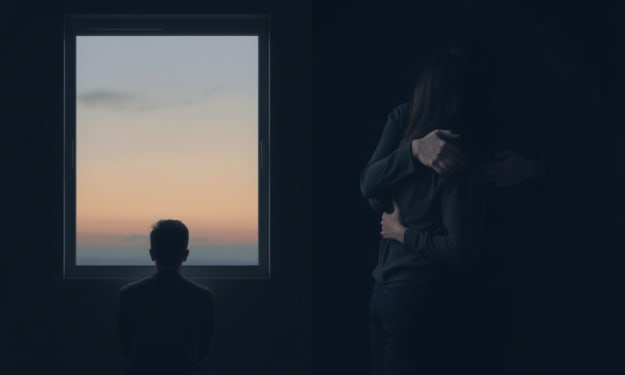
It happened at 2:17 a.m. That’s when I realized the world wasn’t going to end—no matter how much I wanted it to. He had just left. Not in a cinematic, door-slamming, sobbing-through-the-hallway kind of way. No, it was worse than that. He left in silence. Quiet as a whisper. Quiet as death. Just a fading warmth where he’d once sat on my bed and told me, “I’ll never leave unless you ask me to.”
By PrimeHorizonabout a year ago in Psyche
Echoes in the Labyrinth
My shift began at exactly 3:07 AM—the kind of hour when everything is too quiet, too raw—and a thunderclap cracked straight through my chest like it knew where to hit. The storm outside wasn't just weather. It was the moment the thin skin between who I pretend to be and who I actually am tore open. I was awake… or maybe still tangled in the last threads of a dream I didn’t want to admit was mine. The world looked warped, like someone had spilled water over a painting and let the colors run wild. Messy, haunting... but weirdly beautiful.
By Rukka Novaabout a year ago in Psyche
When My World Paused for a Stranger - Austin Shivaji Kumar
I remember the exact platform. Dadar station. The financial and chaos capital of Mumbai. The kind of place where the air feels thick with movement, where a thousand footsteps stomp through your silence. You don’t get a second to think. Or feel.
By Austin Shivaji Kumarabout a year ago in Psyche
Why ‘Good Vibes Only’ is Toxic (And How to Embrace Negative Emotions)
Introduction We live in a world that celebrates the mantra of "good vibes only." The idea that we must constantly stay positive, happy, and upbeat permeates everything from social media to self-help books. But what happens when we ignore our negative emotions and force ourselves to only feel good? In truth, this "good vibes only" mentality is not only unrealistic it can be downright toxic.
By Fahad Khanabout a year ago in Psyche
8 Science-Backed Ways to Reduce Anxiety Naturally
Introduction Anxiety is something most of us face at some point, but when it lingers, it can seriously impact our daily life, relationships, and health. While medication works for many, it's not the only solution. In fact, there are natural, science-backed methods that can significantly help reduce anxiety and promote long-term mental well-being.
By Fahad Khanabout a year ago in Psyche
The Forgotten Language of Touch: How Physical Contact Shapes Our Emotional Well-being
In a world dominated by screens and digital expressions, we have learned to communicate through messages, emojis, and reactions. We connect in online meetings, express love with virtual hearts, and offer condolences through comment sections. Yet, in our reliance on words and technology, we’ve drifted away from one of the oldest and most profound forms of communication—physical touch.
By Mysteries with Professor Jahaniabout a year ago in Psyche
The Invisible Weight: Living with the Emotional Baggage We Don’t Talk About
The Backpack No One Sees When my friend Julia died suddenly in a car accident, her husband, Mark, showed up to her funeral wearing a crisp suit and a smile that didn’t reach his eyes. He shook hands, accepted casseroles, and thanked everyone for their support. Two years later, at a dinner party, he casually mentioned he still sets a place for her at the table. The room fell silent. No one knew what to say—not because they didn’t care, but because grief, like so much of our emotional baggage, lives in the shadows.
By Mysteries with Professor Jahaniabout a year ago in Psyche
How Small Acts of Kindness Changed My Perspective on the World
The Day a Stranger’s Umbrella Taught Me About Humanity It was a gray, drizzly afternoon in Kyoto when I first grasped the quiet power of kindness. I stood outside a train station, drenched and frustrated, silently berating myself for forgetting my umbrella. Out of nowhere, a woman in her sixties—her silver hair peeking beneath a sunhat despite the rain—paused beside me. Without speaking, she opened her bright red umbrella and held it over both of us. We walked in silence for two blocks until she nodded toward my destination: a tucked-away tea shop. When I thanked her, she smiled and said, “The rain feels lighter when shared.” Her words lingered long after the clouds parted.
By Mysteries with Professor Jahaniabout a year ago in Psyche