personality disorder
Personality disorders are as complex as they are misunderstood; delve into this diagnosis and learn the typical cognitions, behaviors, and inner experience of those inflicted.
**5 Habits That Changed My Life**
I didn’t change my life overnight. There was no big moment. No sudden success. No instant transformation. In fact… for a long time, nothing changed at all. I was stuck. Overthinking everything. Delaying everything. Feeling like I had potential… but no progress. I had plans. Big ones. I wanted to improve myself. Build something meaningful. Become someone I could be proud of. But every day ended the same way: “I’ll start tomorrow.” Tomorrow felt safe. Tomorrow felt perfect. Because tomorrow had no pressure. No risk. No fear of failure. But tomorrow… never came. Tomorrow became next week. Next week became next month. And slowly… I realized something scary. My life wasn’t falling apart… It was just not moving. That realization hurt more than failure ever could. Because failure means you tried. But I didn’t. I was just waiting. That’s when I understood something simple, but powerful: It’s not big decisions that change your life. It’s small habits. Small things… done daily. So I stopped chasing motivation… And started changing my habits. Not all at once. Just one by one. And these 5 habits… changed everything. ----------------------------------------------
By LegacyWords7 months ago in Psyche
Good or Bad Isn’t an Explanation
by Annam M Gordon When people describe others as good or bad, they usually think they are explaining behavior. They are not. They are making a moral judgment. That judgment may be understandable, justified, or socially useful, but it is not the same thing as a psychological explanation.
By Annam M Gordon7 months ago in Psyche
Love Used as Control and Praise Is the Leverage.
In some toxic family dynamics, control is built through praise, attention, and emotional reward. One family member positions themselves as the source of approval. They constantly lift certain people up, praise them publicly, single them out, and make them feel chosen, special, or important. On the surface, it looks supportive. It looks loving. It looks like pride.
By Annam M Gordon7 months ago in Psyche
5 Hidden Strategies Your Brain Uses to Control Emotions (Most People Only Notice the Last One)
As someone who has studied psychology both independently and in university for around eight years, I often find myself thinking that many of the concepts we learn in lectures should be shared more openly with the public. A lot of psychological research isn’t just abstract theory—it’s practical knowledge that can help people better understand themselves.
By Navigating the World7 months ago in Psyche
The Girl at Seat 4B: What I Learned by Ignoring My Phone for a Month
The blue light was my morning prayer. Before my feet hit the floor, before the coffee breathed its first steam, I was scrolling. I fed on a diet of outrage, filtered perfection, and the relentless "ping" of notifications that made me feel important while I was actually becoming invisible.
By imtiazalam8 months ago in Psyche
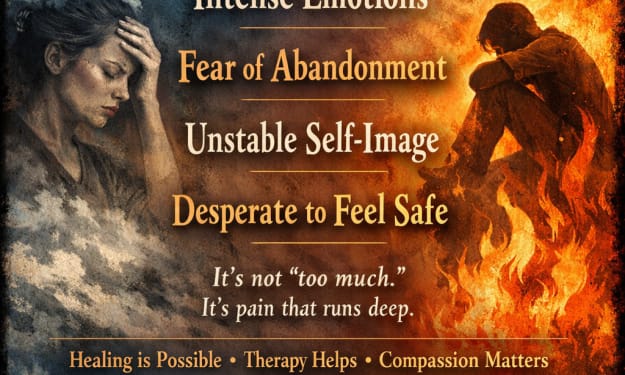
BPD: When the Nervous System Lives at the Edge
A compassionate reflection on Borderline Personality Disorder that explores emotional intensity, unstable self-image, fear of abandonment, and the possibility of healing through understanding, support, and treatment.
By Flower InBloom8 months ago in Psyche
When Does a Woman Feel Safe?
Not because this is another relationship article… but because what you’re about to read might explain a mystery that ruins countless relationships without anyone noticing. Many men think a woman feels safe when she hears “I love you.” Many women think they should feel safe simply because someone promises loyalty. But here’s the uncomfortable truth: A woman doesn’t feel safe because of words. She feels safe because of patterns. Patterns of behavior. Patterns of respect. Patterns that quietly tell her, “You don’t have to protect your heart around me.” This story begins with someone who didn’t understand that. --- Chapter 1: The Question That Changed Everything Daniel believed he was a good partner. He didn’t cheat. He worked hard. He texted often. Yet something always felt slightly distant between him and Maya. Maya smiled. She laughed. She stayed. But sometimes Daniel noticed a hesitation in her eyes — a small pause before she shared something personal. One evening they sat at a quiet café. Rain tapped softly against the glass windows. Daniel finally asked the question that had been sitting in his chest for months. “Why do I feel like you’re still holding something back from me?” Maya looked down at her coffee. Not angry. Not defensive. Just thoughtful. Then she said something simple, but it hit Daniel like lightning. “I like you, Daniel. But feeling safe with someone… takes more than liking them.” Daniel frowned. “Safe? I’ve never done anything to hurt you.” Maya nodded. “I know. But safety in a relationship isn’t just about avoiding harm. It’s about creating comfort.” That night Daniel went home confused. But that confusion would soon turn into understanding. --- Chapter 2: The Invisible Need Many people misunderstand emotional safety. They think it’s dramatic — something related to betrayal, lies, or big conflicts. But most of the time, emotional safety is built in small moments. Moments like: How someone reacts when you admit a mistake How someone listens when you share a fear How someone treats you when you’re not at your best For women especially, emotional safety is deeply connected to trust and vulnerability. A woman may appear strong, confident, independent. But inside, she is constantly evaluating a quiet question: “Is this someone I can relax around… or someone I must protect myself from?” When the answer becomes relax, that’s when safety begins. --- Chapter 3: What Makes a Woman Feel Safe Daniel started paying attention. Not to what he thought mattered. But to what Maya actually responded to. And slowly he began noticing something powerful. Safety wasn’t about grand gestures. It was about consistency. Here are the lessons he learned. --- 1. A Woman Feels Safe When She Is Truly Heard Many people listen just to reply. But feeling heard means something deeper. When Maya talked about her stressful day, Daniel used to jump straight into solutions. “Just ignore your boss.” “You should quit that job.” “Don’t worry about it.” But one day he tried something different. He simply listened. No interruption. No advice. Just attention. At the end Maya said something surprising: “Thank you for listening.” Daniel realized something important. Sometimes the greatest form of safety is simply being understood. --- 2. Consistency Creates Security Grand romantic gestures are exciting. But consistency is comforting. A woman feels safe when she knows what version of you she will meet tomorrow. Not someone loving today and distant next week. Not someone calm today and explosive tomorrow. Consistency tells the nervous system: “This person is predictable. You can relax.” Daniel began showing up in small reliable ways: Keeping promises Being emotionally present Communicating honestly These quiet actions slowly built trust. --- 3. Emotional Reactions Matter More Than You Think One night Maya told Daniel something vulnerable. She confessed she sometimes felt insecure about her career progress. This was a critical moment. If Daniel dismissed her feelings or joked about them, a wall would appear instantly. Instead he said: “That must feel heavy. I’m glad you told me.” Her shoulders relaxed. Why? Because emotional safety grows when someone respects your feelings instead of minimizing them. --- 4. Respect Is the Foundation of Safety Respect isn’t only about politeness. It’s about how someone treats your boundaries, your opinions, and your individuality. A woman feels safe when she knows: Her voice matters Her boundaries will be honored Her thoughts won’t be mocked Daniel began asking for Maya’s perspective more often. Not out of obligation. But genuine curiosity. That changed everything. --- Chapter 4: What Breaks a Woman’s Sense of Safety Just as safety can be built slowly, it can also be broken quickly. There are patterns that silently damage emotional trust. Here are the most common ones. --- Inconsistency Hot today. Cold tomorrow. This emotional unpredictability makes someone feel unstable inside the relationship. --- Dismissive Communication Statements like: “You’re overreacting.” “It’s not a big deal.” “You’re too sensitive.” These phrases tell someone their feelings are invalid. And when feelings aren’t safe, vulnerability disappears. --- Lack of Emotional Presence You can be physically present but mentally absent. Scrolling your phone during conversations. Ignoring subtle emotional cues. Over time this makes someone feel invisible. --- Broken Promises Trust isn’t broken by one huge lie most of the time. It’s broken by dozens of small broken promises. And once trust weakens, safety disappears with it. --- Chapter 5: The Moment Daniel Finally Understood Months passed. The relationship between Daniel and Maya felt different. Lighter. Warmer. One evening they walked through a quiet park. The sun was setting, painting the sky in orange and soft purple. Maya suddenly said something that Daniel would never forget. “I feel calm around you.” Daniel smiled slightly. “That’s good, right?” She nodded. “Yes. It means I feel safe.” That moment wasn’t loud. No fireworks. No dramatic confession. Just peace. And that’s the real secret. When a woman feels safe, love grows naturally. --- Chapter 6: Practical Advice for Anyone Who Wants to Build Emotional Safety Whether you’re in a relationship now or hope to build one someday, these principles matter. Be emotionally available People feel safe with those who are present — not distant. Listen more than you speak Understanding builds connection. Be consistent Your behavior should match your words. Validate feelings Even if you don’t fully understand them. Respect individuality Love should never feel like control. --- Chapter 7: The Hidden Reward Here’s something many people don’t realize. When a woman feels emotionally safe, she becomes more open, more affectionate, and more supportive. Not because she is obligated. But because she no longer needs to guard her heart. Safety unlocks the most authentic version of love. And that kind of love is rare. --- Final Thought If you remember nothing else from this story, remember this: A woman feels safe not when she hears beautiful words… but when she experiences consistent care. Not perfection. Just sincerity, respect, and presence. Those quiet things create the strongest relationships. --- If this story made you pause and think for a moment, you’re already ahead of most people. ❤️ If something here resonated with you, leave a like so more people can discover it. 💬 Share your thoughts in the comments — when do you think someone truly feels safe in a relationship? 🔔 And if you enjoy thoughtful stories like this, follow along. There are many more ideas worth exploring together. Because sometimes a few minutes of reading can change how we understand the people we care about.
By Ahmed aldeabella8 months ago in Psyche