list
Lists about all things mental health; explore psychiatric disorders, treatments and mental illness misconceptions from the common to the obscure.
You’re Not Behind — You’re Just Human
You ever look around and think, “Everyone else seems to know what they’re doing... why don’t I?” Someone just got a promotion. Someone else is buying a house. Your friend is planning a wedding, launching a business, traveling the world. And then there's you — barely holding it together, unsure of your next step, wondering if you missed a memo on how to be an adult. Here’s the truth: **You’re not behind. You’re just human.** And no, you don’t need to have it all figured out. --- ### 1. Life Isn’t a Checklist Somewhere along the way, we were handed a silent list: - Graduate by 22 - Dream job by 25 - Married by 28 - Kids by 30 - Stable, happy, thriving by 35 And if you’re not there? You feel like a failure. But here’s the thing: **that list is fiction.** It was made up. And the people who seem like they’re on track? They’re often just as confused as you — they’re just quieter about it. You are not a timeline. You are a living, breathing, evolving story — and your chapters don’t need to look like anyone else’s. --- ### 2. Confusion Is Not a Sign of Failure — It’s a Sign of Growth Think of any major turning point in your life. Chances are, it started with uncertainty. You questioned your path. You doubted yourself. You felt like everything was falling apart. But later, you saw: it was falling into place. **Uncertainty is the hallway between two versions of yourself.** It feels like being stuck. But really, it’s where you evolve. Growth doesn’t always feel like growth. Sometimes it feels like chaos, discomfort, or silence. But that’s where transformation hides. --- ### 3. “Figuring It Out” Is an Illusion Nobody — and I mean *nobody* — has it completely figured out. Your role models? They have doubts too. That confident entrepreneur? Still wakes up anxious some mornings. That couple that looks perfect online? They argue. That friend who seems so sure of their path? They question everything in the dark. People post their highlight reels. But we all live behind the scenes. What you don’t see are the nights they cried, the days they felt stuck, and the times they almost gave up. --- ### 4. Your Timeline Is Yours Alone A flower doesn’t look at the one next to it and panic. It blooms when it’s ready. So will you. You’re not late. You’re not early. You’re right on time — for *your* story, not someone else’s. You are not a copy. You are not a delay. You are your own rhythm. And that rhythm is sacred. Comparison is a thief of joy, yes. But it also distorts the truth. Because what’s meant for you can’t be rushed… or missed. --- ### 5. Progress Isn’t Always Obvious Some days, progress looks like winning. Other days, it looks like simply not quitting. - Getting out of bed - Sending one email - Saying “no” when you used to say “yes” - Resting without guilt - Repeating “I’ll try again tomorrow” — and meaning it These things don’t get celebrated on social media. But they’re signs you’re becoming someone stronger, braver, clearer. Small wins are still wins. Tiny steps are still steps. Give yourself credit for the quiet victories. --- ### Final Thoughts: You’re Doing Better Than You Think You don’t need all the answers. You don’t need a five-year plan. You don’t need to impress anyone. You just need to keep going — eyes open, heart willing. Growth isn’t linear. Life isn’t a race. And peace doesn’t come from knowing everything… It comes from trusting yourself, even when you don’t. So if today feels messy — let it. If you’re still figuring things out — good. That means you’re alive. --- **Still feeling stuck?** Tell me in the comments what you’re going through — I’ll write a story to help you move through it.
By SHADOW-WRITESabout a year ago in Psyche
The Hidden Psychology of Connection
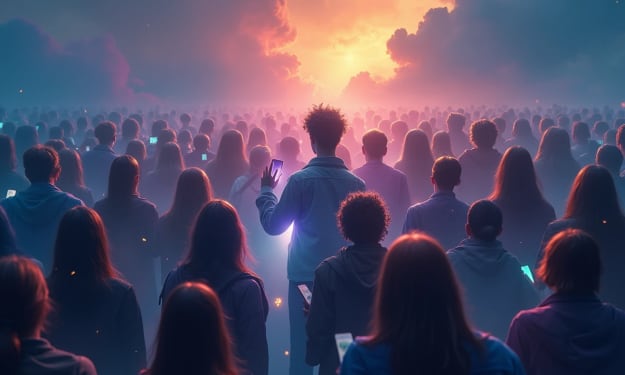
In a world more digitally connected than ever, loneliness is paradoxically thriving. As we scroll through social media feeds and interact with AI companions, we find ourselves surrounded by virtual connections that, in reality, leave us feeling more isolated than before. Eric Solomon, Ph.D., explores this paradox and reveals how the very tools meant to keep us connected might be deepening our sense of isolation. The Paradox of Digital Connection Loneliness is not a new phenomenon, but it has evolved alongside our technological advances. With smartphones, social media, and now AI companions, we have access to constant streams of communication. Yet, despite the illusion of constant connection, many of us feel more isolated than ever. This paradox becomes strikingly clear when we look around in public spaces like New York’s Union Square. People, once engaged in face-to-face conversation, are now engrossed in their phones, disconnected from the world around them. The same technology that promised to bridge the gap between us seems to have only widened it. As Solomon points out, the rise of AI chatbots and virtual assistants, like ChatGPT, reflects a new attempt to address this loneliness. These tools can simulate emotional availability, offering comfort and companionship. However, while they provide solace, they do so without reciprocity. The lack of genuine human interaction makes these digital companions seem comforting at first, but over time, they can leave us feeling even emptier and more disconnected. How Loneliness Affects Our Brain Understanding the psychological impact of loneliness is crucial. Our brains are wired for real, emotionally attuned connections. Attachment theory tells us that from birth, we crave secure relationships, and these connections are essential for our emotional and psychological well-being. But in today’s world, much of our interaction is mediated through screens, and these interactions are often brief, shallow, and performative. The result? We enter an insecure attachment loop. As we feel more isolated, we withdraw further, making it harder to trust others and open ourselves to vulnerability. This isolation becomes a vicious cycle: the lonelier we feel, the more difficult it becomes to connect, leading to even deeper isolation. The Role of Technology in Deepening Isolation Technology, though not entirely to blame, plays a significant role in exacerbating this issue. AI companions, while appearing to fulfill emotional needs, do not offer real connection. Our nervous systems, tricked into believing that these virtual interactions provide the warmth and understanding we seek, end up reinforcing our sense of emptiness. Studies have shown that those who rely heavily on chatbots for emotional support often experience greater loneliness and fewer meaningful real-life interactions. The very tools we turn to for comfort—smartphones, social media, and AI—are intensifying the loneliness they are meant to alleviate. The Collapse of Flourishing A recent Global Flourishing Study, involving over 200,000 people from more than 20 countries, reveals a disturbing trend: young adults—especially those aged 18 to 29—are struggling with mental, emotional, and social well-being. Unlike previous generations, their well-being doesn’t improve as they age. Instead, it remains stagnant, or even worsens, leading to what researchers call "the collapse of flourishing." In many parts of the world, the happiness curve that typically dips in midlife and then rises in later years has flattened entirely for this age group. The problem is not just that they are alone, as Robert Putnam’s seminal work "Bowling Alone" suggested. It’s that many young people aren't participating in social activities at all. The shift towards productivity, comparison, and digital engagement has undermined the sense of community and connection that once served as a foundation for well-being. Breaking the Cycle of Isolation So, what can we do about it? The first step is recognizing that digital detoxes won’t solve the problem. Shaming ourselves for spending too much time on our phones or social media may feel like a solution, but it’s only a temporary fix. Real change begins with acknowledging the root cause of our loneliness: the breakdown of genuine, secure human connections. Solomon emphasizes that loneliness is not simply a feeling but a neurological and behavioral issue. The more we isolate ourselves, the more our brains adapt to this isolation, making it harder to connect with others. However, there is hope. Small, consistent acts of human connection can help rewire our nervous systems. Reaching out to someone for a real conversation, attending social gatherings, or simply taking the time to be present with others can help rebuild trust and emotional resilience. The Importance of Human Connection In a world where technology is advancing faster than our ability to process its impact on our mental health, it’s easy to overlook the power of genuine human connection. While AI and digital tools can provide temporary comfort, they cannot replace the deep, meaningful bonds that come from real-life interactions. Even as technology continues to shape our lives, we must remember that true flourishing is rooted in connection with others. It’s not enough to have endless digital interactions or AI companions. We need to rebuild the emotional infrastructure of our lives—one that values vulnerability, trust, and real-time, face-to-face interactions. By doing so, we can begin to heal the psychological wounds that loneliness has inflicted on us. Conclusion As we navigate the complexities of the digital age, the challenge of loneliness looms larger than ever. Yet, as Eric Solomon’s insights reveal, there is a path forward. It may require stepping away from the digital world, even if just for a moment, to engage in the raw, imperfect, and beautiful connections that make us human. In these moments, we can find the antidote to loneliness—a deep sense of belonging that no screen or chatbot can ever replicate.
By SophiaSosoabout a year ago in Psyche
How to Support a Partner with Bipolar Disorder Without Losing Yourself
Loving someone with bipolar disorder can be both deeply rewarding and incredibly challenging. Bipolar disorder—a mental health condition characterized by extreme mood swings—doesn’t just impact the person diagnosed; it can profoundly affect their loved ones too.
By Richard Baileyabout a year ago in Psyche