humanity
Mental health is a fundamental right; the future of humanity depends on it.
You’re Not Cold — You Just Stopped Explaining Yourself to People Who Never Listened
You used to explain yourself. Every emotion. Every boundary. Every “no.” You’d write paragraphs trying to be understood. Trying to seem “reasonable.” Trying not to upset anyone. But lately — you’ve gone quiet. Not because you’re angry. Not because you stopped caring. But because you’ve finally realized… **They weren’t listening anyway.** --- ### (1. You’re Not Cold — You’re Just Tired of Talking to Walls) You opened your heart. You shared your truth. But your words were met with silence, deflection, or guilt. So you stopped. Because repeating yourself to people who choose not to understand you isn’t clarity. It’s *self-abandonment.* --- ### (2. You Realized Peace Doesn’t Come From Being Understood — It Comes From Being Aligned) You used to think peace meant explaining everything perfectly. Now, peace means walking away without a scene. Without closure. Without dragging your heart through another loop. Because your soul craves stillness more than approval. --- ### (3. You’re Choosing Boundaries Over People-Pleasing) You’ve learned that saying “no” isn’t mean. That not replying right away isn’t rude. That putting yourself first isn’t selfish — it’s sacred. You’re no longer interested in overextending just to seem “nice.” You’re choosing alignment over performance. --- ### (4. You Know Who You Are — And That’s Enough) You used to shrink when misunderstood. Now, you stand still. You don’t argue with people committed to misjudging you. Because your worth is no longer up for debate. And you don’t need external validation to stay rooted in your truth. --- ### (5. You Stopped Explaining Because It Was Hurting You) Every time you over-explained… You felt smaller. More exhausted. More disconnected from yourself. So now, you let your silence speak. Because nothing feels heavier than trying to convince someone to care. --- ### (6. You’re Protecting Your Peace Without Justifying It) You say no. You unfollow. You walk away. And you don’t send long texts to explain why. Because your inner peace is your responsibility. Not your defense case. --- ### (7. You Understand That People Hear What They Want To) It doesn’t matter how carefully you speak. If someone doesn’t want to understand you — they won’t. They’ll twist your words. Make it about them. Make *you* the villain. So you stopped talking. And started observing. --- ### (8. You’re Rebuilding in Silence — And That’s a Superpower) Not every breakthrough needs an announcement. Not every healing moment needs an audience. You’re growing roots now. Quietly. Privately. In sacred spaces they’ll never be allowed to enter again. --- ### (9. You Realized That True Love Doesn’t Need Constant Proof) With the right people, you don’t have to explain why you’re quiet. Why you pulled back. Why you need space. They’ll feel it. They’ll understand it. They’ll *honor it.* Without needing you to perform your pain. --- ### (10. You Stopped Explaining Because You Finally Started Listening — To Yourself) You used to silence your needs. Now, you’re tuned in. You don’t need to over-speak. You just need to *honor the whisper.* And that whisper says: **“Stop exhausting yourself trying to be understood. Start choosing people who already get you — without the speeches.”** - - - - - - - - - - - - - - - - - - - - - - - - - - - - - - - ### 🌿 Final Thought You’re not cold. You’re not heartless. You’re not distant. You’re just *done begging for bare minimum understanding.* (. . .) This silence? It’s not passive aggression. It’s *protection.* This distance? It’s not ego. It’s *clarity.* So if they ask why you’ve changed — Tell them: ** “I stopped explaining myself to people who never really listened.” ** And that shift? **That’s not weakness. That’s power.**
By SHADOW-WRITESabout a year ago in Psyche
Micro Joys: The Tiny Moments That Are Quietly Saving Our Lives
Most days, we’re just trying to get through. We juggle to-do lists, unread messages, constant notifications, and the quiet (or not-so-quiet) pressure to be more—more successful, more productive, more present, more grateful. It’s easy to believe joy has to be earned or scheduled, like a vacation you save up for or a milestone you finally reach.
By Nicole (Nikki) M.about a year ago in Psyche
What is the World Transformation Movement? An Introduction and Summary
We live in an age of escalating psychological distress — where anxiety, depression, addiction, and social breakdown have become alarmingly normal. These symptoms, however, all stem from a much deeper, largely unspoken issue: the human condition.
By Fix The Worldabout a year ago in Psyche
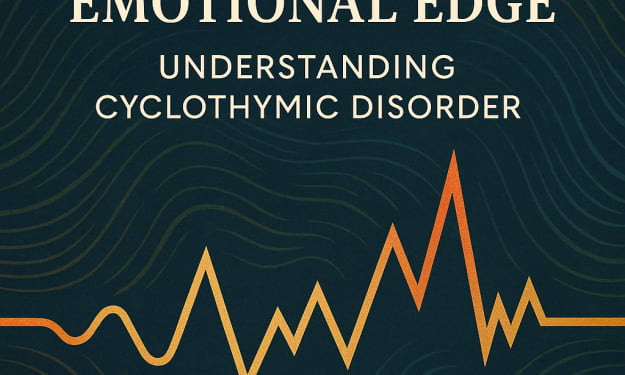
Living on the Emotional Edge: Understanding Cyclothymic Disorder
Introduction Everyone experiences emotional ups and downs. A burst of excitement one day, a dip in motivation the next — it's part of being human. But for some, these fluctuations are more than just ordinary mood shifts; they form a persistent, confusing rhythm that quietly shapes their entire life. When your inner world feels like a never-ending ride between minor emotional highs and unexpected lows — without ever tipping fully into mania or deep depression — it might not just be personality. It might be Cyclothymic Disorder.
By Siria De Simoneabout a year ago in Psyche
The Complexities of Co-Dependency
Have you ever met a person who couldn't do the simplest of tasks on their own? That person might even be you. There is always a deeper understanding of things like introverts, extroverts, the ego, etc., within society. The idea that someone doesn't like to be surrounded by noise isn't too uncommon. Just like the idea that an individual is their best drowning in a sea of people. Sometimes, you can struggle with an entirely different aspect of self. One that might even make you lose your own. Co-dependency.
By The Darkest Sunriseabout a year ago in Psyche
"The Interpretation of Dreams" by Sigmund Freud: A Journey into the Unconscious Mind
"The Interpretation of Dreams" by Sigmund Freud: A Journey into the Unconscious Mind "The Interpretation of Dreams" is not just a book; it is the foundation of modern psychology and a journey into the mysterious world of the unconscious. First published in 1899, this book revolutionized our understanding of dreams. Dreams are no longer seen as random or meaningless images; instead, they are glimpses into our hidden desires, fears, and experiences. Freud's writing is a blend of science, philosophy, and personal discovery. This book explains how dreams are formed, their connection to the unconscious mind, and how they reveal hidden truths through symbols. Although it can be challenging, for those interested in understanding the human mind, it is a feast for the intellect.
By Ikram Ullahabout a year ago in Psyche
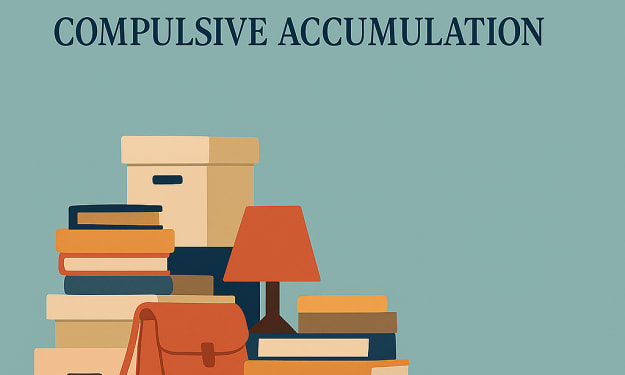
The Psychology of Hoarding: Inside the Mind of Compulsive Accumulation
Introduction In today’s society, where minimalism and decluttering are often glorified, the reality of Hoarding Disorder stands in stark contrast — a condition that disrupts lives, endangers health, and challenges the boundaries of our understanding of mental illness. Far from being a lifestyle choice or mere disorganization, Hoarding Disorder is a serious psychological condition now formally recognized in the Diagnostic and Statistical Manual of Mental Disorders, Fifth Edition (DSM-5). Despite its prevalence, the disorder remains largely misunderstood, stigmatized, and underdiagnosed.
By Siria De Simoneabout a year ago in Psyche
Best
Measuring sticks are useful, but don't account for everything. Lately, I have been hearing people talk about being the best. The first, was an immigrant in the food industry, explaining how he wanted to come to the USA and prove he is the best chef. The second, was a teacher talking about teaching students to be their best. The third, was generic sayings about being your best self and being the best in the business. I couldn't help but think, what is this obsession with being the best. Then I checked myself by thinking of F1 racing and other sports. There needs to be the best, to win. Having the best doctor in a complicated specific surgery may be the difference between life or death. Clearly there are times when being the best should happen, and others when it should be less important. It got me wondering if the problem for me is more with the kinds of individuals with this mentality, to always be the best. The competative nature. I have never been very competitive. I like to joke as if I am at times, but when it comes down to it, I am not at all competative. In fact, as a person with anxiety and at times known to faint from being nervous, I have spent most my life trying not to be the best. This is not to say I don't try or don't like to learn to my fullest potential. Not being the best always seemed to allow for more; More fun, more growth, more anonymity. The best always seemed constricting. Is it possible to be the best at not being the best? I also find that if someone I love is really good at something, I don't want to out do them. Id prefer to work with them, but let them have their thing. People may not be the best at something outside of a specific group, but someone can be the best to someone else. For me it was an appreciation of my moms sewing tips that brought me to her level faster than she was able to. Her tips from years of teaching herself, helped me. Her mom, disliked sewing. In my eyes she was the best. Most impressive. I could do what she did, but I wanted her to always be better. The best is so easily loved and liked. There are some individuals that are so difficult, but still very much loved or accepted in a field of work or study because they are the best. The best seems like a challenging measuring stick to use, one where the measurements are constantly changing. So much so, no measurement can be trusted. So why and where did this obsession with the best come from? In ancient times, survival most likely fueled this concept and allowed competative nature to be an important motivator. This lead to leadership and status. Those who were stronger, smarter, most resourceful or the "best" for the times. The middle ages emphasized the divine. Religious and pious individuals were divinely ordained and righteous. Chosen ones, helping humanity. Romans believed in 'virtus'. It included the concept of excellence. Romans also had ideas about beauty relating to excellence. Renaissance lead towards humanism and individualism. Human achievements began to take the stage. It progressed from here. The best is a concept tied to progress. Inventors and critical thinkers are the best because they progress humanity in a given time period. At this point the concept of the best seems critical to our existence and progress. A necessary evil or good. However, could the concept of "Best" be becoming outdated? I would argue it hinders the population instead of progressing it. An obsession with the best keeps us from our potential of being the best. There are too many factors: start in life, family, environment, income, health, life events, education, friends, etc. The true best, the ones it comes naturally to, don't have time or energy to care about being the best. It's hard work. It's all of us who are not, who have grand ideas and dreams of being the best. And why? Because the best, in today's world, equals more recognition meaning more money, and more power. That, we all probably need and want. Money and power buys a better life for one, who can then choose to help society or a themselves and family. In a population with so many bests, so many talented achievers, so many entertainers, so many measurements, it forms a negative competition for yourself and others. It seems opposite to progress. But! how can I think this and not be a socialist I began to think. Around this time, my dog walked in. I looked at her cute face, walked to her, kissed her nose and told her "you are the best dog for me". I meant it as the ultimate compliment for how much I love her. Ultimately it is irrelevant because I don't know every dog in the world and who cares. There was that word "Best" being highlighted again. The truth is, we need people to want to be the best. We need people to actually be the best. We even need people to think they are the best (maybe even unrealistically). Maybe the concept of "BEST" will never disappear. Maybe it exists because we all need and want it to. Maybe we are more saying, we want special things to exist in the world. Special gets us through.
By simplicityabout a year ago in Psyche
You Weren’t Hard to Love — You Were Just Asking the Wrong People to Try
They made you feel like loving you was a chore. Like your needs were a burden. Your emotions were too loud. Your love was “too intense.” But here’s the truth: You weren’t hard to love. You just kept handing your heart to people who didn’t know how to hold it. --- ### (1. You Loved Deeply — And Expected Depth In Return) You didn’t want perfection. You didn’t need constant attention. You just wanted presence. Consistency. Safe space to be your full self — even on your messy days. That’s not too much. That’s *healthy.* --- ### (2. They Confused Emotional Maturity With Drama) You asked for honesty. They called it overthinking. You expressed hurt. They called it being dramatic. You needed clarity. They called it being “needy.” But none of that was too much. They were just emotionally unavailable. --- ### (3. You Were Teaching Love To People Who Didn’t Want To Learn) You gave examples. Explained how you felt. Held back your own pain just to protect theirs. You were teaching what should’ve come naturally. And teaching love is exhausting when the other person isn’t listening. --- ### (4. They Liked Your Light — But Didn’t Know How To Handle Your Shadows) They loved your laughter. Your support. Your energy. But the moment you got quiet, or tired, or anxious — they backed away. Not because you were difficult. But because they only knew how to love the *happy version* of you. --- ### (5. You Were Watering Relationships That Never Grew) You showed up. You forgave. You gave more chances than you gave yourself grace. And still — they didn’t grow. That’s not your failure. That’s their refusal. You can’t grow something when you’re the only one holding the watering can. --- ### (6. You Made Love Safe For Everyone But Yourself) You created emotional safety for others. Listened without judgment. Held space without conditions. But where was *your* space? Who held you when you fell apart? Being the safe space for everyone else left *you* unheld. --- ### (7. They Didn’t Want Real — They Wanted Easy) You brought truth to the table. Depth. Accountability. Healing. They weren’t ready for that. They wanted simple. Effortless. Love without work. But real love *requires* work. That’s why they left. Not because you were hard to love — but because you asked for something *real.* --- ### (8. You Started Loving Yourself — And They Called It Distance) The moment you stopped chasing? They said you changed. The moment you set boundaries? They called you cold. But you weren’t being distant. You were finally loving yourself the way they never did. --- ### (9. Your Love Wasn’t Meant For People Who Needed You To Shrink) The right people won’t flinch at your depth. They won’t ask you to be smaller, quieter, easier. They’ll match your energy. They’ll meet you where you are — not where it's convenient for them. --- ### (10. One Day, Someone Will Thank You For Loving This Way) They’ll see the way you care. How you notice the little things. How you listen not just with your ears, but your *heart.* And they’ll say, “Where have you been?” And you’ll know — **You weren’t too much. You were just never truly met before.** --- ### 🌿 Final Thought You weren’t asking for too much. You were asking the wrong people. People who didn’t know how to stay. How to listen. How to love someone who feels deeply. (. . .) But here’s what you need to remember: **The love you give is rare. The way you show up is sacred. And the day someone meets you fully — You’ll never have to explain your heart again.** Because they won’t run. They’ll rise. Right beside you.
By SHADOW-WRITESabout a year ago in Psyche
The Age of Secondhand Emotions: How Social Media Has Turned Us Into Borrowers of Other People’s Feelings. AI-Generated.
There was a time when feelings were private. Grief happened behind closed doors, joy was shared over phone calls, and anger was reserved for real-world confrontations. Now, all of it is broadcast, looped, liked, and commented on. In the age of Instagram Reels and TikTok For You pages, feelings are no longer just felt—they are performed, consumed, and echoed. We are living in the age of secondhand emotions, where we experience feelings not through our own lives, but through the curated and choreographed lives of others.
By Ahmet Kıvanç Demirkıranabout a year ago in Psyche