family
Family can be our support system. Or they can be part of the problem. All about the complicated, loving, and difficult relationship with us and the ones who love us.
A Forgotten Child. A Haunted Mind. A Lullaby That Never Ends.
In the darkness, I can hear a lullaby. But I have no children. I sit frozen at the top of the stairs, listening to the music box melody drifting from somewhere deep in the house. My heart is pounding in my ears, but there’s no one there. Every instinct screams that something isn’t right.
By khalilhotiabout a year ago in Psyche
The Apartment Upstairs
Start writing...I heard the footsteps again. Every night, around 11:23 PM, without fail, the floorboards creaked above me. Just three slow steps. Then silence. Not the scurry of mice. Not the groan of old pipes. Just steps. The thing is, the apartment upstairs has been empty for months. My friends roll their eyes when I bring it up. They say I’m being dramatic. “Old buildings do weird things,” Ella told me. “You live alone too long, your mind plays tricks.” Maybe. But I started recording the sounds. I played them back, night after night. Same time, same rhythm. Three steps. Nothing more. Like someone stepping forward—and stopping. The landlord insists no one has a key. He even showed me the lease log. The last tenant was a woman named June. Lived there three years. Quiet. Kept to herself. Died in her sleep. The unit’s been untouched ever since. “Untouched,” he said. I checked the mail slot once. Dust coated the inside. But something about those steps made me curious, obsessed even. So one night, I did what any lonely fool in a half-empty building would do. I climbed the stairs. I told myself it was just curiosity, just to see if the door was still locked. My fingers shook as I reached for the doorknob. It turned. I should have left then. But I stepped inside. The air smelled faintly like lavender and old books. The apartment was… still. Not cold. Not warm. Like it had been waiting. Sunlight from a streetlamp outside filtered through gauzy curtains. Furniture covered in white sheets gave the place the look of a forgotten museum. And then I saw her. A painting on the wall. A woman in her sixties. Soft eyes. Gray curls tucked behind one ear. The bottom read: June, 1986. She looked familiar in that strange way where you can’t tell if it’s memory or imagination. I walked further in, drawn like a moth. In the corner of the living room stood a writing desk. Neat. Tidy. Like someone had just stepped away. Three dusty journals lay stacked beside a ceramic mug. I picked up the top one. The first page read: “If anyone finds this, I hope you understand. Loneliness doesn’t always look the way you expect.” The entries were quiet, intimate. She wrote about growing old alone. About how people stopped calling after her retirement. How silence stopped feeling peaceful and started feeling personal. She talked about the footsteps too. “I sometimes hear someone moving downstairs,” she wrote in her final entry. “Just after 11. Maybe a neighbor. Maybe a ghost. Maybe it’s me, slipping out of myself for a moment, imagining I still belong to the world.” I closed the journal and backed away. Suddenly, the apartment felt different. Not haunted—but hollow. Like it carried someone’s unfinished breath. I left the apartment that night and locked the door behind me. But I didn’t stop hearing the steps. Now, every night, 11:23 PM. Three slow steps. Then silence. I don’t record it anymore. Instead, I sit quietly and whisper, “Goodnight, June.” Sometimes I imagine she whispers back. --- 💬 Author’s Note: If you’ve ever lived alone in an old building, you probably know what it means to hear a memory in the walls. This story is fiction, but the loneliness it speaks of? That’s very real. Check on the quiet ones. Leave the light on. And maybe listen a little closer to the floorboards.
By Qaseem Ahmadzaiabout a year ago in Psyche
The Science of a Mother's Kiss
When a mother kisses her child, it may seem like a fleeting, ordinary act. A moment of tenderness that slips by unnoticed in the rhythm of everyday life. But behind that simple gesture is a powerful force. One that science is only now beginning to understand. A mother’s kiss is not just love — it is biology. It is the way nature designed emotional bonding, trust, and safety to begin. This soft touch between mother and child activates deep parts of the brain, calms the body, and builds emotional strength that can last a lifetime. It is a small act that leaves a lifelong imprint. What Happens in the Mother’s Brain When a mother kisses her baby, her brain responds in extraordinary ways. Studies using brain scans show that areas linked to reward, emotion, and bonding become highly active. The nucleus accumbens, which controls pleasure and motivation, lights up. This region releases dopamine, the chemical that creates feelings of joy and satisfaction. The kiss, in essence, rewards the mother emotionally, making her feel good and reinforcing her instinct to care. The amygdala and hypothalamus — brain regions responsible for emotion and survival behaviors — are also activated. These areas heighten the mother’s sense of connection and drive her to protect and nurture. Then comes oxytocin. This powerful hormone floods the body during moments of love and closeness. Often called the “love hormone,” oxytocin increases trust, lowers stress, and strengthens emotional bonds. During a kiss, both the mother and child experience a rise in oxytocin, creating a sense of calm and connection. The Child’s Response: A Foundation of Security Although a baby may not consciously understand a kiss, their body recognizes its power. The soft touch of a mother’s lips to their skin is more than comfort. It signals that they are safe, that they are loved, and that they are not alone. This signal travels directly to the child’s brain and nervous system. It lowers cortisol levels, calming the child’s stress response. It activates the parasympathetic nervous system, which slows the heart rate and supports rest, digestion, and healing. In short, a kiss teaches the child’s body how to relax. These physical responses are essential for healthy brain development. Over time, repeated acts of gentle affection help build the brain’s ability to regulate emotion. The prefrontal cortex — the area responsible for emotional control, empathy, and decision-making — becomes stronger. This allows the child to feel more secure, more balanced, and better able to handle stress later in life. A Language Beyond Words Long before a child can speak or understand language, they understand touch. A kiss becomes their first language of love. It is a message spoken in warmth and skin. It tells the child they are valued and protected. Even without words, the child’s brain stores these messages. The feeling of being soothed, of being held and kissed, creates emotional memory. It lays down patterns the child will carry into future relationships. It helps shape how they connect with others, how they seek comfort, and how they view themselves. Children who receive frequent affectionate contact tend to develop secure attachment. This means they grow up feeling that the world is safe, that people can be trusted, and that love is real. A Timeless Expression of Love and Safety The power of a mother’s kiss is ancient. Long before science could explain it, mothers around the world instinctively knew to hold, kiss, and comfort their babies. This instinct is deeply rooted in human biology. In the animal kingdom, we see similar behaviors. Mammals lick, nuzzle, and care for their young in ways that mirror our own. These actions are not just symbolic. They help regulate temperature, stimulate brain development, and ensure survival. In humans, a kiss serves the same purpose. It is not only emotional. It is essential to healthy growth. The Invisible Legacy of a Kiss As the child grows, they may not remember every kiss. But their body will. Their nervous system, shaped by early experiences, will hold onto the calm, the safety, and the love that each kiss delivered. That kiss becomes part of their emotional foundation. It influences how they respond to stress, how they handle relationships, and how they understand love. It gives them an inner voice that says, “I am loved. I am safe. I matter.” Even in adulthood, the effects remain. Studies show that people who experienced loving touch in childhood are more emotionally balanced, better able to trust others, and more capable of forming meaningful relationships. Love Written in Biology In today’s fast-paced world, it’s easy to overlook the quiet power of a kiss. But science now confirms what every loving parent already knows. A kiss is not just affection. It is a powerful biological signal that builds the emotional foundation for life. It activates the brain, soothes the body, and strengthens the bond between parent and child. It leaves traces in the mind that last far beyond childhood. And it teaches the child something no words ever could: that they are loved, deeply and unconditionally. So the next time you see a mother kiss her child, pause for a moment. In that brief, beautiful touch, a miracle is taking place. A kiss is not just a kiss. It is love, security, and protection — quietly shaping a future that begins with a single touch.
By DigitalAddiabout a year ago in Psyche
📵 “The Constant Noise You Don’t Hear — But Your Body Does”. AI-Generated.
Have you ever felt tired without doing anything? Or mentally heavy even after resting? You’re not alone — and you’re not lazy. You may just be surrounded by a kind of stress you don’t even notice anymore. It’s not loud like a shout. It’s not painful like a headache. It’s quiet. But it’s always there.
By DR. Allama iqbalabout a year ago in Psyche
Beyond "I Love You": 10 Primal Ways to Keep Him Utterly Devoted
We’ve all heard the cliché advice: "Communication is key." We’re told to talk more, share more, and listen more. And while that’s true, it’s also… incomplete. What if the most powerful locks on your relationship aren’t forged with words at all? What if the secret to building a bond so resilient that it deflects outside temptation lies in a language that’s far more primal, intuitive, and powerful? In a world of constant digital distraction and endless options, creating a truly affair-proof marriage isn't about building a cage. It's about cultivating a garden so beautiful and nourishing that your partner never feels the need to look for sustenance elsewhere. It's about moving beyond mere conversation and into the realm of profound connection. Here are ten secrets to help you do just that. 1. Master the Language of Touch Words can be misheard, misinterpreted, or forgotten. But a touch? The body never forgets a touch. Think about it. The reassuring squeeze of a hand during a stressful meeting, the lazy drape of an arm over your shoulder on the couch, the spontaneous hug in the kitchen just because. These aren't just actions; they are entire conversations without a single word. Men, in particular, often respond more to physical reassurance than verbal praise. An embrace can communicate "I'm here for you" more powerfully than the words themselves. Make your arms his preferred sanctuary, a place of unconditional comfort and acceptance. When a person feels truly seen and held, the allure of a fleeting glance from a stranger fades into insignificance. Spicy Element: A study from the University of California, Berkeley, found that couples who touch each other more frequently report higher relationship satisfaction and are better at managing stress. How many times have you intentionally touched your partner today, outside of obligation? 2. Create an Intimate World Just for Two Let's be blunt. Physical intimacy is the glue that holds much of a romantic relationship together. It's the one thing you share that is completely exclusive. The goal isn't just to go through the motions; it's to create an experience that nourishes both body and soul. It’s about adventure, vulnerability, and creating moments so profound they echo in his mind. This is where you can be playful, daring, and deeply connected. It's about exploring each other's desires in a safe space, making him feel like the only man in the world. When the intimacy at home is not just satisfying but unforgettable, it sets a standard that no cheap thrill can ever meet. Spicy Element: Intimacy isn’t just physical. When was the last time you shared a secret, a deep fear, or a wild dream with him that you’ve never told anyone else? That’s a different kind of naked. 3. Let Your Confidence Be Your Allure There’s a powerful message sent by the way you carry yourself and the care you put into your appearance. This isn’t about dressing for him; it’s about dressing for you in a way that radiates confidence. Whether you're in a stunning dress or your favorite pair of jeans, the energy you project is what matters. Let your style whisper, "I feel good about myself, and I choose to share this version of me with you." This confidence is the ultimate antidote to jealousy. Instead of worrying about other women, focus on your own magnetic energy. When you are secure in your own skin and value yourself, you become a challenge, a prize, and a partner all in one. Your self-assuredness becomes the benchmark against which all others are measured. Spicy Element: Think about the person you were when he first fell for you. He fell in love with a whole person, not someone whose world revolved entirely around him. Are you still nurturing that independent, fascinating individual? 4. Become His Favorite Scent Smell is the most powerful sense tied to memory. The scent of rain on hot pavement, a specific flower from your childhood garden, the cologne of a first love. Our brains are hardwired to link scents with deep emotional experiences. Use this to your advantage. Find a signature scent—a perfume, a lotion, a hair product—that is uniquely you. Let that scent permeate your shared spaces: your pillows, his favorite sweater after a hug. It becomes your olfactory signature. In moments when you're not there, a faint whiff of a similar note can trigger a powerful memory of you, acting as an invisible shield and a reminder of home. Spicy Element: In the world of biology, this is called "scent imprinting." It's a primal way of marking territory, but in a relationship, it's a beautiful, subconscious way of saying, "I am yours."
By Mindfulness about a year ago in Psyche
The Mid-30s Wake-Up Call: 11 Realities to Embrace for a Better Life
Life in your twenties is a whirlwind of discovery, mistakes, and figuring things out. It’s a beautiful, chaotic mess. But as you cruise into your mid-thirties, the music starts to change. The noise of a thousand different opinions begins to fade, replaced by a quieter, more insistent inner voice. If you listen closely, it’s telling you some fundamental truths—the kind that can either be a bitter pill to swallow or the key that unlocks a more authentic, peaceful existence. By 35, you’ve lived enough life to see some patterns, both in yourself and in the world around you. You’ve seen friendships fade, careers pivot, and societal goalposts shift. It's the perfect age to stop, take a breath, and get brutally honest with yourself. It's time to realize a few things that can fundamentally change the game for the second half of your life. Let's dive into the 11 things you should be smart enough to realize by now. 1. The Power of a Closed Mouth Ever replayed a conversation in your head, cringing at something you overshared? We’ve all been there. In our youth, we often believe that our opinions are not just important, but necessary for every situation. By 35, wisdom teaches you the profound power of silence. You don’t need to have a take on everything. You don't need to win every argument or fill every silence. Spicy take: Your silence in a heated moment doesn't mean you've lost; it means you've decided the potential drama isn't worth your peace. It’s a power move that infuriates those who thrive on chaos. 2. Drama is a Drug, and It's Time for a Detox Speaking of chaos, let’s talk about drama. It can be addictive. The he-said-she-said, the workplace politics, the family feuds. It can make life feel exciting, but it’s a cheap thrill that leaves you emotionally hungover. Silence is the antidote. Choosing not to engage, not to forward the gossip, and not to partake in the outrage cycle is one of the greatest gifts you can give yourself. A calm life is a happy life, and unnecessary drama is the thief of that calm. 3. Collaboration Over Competition The world pits us against each other from day one. Who’s the best, the smartest, the most successful? It’s exhausting. By 35, you should recognize that this relentless competition is a sign of insecurity, not strength. When you encounter someone smarter or more skilled than you, don't view them as a threat. See them as an opportunity. Work with them, learn from them, and build something together. True power lies in collaboration, not in trying to be the lone wolf at the top of a lonely hill. Spicy take: The most successful people aren't competing with others; they're competing with who they were yesterday. Everyone else is a potential teammate. 4. The Family You Build Matters More The family you were born into shapes you, for better or for worse. But the family you create defines your future. This doesn't just mean a spouse and kids. It’s the tight-knit circle of friends who feel like siblings, the partner who has your back, and the community you intentionally cultivate. This chosen family is built on mutual respect, love, and shared values. It's where you find your true belonging. Prioritizing their well-being and nurturing these bonds is paramount. 5. Your Job Is Just a Job This one can sting. You pour your heart and soul into your career, work late nights, and sacrifice weekends. But here’s the cold, hard truth: your employer does not love you back. You are a line item on a budget. They pay you just enough to keep you from leaving, just enough to put your own dreams on the back burner. Wake up and see it for what it is. Your job is a tool—a means to fund the life you want, not the life itself. Don't let it kill your spirit. 6. Fire Your Unsolicited Life Coaches Society is full of advice. "Buy a house by 30." "Get married." "Climb the corporate ladder." But take a look around. Are the people dishing out this advice genuinely happy and fulfilled? Often, the answer is no. They are simply regurgitating a script they were handed. Free yourself from this chorus of confusion. Trust your own intuition. The only life plan that matters is the one you design for yourself, based on your own values and desires. 7. Live with Intention, Not by Default This is the big one: INFLUENCE. Not influencing others, but influencing the direction of your own life. So many people are passive passengers in their own existence. They drift from day to day, year to year, without any real purpose or direction. By 35, it's time to grab the steering wheel. Know what you want. Know your needs, your non-negotiables, and your dreams. Live with intention. Make conscious choices, from how you spend your mornings to who you spend your time with. Stop drifting and start driving. 8. The 1 True Friend vs. The 100 Fake Ones Your social circle naturally shrinks as you get older, and that's a good thing. The need for a large audience of acquaintances is replaced by the desire for genuine connection. It is infinitely better to have one friend who celebrates your wins without a hint of jealousy, who supports your craziest dreams, and who you can be completely yourself with. Ditch the lazy, egocentric, and secretly jealous "friends" who drain your energy. Quality, not quantity, is the ultimate social currency. 9. Forgive Your Parents, Free Yourself Holding onto resentment towards your parents for their mistakes is like drinking poison and expecting them to get sick. By 35, you have enough perspective to understand that they were likely doing the best they could with the tools and knowledge they had. Forgiving them isn't about letting them off the hook; it's about freeing yourself from the weight of that anger. Stop blaming them for your shortcomings and take ownership of your own healing and happiness. Spicy take: Your parents occupy a huge amount of emotional real estate in your head, rent-free. Evict the anger and you'll be amazed at how much space you have for your own growth. 10. The "Right Moment" is a Myth "I'll start when the kids are older." "I'll travel when I retire." "I'll launch my business when I have more savings." If you're constantly waiting for the "right moment," you'll be waiting forever. Life doesn't pause for you to get your ducks in a row. The perfect moment is a fantasy that breeds procrastination. The only moment you have is now. Start messy, start scared, but for the love of your future, just start. 11. You Are Your Own Savior This is the ultimate truth, the one that underpins all the others. No one is coming. No knight in shining armor, no lottery win, no magical mentor is going to appear and solve all your problems. Your life, your happiness, your success, your rescue—it's 100% your responsibility. It’s a terrifying thought, but it’s also the most empowering realization you can ever have. Once you truly accept this, you stop being a victim of circumstance and become the author of your own story. By the time 35 rolls around, you’ve earned some scars, and hopefully, some wisdom to go with them. Embracing these truths isn't about becoming cynical; it's about becoming smart. It's about clearing out the noise so you can build a life that is authentically, unapologetically, and happily yours. What do you think? Which of these realizations hit home the hardest for you? Leave a comment below and don't forget to like the article if it gave you something to think about!
By Mindfulness about a year ago in Psyche
The Digital Mirage: How Pornography Rewires Our Brains, Erodes Our Confidence, and How to Reclaim Your Life
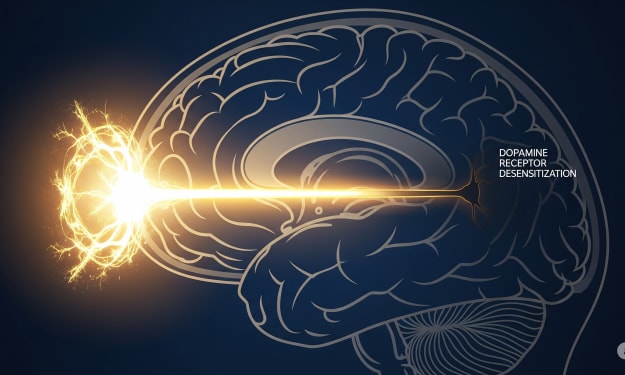
In the vast landscape of the internet, pornography has become a titan. Its websites attract more visitors than Netflix, Amazon, and Twitter combined, often dismissed as a harmless form of entertainment or a normal part of modern sexuality. But behind this veneer of normalcy, a growing body of scientific research reveals a much darker picture. While "pornography addiction" is not yet an official diagnosis in psychiatry's main diagnostic manual, the World Health Organization has recently added "Compulsive Sexual Behavior Disorder" to its own manual, a condition largely driven by problematic pornography use. This acknowledges a clinical reality: for many, pornography use evolves into a compulsive behavior with devastating consequences.
By Kaleem Ullahabout a year ago in Psyche