family
Family can be our support system. Or they can be part of the problem. All about the complicated, loving, and difficult relationship with us and the ones who love us.
How Childhood Neglect Impacts Adults
Today, I wanted to take the time to talk about something that is really important to me: childhood neglect and abuse. For the longest time in my life, I felt the need to justify what happened to me, to think "well, it's my fault", or "there's something wrong with me", or "my parents aren't terrible people maybe I'm just imagining my mistreatment". The thing is, the older I've gotten, the more I've learned of the complex impacts of childhood neglect and abuse. It's not always easy to detect because we are confused as kids; we don't know that what's being done to us is wrong. The families where this happens are sometimes the kinds of families that look alright from the outside world, but instead are deeply hurting. That's what my experience with childhood neglect and abuse was like. I was isolated in my room a lot, a witnessed physical abuse, and listened to arguments constantly. Even though my whole life I was trying so hard to just find my way, the thing is, my family never gave me the support I needed to succeed, so then I turned into this:
By Slgtlyscatt3redabout a year ago in Psyche
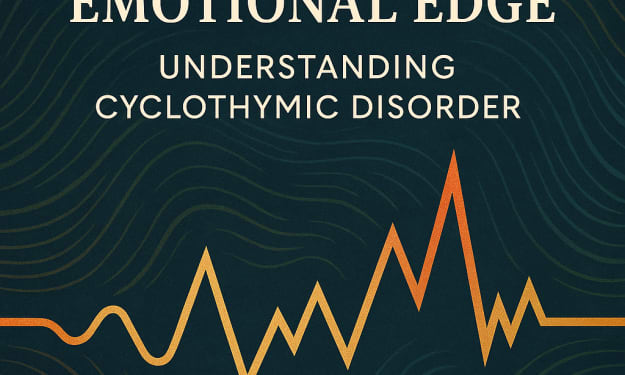
Living on the Emotional Edge: Understanding Cyclothymic Disorder
Introduction Everyone experiences emotional ups and downs. A burst of excitement one day, a dip in motivation the next — it's part of being human. But for some, these fluctuations are more than just ordinary mood shifts; they form a persistent, confusing rhythm that quietly shapes their entire life. When your inner world feels like a never-ending ride between minor emotional highs and unexpected lows — without ever tipping fully into mania or deep depression — it might not just be personality. It might be Cyclothymic Disorder.
By Siria De Simoneabout a year ago in Psyche
The Complexities of Co-Dependency
Have you ever met a person who couldn't do the simplest of tasks on their own? That person might even be you. There is always a deeper understanding of things like introverts, extroverts, the ego, etc., within society. The idea that someone doesn't like to be surrounded by noise isn't too uncommon. Just like the idea that an individual is their best drowning in a sea of people. Sometimes, you can struggle with an entirely different aspect of self. One that might even make you lose your own. Co-dependency.
By The Darkest Sunriseabout a year ago in Psyche
"The Interpretation of Dreams" by Sigmund Freud: A Journey into the Unconscious Mind
"The Interpretation of Dreams" by Sigmund Freud: A Journey into the Unconscious Mind "The Interpretation of Dreams" is not just a book; it is the foundation of modern psychology and a journey into the mysterious world of the unconscious. First published in 1899, this book revolutionized our understanding of dreams. Dreams are no longer seen as random or meaningless images; instead, they are glimpses into our hidden desires, fears, and experiences. Freud's writing is a blend of science, philosophy, and personal discovery. This book explains how dreams are formed, their connection to the unconscious mind, and how they reveal hidden truths through symbols. Although it can be challenging, for those interested in understanding the human mind, it is a feast for the intellect.
By Ikram Ullahabout a year ago in Psyche
The Difficulty Of Freedom
In the US, many people Celebrate today as a Day of Freedom from Tyranny. Now, if you go into the History of the US, there are Challenges that Exist, and some may say this is not accurate, or that it is a day about the "Possibility" of Freedom.
By H.E. Dr. Cody Dakota Wooten, COIE, DFM, DHMabout a year ago in Psyche
The Sewing Box
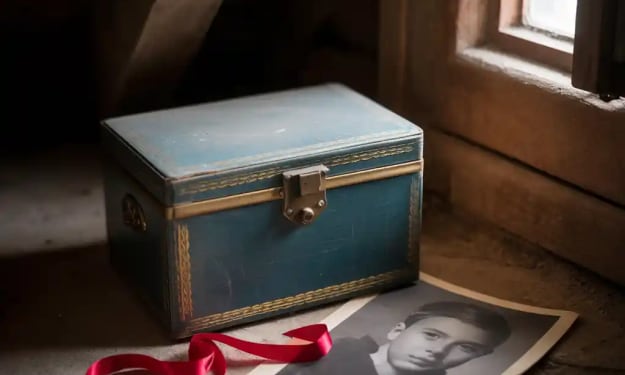
The box had been there for years — untouched, unspoken, and always in the same corner of Nana’s old attic. Covered in lace that had long since yellowed, it waited like a quiet witness. When Nana passed away that winter, I returned home after seven years to settle her affairs — not entirely ready for what I would find. I hadn’t been back since I was sixteen. Back then, I ran away more than I visited. Back then, Nana was already growing forgetful, calling me by my mother’s name, or sometimes by her own sister’s. But she never forgot about the sewing box. She’d always say, “Don’t touch it, Isla. That’s not for you — not yet.” -- The funeral was small. Nana never had many friends left. It was just me, the priest, and the mailwoman who brought her groceries during her final years. The house felt too quiet when I returned — like it had been waiting just for me. I slept in the guest room that night, but I didn’t really sleep. I kept thinking of the sewing box. It wasn’t just nostalgia. Something about it tugged at me — like it had its own heartbeat. -The attic The next morning, I climbed the attic stairs, flashlight in hand. The switch hadn’t worked in years. The air was thick with dust and lavender. Nana always loved lavender. It masked the scent of mothballs and age. I walked past old suitcases, brittle magazines, faded photographs with crinkled edges. And there it was — in the far left corner, exactly where I remembered. The sewing box. It was a faded green, with golden thread-like trim and a broken hinge. A cracked ceramic bird perched on top, its wing chipped. I sat cross-legged in front of it, just like I used to. But this time, I didn’t hesitate. Inside, there were spools of thread, needles, buttons in little paper envelopes. But underneath, tucked beneath a swatch of blue satin, was something else. Letters. Dozens of them, tied with red ribbon, yellowed with age. The top one had my mother’s name — Claire. My heart thumped against my ribs. I opened the first letter. Dear Claire, I know you won’t understand now, but I hope one day you will forgive me. I didn’t have a choice. You were only a baby when he left, and I couldn’t risk it — not again. I had to keep you safe. Nobody believed me back then, but he wasn’t who he said he was. He wasn’t just “James from the library.” He had a darkness I didn’t see — not until it was too late. You have his eyes, you know. I hated them for years, but now… now I wonder if maybe you deserved to know. There’s more in this box than thread, darling. There are truths I never dared speak aloud. — Mother froze. James? My grandfather? I’d never heard anything about him. My mom rarely spoke of her childhood, and when she did, it was always about the happy things — summer at the lake, Sunday cakes, Nana’s lullabies. But not once had she mentioned her father. I read another letter. And then another. Each one was more detailed than the last. Each one filled with fear, and regret, and love twisted in grief. My Nana had been hiding the truth for decades. Not just from my mother — but from the world.
By Arshad khanabout a year ago in Psyche
Left on Read, Left in Ruins: The Social Toll of Rejection Sensitive Dysphoria
The Message That Lingers It usually starts with a message that seems thoughtful enough: "Hey! How have you been?" There's a flicker of something warm in your chest. Maybe surprise. Maybe hope. Maybe a quiet kind of excitement that someone thought of you after so long. You pause whatever you're doing, take the time to respond — kindly, carefully, openly. You ask them how they are, maybe even suggest catching up.
By TechHermitabout a year ago in Psyche