disorder
The spectrum of Mental Health disorders is incredibly vast; we showcase the multitude of conditions that affect mood, thinking and behavior.
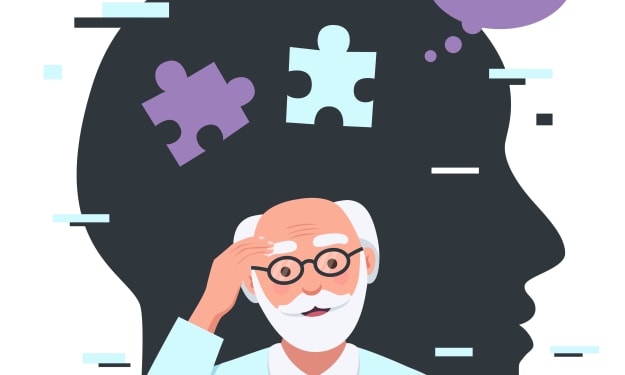
What exactly is Alzheimer's disease?
Alzheimer’s disease (AD) was a disputatious topic since long time ago which some researchers such as Jay W. Pettegrew, Matcheri S. Keshavan, Nancy J. Minshew and so forth who put forward the statement of AD was origin by nature factors while some researchers such as Krysten K. Fulcher, Michael L. Alosco, Lindsay Miller and etcetera propose that AD was cause by nurture factors. Even though there are more than 70 diseases that lead to dementia, AD is the most serious compare to the other disease and accounts for 50-70% of dementia (Akter, Rani, Nordin, Rahman, Aznan & Rathor, 2012). The characteristics of AD which involve the patients in numerous areas has become a medical and social challenge for nowadays society, follow with the need for diversity of professional development in fulfilling the need of patients and their caregivers (Cobos & Rodríguez, 2012). AD is considered as multifactorial disease, with no single cause known, and some modifiable and non-modifiable risk elements are connected with the development and progression of AD (Korolev, 2014). As there was a finding which the prevalence, incidence of AD, brain structure and function were vary by the sex and gender as well (Mielke, Vemuri & Rocca, 2014).
By Ng Teck Sen9 months ago in Psyche
Alzheimer’s disease
According to Alzheimer’s Association (2014), dementia is an overall term for the diseases that have memory decline and other cognitive skills that will have impact on a person’s ability in performing daily activity in the life. The most common type of dementia is Alzheimer’s disease. Alzheimer’s disease is a condition that will bring abnormal changes in the brain that will have impact on someone’s memory and the mental abilities (“Family Caregiver Alliance,” n.d.). In addition, Alzheimer’s disease is an ordinary type of neurodegenerative disorder. It characterized by cognitive impairment with a decline in the ability to carry out living activities (Jellinger, 2015). For the patient with early-onset Alzheimer’s, it usually caused by genetic mutation whereas for the late-onset Alzheimer’s patient, it may cause by a complex series of brain changes. For an instance, the causes may include the combination of genetic problem, environmental problem and lifestyle factors (National Institute on Aging, n.d.).
By Ng Teck Sen9 months ago in Psyche
Phobia
Defining Specific Phobia Specific phobia can be defined as a continual fear that is constrained to a circumscribed stimulus either item or scenario (American Psychiatric Association, 2013). Without delay on exposure, the stimulus is prevented each time feasible or is persevered only with extreme anxiety happening. Besides, the intensity of fear commonly is extreme enough to exhibit interference in individuals functioning educationally, socially including family activities. Usually, the most normal reaction towards specific phobia would be flight or avoidance in terms of motor or known as behavioral system (Silverman & Moreno, 2005).
By Ng Teck Sen9 months ago in Psyche
I Live With Telephone Phobia Every Day!
Warning: Contains some distressing themes. I never used to have a problem using the telephone. When I was in my teens, there was nothing I enjoyed more than the dramatic ring of our bright red Bakelite. To me, it was a very welcoming and social sound.
By Simon Aylward9 months ago in Psyche
Beyond the Doll: Moving from Token Gestures to Real Support for Autistic People. AI-Generated.
This week, Barbie announced the release of a new autistic Barbie doll, aiming to increase visibility and acceptance for autistic individuals. While the intention is commendable, it raises important questions about whether symbolic gestures like this truly address the needs of autistic people. Research and lived experience suggest that meaningful representation and concrete support in society are far more impactful than launching a product labelled as “inclusive”.
By Sarah Xenos9 months ago in Psyche
Watch Out Wednesdays - 1/14/26 (Opinion)
We are now in the second week of 2026. Even though we are only in the first fourteen days of this year, so much has happened in America and throughout the world that would normally take up about 6 months of news. Events are accelerating to an all-time high.
By Adrian Holman9 months ago in Psyche
Why Smiling Can Feel Like the Hardest Thing
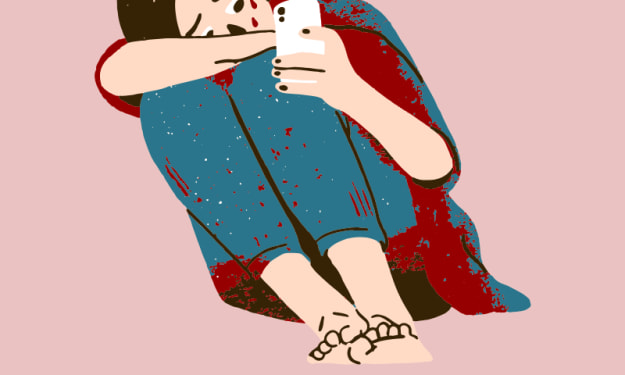
The Unbearable Weight of a Smile: When Your Face Refuses to Lie Anymore"Just smile," they said, as if my face were a light switch I could simply flip. As if the muscles required to curve my lips upward hadn't become so heavy that lifting them felt like deadlifting my own despair. As if smiling—the simplest, most automatic human expression—hadn't become the most exhausting performance of my entire day.I'm standing in line at the coffee shop, and the barista is making small talk."How's your day going?" she asks, cheerful, genuine, expecting the standard response.My jaw tenses. My face feels like stone. I know what I'm supposed to do—smile, say "great, how about you?", participate in this basic social ritual that I've performed thousands of times without thinking.But I can't. My face won't cooperate. The muscles required to form a smile feel paralyzed, or more accurately, weighted down by something too heavy to lift.I force it anyway. The corners of my mouth move upward mechanically, but it doesn't reach my eyes. It doesn't feel genuine. It feels like I'm wearing a mask that doesn't quite fit."Fine, thanks," I manage, and the barista's smile falters slightly. She can tell. Something's off. My smile is wrong somehow—too tight, too forced, too obviously fake.I take my coffee and leave quickly, exhausted by the thirty-second interaction. My face hurts from the effort of that brief, failed smile. And I still have an entire day of this ahead of me.When Your Face Becomes a TraitorI used to smile easily, automatically. It was a reflex, an unconscious response to humor, kindness, joy, social situations. I never thought about it, never had to try.Now every smile is manual labor. Every upward curve of my lips requires conscious effort, deliberate muscle activation, sustained energy I don't have. My face has become resistant, like it knows I'm lying and refuses to participate in the deception.In meetings at work, I'd notice other people smiling, laughing, their faces animated and expressive. And I'd try to match them, to mirror their expressions, to look like I was engaged and present.But my face wouldn't cooperate. It would freeze in this neutral, flat expression that read as either bored or angry, even though I wasn't trying to look either way. I just... couldn't make my face do what faces are supposed to do."You look upset," my boss said after one meeting. "Is everything okay?""I'm fine," I said, and tried to smile to prove it. But even I could feel how wrong it looked—this grimace that pretended to be a smile, this contortion that fooled no one."If something's bothering you, you can talk to me," he pressed.Nothing was bothering me. At least, nothing specific. I wasn't angry or upset about work. I was just... unable to smile. Unable to make my face perform the basic signals that tell others I'm okay, I'm engaged, I'm a functioning human being having a normal interaction.The Exhaustion of PerformanceEvery day became a marathon of forced facial expressions.Wake up. Try to smile at my partner over breakfast. Fail. See his concern. Force a smile to reassure him. Feel my face muscles strain with the effort.Get to work. Try to look pleasant and approachable. Feel my face settle into that blank, heavy expression despite my best efforts. Force periodic smiles during conversations. Feel exhausted by 10 AM from the sheer effort of manipulating my own face.Lunch with colleagues. They're laughing about something. I hear the joke, understand it's funny, know I should be laughing too. Try to make my face do the laughing expression. Produce something that's almost a smile but not quite right. See them notice. Feel them pull back slightly, unsure how to read me.By the end of each day, my face would actually ache. Not from overuse, but from the constant tension of trying to force expressions that wouldn't come naturally, of fighting against muscles that wanted to remain flat and unresponsive.I started avoiding situations that required me to smile. Stopped going to social gatherings where I'd have to perform happiness I didn't feel. Turned down invitations to celebrations, parties, events where smiling would be expected and my inability to do so would be conspicuous.My world shrank to environments where I didn't have to pretend—mostly my apartment, alone, where my face could rest in its natural state of heavy neutrality without judgment or concern.Understanding the Impossibility"Why can't I smile?" I asked my therapist, genuinely baffled by this loss of what seemed like the most basic human function. "I'm not trying to look miserable. I just... can't make my face do it anymore."She explained it in a way that finally made sense. "Depression doesn't just affect your mood—it affects your motor functions, including the facial muscles. The neurotransmitters that allow for spontaneous emotional expression are depleted. Your face isn't refusing to smile. Your brain isn't sending the signals that create smiling."She showed me research about something called "facial feedback"—the way our facial expressions both reflect and influence our emotional state. When you smile, your brain registers that feedback and generates corresponding positive emotions. It's a two-way street.But in depression, that street is blocked. Your brain can't generate the positive emotions that produce genuine smiles, and forcing smiles doesn't trick your brain into feeling better—it just exhausts you with the effort of manually operating machinery that's supposed to be automatic."It's not laziness," she emphasized. "It's not attitude. It's a literal neurological impairment. Your brain has lost the ability to generate spontaneous positive facial expressions."Knowing this didn't make it easier, but it helped me understand why something so simple had become so impossibly hard.The Social CostThe inability to smile carries a staggering social cost that people who've never experienced it can't understand.Humans are wired to read faces. We make split-second judgments about people based on their expressions. A lack of smiling reads as unfriendly, unapproachable, angry, or unstable—even when that's not what you're feeling at all.My relationships deteriorated. Friends stopped reaching out because interactions with me felt flat, heavy, unrewarding. I wasn't fun to be around anymore. Not because I was actively negative, but because I couldn't reflect back the warmth and positive energy that social bonds require.My partner grew increasingly frustrated. "You never seem happy to see me," he said one night. "I come home and you just... look at me. No smile, no warmth, nothing.""I am happy to see you," I insisted. "I just can't make my face show it.""That doesn't make sense," he said, hurt and confused. "If you're happy, why can't you smile?"How could I explain that happiness and smiling had become disconnected? That I could feel some small sense of gladness that he was home, but that feeling couldn't translate into facial expression? That the pathway between emotion and face had been severed?I couldn't explain it in a way that made sense to him. And eventually, he stopped believing I was happy to see him at all.The Judgment and MisunderstandingThe worst part was the constant judgment from people who didn't understand."You should smile more!" Random strangers, usually men, felt entitled to offer this advice, as if my face existed for their viewing pleasure."Cheer up, it might never happen!" People would joke, assuming my expression meant something bad had occurred, when really it just meant my face was resting in its default depressed state."Why are you so angry?" I wasn't angry. I was just unable to smile."You need to work on your attitude." My attitude was fine. My face just couldn't show it.People assumed my lack of smiling meant I was rude, unfriendly, hostile, or miserable. They couldn't see that I was simply exhausted from trying to operate machinery that had stopped working.Even well-meaning people hurt me with their attempts to help. "Just fake it till you make it!" they'd say. "Force yourself to smile and you'll feel better!"But forcing smiles didn't make me feel better. It made me feel like a fraud. It highlighted the gap between what my face was doing and what I was actually feeling. It made the depression more obvious, not less, because the smile never reached my eyes, never looked genuine, never fooled anyone including me.The Breaking PointThe crisis came during my niece's birthday party.She was turning five, excited, adorable, having the time of her life. She ran up to me with a drawing she'd made, her face lit up with pure childhood joy."Look what I made for you, Auntie!"I looked at the drawing—a colorful, enthusiastic rendering of the two of us holding hands. She'd drawn me with a big smile.And I couldn't smile back at her. I tried. God, I tried. This innocent child showing me something she'd made with love, and I couldn't produce even a small smile of acknowledgment.My face remained flat. Heavy. Unresponsive.Her face fell. "Don't you like it?""I love it, sweetheart," I said, my voice breaking slightly. "It's beautiful."But she'd already seen my expression—or lack of it. She walked away, confused and a little hurt, and I stood there holding her drawing, hating myself for not being able to give this child the one simple thing she wanted: a smile.That night, I called my psychiatrist. "Something's really wrong," I said. "I can't even smile at a five-year-old. What's happening to me?"The Medical RealityMy psychiatrist adjusted my medication and explained what was happening. "What you're experiencing is called 'psychomotor retardation'—a slowing down of physical and emotional responses. It's a core symptom of major depression. Your facial muscles aren't responding normally because the neural pathways that control spontaneous expression aren't functioning properly."She also mentioned something called "anhedonia"—the inability to feel pleasure—which often comes with an inability to express pleasure, even when you're trying."The medication we're adjusting should help," she said. "But it takes time. Six to eight weeks, possibly longer, before you notice a difference."She also recommended something unexpected: facial exercises. "Research shows that deliberately practicing facial movements—even without the corresponding emotion—can help retrain the neural pathways. It won't cure the depression, but it might make the physical expressions easier."So I started doing these bizarre exercises. Standing in front of the mirror, manually moving my face through expressions. Lifting the corners of my mouth with my fingers to simulate a smile. Holding it. Releasing. Repeating.It felt ridiculous. I felt ridiculous. But I was desperate enough to try anything.The Slow ReturnThe medication took seven weeks to start working. Seven weeks of forced smiles, exhausted facial muscles, and social situations I couldn't navigate properly.Then one morning, my partner said something funny at breakfast and I felt it—a real smile, spontaneous and genuine, breaking across my face without effort.It lasted maybe three seconds before fading. But it was real. It was mine. It happened without me having to manually operate my face.I started crying, which alarmed my partner until I explained: "I just smiled. A real smile. I didn't have to force it."He looked at me with such relief and sadness. "I didn't realize how hard it's been for you," he said quietly.After that, smiles came more frequently. Not all the time—I still had days where my face felt weighted and unresponsive. But the genuine smiles started outnumbering the forced ones. The effort required diminished. My face started cooperating again.Living With the MemoryA year later, I can smile relatively easily again. Not effortlessly like I used to, and not constantly. But the heavy impossibility has lifted. My face has mostly remembered how to express what I'm feeling without requiring manual operation.But I haven't forgotten what it was like. That period when smiling felt harder than anything else, when my face betrayed me every day, when the simplest human expression became impossible.I'm gentler with people now. When I see someone with a flat expression, with a face that doesn't smile easily, I don't assume they're unfriendly or angry or rude. I wonder if maybe they're fighting this same battle. If maybe their face is as heavy as mine once was.I also don't take smiling for granted anymore. Every genuine smile feels like a gift, like evidence that my brain is working properly again, that the neural pathways are transmitting signals the way they should.The Truth That Needs TellingIf you can't smile right now—if your face feels like dead weight, if forcing expressions exhausts you, if people keep telling you to cheer up and you want to scream that you're trying but your face won't cooperate—please know this:You're not broken. Your face isn't defective. This is a symptom of depression as real and valid as any other symptom. Your brain's ability to generate spontaneous positive expressions has been impaired by depleted neurotransmitters and disrupted neural pathways.This isn't attitude. This isn't choice. This is neurology.And it's treatable. With the right medication, therapy, and time, your face can remember how to smile again. The heaviness can lift. The effort can diminish. The genuine smiles can return.Don't let people shame you for something you literally cannot control. Don't let them tell you to "just smile" as if you haven't been trying. Don't let them mistake your depression for rudeness or hostility.Your face will cooperate again. The pathways will reconnect. The expressions will come naturally once more.Until then, be patient with yourself. You're not failing at something easy. You're managing something impossibly hard. And you're doing better than you think.When smiling becomes the hardest thing, it's not because you're ungrateful or negative or refusing to see the bright side—it's because depression has literally disconnected the neural pathways between emotion and facial expression. Your face isn't betraying you out of spite. It's malfunctioning because your brain chemistry is disrupted. The effort it takes you to produce a smile is the same effort it would take someone else to deadlift a car. You're not being difficult. You're being incredibly strong, showing up to social situations and manually operating facial machinery that's supposed to be automatic. The heaviness will lift. Your face will remember. Until then, please stop judging yourself for not being able to do something your broken neurology has made nearly impossible.---------------------------------------------Thanks for Reading!
By Ameer Moavia9 months ago in Psyche
The Psychology of Losing Interest in Life
I didn't notice when I stopped caring. It wasn't a decision, wasn't a moment. It was a gradual dimming, like someone slowly turning down the lights in a room so incrementally that you don't realize you're sitting in darkness until you can barely see anymore.My bookshelf is full of unread books.Not new books I haven't gotten to yet—books I was excited about, bought eagerly, started reading, and then... just stopped. They sit there, bookmarks still in place from where I lost interest, collecting dust alongside all the other things I used to care about.My guitar leans against the wall in the corner, strings gathering dust. I haven't played it in eight months. I used to play every day, lose myself in music for hours. Now I walk past it without even noticing it's there.My running shoes sit by the door, barely worn. I used to run five miles every morning, needed it to start my day right. Now the thought of lacing them up feels exhausting, pointless.My friends have stopped inviting me places. Not because they're angry, but because I've said "maybe next time" so many times that they've finally stopped asking. I don't blame them. I wouldn't want to hang out with me either.I used to be someone. Someone with passions, interests, hobbies, enthusiasm. Someone who was excited about things, engaged with life, present in my own existence.Now I'm just someone going through motions, waiting for bedtime, counting down hours until I can sleep again and temporarily escape the monotony of being awake.The Erosion of InterestIt didn't happen all at once. That's the insidious thing about losing interest in life—it's so gradual you don't recognize it's happening until you're already deep in it.First, I stopped doing the things that took effort. "I'm just tired," I'd tell myself. "I'll get back to my hobbies when work calms down."Then I stopped doing things that required leaving the house. "It's just easier to stay in tonight. I'll be social next week."Then I stopped doing things that brought me joy, even easy things. Watching shows I loved became too much effort. Reading felt like work. Even scrolling social media—the lowest-effort activity possible—felt exhausting.Eventually, I was doing nothing but the absolute minimum required to keep my life from falling apart: work, basic hygiene, feeding myself (barely), sleep. Everything else fell away.My partner noticed before I did. "You don't seem excited about anything anymore," he said one night. "When's the last time you talked about something you were passionate about?"I couldn't remember. Not because it had been so long, but because I couldn't remember ever being passionate about anything. That person who got excited, who had enthusiasm, who cared deeply about things—she felt like someone I used to know, not someone I'd been.The Questions I Couldn't Answer"What do you enjoy doing?" my therapist asked during our first session.I sat there, genuinely unable to answer. Not because I was being difficult, but because I didn't know. I couldn't remember what I enjoyed. I couldn't access any sense of preference or desire or interest."What did you used to enjoy?" she tried."Reading, I guess. Music. Running. Seeing friends." The words came out flat, like I was reading someone else's biography."Do those things not interest you anymore?""I don't know," I said, and realized I was crying without quite knowing why. "I don't think anything interests me anymore. I don't feel interested. I don't feel... anything about anything."She nodded, unsurprised. "What you're describing is called anhedonia—the loss of interest or pleasure in activities you used to enjoy. It's a core symptom of depression."Depression. The word felt both right and wrong. I wasn't sad, wasn't crying all the time, wasn't unable to function. I went to work every day. I kept my apartment reasonably clean. I wasn't actively suicidal.But I also wasn't living. I was existing. And there's a difference.The Weight of IndifferencePeople don't understand how heavy indifference feels. They think not caring would be light, easy, freeing. But apathy has its own gravity, pulling you down, making every action feel like moving through cement.Every morning, I'd wake up and feel the weight settle over me—the knowledge that I had to get through another day of not caring about anything, including getting through the day.Shower? Why bother. I'd just have to shower again tomorrow.Eat something healthy? What's the point. Nothing tastes good anyway.Call that friend back? For what. I have nothing to say.Work on that project? Why. It doesn't matter. Nothing matters.The rational part of my brain knew things mattered. Objectively, logically, I understood that my relationships, my health, my work, my life—these things had value and consequences.But I couldn't feel it. There was a disconnect between knowing something mattered and caring that it mattered. And without the caring, the knowing was useless.The Isolation of ApathyLosing interest in life is profoundly isolating because you're not just disconnected from activities—you're disconnected from other people's enthusiasm, their joy, their engagement with life.I'd watch my coworkers get excited about projects and feel like I was observing an alien species. How did they care? Where did that energy come from? What was the point?My partner would come home excited about his day, wanting to share, and I'd have to perform interest I didn't feel. "That's great, honey," I'd say, while internally feeling nothing. He'd eventually stop sharing because he could tell I wasn't really there.Friends would invite me to things they were excited about—concerts, trips, events—and I couldn't muster even fake enthusiasm. "I'm busy" became my default response, easier than admitting "I don't care about anything anymore, including seeing you."The worst part was feeling nothing about feeling nothing. I'd think, "I should be upset that I'm losing all my relationships." But I wasn't upset. I was just... aware of it happening, like watching a car crash in slow motion that I had no interest in preventing.The Daily PerformanceI became very good at faking normal.I'd smile at appropriate times. Laugh when others laughed. Nod and say "mm-hmm" during conversations. Make comments that suggested I was present and engaged when really I was counting down minutes until I could be alone again.At work, I did exactly what was required, no more, no less. The passion I'd once had for my career, the drive to excel, the satisfaction from accomplishment—all gone. I showed up, performed my tasks adequately, and left. My performance reviews noted I was "meeting expectations," a phrase that once would have devastated my perfectionist tendencies but now barely registered.I maintained the appearance of someone who had their life together. Clean clothes. Basic hygiene. Apartment not a disaster. Paid my bills. Showed up where I was supposed to show up.But inside? Empty. Going through every motion mechanically, feeling nothing, wanting nothing, caring about nothing.The performance was exhausting. Not because it required much energy, but because maintaining even the minimum felt pointless. Why keep pretending? For what? What was I preserving? A life I didn't even want to live?The Questions That Had No AnswersLate at night, unable to sleep despite being exhausted, I'd lie in the dark asking myself questions I couldn't answer:When did I stop caring?How do I care again?Is this just who I am now?Will I ever feel excited about anything again?Does everyone feel like this and just hide it better?What's the point of any of it?Why am I even here?Not suicidal thoughts exactly—more like existential ones. I didn't want to die, but I also couldn't articulate why I wanted to live. I existed because not existing required active effort I didn't have the energy for. So I just... continued. Day after day. Feeling nothing. Wanting nothing. Being nothing.
By Ameer Moavia9 months ago in Psyche