depression
It is not just a matter of feeling sad; discover an honest view of the mental, emotional and physical toll of clinical depression.
The Hustle Culture Nearly Killed Me
I don’t remember the exact moment I stopped recognizing myself. Maybe it was the third night in a row I fell asleep in my car with my laptop still glowing on my thighs. Or maybe it was the morning I coughed up blood into a paper napkin, wiped it clean, and just… kept typing. Like a machine. Like a woman possessed.
By Ava Writes Truthabout a year ago in Psyche
Why Do We Wait? Understanding the Psychology Behind Student Procrastination
Procrastination is a common struggle for students across the globe, regardless of age, academic level, or cultural background. While it may appear to be mere laziness or poor time management, the truth is more complex. At its core, procrastination is a psychological behavior often rooted in emotional regulation, cognitive distortions, and behavioral habits. Understanding the underlying causes can help educators, parents, and students themselves to develop more effective strategies to combat it.
By Abdul hasib Habibiabout a year ago in Psyche
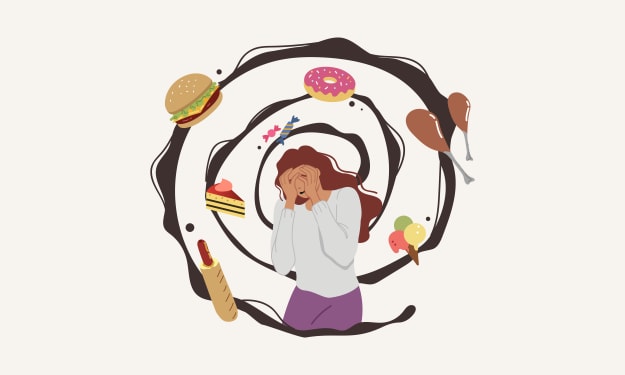
Eating to Fill the Void: When Mental Health Feeds the Mindless Hunger
Lately, I’ve been in a dip. The kind where brushing your teeth feels like too much. The kind where everything is overstimulating and silent at the same time. The kind where your body’s still moving, but your mind is somewhere under the blankets. Still. Fading. Cold.
By Briana Felicianoabout a year ago in Psyche
Silent Hands, Loud Truth
In a small town wrapped in foggy mornings and quiet streets, lived a boy named Haris. He was eight years old, with soft brown eyes and a silence deeper than the sea. No one really knew him. His classmates barely noticed his presence. Teachers marked his attendance, but he was just a shadow in the corner—always quiet, always watching, always hiding.
By ArshNaya Writesabout a year ago in Psyche
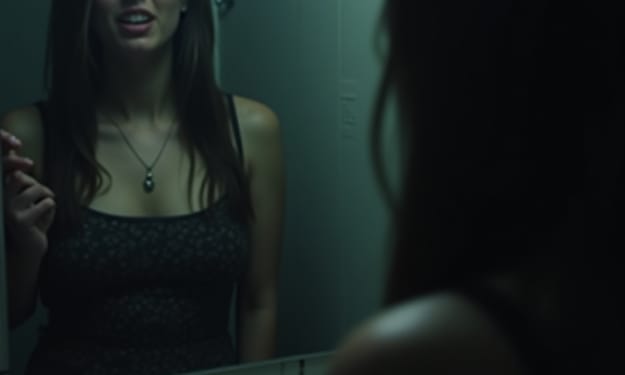
The Day My Reflection Talked Back
It started as an ordinary morning. The kind of morning where the weight of last night’s overthinking clings to your chest like damp clothes. My alarm blared, my apartment reeked of stale coffee, and my inbox was already overflowing with passive-aggressive work emails I didn’t want to answer.
By Zaheer Uddin Babarabout a year ago in Psyche
Inside the Mind: An Exploration of Human Thought
Inside the Mind: An Exploration of Human Thought Human thought is among the most complex and fascinating phenomena in existence. The mind—an invisible, intangible space—is the seat of consciousness, memory, emotion, and imagination. For centuries, scientists, philosophers, and artists alike have attempted to peer into the mind, seeking to understand how we think, why we feel, and what makes our thoughts so uniquely human. This exploration of human thought spans multiple disciplines, from neuroscience and psychology to philosophy and artificial intelligence, offering insight into the intricate workings of our inner world.
By Abdul hasib Habibiabout a year ago in Psyche
Mind Uncovered
The Depths of the Human Mind: Unlocking the Mysteries Within Have you ever paused to wonder what’s truly happening inside your mind? Beyond the conscious thoughts you think and the emotions you feel, there exists an immense, often unexplored world — a labyrinth of memory, perception, instinct, and potential. Welcome to the depths of the human mind, a place where science meets mystery, and where curiosity can unlock worlds beyond imagination.
By Abdul hasib Habibiabout a year ago in Psyche
What TikTok is Really Doing to Gen Z Brains
In a world where everything is a scroll away, TikTok has emerged not just as an entertainment platform—but as a neurological experiment played out on millions of young minds. With over a billion active users, TikTok has dramatically shaped how Gen Z consumes, processes, and craves content. But as viral dances, meme-worthy skits, and dopamine-loaded loops dominate our screens, it’s time to ask: What is TikTok really doing to Gen Z’s brains? The answer isn't just in your screen time—it’s in your brain chemistry.
By Keramatullah Wardakabout a year ago in Psyche
She Grew Anyway - part 2
Before starting...... Missed Part 1? Click Here So Now Priscilla was one year old left all alone. Her grandmother came forward to take care of her. After her mother's death, her grandfather stopped drinking alcohol, and by that time he almost wasted all his wealth on drinking alcohol and gambling. Both grandparents loved her very much as they saw their daughter in her. When she was nine years old, they celebrated her birthday in very grand manner. Priscilla did not know how her mother look like and she did not have any memory of her. In those days photos also were very uncommon, so she really knew nothing about her mother. She considered her grandparents were her own parents. She was enjoying life happily ignoring her past. She thought she was really blessed having that life.
By ann prasanna gogireddyabout a year ago in Psyche
Shadow Work: Narcissists, Toxic People and Healing
In a brief, somewhat uncomfortable acquaintance, I encountered a person who embodied some of the toxic traits of manipulation that I had previously ignored greatly by quieting my intuition and being a person who didn't want to be overly judgmental, or give everyone the benefit of the doubt.
By Sai Marie Johnsonabout a year ago in Psyche