bipolar
Bipolar disorder; understanding the highs, the lows and the in between.
"The Interpretation of Dreams" by Sigmund Freud: A Journey into the Unconscious Mind
"The Interpretation of Dreams" by Sigmund Freud: A Journey into the Unconscious Mind "The Interpretation of Dreams" is not just a book; it is the foundation of modern psychology and a journey into the mysterious world of the unconscious. First published in 1899, this book revolutionized our understanding of dreams. Dreams are no longer seen as random or meaningless images; instead, they are glimpses into our hidden desires, fears, and experiences. Freud's writing is a blend of science, philosophy, and personal discovery. This book explains how dreams are formed, their connection to the unconscious mind, and how they reveal hidden truths through symbols. Although it can be challenging, for those interested in understanding the human mind, it is a feast for the intellect.
By Ikram Ullahabout a year ago in Psyche
Best
Measuring sticks are useful, but don't account for everything. Lately, I have been hearing people talk about being the best. The first, was an immigrant in the food industry, explaining how he wanted to come to the USA and prove he is the best chef. The second, was a teacher talking about teaching students to be their best. The third, was generic sayings about being your best self and being the best in the business. I couldn't help but think, what is this obsession with being the best. Then I checked myself by thinking of F1 racing and other sports. There needs to be the best, to win. Having the best doctor in a complicated specific surgery may be the difference between life or death. Clearly there are times when being the best should happen, and others when it should be less important. It got me wondering if the problem for me is more with the kinds of individuals with this mentality, to always be the best. The competative nature. I have never been very competitive. I like to joke as if I am at times, but when it comes down to it, I am not at all competative. In fact, as a person with anxiety and at times known to faint from being nervous, I have spent most my life trying not to be the best. This is not to say I don't try or don't like to learn to my fullest potential. Not being the best always seemed to allow for more; More fun, more growth, more anonymity. The best always seemed constricting. Is it possible to be the best at not being the best? I also find that if someone I love is really good at something, I don't want to out do them. Id prefer to work with them, but let them have their thing. People may not be the best at something outside of a specific group, but someone can be the best to someone else. For me it was an appreciation of my moms sewing tips that brought me to her level faster than she was able to. Her tips from years of teaching herself, helped me. Her mom, disliked sewing. In my eyes she was the best. Most impressive. I could do what she did, but I wanted her to always be better. The best is so easily loved and liked. There are some individuals that are so difficult, but still very much loved or accepted in a field of work or study because they are the best. The best seems like a challenging measuring stick to use, one where the measurements are constantly changing. So much so, no measurement can be trusted. So why and where did this obsession with the best come from? In ancient times, survival most likely fueled this concept and allowed competative nature to be an important motivator. This lead to leadership and status. Those who were stronger, smarter, most resourceful or the "best" for the times. The middle ages emphasized the divine. Religious and pious individuals were divinely ordained and righteous. Chosen ones, helping humanity. Romans believed in 'virtus'. It included the concept of excellence. Romans also had ideas about beauty relating to excellence. Renaissance lead towards humanism and individualism. Human achievements began to take the stage. It progressed from here. The best is a concept tied to progress. Inventors and critical thinkers are the best because they progress humanity in a given time period. At this point the concept of the best seems critical to our existence and progress. A necessary evil or good. However, could the concept of "Best" be becoming outdated? I would argue it hinders the population instead of progressing it. An obsession with the best keeps us from our potential of being the best. There are too many factors: start in life, family, environment, income, health, life events, education, friends, etc. The true best, the ones it comes naturally to, don't have time or energy to care about being the best. It's hard work. It's all of us who are not, who have grand ideas and dreams of being the best. And why? Because the best, in today's world, equals more recognition meaning more money, and more power. That, we all probably need and want. Money and power buys a better life for one, who can then choose to help society or a themselves and family. In a population with so many bests, so many talented achievers, so many entertainers, so many measurements, it forms a negative competition for yourself and others. It seems opposite to progress. But! how can I think this and not be a socialist I began to think. Around this time, my dog walked in. I looked at her cute face, walked to her, kissed her nose and told her "you are the best dog for me". I meant it as the ultimate compliment for how much I love her. Ultimately it is irrelevant because I don't know every dog in the world and who cares. There was that word "Best" being highlighted again. The truth is, we need people to want to be the best. We need people to actually be the best. We even need people to think they are the best (maybe even unrealistically). Maybe the concept of "BEST" will never disappear. Maybe it exists because we all need and want it to. Maybe we are more saying, we want special things to exist in the world. Special gets us through.
By simplicityabout a year ago in Psyche
The Peace Within Accountability
There is peace in accountability. If you’d met me several years ago, you couldn’t have paid me to admit that. The truth is, several years ago, I myself was oblivious to this notion. I’d been in conflict after conflict and not one time had I come out on the bottom of it, even if I truly had. If I said it was so, you couldn’t convince me otherwise. And oh, honey I would die on that hill. There was something powerful about lacking any control for much of my life, eventually learning that I can build my own narrative beautifully crafted in any way that I want. What did I want? Control. How did I get it? By being right. Ultimately, I spent over twenty seven of the twenty-eight years on this Earth failing at what I now know as gaslighting. Crafting weak fairytales in a vain attempt to keep what little control I had over my life.
By The Darkest Sunriseabout a year ago in Psyche
The Sewing Box
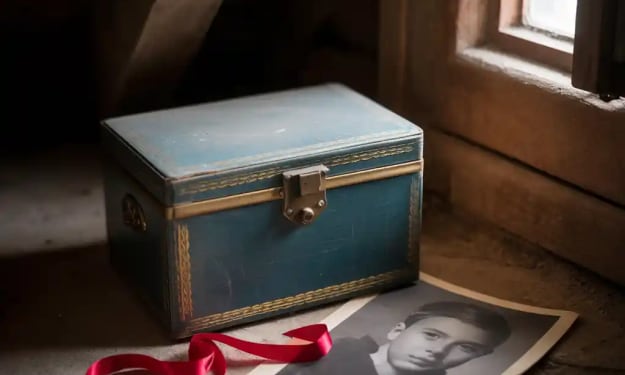
The box had been there for years — untouched, unspoken, and always in the same corner of Nana’s old attic. Covered in lace that had long since yellowed, it waited like a quiet witness. When Nana passed away that winter, I returned home after seven years to settle her affairs — not entirely ready for what I would find. I hadn’t been back since I was sixteen. Back then, I ran away more than I visited. Back then, Nana was already growing forgetful, calling me by my mother’s name, or sometimes by her own sister’s. But she never forgot about the sewing box. She’d always say, “Don’t touch it, Isla. That’s not for you — not yet.” -- The funeral was small. Nana never had many friends left. It was just me, the priest, and the mailwoman who brought her groceries during her final years. The house felt too quiet when I returned — like it had been waiting just for me. I slept in the guest room that night, but I didn’t really sleep. I kept thinking of the sewing box. It wasn’t just nostalgia. Something about it tugged at me — like it had its own heartbeat. -The attic The next morning, I climbed the attic stairs, flashlight in hand. The switch hadn’t worked in years. The air was thick with dust and lavender. Nana always loved lavender. It masked the scent of mothballs and age. I walked past old suitcases, brittle magazines, faded photographs with crinkled edges. And there it was — in the far left corner, exactly where I remembered. The sewing box. It was a faded green, with golden thread-like trim and a broken hinge. A cracked ceramic bird perched on top, its wing chipped. I sat cross-legged in front of it, just like I used to. But this time, I didn’t hesitate. Inside, there were spools of thread, needles, buttons in little paper envelopes. But underneath, tucked beneath a swatch of blue satin, was something else. Letters. Dozens of them, tied with red ribbon, yellowed with age. The top one had my mother’s name — Claire. My heart thumped against my ribs. I opened the first letter. Dear Claire, I know you won’t understand now, but I hope one day you will forgive me. I didn’t have a choice. You were only a baby when he left, and I couldn’t risk it — not again. I had to keep you safe. Nobody believed me back then, but he wasn’t who he said he was. He wasn’t just “James from the library.” He had a darkness I didn’t see — not until it was too late. You have his eyes, you know. I hated them for years, but now… now I wonder if maybe you deserved to know. There’s more in this box than thread, darling. There are truths I never dared speak aloud. — Mother froze. James? My grandfather? I’d never heard anything about him. My mom rarely spoke of her childhood, and when she did, it was always about the happy things — summer at the lake, Sunday cakes, Nana’s lullabies. But not once had she mentioned her father. I read another letter. And then another. Each one was more detailed than the last. Each one filled with fear, and regret, and love twisted in grief. My Nana had been hiding the truth for decades. Not just from my mother — but from the world.
By Arshad khanabout a year ago in Psyche
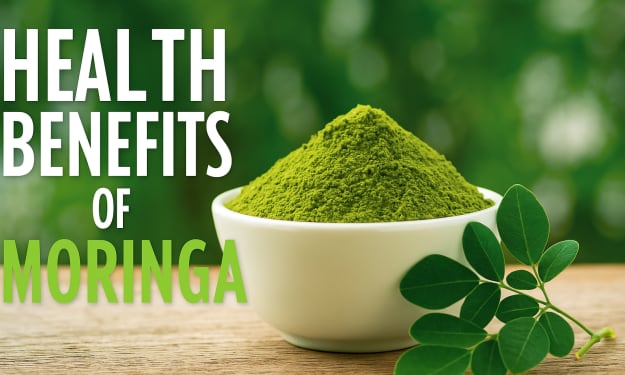
Moringa: Nature’s Best Brain Food.. AI-Generated.
Feeling foggy, anxious, or just mentally drained? You’re not alone. In our fast-paced world, mental fatigue, low mood, and burnout have become all too common. But instead of turning to yet another cup of coffee or an energy drink, many people are turning to something completely natural—and surprisingly powerful called Moringa Powder.
By Edward Smithabout a year ago in Psyche
Signs of Stress in Body Language
Body movements and facial expressions that an individual makes may help to know his thoughts and feelings, including tension, fear, admiration, and others. The following is a group of signs of tension in body language:
By Uchenna Cosmas Nwokafor about a year ago in Psyche
"The Gentle Path to Healing"
It sounds like you've shared a really thoughtful piece about healing and self-care. Here are a few ways to reword it, focusing on slightly different angles: Option 1 (Focus on the Turning Point): > Her presence was a turning point. She didn't judge or try to solve my problems; she simply offered support when I needed it most. Shortly after, I started therapy, which felt daunting at first. Expressing my inner turmoil was a challenge, but with consistent effort, I began to understand myself better. Healing wasn't a quick fix, but reaching out for help was the crucial first step in rediscovering my true self. > > Learning to set boundaries became an act of self-love. I used to say "yes" to everything, fearing I'd disappoint others or appear difficult. I mistakenly believed I was being helpful, but in reality, I was neglecting my own needs. Each time I agreed to something that didn't align with my well-being, I was denying myself the chance to nurture my own happiness. Saying "no" wasn't about becoming cold; it was about valuing my own capacity and limits. Surprisingly, establishing these boundaries didn't disrupt things – instead, it felt like an act of self-care. > > The path to healing isn't a straight line. Some days bring lightness and hope, while others feel heavy with old stresses. I used to think feeling down meant I was failing, that healing was a final destination. But the truth is, healing is a winding, uneven journey with forward steps, backward steps, and sideways moments. The important thing is to keep returning to yourself, to keep making choices that support your healing, even when it feels impossible. Now, when darkness returns, I can meet it with calm and acceptance, knowing it's part of the process. > > In conclusion, remember that whatever you're facing, you are not broken – you are human. It's perfectly okay to step back, rest, or seek support. It takes courage to acknowledge your limits and ask for help. Sometimes, our lowest points can lead to profound personal growth, as they did for me. When I felt like I had hit rock bottom, I was actually beginning a slower, more authentic life, one I can finally be proud of. As you navigate your own journey, remember that the light will return. It comes in moments, big and small, reminding you that you are here, and that you matter. > Option 2 (Focus on Self-Compassion): > The simple presence of a supportive person, who offered understanding without judgment, encouraged me to seek therapy soon after. Initially, therapy felt intimidating, as I struggled to articulate my inner world. However, with time and persistence, I began to gain clarity about my experiences. Healing wasn't instantaneous; it was the act of asking for help that initiated my journey back to my authentic self. > > Learning to establish boundaries became an essential act of self-compassion. My tendency to always say "yes" stemmed from a fear of disappointing others or appearing selfish. I mistakenly believed I was doing the right thing by agreeing to everything, even when it conflicted with my own needs. In reality, I was betraying myself. Each time I overextended myself, I was denying myself the opportunity to nurture my own well-being and happiness. Saying "no" wasn't about becoming unkind; it was about recognizing and honoring my own limits. I was surprised to find that setting boundaries didn't create chaos; instead, it felt like a profound act of self-love. > > The journey of healing is rarely linear. There will be days filled with lightness and hope, and others when old feelings resurface. I used to interpret these low points as setbacks, believing that healing meant reaching a permanent state of well-being. However, healing is a fluid process, characterized by progress that isn't always consistent. There will be forward steps, backward steps, and detours. The crucial element is to continually return to yourself, to keep making choices that support your healing, even when it feels incredibly challenging. Now, when difficult feelings arise, I can approach them with a sense of calm, allowing myself to feel them and remembering that they are a natural part of the journey. > > Ultimately, please remember that whatever you are experiencing, you are not flawed; you are human. It is perfectly acceptable to need to withdraw, take a break, or seek support. It requires courage to acknowledge your limits and ask for help. Often, our most challenging moments can pave the way for significant personal transformation, as they did for me. When I felt like I had lost everything, I was actually beginning to embrace a more intentional and genuine way of living, a life I now value deeply. As you navigate your own path, hold onto the understanding that the light will return. It finds you in moments, both big and small, reminding you of your presence. You are here, and that is significant. > Option 3 (More Concise): > Her non-judgmental support led me to therapy, which was initially scary as I didn't know how to express myself. Over time, I began to understand my inner world. Healing wasn't immediate; asking for help was the start of my journey back to myself. > > Setting boundaries became an act of self-love. My "yes-saying" came from a fear of disappointing others, but it was a betrayal of my own needs. Saying "no" wasn't cold; it was valuing my limits and surprisingly kept things running smoothly. > > Healing isn't linear, with good days and bad days. I used to think feeling low was a failure, but healing is an uneven process. The key is to keep returning to yourself and making choices that aid healing, even when it's hard. Now, I meet darkness with calm, knowing it's part of the journey. > > Remember, you're not broken, just human. Needing breaks or support is normal and takes courage. Breakdowns can lead to growth, as mine did. When I felt I'd lost everything, I began a slower, more real life I'm proud of. Know that the light returns in moments, big and small, reminding you that you are here and that you matter. > Let me know if you'd like me to try rephrasing it in a different way or focusing on a specific aspect!
By Nasir Khan2 years ago in Psyche
The Hidden Game: How Politicians, Influencers, and Celebrities Secretly Control Your Mind, Wallet, and Emotions Without You Realizing It
In today’s digital jungle, power isn’t about guns or armies — it’s about attention, influence, and perception. From TikTok trends to political campaigns, a handful of powerful politicians, influencers, and celebrities are quietly pulling strings behind the scenes, shaping what you think, feel, buy, and even fight for.
By Umar Khattak2 years ago in Psyche
How to Overcome Difficult Times & Feelings
Life doesn’t ask permission to get hard. One moment you’re coasting, and the next, you’re hit with something that knocks the wind out of you—a breakup, a layoff, a loss, or simply the overwhelming weight of existing in a chaotic world. When those moments come (and they always do), it can feel like you’re stuck in a storm with no umbrella, no map, and no clue when it’ll end.
By AnthonyBTV2 years ago in Psyche
How Can ADHD Testing Help You? Exploring the Benefits and Process
Understanding why you think, feel, and act a certain way can bring deep relief. Many people go through life feeling distracted, restless, or unable to focus, without knowing why. Parents may wonder why their child cannot sit still or pay attention at school. Adults often ask themselves why staying on task or meeting deadlines seems so hard. Attention-Deficit/Hyperactivity Disorder, or ADHD, affects children, teens, and adults, yet many still go undiagnosed. With more people wanting answers, ADHD testing has become even more important.
By Mind-Body Care2 years ago in Psyche