advice
Advice and tips on managing mental health, maintaining a positive outlook and becoming your happiest self.
If You’ve Outgrown Someone, You Don’t Need to Hate Them to Let Go
Letting go doesn’t always come with closure. Sometimes it doesn’t come with a fight, betrayal, or big breakdown either. Sometimes, it’s just a slow drifting. A quiet realization. A feeling that the connection no longer fits — not because they were bad, but because you changed. And here’s something most people won’t tell you: **You can outgrow someone without hating them.** You can release a relationship with love, not bitterness. Here’s how to know when that’s happening — and why it’s still valid. - - - - - - ### (1. You No Longer Feel Understood Around Them) They’re not mean. They haven’t changed. But suddenly, your conversations feel hollow. Misaligned. They don’t “get” your growth, your new interests, your silence. And explaining yourself feels more exhausting than connecting. (. . .) That’s not shade. That’s evolution. - - - - - - ### (2. You Feel More Yourself Away From Them Than With Them) You laugh more when they’re not around. You breathe easier. You don’t shrink, explain, or censor your thoughts. That’s your soul noticing the difference between feeling safe and feeling small. - - - - - - ### (3. You’re Holding Onto the History — Not the Present) You stay because of childhood memories. Inside jokes. Shared trauma. Old loyalty. But if the current version of them met the current version of you — would you even be friends? Sometimes, we hold on to what *was*, even when what *is* no longer fits. - - - - - - ### (4. You Keep Making Excuses for Why It Doesn’t Feel Right) “They’re going through a lot.” “It’s just a phase.” “Maybe I’m being sensitive.” But the truth is: it’s been months, maybe years, of emotional distance. You’re not cold. You’re just slowly realizing you’ve outgrown the dynamic. - - - - - - ### (5. You Don’t Hate Them — You Just Don’t Feel Connected Anymore) And that’s the hardest part. There’s no villain. No scandal. Just a quiet ache that says: “This version of us isn’t working.” And still, you feel guilty for letting go. But here’s the truth: not every disconnection needs a dramatic ending. - - - - - - ### (6. You’re Growing, But They’re Staying the Same) You’ve started healing. Unlearning. Expanding. They’re stuck in loops — gossip, blame, complaining. You want to talk about books, emotions, boundaries. They want to talk about people, problems, and the past. Different languages. Same silence. - - - - - - ### (7. Your Energy Feels Drained After Interactions) Not because of a fight — but because the emotional exchange feels… off. Your light feels dimmed. Your enthusiasm feels ignored. You leave the conversation feeling smaller than you entered. That’s not chemistry. That’s a mismatch. - - - - - - ### (8. You Keep Them in Your Life Out of Guilt, Not Joy) You dread replying. You force check-ins. You show up, but you don’t feel present. Love built on guilt doesn’t last. You deserve to feel energized by connection — not burdened by obligation. - - - - - - - - - - - - - - - - - - - - - - - - - - ### 🌿 Final Thought Outgrowing someone doesn’t mean you’re better. It doesn’t mean you don’t care. It just means your paths — your healing, your frequency, your values — no longer match. And that’s okay. You don’t need to wait for them to hurt you. You don’t need to fake smiles for loyalty. You don’t need to make them the enemy just to justify your distance. ( . . . ) You’re allowed to let go in peace. Let the goodbye be soft. Let the memory stay warm. Let your future unfold without forcing someone into chapters they no longer belong in. **Not all endings need closure. Some just need courage.**
By SHADOW-WRITESabout a year ago in Psyche
The Hustle Culture Nearly Killed Me
I don’t remember the exact moment I stopped recognizing myself. Maybe it was the third night in a row I fell asleep in my car with my laptop still glowing on my thighs. Or maybe it was the morning I coughed up blood into a paper napkin, wiped it clean, and just… kept typing. Like a machine. Like a woman possessed.
By Ava Writes Truthabout a year ago in Psyche
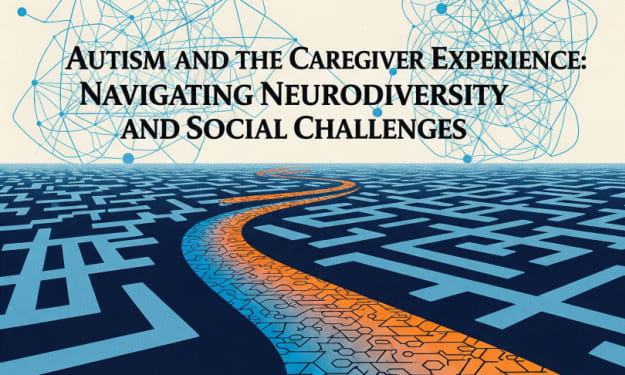
Autism and the Caregiver Experience: Navigating Neurodiversity and Social Challenges
Introduction Autism Spectrum Disorder (ASD) is a complex neurodevelopmental condition characterized by persistent challenges in social interaction, communication, and behavior. As the prevalence of ASD continues to rise globally, awareness of the condition has increased. However, less attention is given to the caregivers of individuals with autism—those who navigate daily responsibilities that often involve emotional, financial, and social strain. This article explores not only the neuropsychological aspects of ASD but also the social dynamics and mental health consequences experienced by caregivers. By understanding both perspectives, we aim to shed light on the full ecosystem surrounding autism.
By Siria De Simoneabout a year ago in Psyche
10 Things Only Emotionally Intelligent People Truly Understand
Emotional intelligence isn’t loud. It doesn’t shout, demand, or compete. It listens. Observes. Softens. Waits. And when it moves, it moves with purpose. Emotionally intelligent people often go unnoticed — but the way they live, love, and lead quietly shifts the world around them. Here are 10 things only emotionally intelligent people truly understand. --- ### (1. Not Every Thought Needs to Be Spoken) Just because you feel it, doesn’t mean it needs to be said. Emotionally intelligent people pause. They know timing matters. They think before reacting — not out of fear, but out of care. (. . .) Silence, when chosen with wisdom, is powerful. --- ### (2. How Someone Treats You Has More to Do With Them) You weren’t too sensitive. You weren’t too much. Their disrespect, mood swings, or coldness — it wasn’t about you. Emotionally intelligent people don’t take everything personally. They know that pain often spills from people who haven’t healed. That doesn’t excuse it. But it makes forgiveness easier — and detachment gentler. --- ### (3. Kindness Doesn’t Make You Weak) Being soft in a cruel world is not weakness. It’s a form of rebellion. Emotionally intelligent people choose kindness not because others deserve it — but because *they* do. Because staying kind keeps their spirit clean. They don’t stoop. They rise. --- ### (4. You Can Hold Two Emotions at Once) You can be grateful and grieving. You can love someone and let them go. You can feel joy and sorrow in the same breath. Emotionally intelligent people don’t need simple emotions. They sit with complexity — and grow stronger because of it. --- ### (5. Boundaries Are Love — Not Punishment) Saying “no” doesn’t mean you’re cold. Stepping back doesn’t mean you’re heartless. Emotionally intelligent people set boundaries because they care — about themselves and the relationship. They know that without limits, even love becomes exhausting. --- ### (6. Being Right Is Less Important Than Being at Peace) You don’t need to win every argument. You don’t need to correct every wrong opinion. Emotionally intelligent people choose peace over ego. They walk away not because they lost — but because they value their energy. Sometimes, silence is the most intelligent reply. --- ### (7. Not Everyone Deserves Access to You) You can love from a distance. You can forgive and still walk away. Emotionally intelligent people don’t let everyone into their sacred space. They’re selective with who gets their time, attention, and vulnerability. (. . .) Protecting your peace isn’t selfish — it’s wise. --- ### (8. Emotional Control Is Strength — Not Suppression) Emotionally intelligent people feel everything. But they don’t let their feelings hijack their actions. They know how to pause, breathe, process. They respond instead of react — and that’s not numbness. That’s mastery. --- ### (9. Vulnerability Isn’t a Risk — It’s a Bridge) Opening up can be scary. But emotionally intelligent people do it anyway. Because they know that walls protect — but they also isolate. Real connection begins where pretending ends. They choose truth over comfort — even when it shakes them. --- ### (10. Healing Is a Lifelong Process — Not a Final Destination) Emotionally intelligent people don’t chase perfection. They chase understanding. They forgive themselves for past versions. They grow through what they’ve gone through. They know that being human is messy — and that’s okay. (. . .) They keep evolving — quietly, deeply, constantly. --- ### 🌿 Final Thought Emotional intelligence doesn’t come from books. It comes from being broken and choosing softness anyway. It comes from listening more than speaking. From staying when it’s easier to run. From choosing to grow, even when it hurts. Emotionally intelligent people don’t always speak the loudest. But their presence says everything. And if you’ve ever paused to protect your peace, let go with grace, or speak truth with love… Then you already know: **This isn’t just a skill. It’s a way of living.**
By SHADOW-WRITESabout a year ago in Psyche
Why Do We Wait? Understanding the Psychology Behind Student Procrastination
Procrastination is a common struggle for students across the globe, regardless of age, academic level, or cultural background. While it may appear to be mere laziness or poor time management, the truth is more complex. At its core, procrastination is a psychological behavior often rooted in emotional regulation, cognitive distortions, and behavioral habits. Understanding the underlying causes can help educators, parents, and students themselves to develop more effective strategies to combat it.
By Abdul hasib Habibiabout a year ago in Psyche
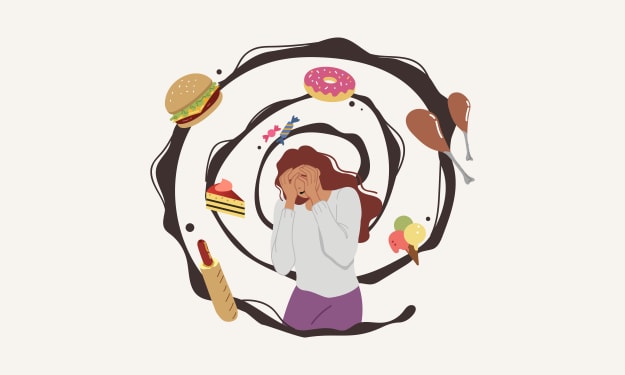
Eating to Fill the Void: When Mental Health Feeds the Mindless Hunger
Lately, I’ve been in a dip. The kind where brushing your teeth feels like too much. The kind where everything is overstimulating and silent at the same time. The kind where your body’s still moving, but your mind is somewhere under the blankets. Still. Fading. Cold.
By Briana Felicianoabout a year ago in Psyche
Why Some People Feel Everything So Deeply (And It’s Not a Flaw)
Some people walk through life and feel... everything. They cry at movie trailers. They get anxious before sending a text. They can sense when someone else is hurting — even if that person is silent. And sometimes, they wonder: “What’s wrong with me? Why can’t I just let things go like everyone else?” Here’s the truth : Nothing is wrong with you. Feeling deeply isn’t a flaw. It’s a trait — one that comes with both power and weight. Here’s why some people feel everything so deeply… and why the world needs them. --- ### (1. You’re Wired With High Emotional Sensitivity) It’s real. Some brains are built differently. You process emotions more thoroughly than most. This means you notice the tiniest shifts — in tone, in energy, in facial expressions. You don’t just hear what someone says. You feel what they *don’t* say. That’s not overthinking. That’s sensitivity — and it’s powerful. --- ### (2. You Carry an Empath’s Heart) You can walk into a room and *feel* the tension. You know when someone is off, even if they smile. You carry other people’s emotions like they’re your own. Yes, it’s exhausting. But it’s also a gift — a quiet superpower most don’t understand. --- ### (3. You Were Probably Labeled “Too Much” Growing Up) “Stop crying.” “Don’t take it so personally.” “You’re too emotional.” Sound familiar? People who feel deeply are often told to shrink their feelings. To toughen up. To numb out. But that only teaches you to bottle emotions — not heal them. Your depth isn’t drama. It’s honesty. --- ### (4. You Reflect More Than Others Do) You don’t just feel things — you *analyze* them. You revisit conversations in your head. You wonder what you could’ve done differently. You feel guilt, even when it’s not yours to carry. This kind of reflection can feel heavy. But it also means you grow faster than most. You learn. You evolve. You rise. --- ### (5. You Have a Strong Sense of Justice and Truth) Deep feelers often react strongly to unfairness. Lies hurt you more. Betrayal cuts deeper. That’s because your soul doesn’t tolerate emotional dishonesty. You want things to be real, raw, and right. You feel conflict not as annoyance — but as actual pain. --- ### (6. You Love Intensely — But Few Can Match That Energy) You don’t do casual. When you love, you love with your entire being. You show up. You remember the small details. You give more than you receive. But here’s the challenge: not everyone loves like you do. And when you don’t get that same energy back, it hurts — deeply. --- ### (7. Your Nervous System Needs More Rest Than Others) Feeling everything also means you burn out faster. Social settings tire you. Loud places drain you. Even joyful moments can be overwhelming. You’re not antisocial. You’re just emotionally full — and your nervous system needs time to catch up. --- ### (8. You Find Beauty in Things Others Miss) A sunset makes you pause. A song lyric makes you cry. A random act of kindness restores your faith in the world. Deep feelers live in high-definition. The world cuts deeper — but it also glows brighter. - - - - - # # # 🌿 Final Thought If you feel everything deeply, you might wonder if you’re broken. You’re not. You’re just built to *notice*. To *care*. To *carry meaning* where others walk right past it. Yes, it’s hard. Yes, it’s heavy. But it’s also rare. And sacred. Don’t harden. Don’t shrink. Learn to protect your heart — but never stop using it. The world doesn’t need less feeling. It needs more people like *you* — honest, raw, and beautifully deep. ( . . . ) And if you’re reading this and nodding quietly to yourself? You already know: your depth is not your weakness. It’s your quiet strength.
By SHADOW-WRITESabout a year ago in Psyche
Sensory Toys and Spaces
As more awareness about neurodiversity becomes available, so too does understanding and acceptance of places and things to accommodate it. As an autistic person, I have watched places grow and develop new programs and services for the neurodivergent community as I have grown up. They were rare to unheard of when I was growing up in rural California. Particularly libraries were pioneers in creating these spaces or allowing check-outs of fidget and sensory toys. But as time progresses and I'm seeing more and more acceptance, I have started to see such spaces pop up in festivals and conventions as well. There will, in these cases, usually be a quiet room filled with sensory toys and/or weighted blankets.
By Minte Staraabout a year ago in Psyche
Inside the Mind: An Exploration of Human Thought
Inside the Mind: An Exploration of Human Thought Human thought is among the most complex and fascinating phenomena in existence. The mind—an invisible, intangible space—is the seat of consciousness, memory, emotion, and imagination. For centuries, scientists, philosophers, and artists alike have attempted to peer into the mind, seeking to understand how we think, why we feel, and what makes our thoughts so uniquely human. This exploration of human thought spans multiple disciplines, from neuroscience and psychology to philosophy and artificial intelligence, offering insight into the intricate workings of our inner world.
By Abdul hasib Habibiabout a year ago in Psyche
Mind Uncovered
The Depths of the Human Mind: Unlocking the Mysteries Within Have you ever paused to wonder what’s truly happening inside your mind? Beyond the conscious thoughts you think and the emotions you feel, there exists an immense, often unexplored world — a labyrinth of memory, perception, instinct, and potential. Welcome to the depths of the human mind, a place where science meets mystery, and where curiosity can unlock worlds beyond imagination.
By Abdul hasib Habibiabout a year ago in Psyche