advice
Advice and tips on managing mental health, maintaining a positive outlook and becoming your happiest self.
Is a Life Free of Regrets Really What We Should Be Striving For?
The idea that the ideal life lived is one free of regrets is a philosophical position that most of us have been exposed to consistently and regularly from a very early age. It was preached as gospel in books, movies, television, and every other form of mass media by friends, peers, colleagues, presidents, kings, queens, prime ministers, and everyday Joes and Janes. The deathbed speech in which the dying person says “I have no regrets” with a smile on their face, as they take their last breath is a classic and highly cliched example. Basically the idea goes that when we die if we can honestly say that we have no regrets that means we had a good life. That does not imply that we had a perfect life or never made mistakes or only made good decisions. It only means that we recognize that even if some of our choices were less than ideal, we still accept them as a part of life and understand that sometimes what seem like bad choices may lead to good outcomes in unexpected ways. Essentially, that life is unpredictable and that we are fallible beings who don’t always do the right things. We do not regret the bad decisions we made, we accept them as a normal part of life and of being human. Importantly and most critically, if we could go back in time we would not change anything with respect to the decisions we made because ultimately it was the sum total of all those decisions and choices, both good and bad, that led us to where we are today, dying in our deathbeds thankful that we can honestly say we have no regrets.
By Everyday Junglistabout a year ago in Psyche
Beneath the Surface: Understanding Major Depressive Disorder
Introduction Depression is often misunderstood as simple sadness, a temporary cloud that will lift on its own. But for millions of people worldwide, depression is not fleeting—it is a constant, heavy presence that reshapes how they think, feel, and function. Among the most disabling mental health conditions, Major Depressive Disorder (MDD) is a complex and multifaceted disorder that reaches far beyond low mood. It is a condition that touches the emotional, cognitive, physical, and social dimensions of a person’s life. And while it remains one of the most prevalent psychiatric disorders globally, it is still surrounded by stigma, silence, and dangerous misconceptions.
By Siria De Simoneabout a year ago in Psyche
The Addiction to Validation No One Talks About
The Silent Addiction That Controls Our Lives When we think of addiction, we usually picture alcohol, drugs, or nicotine. But there's a subtler, quieter addiction sweeping through society—one so normalized, we don’t even recognize it.
By Shoaib Afridiabout a year ago in Psyche
10 Signs You’re Healing in Silence — Even If It Doesn’t Feel Like It
Healing doesn’t always come with big moments. Sometimes, it’s quiet. Invisible. Internal. And if you’ve ever felt like you’re doing the work but can’t see the progress — This is your reminder: **You’re healing. Even if no one notices. Even if it still hurts. Even if you don’t feel “healed” yet.** Here are 10 signs you’re healing in silence — and probably don’t realize it. --- ### (1. You Stop Explaining Yourself So Much) You used to over-explain. Make sure no one misunderstood you. Now? You let people think what they want. Because peace > proving your point. You trust your truth — and that’s healing. --- ### (2. You Choose Distance Without Drama) You don’t ghost. You don’t yell. You just… step back. Quietly. Gracefully. Without needing a fight to justify it. Because you’ve learned that protecting your energy is reason enough. --- ### (3. Your Triggers Don’t Control You Anymore) The same comment used to ruin your whole day. Now, you notice the emotion — and breathe. You pause. You respond instead of react. That’s emotional regulation. That’s growth. That’s healing. --- ### (4. You’re Okay With Not Being Chosen) Rejection used to sting. Make you question your worth. Now? You don’t beg. You don’t chase. You understand that what’s meant for you won’t need convincing. And that acceptance… is healing. --- ### (5. You Don’t Feel Guilty For Resting) You used to measure your worth by your productivity. Now, you rest without shame. Nap without apology. Say “I’m tired” and mean it. Because you finally see rest as recovery — not weakness. --- ### (6. You Protect Your Peace — Even If It Disappoints Others) You say no. Without essays. Without guilt. You choose peace over people-pleasing. Even when it disappoints someone else. Because you’re no longer available for your own self-abandonment. --- ### (7. You’re No Longer Addicted to Chaos) Drama used to feel like home. Now it exhausts you. You crave quiet. Softness. Simple mornings and deep conversations. You’ve outgrown chaos — and that’s a clear sign of healing. --- ### (8. You Trust the Silence Instead of Fearing It) You used to fill every gap. Every quiet moment felt like rejection. Now? You’re okay with space. You’re okay with being alone. Because in the silence, you finally hear yourself again. --- ### (9. You Catch Your Negative Self-Talk — And Challenge It) The voice in your head isn’t always kind. But you’re learning not to believe every word. You pause. You question. You reframe. And that’s how healing happens — one internal conversation at a time. --- ### (10. You’ve Made Peace With Not Having Closure) You stopped needing answers. Apologies. Explanations that may never come. You accept what happened. You release the story. Not because it didn’t matter — but because your peace matters more. - - - - - - - - - - - - - - - - - - - - - - - - - - - - - - - - - - - - - - - - - - - - - - - - - - - - - - - - - - - - - - - - - - - - - - - - - - - - - - - - - - - - - - - - - - - - - - - - - - - - - - - - - - - - - - ### 🌿 Final Thought Healing isn’t always loud. It doesn’t always look like progress. But if you’re doing any of these things — You’re healing. Quietly. Courageously. Day by day. (. . .) So don’t wait for someone to notice. Don’t wait for the pain to fully disappear. Honor the quiet wins. Celebrate the silent milestones. Because every time you choose peace over patterns — **You’re rewriting your story. And healing in silence is still healing.**
By SHADOW-WRITESabout a year ago in Psyche
The Complex Role of Dopamine in Our Lives: Understanding the Science Behind Pleasure and Motivation
*The Complex Role of Dopamine in Our Lives: Understanding the Science Behind Pleasure and Motivation* Dopamine is a neurotransmitter that plays a crucial role in our brain's reward and pleasure centers. It is often referred to as the "feel-good" hormone, and for good reason. Dopamine is released in response to pleasurable activities, such as eating, exercise, or social interactions, and it helps to motivate us to repeat those behaviors. However, when dopamine is released in excess or in response to artificial stimuli, such as social media or pornography, it can have negative consequences for our mental and physical health. *The Science Behind Dopamine* Dopamine is a chemical messenger that transmits signals between neurons in the brain. When we experience something pleasurable, dopamine is released, and it binds to dopamine receptors in the brain, producing a feeling of pleasure and satisfaction. This process is known as the brain's reward system, and it is essential for motivating us to engage in behaviors that are necessary for survival, such as eating and reproduction. However, the brain's reward system can be hijacked by artificial stimuli, such as social media, video games, or pornography. These stimuli can cause a rapid release of dopamine, leading to feelings of pleasure and addiction. Over time, the brain becomes accustomed to these artificial stimuli, and it requires more and more dopamine to feel the same level of pleasure. This can lead to a vicious cycle of addiction, where individuals become increasingly dependent on these stimuli to feel good. *The Consequences of Excessive Dopamine Release* Excessive dopamine release can have negative consequences for our mental and physical health. Some of the potential consequences include: - Addiction: Excessive dopamine release can lead to addiction, as individuals become dependent on the pleasurable feelings associated with dopamine release. - Decreased motivation: When dopamine is released in response to artificial stimuli, it can decrease motivation and interest in activities that do not provide a rapid dopamine release. - Decreased pleasure: Over time, the brain becomes accustomed to the artificial stimuli, and it requires more and more dopamine to feel the same level of pleasure. - Negative impact on mental health: Excessive dopamine release can contribute to mental health issues, such as depression, anxiety, and obsessive-compulsive disorder. *How to Manage Dopamine Levels* Fortunately, there are ways to manage dopamine levels and reduce the negative consequences of excessive dopamine release. Some strategies include: - *Dopamine detox*: Taking a break from artificial stimuli, such as social media or video games, can help to reset the brain's dopamine system. - *Engage in natural pleasures*: Engaging in natural pleasures, such as exercise, reading, or spending time with friends and family, can help to increase dopamine levels in a healthy way. - *Set clear goals*: Setting clear goals and working towards them can help to increase motivation and provide a sense of purpose. - *Practice self-care*: Practicing self-care, such as getting enough sleep, eating a healthy diet, and engaging in regular exercise, can help to support overall brain health. *The Importance of Self-Awareness* Self-awareness is critical in managing dopamine levels and reducing the negative consequences of excessive dopamine release. By being aware of our own behaviors and motivations, we can take steps to manage our dopamine levels and reduce our dependence on artificial stimuli. *Conclusion* Dopamine is a complex neurotransmitter that plays a crucial role in our brain's reward and pleasure centers. While dopamine is essential for motivating us to engage in behaviors that are necessary for survival, excessive dopamine release can have negative consequences for our mental and physical health. By understanding the science behind dopamine and taking steps to manage our dopamine levels, we can reduce the negative consequences of excessive dopamine release and improve our overall health and well-being. *The Role of Dopamine in Motivation* Dopamine plays a critical role in motivation, as it helps to reinforce behaviors that are necessary for survival. However, when dopamine is released in response to artificial stimuli, it can decrease motivation and interest in activities that do not provide a rapid dopamine release. *The Impact of Dopamine on Mental Health* Dopamine has a significant impact on mental health, and excessive dopamine release can contribute to mental health issues, such as depression, anxiety, and obsessive-compulsive disorder. By understanding the role of dopamine in mental health, we can take steps to manage our dopamine levels and reduce the risk of mental health issues. *The Importance of Balance* Balance is critical in managing dopamine levels and reducing the negative consequences of excessive dopamine release. By finding a balance between artificial stimuli and natural pleasures, we can reduce our dependence on artificial stimuli and improve our overall health and well-being. *Conclusion* In conclusion, dopamine is a complex neurotransmitter that plays a crucial role in our brain's reward and pleasure centers. By understanding the science behind dopamine and taking steps to manage our dopamine levels, we can reduce the negative consequences of excessive dopamine release and improve our overall health and well-being. By finding a balance between artificial stimuli and natural pleasures, we can reduce
By Ikram Ullahabout a year ago in Psyche
A Letter to the Person I Used to Be
Dear Me, I don’t write to you often — mostly because I’ve been too busy trying to survive, adapt, prove, and protect. But today, I felt you. In the silence between tasks. In the ache behind my smile. In the mirror, when I almost didn’t recognize who I’d become. So this is a letter to you — the person I used to be.
By DR. Allama iqbalabout a year ago in Psyche
How to Stay Productive at Work While Managing Depression and Anxiety
Depression and anxiety can feel like invisible weights strapped to your shoulders. You show up to work, you sit at your desk, and you try your best to focus, but inside, your thoughts are racing, your energy is drained, and your motivation has taken a hit.
By Richard Baileyabout a year ago in Psyche
To Dissociate or Not? Low‑Dose vs Full State Ketamine Infusions Explained
The Spectrum of Ketamine Therapy In the realm of mental health and chronic pain management, ketamine has carved out a profound reputation. Once known primarily as an anesthetic and party drug, it’s now respected for its fast-acting relief in treatment-resistant depression, PTSD, anxiety, and other hard-to-treat conditions.
By Richard Baileyabout a year ago in Psyche
You’re Not Cold — You Just Stopped Explaining Yourself to People Who Never Listened
You used to explain yourself. Every emotion. Every boundary. Every “no.” You’d write paragraphs trying to be understood. Trying to seem “reasonable.” Trying not to upset anyone. But lately — you’ve gone quiet. Not because you’re angry. Not because you stopped caring. But because you’ve finally realized… **They weren’t listening anyway.** --- ### (1. You’re Not Cold — You’re Just Tired of Talking to Walls) You opened your heart. You shared your truth. But your words were met with silence, deflection, or guilt. So you stopped. Because repeating yourself to people who choose not to understand you isn’t clarity. It’s *self-abandonment.* --- ### (2. You Realized Peace Doesn’t Come From Being Understood — It Comes From Being Aligned) You used to think peace meant explaining everything perfectly. Now, peace means walking away without a scene. Without closure. Without dragging your heart through another loop. Because your soul craves stillness more than approval. --- ### (3. You’re Choosing Boundaries Over People-Pleasing) You’ve learned that saying “no” isn’t mean. That not replying right away isn’t rude. That putting yourself first isn’t selfish — it’s sacred. You’re no longer interested in overextending just to seem “nice.” You’re choosing alignment over performance. --- ### (4. You Know Who You Are — And That’s Enough) You used to shrink when misunderstood. Now, you stand still. You don’t argue with people committed to misjudging you. Because your worth is no longer up for debate. And you don’t need external validation to stay rooted in your truth. --- ### (5. You Stopped Explaining Because It Was Hurting You) Every time you over-explained… You felt smaller. More exhausted. More disconnected from yourself. So now, you let your silence speak. Because nothing feels heavier than trying to convince someone to care. --- ### (6. You’re Protecting Your Peace Without Justifying It) You say no. You unfollow. You walk away. And you don’t send long texts to explain why. Because your inner peace is your responsibility. Not your defense case. --- ### (7. You Understand That People Hear What They Want To) It doesn’t matter how carefully you speak. If someone doesn’t want to understand you — they won’t. They’ll twist your words. Make it about them. Make *you* the villain. So you stopped talking. And started observing. --- ### (8. You’re Rebuilding in Silence — And That’s a Superpower) Not every breakthrough needs an announcement. Not every healing moment needs an audience. You’re growing roots now. Quietly. Privately. In sacred spaces they’ll never be allowed to enter again. --- ### (9. You Realized That True Love Doesn’t Need Constant Proof) With the right people, you don’t have to explain why you’re quiet. Why you pulled back. Why you need space. They’ll feel it. They’ll understand it. They’ll *honor it.* Without needing you to perform your pain. --- ### (10. You Stopped Explaining Because You Finally Started Listening — To Yourself) You used to silence your needs. Now, you’re tuned in. You don’t need to over-speak. You just need to *honor the whisper.* And that whisper says: **“Stop exhausting yourself trying to be understood. Start choosing people who already get you — without the speeches.”** - - - - - - - - - - - - - - - - - - - - - - - - - - - - - - - ### 🌿 Final Thought You’re not cold. You’re not heartless. You’re not distant. You’re just *done begging for bare minimum understanding.* (. . .) This silence? It’s not passive aggression. It’s *protection.* This distance? It’s not ego. It’s *clarity.* So if they ask why you’ve changed — Tell them: ** “I stopped explaining myself to people who never really listened.” ** And that shift? **That’s not weakness. That’s power.**
By SHADOW-WRITESabout a year ago in Psyche
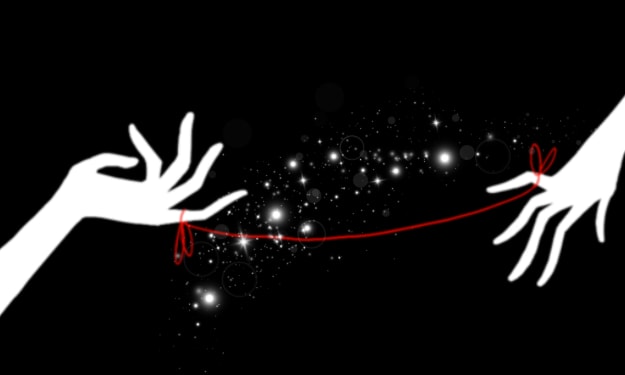
The Invisible String Tying You to Me
Let me ask you something. Have you ever locked eyes with a stranger and felt the entire world fall away? For a single, breathless moment, the noise of the crowded room, the city street, the chaotic party, all of it just… fades. And in that silence, a thought lands in your mind, so clear and certain it feels less like a thought and more like a memory: Oh, there you are. This is where my story begins.
By Selina Khatun about a year ago in Psyche