advice
Advice and tips on managing mental health, maintaining a positive outlook and becoming your happiest self.
Watch Out Wednesdays - 2/4/26 (Opinion)
We are smack dab into the first week of February! I hope that everyone is preparing to watch Super Bowl LX (60) on Sunday between the Seattle Seahawks and the New England Patriots. This game will definitely be decided in the fourth quarter.
By Adrian Holman8 months ago in Psyche
The Last Quiet Seat. Content Warning.
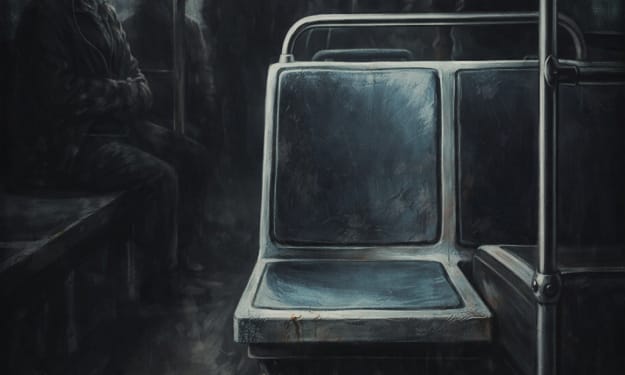
By the time Mara noticed the rule, it had already saved her life. The bus arrived at 6:12 every morning, sighing at the curb like it had been running for miles before it ever reached her. The doors folded open. People stepped off. People stepped on. Coins clinked. Cards beeped. No one spoke. Mara boarded, as she always did, and took the second seat on the right, halfway down the aisle. No one ever sat in the first seat. It wasn’t marked. No tape, no sign, no warning scrawled in Sharpie. The vinyl cushion was the same faded blue as the others, split at the seams, stuffing visible like a secret that had lost its urgency. The metal pole beside it was dulled by thousands of hands. But no one sat there. Not the elderly woman with the oxygen tank who rode three stops and got off breathing hard. Not the construction workers who boarded in muddy boots and filled the back with the smell of sweat and concrete dust. Not the teenagers who pretended not to see anything, ever. When the bus was full—when people stood shoulder to shoulder in the aisle, gripping straps, swaying with every stop—the seat remained empty. Mara noticed because she was tired. Because she had slept badly. Because she had woken up already bracing herself for the day ahead, for the fluorescent lights and the hum of machinery and the way time seemed to congeal at work. She noticed because she thought, for one brief, stupid moment: That’s odd. The thought slid away as quickly as it came. The bus pulled off. The city passed by in gray slices. Someone coughed. Someone else scrolled on their phone with the sound off. No one looked at the empty seat. At the third stop, a man got on who didn’t belong. Mara couldn’t say how she knew that. He wore the right clothes—work boots, jacket, a knit cap pulled low. He paid his fare. He nodded once at the driver. But he hesitated. Just a fraction of a second too long. His eyes flicked to the empty seat. Mara felt it then, a tightening in her chest, like when you miss a step on the stairs but don’t fall. Her fingers curled around her bag strap. The man stepped into the aisle. And sat down. The bus did not lurch. It did not brake. Nothing dramatic happened. The world did not end or even noticeably pause. What changed was the people. The woman standing nearest the seat shifted away, her shoulder brushing Mara’s arm as she moved. A man across the aisle suddenly found the floor fascinating. Someone near the back muttered something sharp and low, not quite words. The driver’s eyes met Mara’s in the mirror. Just for a second. They widened. The man in the seat smiled, as if pleased with himself. “Finally,” he said, loud enough to be heard. “Been wondering how long you’d all keep this up.” No one answered. The bus rolled on. Mara’s heartbeat thudded in her ears. She could feel it in her throat, her wrists. She told herself she was overreacting, that this was nothing, that she was projecting meaning onto coincidence. The man leaned back. The vinyl creaked beneath him. “You know,” he continued, conversational, “I almost thought there wasn’t a rule. Thought maybe you were all just being polite.” A woman near the front pressed the stop request cord. The bell dinged. The driver didn’t slow. The man laughed softly. “Oh. That’s not how it works.” Mara stood. She didn’t know why she did it. Later, she would tell herself it was instinct, or courage, or stupidity. In truth, it was something simpler: the certainty that if she didn’t move now, she wouldn’t be able to later. “Sir,” she said. Her voice sounded strange to her own ears—too loud, too steady. “You need to get up.” He turned his head toward her slowly, like a predator deciding whether something was worth the effort. “And why would I do that?” No one else spoke. But the silence was no longer neutral. It pressed in, thick and heavy, as if the air itself were waiting. Mara swallowed. “Because that seat isn’t for sitting.” The man’s smile widened. “Says who?” The bus hit a pothole. Someone gasped. The man’s body jolted—but the seat held him, held him firmly, as if it had been waiting. “Everyone,” Mara said. That was when the bus screamed. Not the engine. Not the brakes. The bus itself. A deep, metallic shriek rippled through the floor and walls, vibrating up through Mara’s bones. The lights flickered. The windows rattled. The man bolted upright, panic finally cracking through his bravado. “What the hell—” The seat split. Not the vinyl—the space. The air beneath him tore open like fabric. Something dark and vast yawned where the floor had been. Hands came out. Too many. Too thin. Grasping, pale, jointed wrong. They wrapped around the man’s legs, his waist, his arms. He screamed. A real scream, raw and animal. The bus stopped. The doors opened. No one moved. The driver turned around fully in her seat. Her face was calm, almost gentle. “You can still let go,” she said to the man. “If you stand up.” “I can’t!” he sobbed. “I can’t—help me!” Mara met his eyes. “I tried,” she said, and meant it. The hands pulled. The man vanished. The tear sealed itself with a sound like a held breath being released. The floor was solid again. The seat was empty. The bus was very quiet. Then the driver stood, walked to the seat, and sat down. She exhaled, long and tired. “Thank you,” she said to no one in particular. The doors closed. The bus resumed its route. No one screamed. No one cried. A few people wiped their faces. Someone near the back whispered a prayer. The woman with the oxygen tank adjusted her mask with shaking hands. Mara sank back into her seat, legs trembling. The driver glanced at her in the mirror. “You noticed,” she said. Mara nodded. The driver smiled, small and sad. “We always hope someone will.” At the next stop, the driver stood and left the bus. A new driver took her place without comment. No one sat in the first seat. Mara rode the rest of the way in silence, the city unfolding as it always had. When she got off, her knees nearly buckled, but she stayed upright. She walked to work. She clocked in. She did her job. The world did not change. The next morning, she boarded the bus at 6:12. The first seat was empty. She did not look at it. She took her usual place, halfway down the aisle. Someone new boarded at the third stop. A woman, this time. She hesitated, just a little. Mara caught her eye and shook her head once. The woman looked away. The rule held. And the bus went on.
By Dakota Denise 8 months ago in Psyche
I Loved, I Lost, and I Had to Meet Myself Again
A True Emotional Journey Through Love, Attachment, Depression, and Healing I never thought love would be the thing that breaks me open. Not dramatically. Not loudly. But slowly, quietly, from the inside. When I fell in love, I didn’t fall with caution. I fell with hope. I believed love would save me from the emptiness I never talked about. I believed it would give meaning to the parts of my life that felt unfinished. And for a while, it did. --- At the beginning, everything felt natural. I was excited, curious, alive. Her presence felt warm, familiar—almost necessary. I told myself this was normal, that this is how love works. But even then, something was off. I cared too much. I thought too deeply. I feared losing her long before there was any reason to. When she didn’t reply, my mind filled the silence with stories. When her tone changed, my chest tightened. When she was distant, I felt abandoned. I didn’t call it anxiety. I called it love. --- What I didn’t understand back then was this: I wasn’t afraid of losing her. I was afraid of returning to myself without her. Because before love, I already felt incomplete. --- Slowly, I began adjusting myself around her. I prioritized her moods over mine. I measured my words carefully. I softened my opinions. I became more agreeable, more available, more present than I truly was. Not because she demanded it. But because I believed that if I became easier to love, she wouldn’t leave. That belief shaped everything. --- Without noticing, I stopped being an individual. My happiness depended on her presence. My calm depended on her reassurance. My confidence depended on how she treated me. I had crossed a line—from loving someone to needing them. --- That’s when attachment took control. I didn’t feel safe unless she was emotionally close. I didn’t feel stable unless she confirmed I mattered. I didn’t feel whole unless I felt chosen. And the worst part? No amount of reassurance was ever enough. Because attachment is not satisfied by love—it is fueled by fear. --- I remember nights when I stared at my phone, waiting. Waiting for a message. Waiting for proof that I was still important. My body reacted before my mind could stop it: racing heart, shallow breathing, restless thoughts. I hated myself for it. I was aware. I knew this wasn’t healthy. But awareness doesn’t cancel emotional wounds. --- When the relationship ended, it didn’t feel real at first. There was no explosion. No dramatic goodbye. Just distance… then silence. And silence is brutal. --- At first, I thought I was just sad. But sadness turned into something heavier. I lost interest in things I once enjoyed. I struggled to get out of bed. Days blended into each other, colorless and dull. I wasn’t just heartbroken. I was depressed. --- The world continued, but I didn’t. People laughed. They made plans. They lived. I existed. Everywhere I went, I carried an invisible weight. Every conversation felt exhausting. Every smile felt forced. I questioned everything: Was I ever loved? Was I replaceable? Did I lose the only person who made me feel alive? --- The hardest part wasn’t missing her. It was missing who I was when I believed I mattered. --- I avoided places we shared. Songs became unbearable. Memories attacked without warning. At night, my thoughts were loud. I replayed conversations. I rewrote endings. I imagined different versions of myself—better ones, stronger ones—that maybe she would have stayed for. That kind of thinking destroys you quietly. --- What hurt the most was realizing how much of myself I had given away. I didn’t know who I was without her. My identity had been built around the relationship: my routine my emotional rhythm my sense of purpose And now it was all gone. --- I felt empty, but not free. Alone, but not independent. I didn’t trust myself anymore. If I had lost myself once, what stopped it from happening again? --- Healing didn’t start when I felt better. It started when I felt tired of suffering. Tired of blaming myself. Tired of romanticizing pain. Tired of waiting for closure that would never come. --- I started small. I sat with discomfort instead of escaping it. I stopped checking her social media. I allowed myself to feel lonely without trying to replace it immediately. Loneliness stopped being an enemy. It became a mirror. --- I began asking myself questions I had avoided for years: Who am I when no one is watching? What do I enjoy without sharing it? What do I believe without seeking approval? The answers didn’t come easily. But they came honestly. --- I learned that love didn’t ruin me. What ruined me was abandoning myself to keep someone else. I learned that attachment was not devotion—it was fear. That anxiety was not intuition—it was memory. That depression was not weakness—it was grief demanding attention. --- Slowly, I rebuilt. I reclaimed my time. I rebuilt boundaries. I learned how to say no without guilt. I trusted my voice again. --- Now, when I think about love, I don’t feel panic. I feel respect. For myself. I know I can love deeply without disappearing. I know I can connect without depending. I know I can lose someone and still remain whole. --- This wasn’t just a breakup. It was a psychological rebirth. Pain forced me to meet myself for the first time—not as someone’s partner, but as a complete human being. --- I don’t regret the love. I don’t regret the pain. Because through it all, I found something rare: myself.
By Ahmed aldeabella8 months ago in Psyche
Who Am I Without You
Losing Yourself After Love and the Long Road to Rebuilding When she walked away, it wasn’t just her I lost. It was the person I had become with her. The version of me that existed only in the space between her eyes and my heartbeat. Suddenly, the reflection I saw in the mirror felt unfamiliar. A stranger stared back. And the question hit me harder than any words ever could: Who am I without you? --- The first weeks were surreal. I walked the streets like a ghost, physically present but mentally absent. Everything reminded me of her: the café we visited, the songs we loved, the scent of coffee she preferred. And in every reflection, I searched for a piece of myself I thought I had lost forever. --- I had built my identity around her. Not consciously, not intentionally. But slowly, almost imperceptibly, the lines between her world and mine blurred. Her laughter was my happiness. Her opinions shaped my decisions. Her presence defined my moods. I didn’t just love her—I became her companion, her echo, her shadow. And now, without her, I felt hollow. --- I tried to hold on to the fragments of my old self, but they slipped through my fingers like sand. Hobbies I once enjoyed felt meaningless. Friends’ laughter sounded distant, like they were speaking in a language I no longer understood. Even simple routines felt foreign, as if life itself had shifted without permission. --- I began doubting everything: Do I even know who I am? Was I ever independent, or was I just a reflection of her desires? Can I trust my own feelings if they were so entwined with someone else’s? It was terrifying. To lose a person is painful. To lose yourself is paralyzing. --- Some nights, I couldn’t sleep. I lay awake, staring at the ceiling, wondering how my identity had disappeared so completely. Every memory of us was like a weight pressing down on my chest. Every moment alone highlighted the emptiness I had ignored for too long. I was grieving not just a love, but the self I had surrendered. --- I stopped making plans. I stopped dreaming. I stopped believing I could feel joy outside of her presence. Even when I tried, the thoughts crept in: If she doesn’t see me, does my life have meaning? If she is gone, what am I fighting for? And the answer was silence. --- I realized that love had been both beautiful and dangerous. It had shown me ecstasy, intimacy, and connection. But it had also convinced me that I could only exist in relation to her. It took leaving for me to understand the truth: I had forgotten how to stand alone. --- The first breakthrough came unexpectedly. I was walking alone in the park, a place we used to visit together. The wind brushed against my face. The sun fell softly over the trees. And for the first time in months, I noticed something: I was breathing. Not for her. Not for our memories. For myself. It was a small moment, almost imperceptible. But it was the beginning. --- Rebuilding trust in myself was harder than trusting anyone else. I had to relearn my preferences, my values, my boundaries. I had to remember that my voice matters—even if no one validates it. I had to face the truth that my worth does not depend on someone loving me. Each realization was painful. Every step forward was accompanied by memories of what I had lost. Every moment of independence reminded me of how dependent I had once been. --- I began to journal. Not to analyze her or blame her, but to reconnect with myself. I wrote about my fears. I wrote about my desires. I wrote about the self I wanted to rediscover. And slowly, the words became a map. A guide back to the person I had buried beneath love and attachment. --- I reconnected with old friends. At first, it was awkward. I had changed, and they had changed. But I realized that relationships can survive distance, and that laughter shared with those who care for you can rebuild parts of the soul you thought were lost. --- I started setting boundaries. Small ones at first. Saying no without guilt. Prioritizing my needs without fear. It was liberating. And terrifying. Because freedom feels alien after years of surrender. --- Gradually, confidence returned. Not the naive, reckless confidence of youth, but a tempered, grounded belief in my own resilience. I began trusting my feelings. I began trusting my instincts. I began trusting that I could love without losing myself. --- And I realized: the love I lost was not wasted. It had shown me my capacity for depth, for empathy, for passion. It had revealed my vulnerabilities. It had pushed me to confront parts of myself I would otherwise have ignored. And now, after the darkness, I could see the light of my own being. --- I am not the same person I was before. I am stronger. I am wiser. I am more aware. And though there are scars—soft reminders of the love I once had—they do not define me. They are part of the tapestry of my life, beautiful in their imperfection. --- I do not fear being alone anymore. I know that I am complete within myself. I know that happiness does not require another person to validate it. I know that love can be a gift, not a chain. --- And when I love again, I will bring my whole self. Not the version shaped by fear. Not the version defined by someone else’s presence. The authentic me, free and unafraid. Because the truth I have learned is simple: You cannot lose what you never surrendered. And now, I am no longer lost. I am found.
By Ahmed aldeabella8 months ago in Psyche
Homework Assignment - Right, Wrong, or Grey-zone?
So my autism therapist gave me some homework for a new form (to me at least) of therapy. It is an Internal Family Systems parts mapping exercise and I have no idea if I am doing it correctly or not, but I just wanted to write about my experience... *smile*
By Adora Hooper8 months ago in Psyche
I Forgot Where I Ended and You Began
When Love Becomes Identity and Attachment Turns into Addiction At some point, I stopped saying “I want you” and started thinking “I need you.” I didn’t notice when it happened. There was no warning sign, no clear line I crossed. Just a quiet shift—subtle, dangerous. Love stopped being something I felt. It became something I depended on. --- In the beginning, I still had my own life. My routines. My interests. My opinions. I laughed with friends. I spent time alone without feeling empty. I made decisions without imagining how they would affect her. Back then, love was an addition—not a replacement. But slowly, almost politely, it started asking for more space. --- I started checking in with her before checking in with myself. If she was happy, I was calm. If she was distant, I felt lost. If she was upset, I panicked—as if her emotions were my responsibility to fix. I didn’t call it attachment. I called it devotion. --- I told myself I was just “deep.” Just “romantic.” Just someone who loves intensely. But intensity is not the same as health. And I was crossing lines— not hers, but mine. --- I stopped doing things alone. Not because she asked me to stop, but because they felt meaningless without her. Music didn’t sound right unless I imagined her listening too. Places felt empty if she wasn’t there. Achievements felt smaller if she didn’t witness them. My inner voice had changed: What would she think? Would she like this version of me? Is this enough to keep her? --- That’s the moment you should be afraid. When your identity starts negotiating with love. --- I gave too much, too quickly. My time. My emotional energy. My forgiveness—even when I shouldn’t have forgiven. I said yes when I wanted to say no. I stayed silent when I needed to speak. Not because I lacked boundaries— but because I was afraid boundaries would push her away. --- The cruel part? She didn’t ask for this sacrifice. I volunteered. --- I made her my emotional home. And homes are dangerous when they’re not built on solid ground. Every disagreement felt like a threat of homelessness. Every distance felt like abandonment. Every change in tone felt like an earthquake. I wasn’t reacting to the present moment. I was reacting to the idea of losing everything. --- I remember one night clearly. She went out with friends. She was busy. She didn’t text much. Normal. Healthy. Human. But my body didn’t understand logic. I felt restless. I felt invisible. I felt unanchored. It was as if my emotional oxygen supply had been cut. And that’s when the truth became undeniable: This wasn’t love anymore. It was addiction. --- Addiction doesn’t mean obsession. It means dependence. It means your nervous system has learned to regulate itself through another person. Their presence calms you. Their absence destabilizes you. You don’t miss them—you crave them. --- I hated myself for it. I was educated. Self-aware. Rational. How could I lose myself like this? But attachment doesn’t care about intelligence. It cares about unmet needs. Needs that existed long before her. --- Somewhere in my past, I learned that connection equals survival. That being loved means being safe. That being alone means being abandoned. So when she became important to me, my mind made a silent decision: Never let this go. Even if it costs me myself. --- I noticed the changes too late. I no longer knew what I wanted without imagining her response. I no longer trusted my own feelings. I no longer felt complete alone. Being by myself felt… hollow. Uncomfortable. Like standing in a room stripped of furniture. --- I started chasing reassurance. Subtle questions. Indirect comments. Small emotional tests. Not to manipulate—but to confirm. Do I still matter? Am I still important? Are you still here? And every confirmation felt good— but only briefly. Like a drug that wears off too fast. --- The more reassurance I got, the more I needed. That’s how attachment tightens its grip. --- I became smaller. Not visibly—but internally. I adapted too much. Adjusted too often. Compromised too easily. I confused flexibility with self-erasure. And she—whether she realized it or not—was slowly dating a version of me that wasn’t real. A curated self. A fearful self. A self afraid to be left. --- The breaking point didn’t come from a fight. It came from exhaustion. I was tired of monitoring moods. Tired of guessing needs. Tired of carrying the emotional weight of two people. Love shouldn’t feel like self-betrayal. --- When the relationship ended, it felt like a psychological amputation. I didn’t just lose her. I lost: my routine my emotional regulator my sense of direction I woke up and didn’t know who I was without her orbit. --- The silence after attachment is terrifying. Because it’s not empty—it’s loud. Thoughts rush in. Memories echo. Questions scream. Who am I now? What do I do with all this feeling? How do I exist without someone holding my emotional center? --- The pain wasn’t romantic. It was raw. Physical. Disorienting. I reached for my phone out of habit. I imagined conversations that would never happen. I felt an urge to reconnect—not for love, but for relief. That’s how you know it was attachment. Love wants connection. Attachment wants anesthesia. --- Healing was humiliating at first. I had to admit I didn’t lose a person—I lost myself long before that. I had to relearn solitude. Rebuild routines. Rediscover preferences. Simple questions felt difficult: What do I enjoy? What do I believe? What do I want? Without her as reference. --- Slowly, painfully, something shifted. I sat with discomfort instead of escaping it. I allowed loneliness without medicating it with fantasy. I resisted the urge to fill the void too quickly. And the void began to shrink. --- I learned something crucial: Attachment is not about the other person. It’s about the parts of us that don’t feel whole on their own. When those parts heal, love becomes lighter. Freer. Safer. --- I don’t regret loving her. But I regret abandoning myself to keep her. If I love again—and I will—it will be different. I will bring my whole self, not offer it as collateral. --- Now, when I feel that old urge to merge completely, I pause. I breathe. And I remind myself: I can love deeply without disappearing.
By Ahmed aldeabella8 months ago in Psyche