
People are Hate Watching Euphoria Season Three
And Why People Love to Hate Watch in General



Hate-watching is defined as the practice of viewing media that a viewer dislikes, finds poorly made, or finds morally objectionable in order to derive pleasure from laughing, criticizing, or mocking it. In other words, we find enjoyment from consuming content that we are aware is bad.
Using the newest episodes of Euphoria's season 3, let's dive deeper into the psychological reasons behind the phenomenon of hate watching.
Note: This piece was written and posted following the airing of Season 3, Episode 3. The analysis reflects media reports and narrative developments available up to that point. If you are reading this after later episodes have premiered, some information may be outdated or inaccurate. Spoilers ahead.
Bonding Through Hate
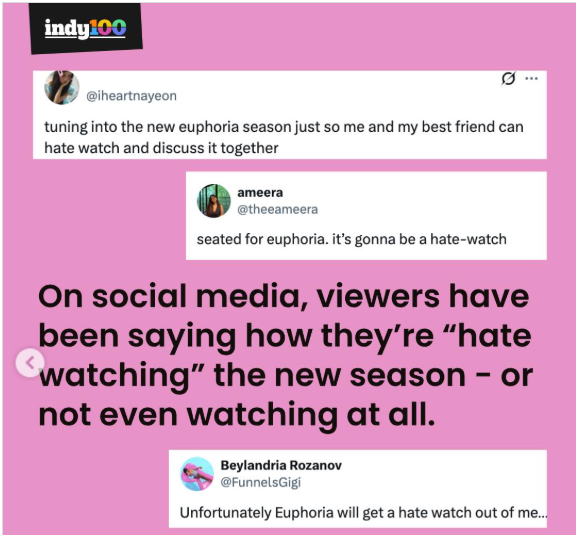
A big part behind hate watching is the community that builds from it. People flock to X, Instagram, TikTok, YouTube, and other social media platforms with their thoughts about the most recent episodes. People are collectively discussing the episodes and bonding over the parts that they hate.
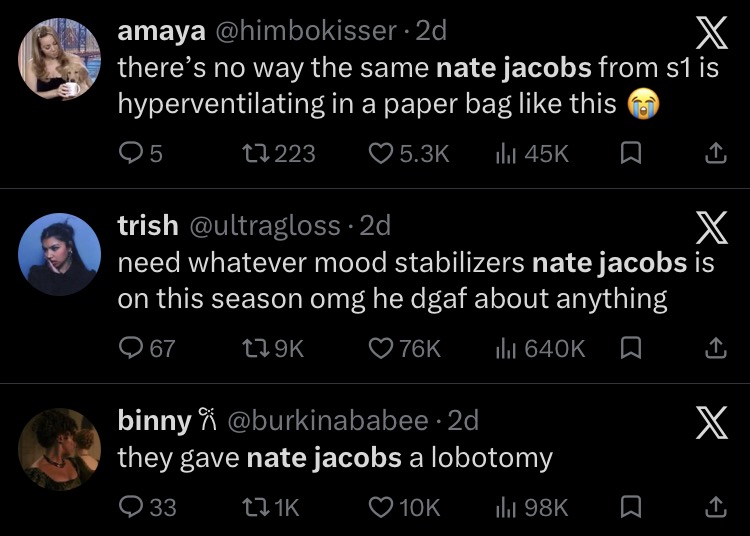
Much of the commentary I've encountered questions how this is even the same show. The shift in character dynamics has been a shock to the system.
Another common complaint is the new music, since Labrinth is no longer contributing to the show.
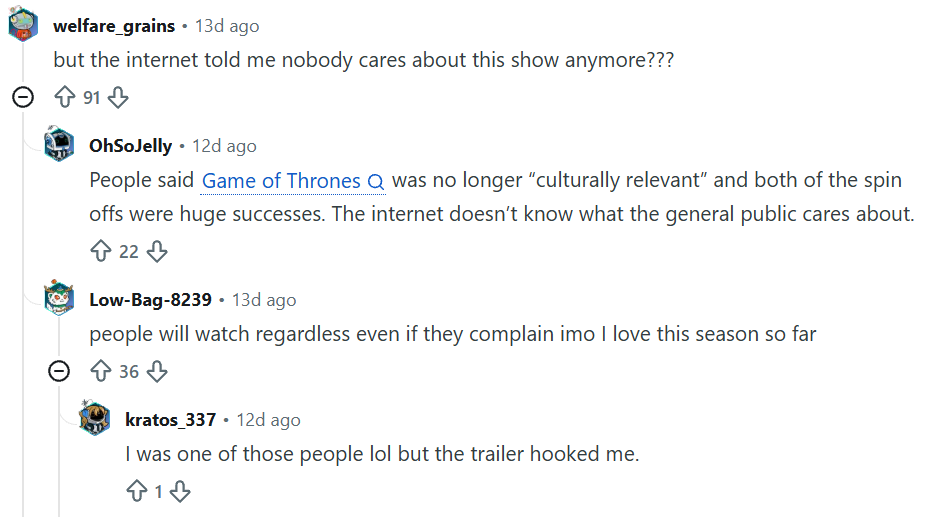
Overall, bonding over a shared dislike can be just as powerful as bonding over a shared love. Many of us watch just to participate in the memes and the comment section roasts.
Dedication & Loyalty
Euphoria has been a cultural craze since it first aired in 2019, and viewers remain dedicated to these characters.
Not only that, but humans psychologically have a need for closure. We've been with these characters for 7 years, and we need to see a payoff for all of the misery that we've witnessed. It's the "I've come this far" mentality that is keeping these views high, despite the bad reviews.
Beyond the characters, there is a profound loyalty to the actors, especially those we have lost since previous seasons aired.
It is wonderful to see Eric Dane's final performances through his ALS.
And scenes about Fez, who was played by the late Angus Cloud.
Catharsis, Social Comparison, and the Morality High
Humans use fiction to experience high-stakes emotions that would be too dangerous or tiring in real life. Watching TV allows us to let out emotions such as rage, anxiety, stress, and sadness for an hour, then turn the TV off.
Additionally, human beings often evaluate our worth by comparing our lives to others, whether it's intentional or not. With Euphoria, the audience particpates in Downward Social Comparison. This phenomenon occurs when we look at individuals we consider to be "worse off" than ourselves to feel better about our own situations. We love to watch a mess that isn’t ours; it’s optional, it’s entertaining, and it reminds us that while we all have issues, at least we aren't the characters on screen.
Our daily lives—work, school, and social obligations—force us to be organized and composed. It is only in the comfort of our homes that we can relax and allow ourselves to feel "messy" emotions without judgment. Watching the broken pieces of the human experience on screen reminds us that we aren't alone in the chaos of daily life. Putting yourself in someone else's shoes for an hour allows the brain a necessary break from its own worries.
Ultimately, our curiousity towards watching Euphoria Season 3 proves that a show doesn't have to be good to be popular. Whether we are excited by finding a community in the social media fallout, staying out of loyalty to the characters and actors, or seeking validation through Downward Social Comparison, hate watching the show serves a positive purpose.
Hate-watching isn't about negativity; it is a complex psychological exercise in empathy, ego-validation, and closure. We return to the chaos of Euphoria because it offers us a space to process our own frustrations and reminders of our own stability. In a world that demands we stay composed and organized, there is a strange, necessary comfort in watching a beautiful mess—as long as it’s someone else’s.
About the Creator
Annie
Hello! 🫶 This space is my digital notebook and creative playground. Thanks for stopping by!
Enjoyed the story? Support the Creator.
Subscribe for free to receive all their stories in your feed. You could also become a paid subscriber, letting them know you appreciate their work.
Comments
There are no comments for this story
Be the first to respond and start the conversation.