Latest Stories
Most recently published stories in Psyche.
They Called It Discipline — I Called It Survival
I fall from the sky every night. In my dreams, I am always somewhere high — a rooftop, a cliff, a place with no name — and then I drop. Fast. Completely. The ground rushes up and I wake up just before impact, heart pounding, hands gripping the sheets, body convinced it just survived something real.
By saif ullah3 months ago in Psyche
I Fall From the Sky Every Night — And Wake Up Just Before I Hit the Ground
It always starts the same way. I am somewhere high. A rooftop, a cliff, a place with no name that exists only in the logic of dreams. The air is thin. The ground is impossibly far below. And then — without warning, without reason — I fall.
By saif ullah3 months ago in Psyche
I Thought It Was Me
For a long time I thought something was wrong with me. It wasn’t some big thing I could just describe to anyone. It sat there in the background, with this ongoing feeling like I didn’t have what other people seemed to carry around so easily. I figured maybe I came off as too sensitive, hard to deal with. Or that I wanted more from situations than made sense and maybe that I fell short in spots I couldn’t see but everyone else picked up on right away.
By Annam M Gordon3 months ago in Psyche
7 Things That Made You Suck!
Do you want to convince someone you’re a weak, insecure, overly self-conscious, needy, scared excuse for a person? Sure, one of these might not get your reputation in the dumpster, but if you start racking up numbers, you likely suck in some people’s eyes. These are the seven things that failing to keep quiet or private about will get you rated high on the suck-o-meter.
By Jason Morton4 months ago in Psyche
“Gold Over Glare: The Night Belongs to Yellow Light”. AI-Generated.
For over a century, humanity waged a war against darkness, believing that more light — brighter, whiter, and more intense — automatically meant better vision and greater safety. The result is a modern nightscape bathed in the cold, blue-white glare of LEDs, a light so harsh it often blinds more than it illuminates. But a quiet revolution is taking place, one that looks back to a warmer, more ancient color to reclaim the night. The evidence is mounting: when the sun goes down, gold outclasses glare. The night, quite simply, belongs to yellow light. To understand why yellow light is superior, we first have to look inside the human eye itself. Our retinas contain two primary types of photoreceptor cells: cones, which handle color and fine detail in bright conditions, and rods, which are a thousand times more sensitive to light and take over in dim environments. This rod-driven state is known as scotopic vision — your natural night mode. Rods are exquisitely tuned to the blue-green part of the spectrum, which is exactly where harsh white LEDs pump out a tremendous spike of energy. When a cool white light hits your eye, it essentially screams at your rods, overdriving them into a state of chemical depletion called photobleaching. The pigment that rods need to reset, called rhodopsin, takes around 30 to 45 minutes to fully regenerate in darkness. A single glance at a white LED streetlight can wipe out your carefully earned natural night vision in an instant, leaving you effectively blind once you step back into the shadows. Yellow light, by contrast, is a gentleman with the eye. Its spectrum sits predominantly in the longer wavelength region, where rods are dramatically less sensitive. A golden-amber light source, peaking around 590 nanometers, stimulates cones well enough to give you crisp definition and excellent contrast but leaves the rod system largely undisturbed. This is why astronomers, soldiers, and sailors have long used dim red or amber lights for nighttime tasks: you can read a map, navigate a path, and still look up to see the stars or scan a dark treeline without being disabled by a self-inflicted white flash. You aren’t just seeing light; you’re preserving the eye’s own exquisite biological machinery. The next culprit tied to white light is glare itself. Glare is not just a minor discomfort; it is a genuine visual impairment caused by intraocular scattering. Short-wavelength blue light scatters significantly more as it passes through the various fluids and proteins within the eye, creating a luminous veil that washes over the retina and slashes contrast sensitivity. For older adults, whose eyes have accumulated more microscopic imperfections in the lens, this effect is catastrophically worse. A street lit with 4000K or 5000K white LEDs can be a disorienting wall of halos and starbursts, making it genuinely difficult to spot a pedestrian at the curb. Golden light, with its minimal blue component, cuts through the eye’s optical media cleanly. The image on the retina is sharper, the shadows are softer, and the space between objects feels deep and legible rather than a flat, overexposed sheet. One revealing study published in the journal Lighting Research & Technology found that for equivalent photopic luminance, warm-white and amber light sources consistently produced lower discomfort glare ratings than cool-white LEDs across all age groups. You aren’t sacrificing safety for mood; you are actively upgrading the quality of your vision. The biological price of white light extends far beyond the retina, deep into the brain’s master clock. Specialized cells called intrinsically photosensitive retinal ganglion cells (ipRGCs) contain melanopsin, a photopigment that is exquisitely sensitive to blue light around 480 nanometers. These cells don’t form images; they tell your brain whether it is day or night. When they are blasted by the blue peak of a white LED after sunset, they send an unambiguous alarm signal to the suprachiasmatic nucleus: the sun is still up, halt all melatonin production, stay alert. Melatonin is not just a sleep hormone; it is a powerful antioxidant that repairs DNA, modulates immune function, and starves certain cancer cells. The World Health Organization’s International Agency for Research on Cancer has classified shift work that involves circadian disruption as a probable human carcinogen, partly due to this melatonin-suppressing light exposure. Yellow light, with its rich amber wavelength profile, sits almost entirely outside the melanopsin danger zone. A warm 2200K lamp provides all the visual information you need to move safely through your home or neighborhood while telling your ancient biology the honest truth: night has fallen, it is time to wind down, you are safe. Beyond human biology, the night belongs to a vast web of other creatures who suffer profoundly under white glare. Nocturnal pollinators, including hawk moths and certain beetles, can become fatally trapped orbiting a blue-rich lamp instead of feeding and reproducing. Migrating birds, which navigate by starlight and the Earth’s magnetic field, are disoriented by the skyglow of cities and increasingly collide with lit buildings. Sea turtle hatchlings, hardwired for millions of years to crawl toward the brightest horizon — historically, the moon reflecting off the ocean — are instead lured inland toward white streetlights, where they die of dehydration or predation. Amber and yellow lights, particularly in the narrow-spectrum “turtle-safe” wavelengths, are a proven conservation tool that literally brings hatchling disorientation rates close to zero. When a coastal community switches from white to gold, it is not just an aesthetic choice; it is a lifeline. Then comes the sky itself. Light pollution has stolen the Milky Way from the unaided eyes of nearly 80 percent of North Americans. The physics here is inescapable: Rayleigh scattering dictates that short wavelengths scatter vastly more in the atmosphere than long ones. A photon of blue light is many times more likely to bounce off air molecules and hang in a glowing dome of skyglow than a photon of golden light, which cuts through the atmosphere with a fraction of the interference. This is why world-class observatories like those in Arizona’s Flagstaff region and Chile’s Atacama Desert mandate either low-pressure sodium or filtered amber LED lighting. Those iconic gold-soaked street scenes are not nostalgic relics; they are a functional shield protecting our last windows into the cosmos. Interestingly, the city of Flagstaff became the world’s first International Dark Sky City largely because it aggressively adopted narrow-spectrum amber lighting decades ago, proving that a modern city can function brilliantly without erasing the universe above it. There is a practical, day-to-day driving reason that the golden rule endures, too. Think of fog lights. For generations, selective yellow fog lamps were standard on European vehicles, and for good reason. When white light hits suspended water droplets in fog, rain, or snow, the heavy blue component backscatters directly into the driver’s eyes, creating an opaque white wall. Yellow light, lacking that scatter-prone short-wavelength energy, penetrates the particulate screen more deeply, allowing drivers to see the road surface and its markings rather than a blinding reflection of their own headlights. This same principle applies to your own street on a rainy night. The white-LED glare bouncing off wet asphalt creates a mirror-like sheen of blinding light, while golden illumination renders the road’s texture and hazards with a quiet clarity. Finally, we are learning that the wholesale transition to white light may have been an act of technological overshoot. The first generation of LED streetlights was applauded for energy efficiency, but it came at the cost of a 4000K or 5000K color temperature that no one’s biology had asked for. The good news is that the industry is pivoting. Warm-white and filtered amber LEDs now offer the same electrical efficiency without the biological wreckage. Forward-thinking municipalities from Phoenix to Cambridge, Massachusetts, are specifying 2700K or even narrow-amber 590nm LED retrofits, not as a step backward to gaslight, but as a sophisticated fusion of 21st-century efficiency and timeless human-centered design. Gold over glare is not a poetic metaphor. It is a physiological truth, an ecological imperative, and a technological evolution. The white light era treated darkness like an enemy to be obliterated. The golden light era understands that the night is a delicate, living presence to be shared with care. When we wrap our streets in amber, we do more than see better. We sleep deeper, protect the creatures that inherit the dark hours, and lift our gaze to a sky that has suddenly been returned to us, star by star. The night, after all, never belonged to the glare. It was always waiting for the gold.
By Touseef Gul4 months ago in Psyche
Quiet the Noise
It is recommended that people have 7-9 hours of sleep each night. However, sleep and I have had an elusive relationship ever since I was in high school. I stayed awake at night due to family issues. Extremely anxious, I didn’t want to face the issues head-on. Instead, I sought an escape. I turned to Adult Swim at night and watched mostly anime. It was weird being the only one awake at night watching TV, but I found it comforting. It was easy for me to get lost in the storytelling and calm my worries.
By J. Davis Mallory4 months ago in Psyche
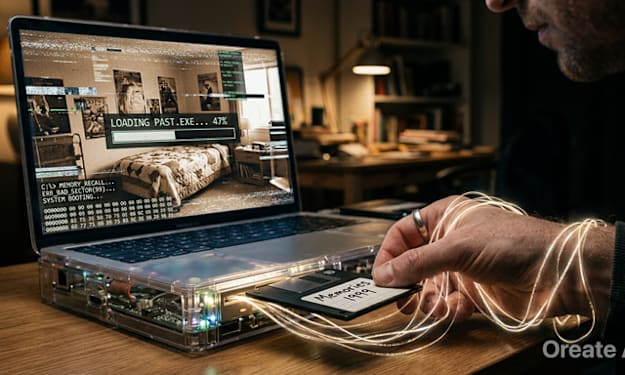
Booting the past. AI-Generated.
Imagine if the human mind worked exactly like a computer. Every experience, every emotion, every conversation, and every moment of joy or heartbreak would be stored somewhere deep within an invisible archive. Some memories would remain easily accessible, while others would become buried beneath years of new experiences, hidden away like forgotten files in an old hard drive. Yet, despite the passage of time, those memories never truly disappear. They simply wait for the right trigger, the right emotion, or the right moment to be loaded again. This is the idea behind Booting the Past—the process of reconnecting with memories that have shaped our identity and influenced the person we have become today. Just as a computer requires a boot sequence to load its operating system, human memory often requires its own sequence of activation. A familiar song can suddenly transport us back to a childhood afternoon. The scent of old books may remind us of a classroom from years ago. A photograph hidden inside a drawer can instantly unlock emotions we thought were long forgotten. These moments feel almost magical, as though a hidden system within our minds has awakened and begun restoring lost data. Memory is one of the most remarkable abilities possessed by human beings. It allows us to learn, adapt, and maintain a sense of continuity throughout our lives. Without memory, every day would feel disconnected from the last. Our identities are built from countless experiences woven together over time. In many ways, we are not only living in the present—we are also carrying an entire archive of the past wherever we go. However, memory is not a perfect recording device. Unlike a computer that stores information in exact form, human memory is dynamic. Every time we remember an event, we may slightly alter it. Details fade, emotions evolve, and perspectives change. This means that the past we recall today may not be identical to the past we experienced years ago. Instead, memory acts more like a living story that continues to adapt as we grow. The concept of "booting" memories becomes especially important during periods of self-discovery. Throughout life, people often search for answers about who they are and why they think the way they do. Sometimes those answers cannot be found by looking forward. They can only be discovered by revisiting experiences from the past. A person who remembers overcoming challenges as a child may regain confidence during difficult times. Someone who reconnects with forgotten dreams may rediscover passions they abandoned years ago. By loading these experiences back into consciousness, individuals can better understand the foundations of their character and purpose. Technology provides an interesting comparison. When a computer starts up, it loads essential files needed for operation. Similarly, our minds constantly load memories that influence decisions, emotions, and behavior. Many of these processes happen automatically. We may not consciously think about a particular childhood experience, yet it may still shape our reactions to situations in adulthood. This hidden influence demonstrates the incredible power of memory. The past is never completely separate from the present. Instead, it quietly operates in the background, affecting how we perceive the world. Modern neuroscience continues to reveal fascinating insights into how memories are formed and stored. Scientists have discovered that memories are distributed across complex networks within the brain rather than being stored in a single location. Every recollection involves the activation of multiple regions working together to reconstruct an experience. In a sense, remembering is less like opening a file and more like rebuilding a scene from interconnected pieces. This explains why memories can feel incomplete. Sometimes we remember a face but not a name. Other times we recall an emotion without remembering the event that caused it. These fragments are like pieces of an unfinished puzzle waiting to be connected. The digital age has also transformed how humans interact with memory. Smartphones, cloud storage, social media, and digital photographs allow people to preserve moments with unprecedented accuracy. Every day, billions of images and videos are captured around the world. Yet despite these technological advances, digital records can never fully replace human recollection. A photograph may show what happened, but it cannot completely capture how it felt. The warmth of a family gathering, the nervous excitement before a major achievement, or the comfort of a familiar voice are experiences that exist beyond pixels and data. They live within memory itself. There is also a deeper emotional dimension to revisiting the past. Not all memories are joyful. Some contain disappointment, regret, or loss. Nevertheless, these memories remain valuable because they contribute to personal growth. Challenges often teach lessons that success cannot. Moments of failure can provide wisdom, resilience, and empathy. Booting the past does not mean becoming trapped within it. Rather, it means acknowledging its presence and learning from it. Just as outdated software can be updated while preserving important information, individuals can move forward while retaining the lessons of previous experiences. The most meaningful aspect of memory may be its connection to identity. Every memory acts as a thread in the story of a person's life. Together, these threads form a narrative that explains where we have been and who we are becoming. When we revisit forgotten moments, we often gain a clearer understanding of ourselves. Sometimes the smallest memory can have the greatest impact. A simple conversation remembered years later may inspire a life-changing decision. A forgotten photograph may reignite a passion. A familiar melody may remind someone of the dreams they once held. In this way, memory is not merely a record of the past—it is a bridge between past, present, and future. The journey of booting the past is ultimately a journey of rediscovery. It is about uncovering hidden archives within the mind, reconnecting with forgotten experiences, and understanding the events that have shaped our lives. Every memory restored adds another piece to the larger picture of who we are. As we continue moving forward, the past remains quietly stored within us, waiting for the moment it is needed once again. Like a system awakening from sleep mode, our memories can illuminate forgotten paths, reveal lost possibilities, and remind us of the stories that define us. The process never truly ends. New experiences are constantly being recorded while old memories continue to influence our lives. We are both the creators and the custodians of our personal archives. Every day adds another chapter, another file, another fragment to the ever-growing collection of moments that make us uniquely human. And whenever we choose to look back, we begin the process once more—loading forgotten fragments, restoring lost connections, and booting the past.
By Touseef Gul4 months ago in Psyche
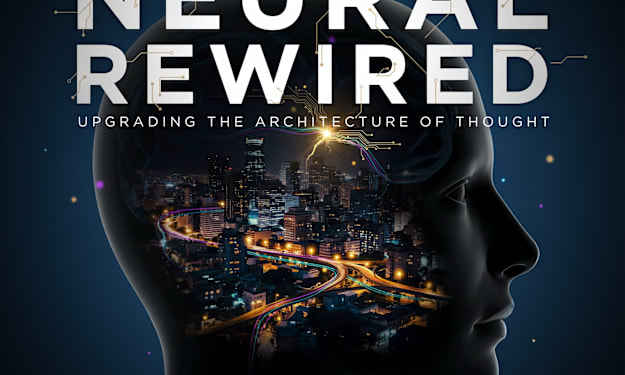
"Neuroplasticity Unleashed: Rewiring Your Brain for a Sharper Memory". AI-Generated.
Introduction: The Myth of the "Bad Memory" For centuries, people believed that memory was fixed—like a box you either inherited full or empty. If you forgot names, misplaced keys, or blanked during exams, the conclusion was simple: you just don't have a good memory. Modern neuroscience has shattered this myth. The truth is far more empowering. Your brain is not a static organ; it is a dynamic, living forest of connections that reshapes itself with every thought, emotion, and experience. This ability is called neuroplasticity. Neuroplasticity means your brain can grow new neurons, strengthen existing pathways, and even reassign functions when one area is damaged. More importantly for memory, you can deliberately train your brain to become sharper, faster, and more reliable—at any age. This article explores the science behind memory boosting and provides actionable techniques to unleash your cognitive potential. How Memory Really Works: The Encoding, Storage, Retrieval Model Before rewiring anything, understand the three steps of memory: 1. Encoding – Your brain converts sensory input (a face, a number, a smell) into a neural code. If you're distracted, encoding fails. 2. Storage – The information is held over time. Short-term memory lasts seconds; long-term memory can last a lifetime if consolidated. 3. Retrieval – You access stored information. Retrieval failure is often mistaken for forgetting—the data is there, but the pathway to it has grown weak. Neuroplasticity influences all three stages. By repeatedly practicing retrieval (testing yourself) and elaborative encoding (connecting new data to old knowledge), you physically thicken the myelin sheaths around neurons, speeding transmission. This is why memory champions aren't born—they're made through systematic training. The Surprising Culprits That Weaken Memory You may be unknowingly sabotaging your brain. Common memory blockers include: · Chronic stress – Cortisol literally shrinks the hippocampus, the memory center. · Multitasking – Task-switching fragments encoding; nothing sticks. · Poor sleep – During deep sleep and REM, the brain replays and transfers memories from temporary to permanent storage. Skimp on sleep, and you delete the day's learning. · Information overload – Without intentional review, Ebbinghaus's Forgetting Curve shows we lose 50% of new information within an hour. The good news? Each of these can be reversed with habit changes. Practical Techniques to Rewire Your Memory Here are science-backed strategies, moving from simple to advanced. 1. The Spaced Repetition System (SRS) Instead of cramming, review information at increasing intervals: 1 hour, 1 day, 3 days, 1 week, 1 month. Apps like Anki automate this. SRS leverages the brain's predictive timing—each successful recall strengthens the neural circuit more than passive rereading ever could. 2. Elaborative Encoding & The Memory Palace To remember a list (groceries, speeches, exam points), associate each item with a vivid, bizarre, emotional image placed along a familiar route (your home, your commute). For example: "Milk" becomes a giant cow dancing on your doormat; "Eggs" become egg-shaped aliens landing on your sofa. The absurdity locks in the memory. This technique, used since ancient Greece, works because our spatial and visual memory evolved to be far stronger than abstract recall. 3. Active Recall Over Passive Review Reading a chapter twice is low-yield. Instead, close the book and write down everything you remember. Then check for gaps. The effort of retrieval—even when you fail—triggers neuroplastic repair and strengthens the pathway. Studies show active recall doubles retention compared to re-studying. 4. Teach What You Learn Explaining a concept to someone else (or even to an imaginary audience) forces your brain to reorganize information logically, fill in holes, and use multiple sensory channels. Teaching is the ultimate consolidation technique. Lifestyle Boosts for Neuroplasticity No technique works if your brain lacks the raw materials and energy. · Sleep hygiene – Aim for 7–9 hours. A 20-minute nap after learning can boost recall by 20–30%. · Omega-3 fatty acids – Found in fish, walnuts, flaxseeds. They reduce inflammation and support synaptic membrane fluidity. · Physical exercise – Aerobic exercise (brisk walking, running, swimming) increases BDNF (Brain-Derived Neurotrophic Factor), a protein that stimulates neuron growth and protects existing cells. Just 20 minutes of walking before a study session improves encoding. · Novelty and challenge – Learning a new language, musical instrument, or complex game (chess, bridge) creates new dendritic spines. Doing the same crossword daily plateaus; constantly challenge yourself. The Mindset Shift: Embrace Forgetting to Remember Better Paradoxically, healthy forgetting is essential for good memory. Your brain prunes weak, irrelevant connections to save resources for important ones. If you forgot where you put your glasses yesterday, that's normal. If you forgot a close friend's name, that's a signal to train. Don't fear forgetting—it guides your review schedule. Celebrate the act of relearning because each retrieval attempt re-engraves the memory. A 7-Day Jumpstart Plan · Day 1: Audit your sleep and stress. Commit to 7.5 hours in bed. · Day 2: Learn one memory palace route (your living room to kitchen). Place 5 random objects on it. · Day 3: Replace highlighters with blank paper. After reading a page, write down three key points from memory. · Day 4: Take a 20-minute walk before your next learning session. · Day 5: Teach a family member or record a voice memo explaining one concept you want to remember. · Day 6: Set up a spaced repetition app (Anki) and add 10 flashcards. · Day 7: Review your week. Test yourself on Day 1's 5 objects—you'll likely remember them perfectly. Conclusion: Your Brain is Clay, Not Stone The title Neuroplasticity Unleashed is not an exaggeration. Every time you choose to sleep an extra hour, quiz yourself instead of rereading, or walk before studying, you are physically reshaping your brain's wiring. Memory isn't a gift—it's a practice. Start small, be consistent, and within weeks, you will notice names coming easier, facts sticking longer, and the quiet confidence of a mind that works with you, not against you. Your hidden potential has been waiting for you to unlock it. The key is in your hands—neural, plastic, and ready to change
By Touseef Gul4 months ago in Psyche
The Mental Health Apocalypse
THE NUMBERS THAT SHOULD ALARM EVERYONE 📊 One in five American adults experiences a mental health disorder in any given year. Among adolescents and young adults aged thirteen to twenty-five, rates of anxiety disorder have increased by approximately sixty percent over the past decade. Depression rates have doubled in the same period. Suicide rates among young people, which declined for most of the twentieth century as living standards improved, reversed direction in 2011 and have been climbing since, with the reversal correlating precisely with the widespread adoption of smartphones and social media among adolescents. Emergency department visits for mental health crises among children and teenagers increased by approximately fifty percent in the years surrounding the COVID-19 pandemic and have not returned to pre-pandemic levels despite the resolution of the acute pandemic phase. These numbers are not statistical abstractions. They represent millions of specific young people experiencing specific suffering that impairs their development, their relationships, their education, their careers, and in thousands of cases each year, their continued survival 😢
By The Curious Writer4 months ago in Psyche