

Does Every Child Matter?
For decades, the truth about residential and boarding schools in Canada has lingered in the shadows, only spoken in fragments, denied in silence, or dismissed as inconvenient history or worse, accusing the stories of being “exaggerated That silence is breaking. Stories are being told. Graves are being uncovered. The call for justice is no longer something that can be silenced.
Many Canadians support the investigation and prosecution of those responsible for crimes against Indigenous children. That support matters. It is necessary. But it also raises a harder question—one that sits uncomfortably beneath the surface:
Is our commitment to justice complete, or selective?
In 2015, Scotland launched the Scottish Child Abuse Inquiry, a sweeping effort to examine abuse across private and state-run residential institutions. It continues to this day, methodically uncovering truth wherever it leads. Canada has taken steps—important ones—but they remain focused largely on Indigenous experiences. That focus is justified. It is overdue. But it is not the whole story.
I know this because I lived another part of that story.
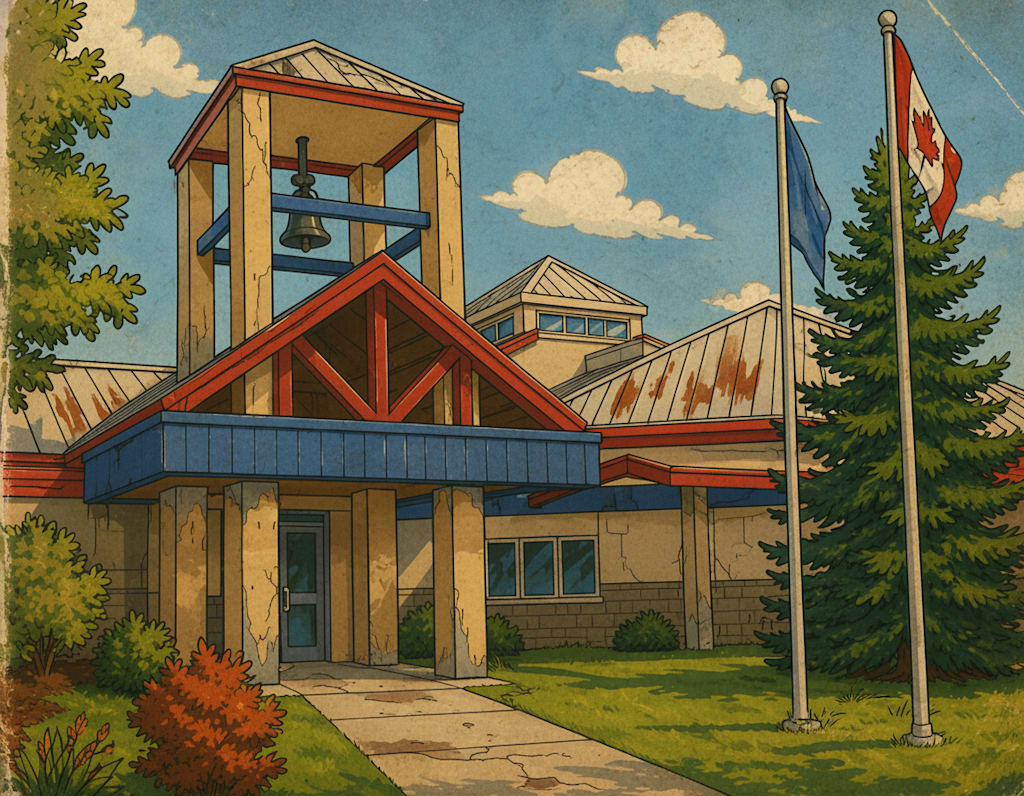
I was a student at what was once called the 1” toughest school in North America,” St. John’s School in Alberta. Behind its reputation for discipline and creating disciplined young men, something far darker existed. I was abused, sexually, physically, and psychologically, by both staff and fellow students. What happened there was not an isolated incident. It was a pattern. It lasted for years. And some of those responsible are still alive.
I have asked a simple question again.
Why has there been no full investigation into private boarding schools in Canada—past and present?
The answers, when they come at all, are polite but empty. Emails acknowledged. Calls unanswered. Institutions deflect. Churches respond with carefully worded documents. Some voices, even within faith communities, suggest it is better left alone, that the damage to reputations has already been enough.
But justice is not measured by comfort; justice should be for all.
In my search, I have spoken to officials, community leaders, and survivors. I have met people willing to listen, mayors who gave their time and attention, and individuals who showed genuine concern. But I have also encountered something else: hesitation. Boundaries. Lines drawn around who qualifies for recognition, for support, for action.
During one conversation with a government representative, I was told plainly that they could not help me because I was not Indigenous. The focus, I was told, must remain there.
That is when I asked the question that still echoes:
“Do Caucasian boys matter?”
There was a pause, it went long enough to say more than words could. The answer, when it came, was careful:
“Yes… But we cannot help them at this time.”
And with that, the conversation ended.
This is not an argument against the vital work being done to address the suffering of Indigenous communities. That work must continue fully, transparently, and without delay. But it cannot exist in isolation from other truths.
Abuse does not check ancestry before it harms a child.
As a boy, I carried my own burdens from family instability, violence at home, and a sense of not quite belonging. But none of that prepared me for what I experienced at that school. And nothing about my background made that abuse acceptable. Yet somewhere along the way, it seemed to become easier for institutions to look away.
What I have discovered since then is that I am not alone. There are many of us survivors from different backgrounds, different schools, different circumstances, but with strikingly similar stories. Neglect. Violence. Silence.
We are not asking for recognition at the expense of others.
We are asking for completeness in the pursuit of truth.
Because the question is not whether one group deserves justice more than another. The question is whether we are willing, as a society, to follow the truth wherever it leads, even when it complicates the narrative, even when it challenges institutions we would rather protect.
I ask again:
Does every child matter?
Not in words. Not in policy statements. But in action.
I hold no hatred toward those who harmed me. Carrying that would only extend their reach into my life. What I carry instead is a determination to speak, and a gratitude for the few who showed kindness when it mattered most: a teacher who offered friendship, a horse program that gave me a sense of peace, and writing, which became a way to survive.
To those who have listened, who have responded, who have dared to engage, I say thank you.
And to those who would prefer silence, or who believe this is a story best left buried: it is not.
Because somewhere, even now, there may be another child waiting for someone to ask the question—and mean it.
Do they matter?
(1) Toughest School in North America - Written by Richard de Candole May 2022 - Find it on Amazon.
About the Creator
Bruce Curle `
Greetings! I’m a Canadian writer, certified Life Coach, and actor with a passion for storytelling, creativity, and versatility.
Enjoyed the story? Support the Creator.
Subscribe for free to receive all their stories in your feed. You could also become a paid subscriber, letting them know you appreciate their work.
Comments
There are no comments for this story
Be the first to respond and start the conversation.