
Creating Daily Rituals That Support Emotional Wellbeing
Part 3

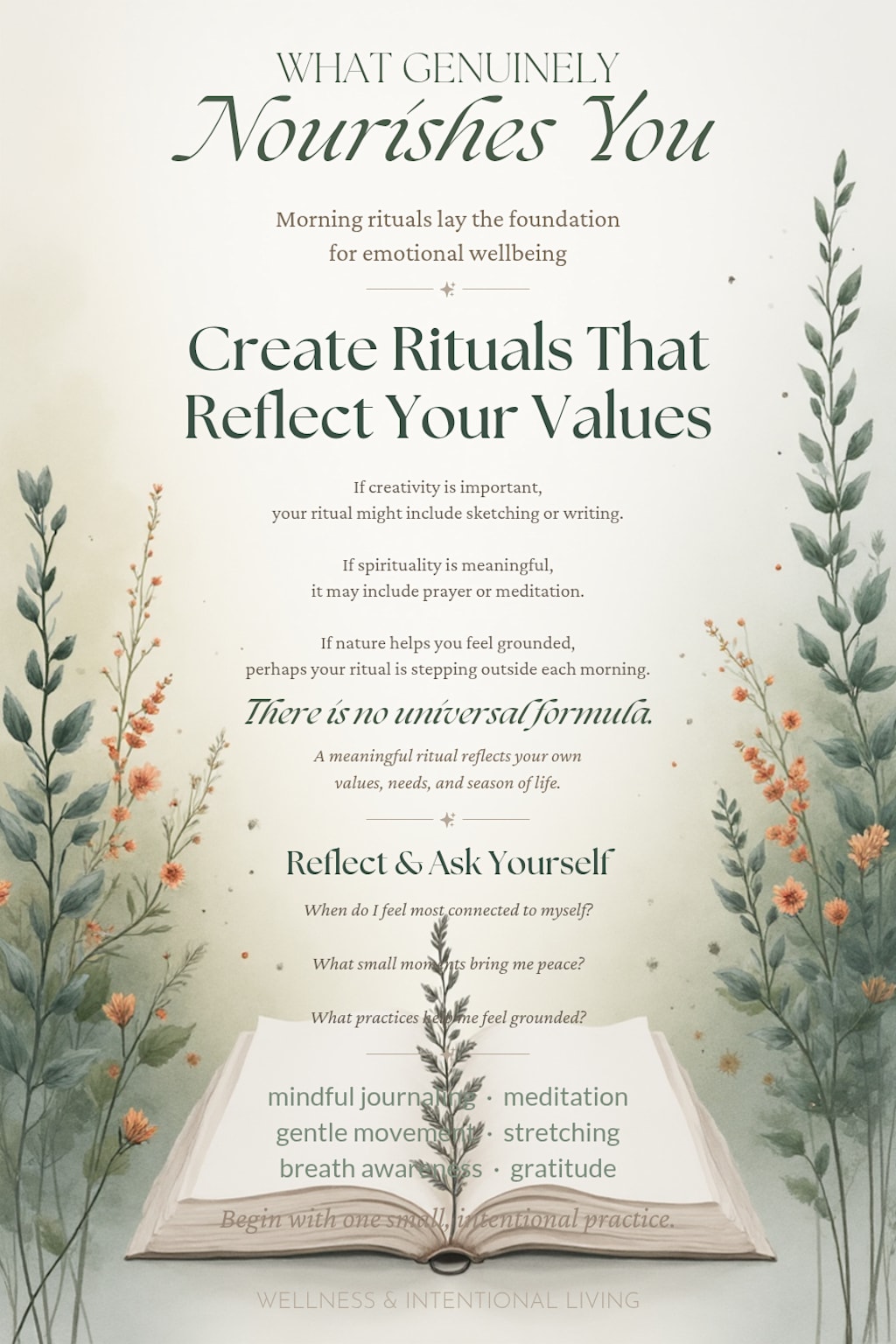
Evening Rituals, Reflection, and Building a Life of Intentional Presence
As the day comes to an end, many of us continue carrying the weight of unfinished conversations, responsibilities, disappointments, and worries about tomorrow. Our bodies may be physically home, but our minds are still replaying the day or anticipating what comes next.
An evening ritual offers something different.
Rather than ending the day by scrolling through social media or mentally reviewing everything that went wrong, an intentional evening practice creates space to acknowledge the day with honesty, gratitude, and compassion.
It is an opportunity to transition—not only from work to home, but from activity to rest.
The Importance of Ending the Day Intentionally
Just as a mindful morning can shape the hours ahead, a thoughtful evening can influence how we sleep, recover, and begin the following day.
An evening ritual doesn’t erase stress, but it can help us recognize what belongs to today and what can wait until tomorrow.
Ask yourself:
What am I still carrying?
What can I release for tonight?
What supported me today?
What does my body need before I rest?
These questions invite closure rather than rumination.
Designing an Evening Ritual
An evening ritual does not need to be elaborate. In fact, the simpler it is, the more likely it is to become part of your daily life.
You might include:
Turning off screens thirty minutes before bed.
Dimming the lights.
Lighting a candle or diffusing a calming scent.
Drinking a warm, non-caffeinated beverage.
Reading a few pages of a book.
Gentle stretching.
A brief meditation.
Writing in your journal.
Expressing gratitude.
The goal is not to complete a checklist—it is to create a rhythm that signals to your mind and body that it is time to rest.
A Daily Emotional Check-In
Before ending your day, pause and ask yourself:
Body
Where do I notice tension?
What sensations are present?
Am I physically tired, mentally tired, or both?
Mind
What thoughts keep repeating?
Is there something I need to write down instead of continuing to carry it?
Emotions
What emotion stayed with me today?
Did anything surprise me?
What do I need to acknowledge before I sleep?
Simply noticing is often enough.
Awareness itself is a meaningful practice.
Weekly Rituals for Emotional Wellbeing
While daily rituals create consistency, weekly rituals allow for deeper reflection.
Consider setting aside thirty to sixty minutes each week to review your experiences.
You might ask:
What brought me the most joy this week?
What challenged me?
When did I feel most connected to myself?
When did I ignore my own needs?
What am I learning about my emotional patterns?
Where do I want to grow?
This practice shifts your attention from simply getting through the week to understanding how you experienced it.
Creating a Personal Wellbeing Plan
Everyone’s emotional needs are different.
Rather than following someone else’s routine, create a plan that reflects your own values.
My Daily Practices
Morning:
Midday:
Evening:
My Signs of Wellbeing
When I feel emotionally grounded, I notice:
My Early Signs of Stress
My body usually tells me I need to slow down when:
My Sources of Support
The practices that help me reconnect include:
□ Journaling
□ Meditation
□ Gentle movement
□ Walking outdoors
□ Talking with someone I trust
□ Reading
□ Music
□ Creative expression
□ Rest
□ Other: ___________
There is no perfect plan. Allow it to evolve as your life changes.
A 30-Day Emotional Wellbeing Ritual Challenge
Rather than trying to transform your life overnight, commit to one month of gentle consistency.
Week One: Awareness
Each day:
Pause for three mindful breaths.
Notice one physical sensation.
Write one sentence about how you’re feeling.
Week Two: Presence
Continue Week One, and add:
Five minutes of journaling.
Five minutes of gentle stretching.
One intentional act of self-care.
Week Three: Reflection
Continue previous practices and add:
Evening gratitude journaling.
A daily emotional check-in.
One meaningful conversation where you practice active listening.
Week Four: Integration
Ask yourself each day:
What have I learned about myself?
Which rituals feel sustainable?
What do I want to continue after these thirty days?
Remember, success is not measured by perfection. It is measured by your willingness to return to the practice with kindness.
Journal Prompts for Ongoing Growth
Use these prompts whenever you want to deepen your self-awareness:
What helps me feel most like myself?
What activities leave me feeling nourished?
When do I feel most present?
What drains my energy?
How do I know when I need rest?
What boundaries support my wellbeing?
What am I grateful for today?
What emotions have I been avoiding?
What am I learning about myself this season of life?
What would caring for myself look like tomorrow?
There are no wrong answers.
Your journal is a conversation with yourself, not a performance.
Measuring Growth Differently
Many people measure progress by achievement.
Emotional wellbeing asks us to measure something different.
Perhaps progress looks like:
Recognizing your stress earlier.
Speaking more kindly to yourself.
Asking for help when you need it.
Respecting your own boundaries.
Taking breaks without guilt.
Recovering more gently after difficult days.
Growth often appears quietly.
Celebrate those moments.
A Letter to Yourself
As you conclude this article, consider writing yourself a short letter.
You might begin with:
“Dear Me,”
Thank yourself for showing up.
Acknowledge what has been difficult.
Recognize what you’ve survived.
Celebrate how far you’ve already come.
Offer yourself the same compassion you would extend to someone you deeply care about.
Keep this letter.
Return to it whenever you need the reminder.
Final Thoughts
Daily rituals are not about creating a perfect life. They are about creating moments of presence within an imperfect one.
Some days your ritual may last twenty minutes.
Other days it may simply be one conscious breath before responding to a stressful situation.
Both matter.
The goal is not to become someone new.
It is to become more deeply connected with the person you already are.
As you continue building these practices, remember that emotional wellbeing is not a destination you arrive at. It is a relationship you cultivate—with your body, your mind, your emotions, your values, and your community.
Each journal entry, each mindful breath, each stretch, each moment of gratitude, and each act of self-compassion is another invitation to return home to yourself.
That return will not always be easy.
It will not al
ways be graceful.
But it will always be worthwhile.
May your rituals become gentle reminders that you are worthy of care, deserving of rest, capable of growth, and deeply connected to the life unfolding one intentional moment at a time.
About the Creator
Dreadful.herbalist
Wisdom is only found by those that learn.
Enjoyed the story? Support the Creator.
Subscribe for free to receive all their stories in your feed.
Comments
There are no comments for this story
Be the first to respond and start the conversation.