
Counting Pennies and Brain Wiring: Why Do Some of Us Do Our Own Thing?
From a missionary’s bag of pennies to Elon Musk’s Neuralink, this story follows one question: why do some of us think in our own way?

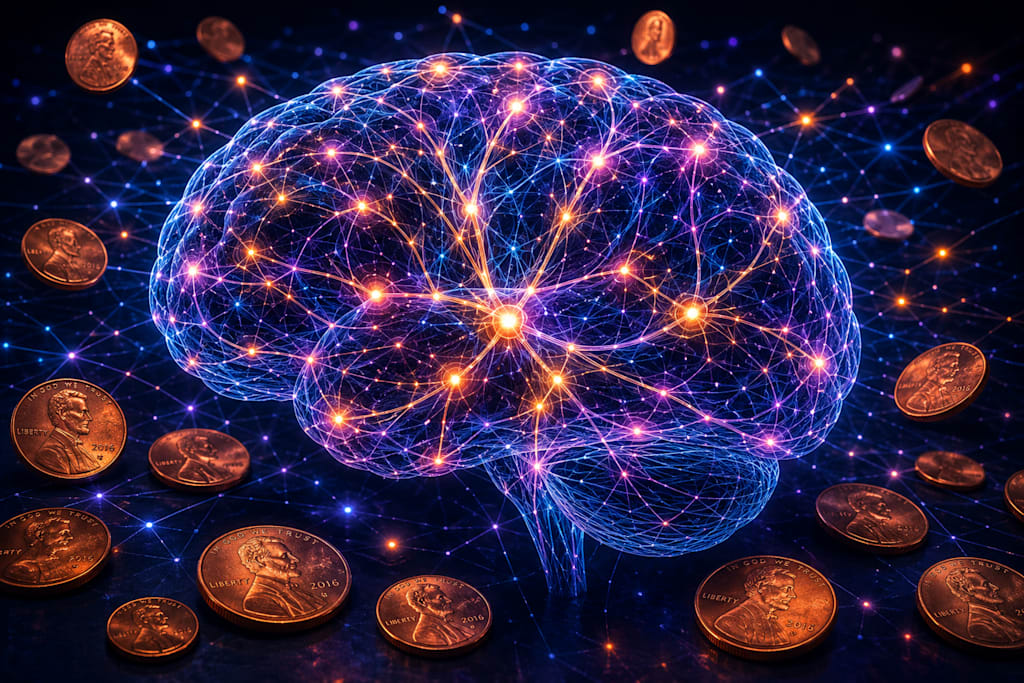
The Penny-Counting Puzzle
As always, one thing leads to another. A random memory drifted into my mind one day, and—like memories often do—it nudged me toward a bigger question. That moment from years ago made me wonder about brain connectivity, individuality, and why some people seem wired to do things differently.
Many moons ago, my late husband and I hosted a missionary friend from Jamaica. He and his wife were visiting churches in America, hoping to raise a little support for their ministry. One small, humble congregation handed him a brown paper bag filled with coins—mostly pennies. It was all they had, and they gave it with love.
Back at our apartment, we offered to help roll the coins. The bank required them to be wrapped, so we sat around the dining table with stacks of empty penny wrappers and that heavy bag of change.
The minister, his wife, and I all instinctively counted the same way: stacks of ten pennies. Five stacks equaled fifty cents. Simple. Efficient. Standard.
But my husband? He had his own system.
He made two stacks of ten, one stack of five, then repeated the pattern. Ten, ten, five. Ten, ten, five. Six stacks total—still fifty cents.
The math was correct. The counting method was… unexpected.
The three of us stared at him, baffled. He stared back, equally baffled that we didn’t see the brilliance of his approach. In his mind, two sets of twenty‑five cents made perfect sense. It was logical. It was certain. It was his way.

Are We on Sesame Street?
The penny-counting “incident” was an ideal Sesame Street moment, and I wished our kids could have seen it, but we had already put them to bed. On the acclaimed, award-winning educational TV show, Sesame Street, they would play this game. They would show 4 kids in 4 separate squares engaging in an activity. Perhaps you remember the song?
Three of these kids belong together. One of these kids is not the same…
My husband was the kid in the fourth square doing his own thing. But why?
His counting method wasn’t wrong. It wasn’t slower. It wasn’t confused. It was simply different.
And that difference stuck with me for years. Not because it caused a problem—it didn’t—but because it revealed something deeper about how people think. How can four people approach the same task and one of them take a completely different mental route to finish the task?
Your Brain’s Wiring: The Hidden Architect of Behavior
Can you recall a situation where you or somebody else was doing their own thing, totally different from everyone else? Do you know why?
ScienceDaily published an article explaining that differences in brain connectivity shape how we think and behave. Modern neuroscience suggests that each person’s brain is wired in a unique way. These variations influence how we process information, integrate ideas, and make decisions.
The article states:
“Differences in the physical connections of the brain are at the root of what make people think and behave differently from one another.”
That one sentence unlocked the mystery of the pennies.
- REF: Cell Press. “Brain Research Provides Clues to What Makes People Think and Behave Differently.” ScienceDaily, 6 Feb. 2013, https://www.sciencedaily.com/releases/2013/02/130206131048.htm.
When “Different Wiring” Becomes a Disorder
If it’s something harmless—like counting pennies—different wiring is just a fun quirk. But when the wiring affects emotional regulation, perception, or impulse control, it can become a serious neuropsychiatric challenge.
The ScienceDaily article was only an overview, but it opened the door to deeper questions about brain development, genetics, and the architecture of the mind. There were also links to related research which discusses how the brain changes during puberty – boys versus girls; brain architecture and genetic differences; and why highly intelligent brains tend to be more efficiently connected.
- However, this brain research article led me to ask another question: What about brain chips?
From Brain Wiring to Brain Hacking
If brain wiring shapes behavior, what happens when someone tries to alter that wiring?
People often claim the government is implanting chips in their brains to control them. To my knowledge, there’s no proof of that. And if such research existed, it would be locked behind layers of classified clearance far above my pay grade.
Still, the idea raises a chilling question: Could someone manipulate a healthy brain on purpose?
We all fear the archetype of the mad scientist. And while medical brain implants have helped many people, the possibility of mind control—real or imagined—lingers in the public imagination.
Mind Control or Medical Miracle?
Brain implants do exist, but they’re used for medical reasons: treating Parkinson’s, restoring movement, and helping people communicate. These are extraordinary breakthroughs.
- But what about non‑medical uses?
- What about altering behavior?
- What about controlling thought?
That's just science fiction? Maybe. But history has taught me never to underestimate what humans are capable of—good or bad.
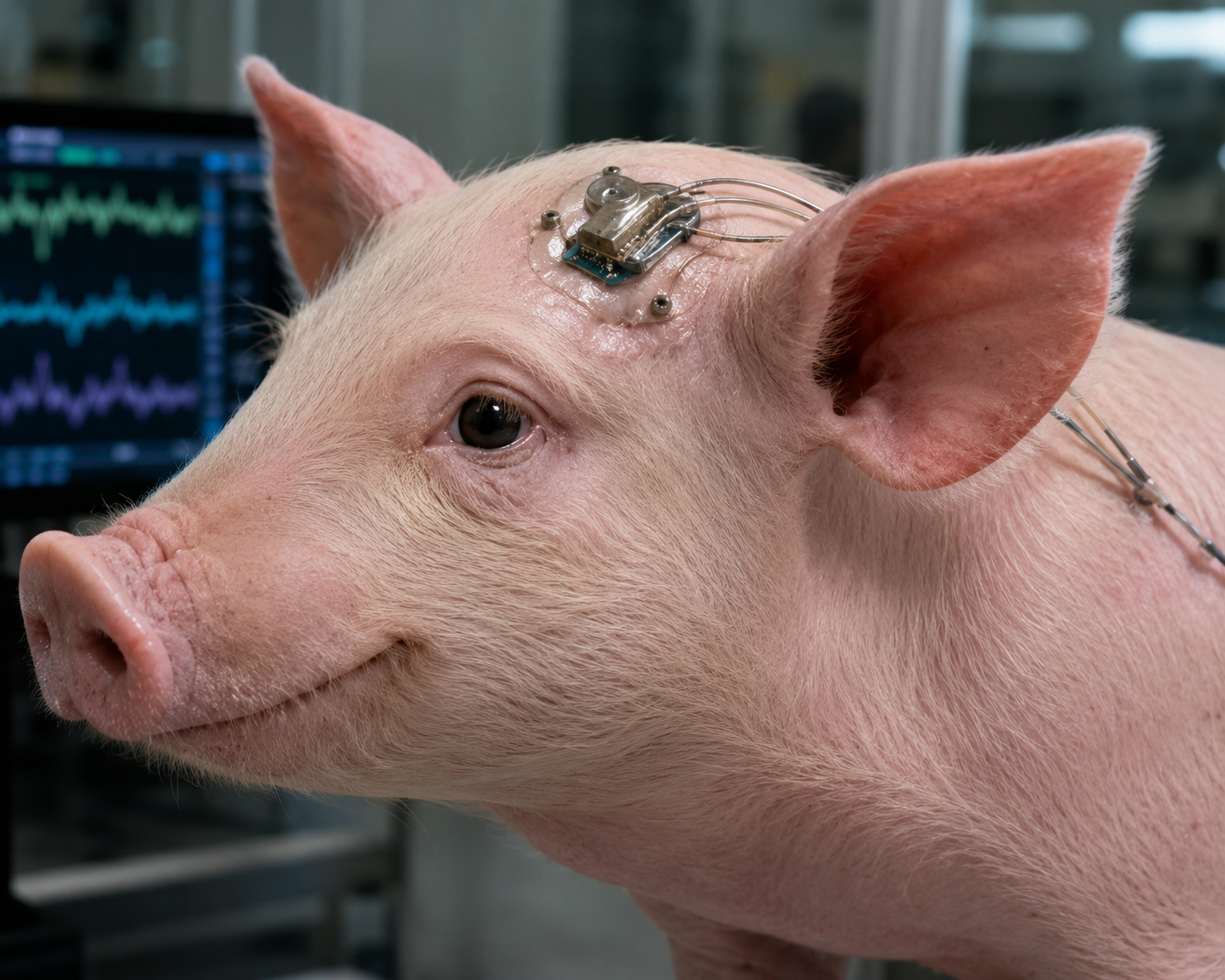
Elon Musk, Gertrude the Pig, and the Future of Neural Tech
If the ScienceDaily article intrigued you, the story of Elon Musk’s Neuralink will fascinate you.
In 2020, Musk revealed a brain implant placed inside a pig named Gertrude. He described the device as “a Fitbit in your skull.” His company’s clinical studies, he said, were making “good progress.”
Whether Neuralink becomes a medical revolution or a technological Pandora’s box remains to be seen.
- REF: Schumaker, Erin. “Elon Musk Unveils Brain Chip Implant: ‘It’s like a Fitbit in Your Skull.’” ABC News, 29 Aug. 2020, https://abcnews.com/Health/elon-musk-unveils-brain-chip-implant-fitbit-skull/story?id=72703840.
So, Why Do Some of Us Do Our Own Thing?
We are unique, and our brains' wiring is uniquely different. (DUH!)
I'm satisfied with this answer.
- Some of us follow the standard path.
- Some of us take the scenic route.
- Some of us stack pennies in neat rows of ten.
- Some of us build two tens and a five ~ twice!
Maybe that’s what makes the human brain endlessly fascinating.
Are you intrigued by the way the human brain works?
Look at my story. From a dining-table penny-puzzle to neuroscience, brain implants, and the future of human thought. Curiosity is its own kind of wiring. Ya think?🤔😊
Also, I could have modified the title of one of my favorite animated TV shows, “Pinky and the Brain” and titled this article “Pennies and the Brain”. Maybe I should do follow-up research on what kind of brain wiring makes my humor so cheesy. 😂🤣🤪😁
Thanks for reading.
About the Creator
Treathyl Fox (aka cmoneyspinner)
Work-at-home professional since 2007.
*NOTE* My content might contain affiliate links, meaning commissions might be earned if you click through to the vendor’s website.
My socials: * X (Twitter) * Bluesky *
* Blogger * Content Writer *
Enjoyed the story? Support the Creator.
Subscribe for free to receive all their stories in your feed.
Comments
There are no comments for this story
Be the first to respond and start the conversation.