
The World's Most Dangerous Addiction Doesn't Look Like an Addiction
Nobody warned me about this one. How passive consumption is silently killing your potential, your career, and your real progress.

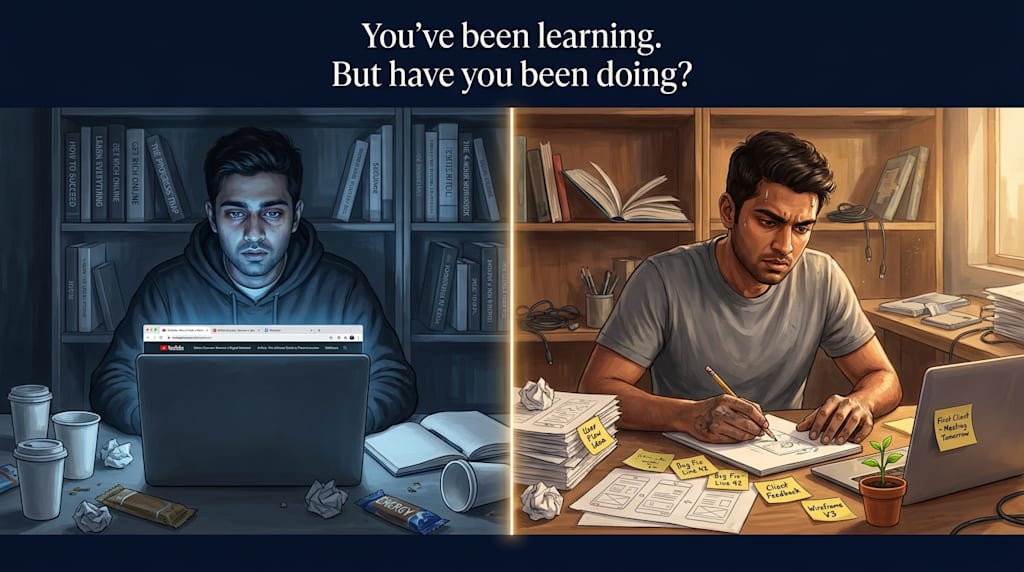
The World's Most Dangerous Addiction Doesn't Look Like an Addiction Nobody warned me about this one. When people talk about addiction, they picture someone in a dark room, unable to function. They picture bottles, pills, something visibly destructive. Something that looks like a problem. But the addiction I'm talking about doesn't look like that at all. It looks like productivity. It looks like ambition. It looks like a person who's always busy, always online, always doing something. It looks, honestly, like success. And that's exactly what makes it so dangerous. Let Me Tell You About Raza Raza is a 26-year-old guy from Lahore. Brilliant, motivated, the kind of person his family pointed to with pride. He had a laptop, a decent internet connection, and a burning desire to build something for himself. Every morning, he woke up and immediately picked up his phone. Before brushing his teeth, he was already watching a YouTube video about passive income. By 9 AM, he had three new tabs open — one about freelancing, one about crypto, one about dropshipping. By noon, he'd consumed four hours of content. By evening, he hadn't built a single thing. He went to bed feeling productive though. Informed. Like he was getting closer to his goal. He did this for eight months straight. Sound familiar? Maybe not Raza specifically, but the pattern? It Has a Name, But Most People Don't Know It What Raza was experiencing is called passive consumption addiction — and it's arguably the most widespread addiction of our generation. It's not about scrolling mindlessly. It's more subtle than that. It targets motivated people. Curious people. People who actually want to improve their lives. The trap is disguised as learning. You watch a video about starting a business — that feels useful. You read an article about morning routines — that feels productive. You follow seventeen creators who talk about discipline — that feels like growth. But here's the uncomfortable truth: consuming information about doing something is not the same as doing it. And your brain, the sneaky organ that it is, can't always tell the difference. When you watch someone explain how to build a website, your brain releases a small shot of dopamine. It feels like progress. It mimics the feeling of actually building something. So you chase that feeling again. And again. And suddenly you've watched 200 videos about freelancing and never sent a single proposal. Why This Addiction Is More Dangerous Than It Looks Traditional addictions come with obvious consequences. You can see the damage. You know something is wrong. This one? It comes with a highlight reel. You feel educated. You feel inspired. You collect knowledge like trophies. You can talk about business models, productivity systems, investment strategies — and never apply a single one. The danger is in the delay. A person addicted to scrolling Instagram knows they're wasting time. Deep down, they feel the guilt immediately. But a person addicted to self-improvement content? They feel virtuous. They feel like they're doing the right thing. The consequences only show up months later, when they look around and realize — nothing has changed. Same bank account. Same situation. Same dreams, still waiting. That delayed consequence is what makes this addiction so hard to catch and even harder to break. This Is a Global Problem, But It Hits Differently in Different Places In the West — the US, UK, Canada — this addiction shows up in people drowning in online courses they never finish. Studies suggest the average completion rate for online courses globally sits somewhere around 10 to 15 percent. People buy knowledge and never use it. There's even a term for it: the "course graveyard." Dozens of programs purchased, opened once, abandoned. But the buyer still feels good because they own the course. Ownership felt like progress. In countries like Pakistan, India, and across South Asia, it takes a slightly different shape. Here, the dream of online earning — freelancing, YouTube, content creation — is incredibly powerful, especially for young people who see it as a way out of limited job markets. So they consume. Endlessly. Tutorials in Urdu and English about Fiverr, about graphic design, about how to make money on YouTube. The hunger is real. The effort of watching is real. But the application never comes, because the next video is always more appealing than the discomfort of actually starting. In both cases, the pattern is identical: information without action becomes a comfort zone disguised as a growth strategy. The Neuroscience Behind It (Without the Jargon) Here's what's actually happening in your brain when you fall into this loop. Every time you learn something new — watch a video, read an article, finish a podcast — your brain gets a small reward. A tiny hit of dopamine. It associates that feeling with the act of consuming content. Over time, your brain starts to prefer that easy reward over the harder, slower reward that comes from actually doing something. Building a skill is uncomfortable. Progress is slow. You make mistakes. You feel stupid. There's no dopamine hit at the beginning — just frustration. But watching someone else do it? That's smooth. That's comfortable. That's ten dopamine hits in one hour. So your brain quietly starts steering you toward consumption and away from creation. And you don't even notice it happening. You just notice that you've been "learning about freelancing" for a year and still haven't landed a client. The Moment I Recognized It in Myself I'm not writing this from the outside looking in. I lived this. There was a period where I had bookmarked so many articles about writing that I genuinely felt like a better writer — without having written anything new in weeks. I had a folder called "Inspiration" with over 400 saved posts. I revisited it often. It felt like research. It felt like preparation. But preparation without execution is just procrastination with better branding. The wake-up call came when a friend asked me to share something I'd written recently. I opened my drafts. Everything was half-finished. Everything was saved "for later." Later never comes when you're addicted to consuming. The Three Warning Signs You're Already In It You might be in this trap right now. Here are three signs that are easy to miss: The first is that you feel busy but stuck. Your days feel full. You're always consuming something — a podcast during your commute, videos in the evening, articles at night. But when you look at your actual progress toward your goals, nothing is moving. That gap between feeling busy and actually progressing? That's the addiction at work. The second is that you need more content to feel motivated. Early on, one good video could fire you up for a week. Now you need three videos just to feel like starting. That's tolerance building — the same mechanic that operates in every addiction. You need more of the same thing to get the same effect. The third is that starting feels harder than it used to. The blank page, the empty screen, the first step — it all feels heavier than before. That's because your brain has been rewired to prefer passive intake over active output. Creation now feels difficult because consumption has become the default. How to Actually Break It This is where most articles would give you a seven-step plan. I'm not going to do that. Not because steps don't work, but because the real solution is simpler and harder at the same time. You have to make creation non-negotiable before consumption. Not instead of consumption. Before it. Before you watch a single video tomorrow morning, do one thing. Write one paragraph. Send one email. Design one element. Record one minute. Code one function. Whatever your craft is — do one unit of it before you consume anything. This sounds small. It is small. That's the point. The addiction is powerful because consumption is easy and creation is hard. You're not going to out-discipline it. You're going to out-structure it. When creation comes first, your brain starts reconnecting effort with reward. Slowly, the dopamine starts attaching to doing, not just watching. The 24-Hour Test Here's something practical you can try today. For the next 24 hours, cut your content consumption by 80 percent. Not forever. Just one day. No YouTube tutorials. No podcast episodes about productivity. No saved articles about how to succeed. Instead, spend that time doing whatever you've been consuming content about. Want to be a freelancer? Spend those hours sending proposals, not watching videos about proposals. Want to be a writer? Write. Not about writing — just write. Want to learn graphic design? Open the software and make something ugly. Make something wrong. Make something. At the end of 24 hours, notice how you feel. Probably a mix of frustrated and alive. That frustration? That's real progress. That's what growth actually feels like before it becomes comfortable. A Different Kind of Success Story Let me tell you about someone who broke this cycle. Amara is a 23-year-old in Toronto, originally from a Pakistani family. She spent two years watching YouTube videos about becoming a freelance graphic designer. She knew every tip, every tool, every platform. One day, her internet went out for a week. With nothing to consume, she opened Canva and just started making things. Random posters. Fake logos for fake brands. She posted them on Instagram with no strategy, no plan. Within three weeks, someone messaged her asking if she was available for work. She wasn't ready. She didn't feel ready. She said yes anyway. That client led to three more. She now runs a small freelance design business and earns more than she did at her part-time retail job. She told me later: "The internet going out was the best thing that happened to my career." She didn't need more content. She needed less. What This Addiction Is Really Costing You Time is the obvious cost. But that's not the heaviest one. The heaviest cost is identity. When you spend years consuming without creating, you start to see yourself as someone who learns about doing things — not someone who actually does them. That self-image hardens. It becomes who you are. And changing your habits is one thing. Changing who you believe you are is a much bigger fight. The longer you stay in passive consumption, the more you convince yourself that you're "almost ready." That you need just one more course, one more video, one more source of inspiration before you begin. But you're already ready enough. You've always been ready enough. The content told you that you needed more. That was the addiction talking. One Last Thing The most dangerous addictions are the ones that feel like virtues. And consuming self-improvement content feels virtuous. It feels responsible. It feels like you're taking your future seriously. But at some point, preparing to live your life and actually living it have to switch places. You don't need another video about finding your purpose. You need to go find it — messily, imperfectly, without a tutorial. The world doesn't reward the most informed person in the room. It rewards the one who actually showed up and did the work. Close the tab. Start the thing. That's the whole lesson. 
About the Creator
Muhammad Farman
**✨ Writer | Storyteller | Explorer ✍️** **Sharing unique stories, thought-provoking ideas, and unforgettable journeys that inspire, spark curiosity, and leave a lasting impact. 🌍📖**
Enjoyed the story? Support the Creator.
Subscribe for free to receive all their stories in your feed.
Comments
There are no comments for this story
Be the first to respond and start the conversation.