celebrities
Celebrities and other motivational icons who made it to the top, from real actors, athletes and authors who used to be just like you.
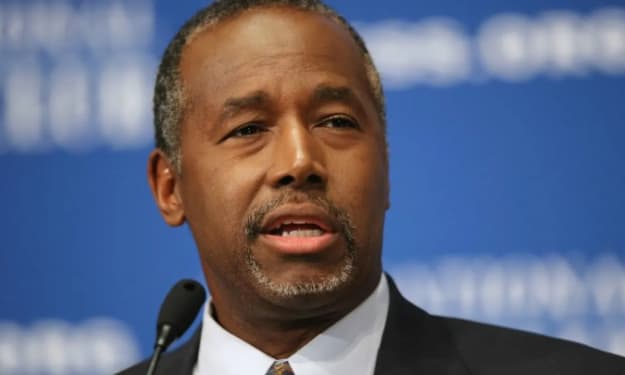
The Quiet Strength That Builds Success: Lessons from Ben Carson
In the still moments of our lives—between deadlines, ambitions, and the noise of daily expectations—most of us secretly ask: Can I really do this? Am I enough to face what’s next? These aren't just doubts; they are the quiet companions of anyone walking a hard road. And for those who keep going anyway, something remarkable begins to unfold.
By Suvichaar about a year ago in Motivation
"Lessons from the Pitch: Leadership, Teamwork, and Heart in Ted Lasso"
The world of soccer is not just a game—it’s a canvas for stories of transformation, leadership, identity, and connection. Ted Lasso, the hit television series centered around a small English football club and its unlikely American coach, takes the foundational principles of the sport and turns them into universal lessons on life, character, and relationships. At the heart of the show lies a rich interplay between soccer as a professional environment and Ted’s evolving role as a leader unfamiliar with the game but deeply in tune with people. Let’s dive into five powerful lessons drawn from the series—lessons that are as important to Ted’s journey as they are to anyone navigating the complexities of leadership and collaboration in any field.
By Nasir Khanabout a year ago in Motivation
The Bridge of Second Chances
In a quiet town nestled between golden hills and silent rivers, lived a young man named Rayan. At seventeen, he was known more for what he didn't do than what he did. He had dropped out of school, drifted through part-time jobs, and spent his nights staring at the stars, wondering what it all meant.
By Rahimullah Mohmandabout a year ago in Motivation
Personal Finance & Investing
Personal Finance & Investing----Personal Finance & Investing ___A Beginner’s Guide to Personal Finance & Investing Personal finance and investing might sound complicated, but they are essential parts of securing a financial future. Whether you're just starting or looking to learn more, this guide will break things down in simple terms, covering the basics of managing your money and growing your wealth through investing.
By MD Melonabout a year ago in Motivation
Small Habits, Big Change: How Tiny Daily Actions Transform Your Life. AI-Generated.
We often chase massive transformations—radical diets, dramatic career moves, or sweeping lifestyle overhauls—believing real change must be big, bold, and immediate. But the most sustainable and impactful transformations usually don’t start with major overhauls. They begin with something much smaller: micro-habits.
By Voice of Simplicityabout a year ago in Motivation
The Light of Hope
In a small village nestled among the mountains, there lived a young boy named Ahmad. From an early age, life tested him in every way. He lost his father when he was just a child, and his mother, a brave and hardworking woman, raised him alone. Every night before bed, she would whisper in his ear, “My son, life may be dark, but you must be the light that shines through it.”
By Rahimullah Mohmandabout a year ago in Motivation
Rafale: The Sky’s Dominator
Above the battlefield, where clouds meet conflict, one aircraft glides with elegance and strikes with deadly precision. This is the Rafale fighter jet — a symbol of technological excellence, aerial supremacy, and strategic power. Designed and built by the French aerospace company Dassault Aviation, the Rafale is a 4.5-generation multirole combat aircraft, trusted by some of the world’s most advanced air forces. It’s more than just a machine; it’s a flying weapon system that combines agility, intelligence, and lethality in one platform. The Birth of a Beast The development of Rafale began in the 1980s when France decided to build an aircraft that could perform air dominance, ground attack, reconnaissance, and nuclear strike — all in one plane. Unlike most other jets built for specific roles, the Rafale was designed from the start as an “omnirole” fighter — meaning it could do it all. The first flight of Rafale took place in 1986, and after years of refinement, it entered operational service in the French Air Force and Navy in the early 2000s. Since then, it has proven its worth in combat missions in Afghanistan, Libya, Mali, Iraq, and Syria. Design: Sleek, Smart, and Stealthy Rafale’s sleek design is not just for show — it’s a blend of aerodynamics and stealth. Its delta wings and canard foreplanes give it superior maneuverability, allowing it to perform tight turns and rapid climbs. It has a reduced radar cross-section, making it harder for enemy radars to detect. While it’s not a full stealth aircraft like the F-35, Rafale uses passive stealth techniques — such as special materials and shape — to minimize its visibility. Power and Performance Powered by two Snecma M88 engines, the Rafale can fly at a speed of Mach 1.8 (around 2,222 km/h). It has a combat range of about 1,850 kilometers and can refuel mid-air, making it capable of deep-strike missions. The jet is capable of taking off from both land bases and aircraft carriers, making it extremely versatile. Its powerful engines and fly-by-wire controls allow it to remain stable at all speeds and altitudes — from dogfights to high-altitude bombing runs. Technology and Avionics One of the Rafale’s strongest points is its cutting-edge avionics — the electronic systems that help it fly, fight, and survive. RBE2 AESA radar: Detects multiple targets from long range with pinpoint accuracy. SPECTRA electronic warfare system: Detects and jams enemy radar, launches countermeasures, and provides 360-degree threat awareness. OSF (Optronique Secteur Frontal): Infrared and optical sensors that allow Rafale to track and target without using radar. The cockpit is designed for the pilot’s ease and survival, with a wide-angle HUD (Head-Up Display), voice command system, and hands-on throttle-and-stick controls. The pilot can focus entirely on the mission without getting overwhelmed. Weapons: A Flying Arsenal The Rafale can carry a wide variety of air-to-air, air-to-ground, and air-to-sea weapons. It has 14 hardpoints (attachment stations for weapons) and can carry over 9.5 tons of external load. Key weapons include: Meteor: A beyond-visual-range air-to-air missile that can destroy enemies before they even see the Rafale. MICA: Dual-purpose missile for both short and medium-range aerial combat. SCALP: Long-range cruise missile for deep strikes. Hammer: Smart bombs with GPS and laser guidance. Exocet: Anti-ship missile. Nuclear capability: The Rafale is also capable of delivering nuclear warheads as part of France’s deterrence strategy. Rafale Around the World While initially a French exclusive, the Rafale has gained international popularity. Countries like India, Egypt, Qatar, Greece, and the UAE have bought Rafale jets, often praising their combat readiness, ease of maintenance, and operational flexibility. India’s acquisition of Rafale jets in 2016 was a landmark deal. In a region where aerial dominance is key, the Rafale gave India a strategic edge. Indian pilots have lauded the aircraft’s capabilities during training and operational missions. Battle-Tested Excellence Rafale is not just about numbers and specs — it’s a battle-proven aircraft. It has seen real combat in some of the world’s toughest environments. Whether bombing terrorist hideouts in the desert or intercepting enemy aircraft at high altitude, Rafale has always performed with reliability and precision. The Future of Rafale Dassault continues to upgrade the Rafale with next-generation sensors, improved engines, and network-centric warfare capabilities. It is expected to stay relevant well into the 2040s, and may even play a role in future European stealth fighter programs. --- Conclusion The Rafale is not just an aircraft — it’s a statement of power, technology, and modern warfare. It embodies the future of air combat while delivering results today. With its unmatched versatility, advanced systems, and graceful dominance in the skies, the Rafale stands as a legend in the world of fighter jets. Every time it takes off, the sky makes way — for the Rafale is not just flying, it is commanding the air.
By Noman Afridiabout a year ago in Motivation
Who Planted Hope"
In a small, forgotten village on the edge of a vast desert, where dust covered every rooftop and the wind sang songs of sorrow, lived a boy named Ayan. He was no different from other children his age—barefoot, thin, and sunburned—but he carried a seed of something powerful inside him. Not a seed of grain or fruit, but a seed of hope.
By Rahimullah Mohmandabout a year ago in Motivation
Where to Buy the Best Pant Coat for Boys in Pakistan — Trendy, Classy & Comfortable Picks
Looking to dress your little gentleman in something stylish, elegant, and season-appropriate? A well-fitted pant coat for boys is just what you need. Whether it’s a wedding, Eid celebration, birthday party, school function, or a family photo shoot — a smart coat pant for boys turns every young boy into a charming star.
By Ume Aiman Rajputabout a year ago in Motivation
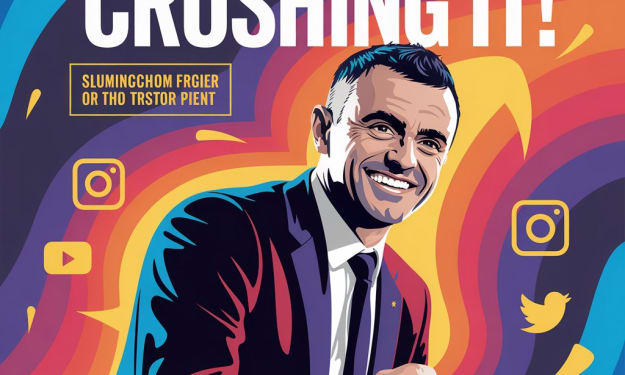
Crushing It!
The Foundation of Crushing It! Gary Vaynerchuk starts the book by discussing the importance of personal branding in the digital age. He believes that anyone, from a small-town entrepreneur to a large corporation, can use social media and online platforms to build a recognizable personal brand. Personal branding, according to Vaynerchuk, is no longer just about self-promotion. It’s about authenticity, providing value to your audience, and being consistent across platforms.
By Muhammad HUzaifaabout a year ago in Motivation
Saddam Hussein: The Last Roar of Arab Pride
The Beginning of a Storm Born in 1937 in the humble village of Al-Awja, near Tikrit, Saddam Hussein rose from poverty and abandonment to become one of the most influential — and controversial — figures of the Arab world. Orphaned young and raised by a harsh uncle, his early life was molded by survival, ambition, and a deep resentment toward colonial influence and oppression. By the 1950s, Saddam had joined the Arab nationalist Ba'ath Party, a political movement that believed in Arab unity, anti-imperialism, and strong leadership. His commitment was not just ideological — it was action-driven, daring, and often dangerous. He participated in the failed 1959 assassination attempt on then Prime Minister Abd al-Karim Qasim, marking the beginning of his reputation as a fearless nationalist. --- The Rise to Power Saddam's political climb was swift and calculated. In 1968, the Ba'ath Party seized power in Iraq. Saddam, though initially vice president under President Ahmed Hassan al-Bakr, quickly became the real force behind the government. By 1979, he formally took over the presidency — and Iraq would never be the same. Under his rule, Iraq experienced a unique blend of authoritarianism and advancement. He nationalized the oil industry, funneled revenues into education, infrastructure, and healthcare, and aimed to build Iraq as a modern Arab power. Literacy soared, universities expanded, and Baghdad emerged as a cultural and political capital of the Arab world. But his leadership came with an iron fist. Dissent was crushed with brutal precision. Political opponents vanished, and fear became a tool of governance. To some, he was a savior; to others, a tyrant. But even his critics could not ignore his defiance of Western dominance. --- The Revolutionary Voice What made Saddam Hussein distinct in the Arab world was not just his rule — but his roar. He dared to speak against Western imperialism, challenged Zionist expansion, and openly defied the United States. During the Iran-Iraq War (1980–1988), Saddam positioned himself as a bulwark against the spread of Iran's Islamic revolution into the Arab world. Though the war brought immense devastation, many Sunni Arab leaders saw him as their shield. In 1990, he invaded Kuwait, a move that would prove catastrophic. While his reasons were strategic — economic pressure, territorial disputes, and regional dominance — the reaction from the global stage was swift. The U.S.-led Gulf War in 1991 devastated Iraq's military and economy. International sanctions followed, isolating Iraq and plunging its people into suffering. --- The Downfall and the Trial The U.S. invasion of Iraq in 2003, under the pretext of weapons of mass destruction, marked the beginning of Saddam’s final chapter. Baghdad fell within weeks. Saddam disappeared, only to be found months later in a small underground hideout near Tikrit. His trial was public, polarizing, and emotionally charged. Supporters saw it as humiliation by foreign forces; critics called it justice long overdue. On December 30, 2006, Saddam Hussein was executed. His final words praised God, condemned foreign occupation, and invoked Arab unity. --- The Man, The Myth, The Memory To this day, Saddam Hussein remains one of the most debated figures in modern history. For some, he was a dictator who ruled through fear and war. For others, he was the last lion who dared to challenge the West and speak for Arab dignity. In a region fragmented by foreign interests and weakened leadership, Saddam stood out as a symbol of strength — even if his strength came with scars. His statues were torn down, but his image still appears on walls, in whispers, and in hearts yearning for self-respect and independence. --- A Final Salute History will always be divided about Saddam Hussein. But what cannot be denied is his impact — on Iraq, on the Arab identity, and on the global order. He ruled with fire, fell with defiance, and left behind a legacy that still echoes in debates, documentaries, and dreams of a united Arab future. Saddam Hussein was not just a man — he was a moment in Arab history. A moment that roared.
By Noman Afridiabout a year ago in Motivation