celebrities
Celebrities and other motivational icons who made it to the top, from real actors, athletes and authors who used to be just like you.
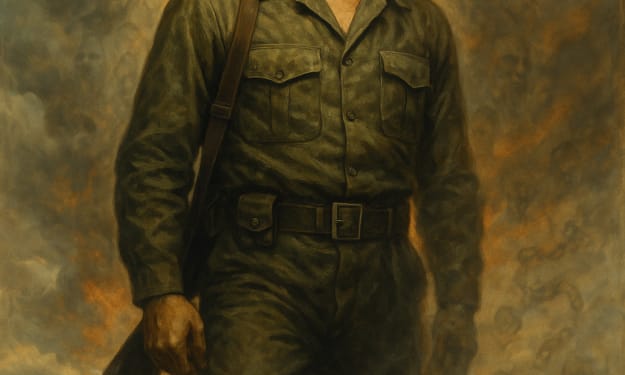
The Fire of the Mountains: Che Guevara’s Revolutionary Journey
Introduction: A Dream Born in Smoke and Sacrifice In the thick forests of Latin America, where bullets echoed louder than dreams and freedom was paid for in blood, a man emerged whose very name became the anthem of rebellion — Che Guevara. His revolutionary journey wasn’t just about overthrowing dictators. It was a burning mission to awaken the soul of the oppressed and challenge the empires of greed. This is the story of a man who walked away from comfort and safety to fight for strangers, only to become a legend. --- Caption: “If you tremble with indignation at every injustice, then you are a comrade of mine.” — Che Guevara --- Chapter 1: A Doctor with a Diagnosis for the World Ernesto Guevara, an Argentine doctor with a sharp mind and a compassionate heart, had seen enough of human suffering. In 1952, during his motorcycle journey across South America, he witnessed the lives of miners, peasants, and lepers—humans treated as shadows by a cruel capitalist system. Medicine could heal the body, he thought, but only revolution could heal society. Upon meeting Fidel Castro in Mexico in 1955, Che's path changed forever. Castro spoke of freedom, justice, and revolution in Cuba — a land crushed under Batista's dictatorship. Che didn’t hesitate. He joined the 26th of July Movement as a combat medic, but soon proved to be much more. --- Caption: He came to heal, but found the world too wounded for medicine alone. --- Chapter 2: Guerrilla in the Sierra Maestra In December 1956, Che landed in Cuba with 81 revolutionaries aboard the yacht Granma. Most of them were killed or captured within days. But Che survived and took refuge in the Sierra Maestra mountains, where the seeds of revolution took root. Through mud, hunger, and blood, he trained fighters, wrote diaries, and led raids. He became both feared and beloved. Known for his strict discipline, yet respected for treating wounded enemies with compassion, Che rose to the rank of commander. Villagers saw him as hope incarnate. With every ambush, they grew stronger. By 1958, Che led the decisive attack on Santa Clara, capturing it in a fierce battle that led to Batista’s flight. --- Caption: He didn’t just fight for Cuba — he fought to ignite hope where despair had ruled for decades. --- Chapter 3: The Face of a New Cuba After the revolution’s victory in 1959, Che Guevara became a pillar of the new Cuban government. But he didn’t ask for wealth or rest. Instead, he worked day and night: managing banks, giving fiery speeches, reforming land laws, and leading volunteer labor brigades. He taught by example, cutting sugarcane alongside workers, sleeping on factory floors, and urging the youth to become the "new man" — selfless, moral, revolutionary. Yet bureaucracy frustrated him. He warned that true socialism couldn’t survive without constant revolutionary spirit. He feared comfort would rot the soul of the cause. --- Caption: Che wanted to build a world where dignity was the currency and equality was law. --- Chapter 4: Leaving Power to Fight Again In 1965, Che disappeared from Cuba. He left behind letters to Fidel, to his children, to the people — saying he was needed where the fight still burned. He first went to the Congo, hoping to assist a Marxist rebellion. But disorganization and infighting doomed the mission. Still hungry for justice, he moved to Bolivia in 1966. With a small group of fighters, Che began training locals in the mountains. But things didn’t go as planned. The CIA, the Bolivian military, and lack of support from the peasants weakened the campaign. Yet, Che refused to give up. Even starving, wounded, and hunted, he wrote: "I know the fight will be hard, but victory is possible." --- Caption: Some men chase glory. Che chased struggle, believing justice was worth more than life. --- Chapter 5: The End That Became a Beginning On October 8, 1967, Che was captured after a firefight in Bolivia. His hands tied, he was held in a small schoolhouse. Refusing to beg, he spoke to his captors with calm defiance. The next day, he was executed. His last words were: “Shoot, coward! You are only going to kill a man.” But Che was not just a man anymore. His death immortalized him. His image, fierce and defiant, became a global banner of resistance. --- Caption: He died with bullets in his body, but fire in his eyes — a martyr of rebellion. --- Conclusion: The Unfinished Revolution Che Guevara’s story is not just history — it’s a question to every generation: Will you accept the world as it is, or fight for what it could be? His enemies called him dangerous. His followers called him a saint. But everyone remembers him. Today, his face appears on walls, flags, and hearts — not because he was perfect, but because he dared to believe the impossible. He taught us that revolutions aren’t started by armies — they begin in the soul. --- Final Caption: Che Guevara — the man who died fighting, and lives on in every cry for freedom.
By Noman Afridiabout a year ago in Motivation
Che Guevara: The Revolutionary Spirit That Shook the World
Introduction: The Man Behind the Myth Che Guevara — a name that echoes through history with fire and defiance. Born Ernesto Guevara in Argentina, he was more than just a revolutionary; he was an icon, a dreamer, and a relentless fighter for justice. His journey from a medical student to a global symbol of rebellion is a tale of passion, sacrifice, and unwavering struggle. This is not just the story of a man, but of a movement that challenged empires and inspired generations. --- Caption: “Let me say, at the risk of seeming ridiculous, that the true revolutionary is guided by great feelings of love.” — Che Guevara --- Early Life and Ideals Ernesto Guevara was born on June 14, 1928, in Rosario, Argentina, into a middle-class family. Despite suffering from chronic asthma, young Ernesto developed a fierce will and intellectual curiosity. His home was filled with books, and from an early age, he immersed himself in literature ranging from Marx to Freud and Neruda. His parents were liberal thinkers, and this deeply influenced his worldview. He studied medicine at the University of Buenos Aires and dreamed of becoming a doctor who would serve the poor. But in 1952, everything changed when he took a motorcycle journey across South America with his friend Alberto Granado. This trip exposed him to the crushing poverty, exploitation, and social injustice faced by indigenous communities and working-class people. He began to question whether treating individual patients was enough when entire systems were sick. The seeds of revolution were sown. --- Caption: The motorcycle journey that opened his eyes—and closed the door to a normal life forever. --- Joining the Revolution: Cuba and Castro In 1955, while in Mexico, Che met Fidel Castro and Raúl Castro, exiled Cuban revolutionaries planning to overthrow the brutal dictatorship of Fulgencio Batista. Che immediately joined the 26th of July Movement and began training as a guerrilla fighter. His intelligence, discipline, and fearlessness made him a natural leader. Che was part of the historic Granma expedition in 1956 and fought in the mountains of Sierra Maestra, where he earned a reputation for his bravery and harsh discipline. By 1959, the revolution succeeded, Batista fled, and Che entered Havana as a victorious commander. His role in the revolution made him a hero among the people and a key figure in shaping the new Cuban government. --- Caption: From doctor to soldier, from soldier to legend — Che Guevara became a face of victory. --- Che in Power: Minister and Diplomat Che was given major responsibilities in the new regime. He became head of the National Bank and later Minister of Industry. He worked tirelessly to reshape Cuba’s economy based on socialist ideals, promoting land reform, literacy programs, and industrialization. He also traveled as a diplomat, speaking at the United Nations and building relationships with other revolutionary nations. However, Guevara grew increasingly disillusioned with bureaucratic politics and economic setbacks. He believed the true revolution lay in constant struggle—not in sitting behind a desk. His heart burned for action. --- Spreading the Flame: Congo and Bolivia After disappearing from public life in 1965, Che secretly traveled to the Congo (present-day Democratic Republic of Congo) to support a Marxist rebellion. The mission failed due to poor leadership and internal conflicts. Undeterred, he then moved to Bolivia to ignite another revolution. But this mission also faced insurmountable challenges. The local peasants didn’t support the movement, the Bolivian army was well-prepared, and the CIA closely monitored his activities. After months of hardship, he was wounded, captured, and executed on October 9, 1967. His last words to his executioner were: “Shoot, coward! You’re only going to kill a man.” And with that, a legend was born. --- Caption: His blood stained the soil of Bolivia, but his spirit soaked the soul of the world. --- Legacy: More Than a Face on a T-shirt Che Guevara became a global icon after his death. The famous photograph taken by Alberto Korda—Che in military fatigues with a determined gaze—became the most reproduced image in history. From protest banners to pop culture, his face became a universal symbol of rebellion. But Che’s legacy is complex. To some, he is a champion of the poor, a voice for the voiceless, and a martyr for justice. To others, he was a ruthless ideologue who believed in armed violence and failed revolutions. Regardless of perspective, no one can deny the impact he made on the world. His writings, especially The Motorcycle Diaries and Guerrilla Warfare, continue to inspire young activists, revolutionaries, and idealists worldwide. Universities still hold debates in his name. His image still leads marches. His dream of justice still burns in hearts. --- Conclusion: The Immortal Revolutionary Che Guevara’s life reminds us that ideas are powerful weapons, and the courage to stand against oppression can echo through centuries. He lived for a cause larger than himself and died with unwavering conviction. His body may have been buried in the Bolivian highlands, but his spirit rises wherever there is injustice. He remains a flame that continues to burn—challenging us all: Will we stand, or will we stay silent?
By Noman Afridiabout a year ago in Motivation
A Visionary Leader Donald Trump. AI-Generated.
When Donald J. Trump descended the escalator at Trump Tower in June 2015 to announce his candidacy for President of the United States, few political analysts took him seriously. He was a businessman and reality TV star with no prior political experience. Yet within 18 months, Trump had secured the Republican nomination and went on to win the presidency in a stunning upset over Hillary Clinton. Whether admired or criticized, Trump has left an indelible mark on American politics, transforming the political landscape with his unconventional leadership style and vision for the country.
By MD. Nazmul Haqueabout a year ago in Motivation
3AM in Brooklyn: A Fan’s Letter to Betnijah Laney-Hamilton
When it comes to the heart of the New York Liberty, no one beats louder than Betnijah Laney-Hamilton. She’s grit, grace, and championship gold all in one frame. And though she won’t be suiting up this season due to a tough meniscus injury, her presence still echoes across Barclays Center like a battle cry from last year’s title run.
By NWO SPARROWabout a year ago in Motivation
Franco Colapinto : The F1 Rookie Reigniting Argentina's Racing Dreams
Franco Colapinto: The F1 Rookie Who Just Gave Argentina a Reason to Dream Again In the high-octane world of Formula 1, where speed, precision, and legacy define greatness, a new name is beginning to echo across racing circuits and social media alike — Franco Colapinto. The 21-year-old driver from Argentina is not just another rookie in the paddock; he’s a symbol of hope, revival, and fierce determination. With his recent rise in Formula 2 and alignment with the Williams F1 Team, Colapinto is making headlines, turning heads, and more importantly — giving Argentina a reason to dream again.
By Md Abu Bakor Jihad about a year ago in Motivation
From Street Kid to Global King
On the sun-scorched streets of Madeira, Portugal, a skinny boy kicked an old ball against the walls of his neighborhood. He didn't sport fancy boots. He didn't sport proper equipment. But he possessed a dream—and an inner spark in his eyes that even his critics couldn't help but acknowledge. The kid's name was Cristiano Ronaldo dos Santos Aveiro. And he would go on to become one of football's all-time greats.
By Logan Bennettabout a year ago in Motivation
"The Fire Within: A Journey of Belief"
In a quiet village tucked between two sunlit hills, lived a young boy named Arman. He was not the strongest, nor the fastest, nor the most clever. But what he had—though he didn’t yet know—was something far greater. A fire. A fire within.
By Rahimullah Mohmandabout a year ago in Motivation
Google rolls out new AI and accessibility features to Android and Chrome
Google Adds New AI and Accessibility Features to Chrome and Android Google today announced a suite of new AI-powered and accessibility-focused features that will be available on Android and Chrome, further demonstrating its dedication to inclusivity and utilizing the power of artificial intelligence. On Global Accessibility Awareness Day, these updates were released with the goal of improving technology's usability and accessibility for all people, especially those who are blind or hard of hearing. Improved Image Interpretation with Gemini and TalkBack TalkBack, the built-in screen reader on Android, is getting a major upgrade thanks to a deeper integration with Google's cutting-edge AI model, Gemini. Users who are blind or have low vision can now ask Gemini follow-up questions about images and even their entire screen content, building on the AI-generated image descriptions that were introduced last year. For example, a user can ask TalkBack (powered by Gemini) about the make, model, or even other details of a new musical instrument if a friend sends them a picture of it. Richer context and more dynamic engagement with visual information are made possible by this improved interaction. Emotional Captions for Complex Audio Interpretation Expressive Captions is another innovative accessibility feature being unveiled. Beyond just transcribing words, this AI-powered tool offers real-time captions for any audio that is playing on an Android device. The subtleties of speech, including long words ("nooooo"), vocal sounds like sighs and laughter, and even background noises like applause or bird chirping, can now be identified and conveyed by expressive captions. Beyond just transcribing words, this AI-powered tool offers real-time captions for any audio that is playing on an Android device. The subtleties of speech, including long words ("nooooo"), vocal sounds like sighs and laughter, and even background noises like applause or bird chirping, can now be identified and conveyed by expressive captions. For people with hearing impairments, this extra layer of information offers a more thorough comprehension of the audio content. Additionally, to provide more context, a new "duration feature" will highlight words that are lengthy. Increasing the Accessibility of Chrome Additionally, Google is working to make its Chrome browser more accessible on desktop and Android devices. The incorporation of optical character recognition (OCR) for PDF documents is a significant advancement. Beyond just transcribing words, this AI-powered tool offers real-time captions for any audio that is playing on an Android device. The subtleties of speech, including long words ("nooooo"), vocal sounds like sighs and laughter, and even background noises like applause or bird chirping, can now be identified and conveyed by expressive captions. For people with hearing impairments, this extra layer of information offers a more thorough comprehension of the audio content. Additionally, to provide more context, a new "duration feature" will highlight words that are lengthy. Increasing the Accessibility of Chrome Additionally, Google is working to make its Chrome browser more accessible on desktop and Android devices. The incorporation of optical character recognition (OCR) for PDF documents is a significant enhancement. In the past, screen readers frequently failed to decipher the text within. Increasing the Accessibility of Chrome Additionally, Google is working to make its Chrome browser more accessible on desktop and Android devices. The incorporation of optical character recognition (OCR) for PDF documents is a significant enhancement. In the past, screen readers frequently had trouble deciphering the text in scanned PDFs. These documents' text can now be automatically recognized by Chrome, enabling users to search, highlight, copy, and have a screen reader read the content aloud. For users who depend on screen readers to access information, this removes a major obstacle. Additionally, Chrome for Android now has the Page Zoom feature, which desktop Chrome users are already accustomed to. This makes it possible for users to enlarge text on webpages without affecting the way the page looks or how they browse it. Users have more control over readability because they can apply their chosen zoom level to all websites or just particular pages. Providing Speech Recognition Tools to Developers Google is extending its Project Euphonia initiative by making open-source resources for developers available in recognition of the significance of diverse speech patterns. They will be able to further reduce barriers to communication by using these tools to create more inclusive speech recognition models that are better able to comprehend non-standard speech. Accessibility Beyond just transcribing words, this AI-powered tool offers real-time captions for any audio that is playing on an Android device. The subtleties of speech, including long words ("nooooo"), vocal sounds like sighs and laughter, and even background noises like applause or bird chirping, can now be identified and conveyed by expressive captions. For people with hearing impairments, this extra layer of information offers a more thorough comprehension of the audio content. Additionally, to provide more context, a new "duration feature" will highlight words that are lengthy. Increasing the Accessibility of Chrome Additionally, Google is working to make its Chrome browser more accessible on desktop and Android devices. The incorporation of optical character recognition (OCR) for PDF documents is a significant enhancement. In the past, screen readers frequently failed to decipher the text within. Increasing the Accessibility of Chrome Additionally, Google is working to make its Chrome browser more accessible on desktop and Android devices. The incorporation of optical character recognition (OCR) for PDF documents is a significant enhancement. In the past, screen readers frequently had trouble deciphering the text in scanned PDFs. These documents' text can now be automatically recognized by Chrome, enabling users to search, highlight, copy, and have a screen reader read the content aloud. For users who depend on screen readers to access information, this removes a major obstacle. Additionally, Chrome for Android now has the Page Zoom feature, which desktop Chrome users are already accustomed to. This makes it possible for users to enlarge text on webpages without affecting the way the page looks or how they browse it. Users have more control over readability because they can apply their chosen zoom level to all websites or just particular pages. Providing Speech Recognition Tools to Developers Google is extending its Project Euphonia initiative by making open-source resources for developers available in recognition of the significance of diverse speech patterns. They will be able to further reduce barriers to communication by using these tools to create more inclusive speech recognition models that are better able to comprehend non-standard speech. Accessibility For devices running Android 15 and later, the improved Expressive Captions and the new TalkBack features with Gemini integration are first being made available in a few English-speaking nations, such as the US, UK, Canada, and Australia. In the upcoming weeks, it is anticipated that Android Page Zoom and Chrome OCR for PDFs will be widely accessible. Google's most recent developments mark a major advancement in using AI to build a more inclusive and accessible online environment. Google is enabling people to engage with technology in more meaningful and thorough ways by concentrating on the unique requirements of users who are blind or hard of hearing. An even more smooth and intuitive experience is anticipated in the future as AI is further incorporated into accessibility features.
By Pabitra Nagabout a year ago in Motivation
The Voice Within
In a small mountain village nestled deep in the valleys of northern Afghanistan, lived a young girl named Amina. She was known for her quiet presence and shy demeanor, often blending into the background like a soft whisper in the wind. But Amina carried a secret — one that even she didn’t fully understand. She had a voice so pure, so powerful, that it could silence storms and awaken hearts.
By Rahimullah Mohmandabout a year ago in Motivation
From Struggles to Success
In the narrow streets of a crowded city neighborhood lived the Malik family — five members sharing a two-room rented house with peeling paint and leaky windows. Imran Malik, the father, was a mechanic who worked from sunrise to sunset, coming home with oil-stained hands and aching muscles. His wife, Shazia, worked just as hard at home — stitching clothes for neighbors, cooking whatever little she could afford, and trying to keep her children's dreams alive despite their circumstances.
By Kashmirabout a year ago in Motivation