
Let Women Be Women: Equality Was Never Meant to Mean Imitation
In a world chasing equality, are we quietly losing authenticity?
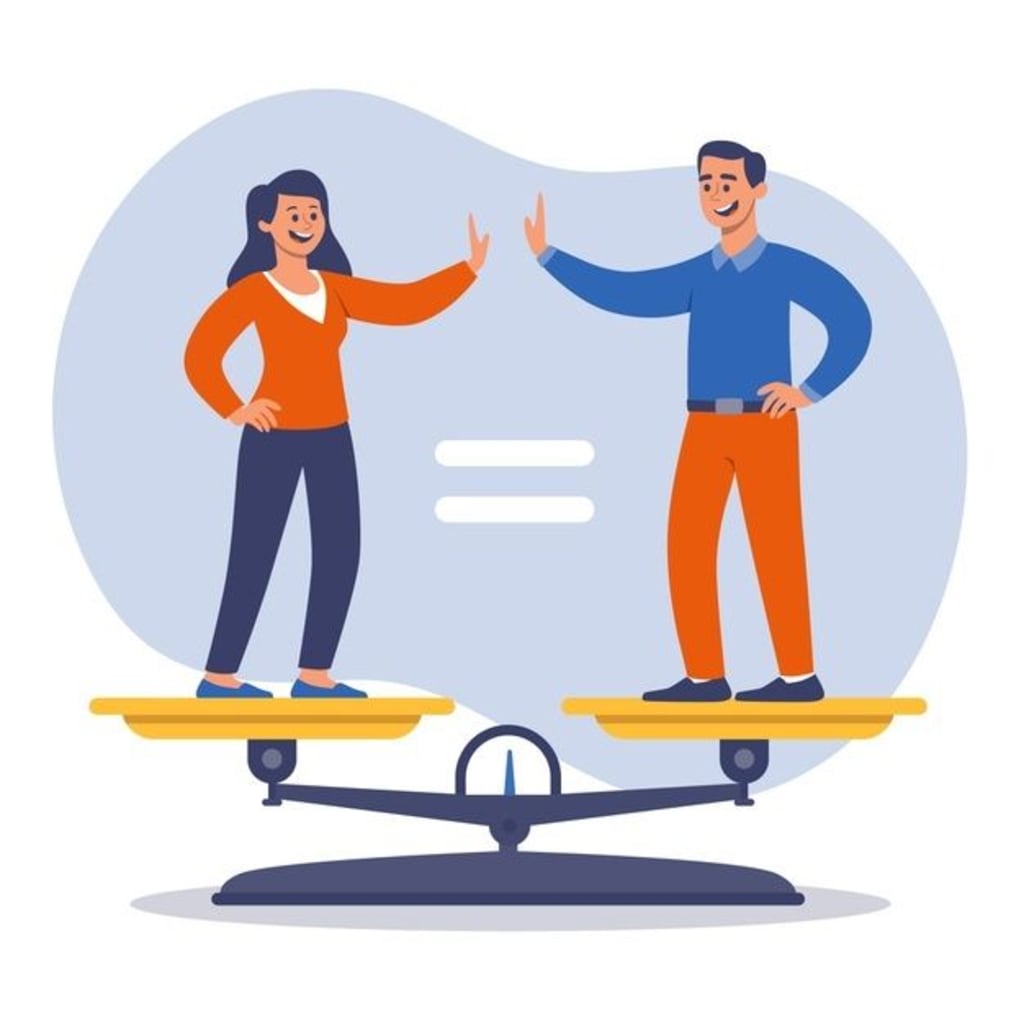
The Boardroom That Changed Everything
Ananya sat quietly in the meeting room, watching the conversation unfold.
Voices overlapped - assertive, sharp, often loud. Opinions were not just shared; they were projected. Every point felt like a competition. Every silence, a weakness.
“Speak up more.” “Be more direct.” “You need to own the room.”
She had heard it all before.
So she adapted. She learned to interrupt. She learned to sound firmer, almost colder. She trained herself to respond faster rather than reflect deeper.
And yes, she began to be noticed.
But somewhere in that transformation, a question slowly took shape:
“If I have to become someone else to succeed… is this really equality?”
When Equality Starts Looking Like Sameness
Feminism has brought necessary and powerful change. It has challenged injustice, broken barriers, and opened doors that were long closed.
But somewhere along the way, its interpretation has started to shift.
Equality is increasingly being confused with sameness.
The unspoken message?
To be equal, you must behave like men. Speak like them. Lead like them. Compete like them.
But is that truly empowerment?
Or is it another form of expectation - just packaged differently?
The Invisible Standard
Modern workplaces and societies often celebrate a certain style of success:
• Be assertive
• Be aggressive
• Be decisive, quickly
• Be emotionally detached
• Be dominant in conversations
These traits are often seen as markers of leadership.
But here’s the quiet truth:
many of these traits are historically associated with masculine behavioral norms.
So when women are asked to adopt them, the underlying assumption becomes:
“Your natural way of being is not enough.”
And that is where the contradiction begins.
The Strength We Are Slowly Being Asked to Hide
What if strength looks different?
What if leadership isn’t always loud, but deeply perceptive?
What if influence comes not from dominance, but from trust?
What if progress is built not just on competition, but collaboration?
Women often bring qualities that are undervalued simply because they don’t fit traditional molds:
• Emotional intelligence
• Intuitive decision-making
• Long-term relationship building
• Empathy-driven leadership
• The ability to listen - not just respond
These are not weaknesses.
In fact, in today’s complex, interconnected world, they are critical leadership capabilities.
Yet, instead of amplifying them, many women feel pressured to suppress them.
Feminism - And Its Unintended Turn
Feminism, at its core, was never about proving women can do what men do.
It was about proving:
Women have the right to choose who they want to be - and still be respected.
But in some conversations today, feminism is subtly drifting toward comparison and competition:
• “We can outperform.”
• “We can dominate.”
• “We can do everything they do.”
While these statements express strength, they also risk shifting the focus away from identity toward validation through comparison.
And in that shift, something important is lost.
The original intent wasn’t:
“Become like them.”
It was always:
“Be yourself - and still stand equal.”
Do We Really Need to Compete the Same Way?
This isn’t about rejecting ambition. It’s not about stepping away from leadership or success. It’s about redefining what those words can mean.
Do women need to compete the same way to succeed?
Or can they lead differently - and change the system itself?
Imagine workplaces where:
• Thoughtful listening is as valued as quick responses
• Collaboration is rewarded as much as competition
• Emotional awareness is seen as strength, not liability
• Leadership doesn’t have a single personality type
That is not idealism.
That is evolution.
Equality Without Erasure
True equality does not demand transformation. It demands recognition.
Recognition that:
• Women are not weaker - they are different
• And different does not mean lesser
• And equal does not mean identical
A balanced society is not built when one group adapts to another.
It is built when both are valued for what they uniquely bring.
Ananya’s Choice
The next time Ananya walked into the boardroom, she made a different decision.
She didn’t force herself to speak louder.
She listened - carefully.
She observed patterns others missed.
She spoke - when it mattered.
Her words weren’t rushed. They weren’t aggressive.
But they were clear. Grounded. Impactful.
And something shifted.
Not because she changed the tone of the room - but because she refused to lose her own.
Let Women Be Women
Women do not need to become men to build empires.
They can build them differently - and just as powerfully.
Let women lead with empathy.
Let them think deeply.
Let them communicate authentically.
Let them be strong - not by imitation, but by identity.
Because the goal of feminism was never to create copies.
It was to create balance.
The question is not whether women can match men.
The question is:
Why should they have to?
Maybe the real progress begins when we stop asking women to fit into existing definitions of success…
and start allowing them to redefine it entirely.
About the Creator
Enjoyed the story? Support the Creator.
Subscribe for free to receive all their stories in your feed.
Comments
There are no comments for this story
Be the first to respond and start the conversation.