
How To Write A Rhyming Poem When You Feel Intimidated By Poetry.
Rhyming poetry intimidated me so much that I once dropped out of a university writing course because of it.


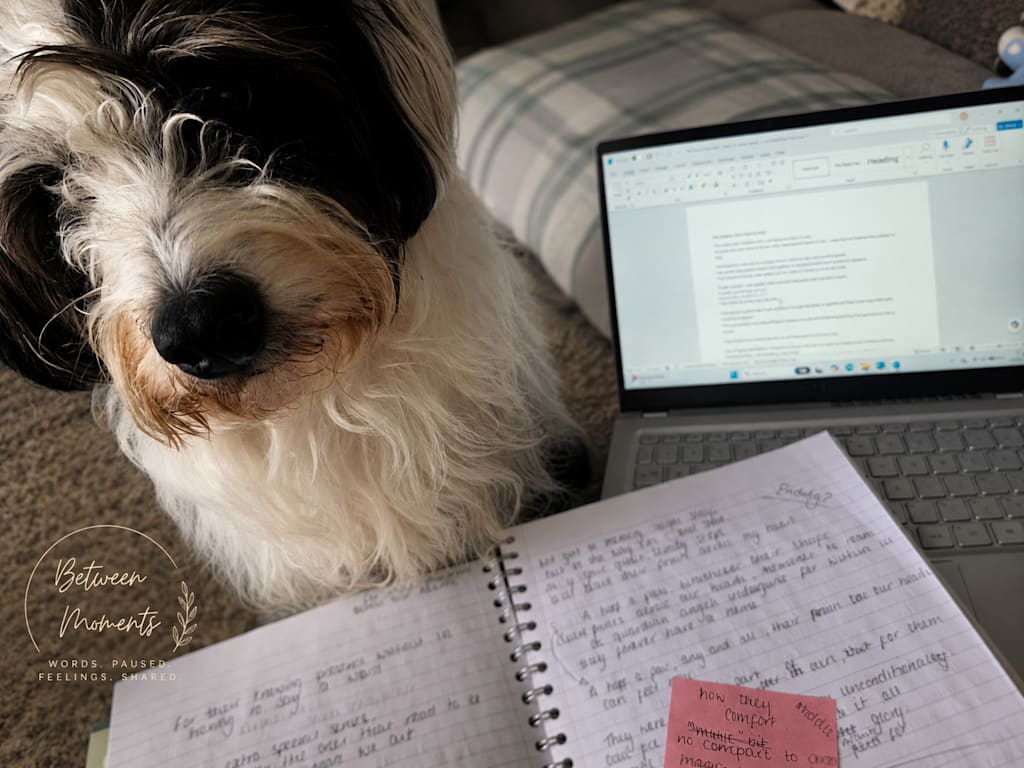
Nearly 20 years later - I loved publishing one.
I never thought I would write a rhyming poem.
Wouldn't attempt it, wouldn't even consider putting myself in a position to do so.
In fact, years ago, being a young-ambitious-dreamy student at university I added a side course of creative writing and poetry onto my degree.
Yet, pressure of "doing poetry right" was enough to turn my back on the course and any want to attempt it altogether.
Rhyming felt rigid. Technical. Exposed.
Every line would sound and feel forced to me.
Like I was trying to imitate poetry instead of feel it. I was contending with it.
So, in utter dismay with it, I admitted defeat and chose to avoid it.
Other pieces were and are different. On and off, I've felt comfortable and enjoyed working with prose. Prose felt different to me. It follows a more natural flow of speech - often freer, less bound by rhythm or strict poetic structure. It breathed more easily for me. More conversational. More instinctive.
I work best with everyday emotional writing that can breathe naturally without worrying whether "heart" needs to rhyme with "part" and where both need placing for all the rhythm and verse rules.
I have been writing more free verse recently - ideas kept on showing up in everything - with one of these, I for some reason, challenged myself. My latest poem wasn't another free verse or prose.
They have all been elegy poems. This one about pets.
Not really about pets, not in the simple sense, nor just about the loss of them, strictly. I kept with what is natural for me to work with - realness, love, emotion - between moments of the everyday: it's about what they quietly do for us, first.
"A look, a pause - that steady stare, the kind that sees what we do not share."
The way the know, before we do what we need best in that moment - every moment they're with us, until they do have to leave too early.
The way a cat will sound it's purr, just as it settles against your chest at exactly the right moment, perhaps even just before so, as if it anticipates your need before it's even there.
The way a dog comes to sit by your side without being called, just like the cat - recognising the need before we might not even acknowledge it - feeling like loyalty itself has taken a furry form.
I have my theme. Still wary of the techniques of rhyming poetry, all I thought to set off doing next was choosing some words on the topics within the poem - plenty of them, that could become the rhyming pairs. Suddenly it all felt less like a perfect performance and more like an honest harmony.
It changed everything.
What I Thought Poetry Had To Be.
I think one of the biggest things that stopped me writing rhyming poetry was the impression that poems had to look, read and sound immaculate immediately.
That every stanza should appear wholly shaped.
That poets somehow sat effortlessly and elegantly arranging metaphors while syllables floated around, to be placed in organised little patterns.
What I actually - not just - discovered but learned was more than ok, it was necessary - it's all messier than that.
What I learned was that good poems usually begin messy. The version I feel is ready to publish only existed because rough drafts came first.
I started, as I do most pieces, with fragments.
Rhyming pairs,
To single lines,
Became bigger snippets.
Half rhymes became rhythmical chunks from word pairings scribbled down almost like loose shopping lists:
- senses / tenses
- need / feed / read
- paw / raw
- stare / care / there
Haphazard to-do's or scattered shopping lists - nothing that resembled those elegant arrangements with their organised patterns.
Like a poem.
But it gave me sound.
And sound brings rhythm - rhythm gives you movement.
Light-bulb-moment with a hint of encouragement, at least for my style, rhyme begins with collecting atmosphere before it's meaning.
The Poetry Rules That Actually Helped.
Even the words "rhyme" and especially "rhythm" themselves feel unnecessarily awkward to spell for something supposedly creative and flowing.
Perfect rhyme vs soft rhyme.
One of the biggest things I've learned was that poems do not need perfect rhymes every line.
In a classroom, I was given the set and strict impression that poetry was constant matching sounds:
heart / part light / night
But softer rhymes often feel more natural.
Words can echo emotionally instead of matching mathematically.
"care" and "there", "paw" and "raw".
Sometimes a meaningful rhythm matters more than that mathematical perfection - readers are human and I know which would resonate more with me.
Rhythm matters more than rhyme.
A poem can technically rhyme and still sound awkward.
But rhyme creates feeling.
And so, reading lines alone helped me hear where the poem naturally wanted to breathe.
Line breaks create emotion.
I discovered where a line ends, changes how it feels;
A short line can land like silence;
A pause can hold emotion longer.
"They just…Stay"
Repetition is not failure.
I realised repetition is often what gives poetry emotional identity.
Repetition of became emotional reinforcement instead of weakness.
"Forever a part of us, forever they'll have a home."
Poems return to certain images for the same reason music returns to choruses.
Poetry does not need to sound "literary".
The poem improved the moment I stopped trying to succumb to old stresses and abide taught "rules" thinking I'd sound impressive.
It became stronger when I sounded honest and allowed it to flow with the genuine thoughts and feelings that wanted to speak.
I Stopped Trying To Sound Like A Poet.
This was probably the brightest lightbulb.
The poem started working when I stopped being concerned it looked perfect.
The emotional truth always did matter more to me than technical perfection. And sometimes you've got to know when to have a little faith in yourself and trust in your instincts.
The poem became stronger when I stopped asking whether lines sounded poetic and started asking if they sounded true.
"They somehow know, even before we do, when it's time to sit by our side."
That honesty carried more rhythm than forcing perfect rhyme ever did.
And that switch changed my attitude completely.
And with it came less need for a battle plan.
Because real emotion already carries rhythm naturally - and that's what now held that plan.
It carries it so, especially when writing about grief.
Especially writing about love.
Real emotion.
When I Learned About Rhyme, Rhythm And Structure.
I learned that structure does not have to mean strictness.
A poem can rhyme without sounding singsong.
One of the most helpful techniques I found, a more natural feeling process, one that felt far more natural for me at least, was using soft rhyme patterns instead of perfect end rhymes every single line.
For example:
- repeating sounds,
- mirrored sentence structure,
- alliteration,
- rhythm through pacing,
- emotional repetition.
Lines like:
"They were only one of our chapters, yet we - their entire story."
Worked because of emotional balance, not because they perfectly rhymed.
Even though I was avoiding singsong, I did discover from how it just naturally worked into this poem - that repetition can act almost like a chorus in poetry.
Returning images like:
- paws,
- hoofprints,
- purring,
- watchful eyes,
- quiet loyalty,
gave the poem emotional continuity.
It gave me the confidence I was hearing and feeling it still, as held together even when rhyme loosened.
Why Imperfect Poetry Still Matters.
This surprised me the most. I loved this.
Good poems are not crowded.
The pauses matter.
The lines breaks matter.
The silence after certain images matter.
And so, I managed to pull myself back from overwriting almost every stanza for trying to force a perfect poem or prove I could write one.
But the strongest lines were often the simplest.
"They just…Stay"
That line taught me more than any technical rule did.
The Real Reason Had Nothing To Do With Rhyming.
In the end, writing the poem taught me something far more important than poetic structure.
Fear usually fades once you begin.
Not before.
And sometimes the creative things that intimidate us most are actually pointing us towards the exact skill we need to grow into next.
Just like the concept of stepping out of your comfort zone - relevant in most of parts of life, not just mastering the patterns of the pen.
One rhyming poem certainly doesn't have me as someone who has "mastered" poetry, I'm not sure hundreds would even earn such a statement.
But I no longer think poetry belongs only to those who sound perfectly literary.
Sometimes it belongs to the people sitting with grief, love, memory and a page full of ruff scribbles about pawprints.
And sometimes, at least this time, that's enough to begin.
That statement, I'll earn.
About the Creator
Enjoyed the story? Support the Creator.
Subscribe for free to receive all their stories in your feed. You could also become a paid subscriber, letting them know you appreciate their work.
Comments
There are no comments for this story
Be the first to respond and start the conversation.