
Finding Light in the Dark: How I Learned to Stay Happy During Blackouts
When people think about happiness, they usually imagine comfort, stability, and convenience. But for Ukrainians, happiness often includes two additional things: electricity and the absence of air raid alarms.

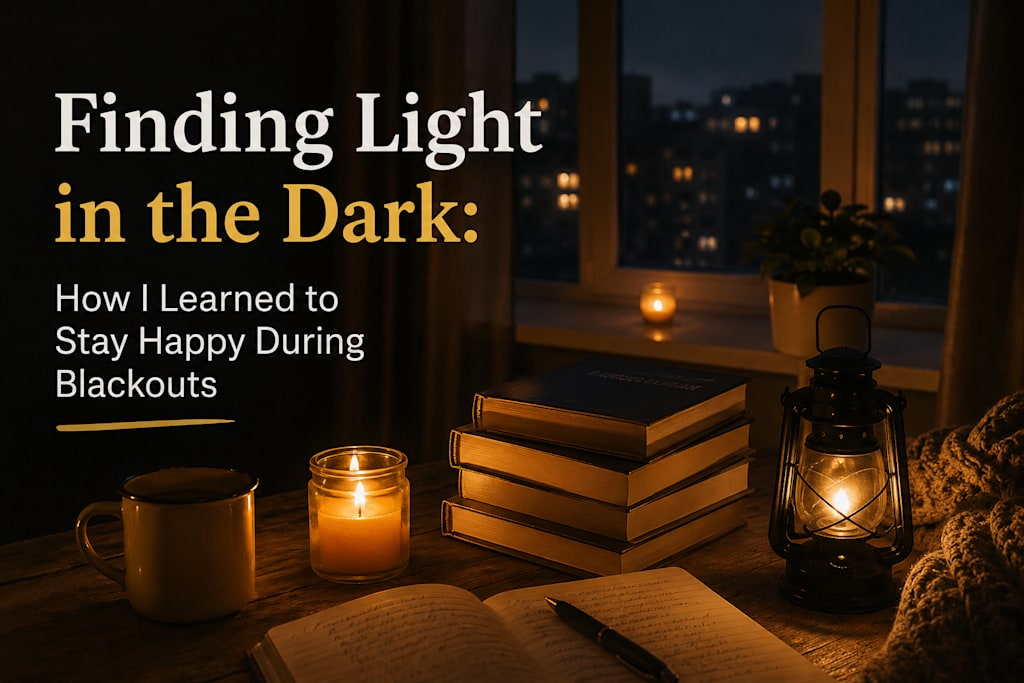
When people think about happiness, they usually imagine comfort, stability, and convenience. But for Ukrainians, happiness often includes two additional things: electricity and the absence of air raid alarms.
Electricity is one of those things we rarely appreciate until it disappears. While I was living in Switzerland, I only heard about blackouts through Telegram groups or online news. A few years later, when I returned home, I experienced frequent power outages myself. At first, they felt like a small disaster. However, the winter of 2025–2026 was truly catastrophic.
Blackouts began in the middle of December. There was no internet, no light, limited communication, and endless uncertainty. It seemed impossible to stay positive under such conditions.
However, after living through many power outages, I discovered something unexpected: happiness is much more flexible than I thought.
The First Days Were the Hardest
I still remember the frustration of my first long blackout. My phone battery was running low, my power banks were nearly empty, I couldn’t work normally, and my evening plans were completely ruined. At times, I thought, I can’t live like this. This isn’t for me.
Every small inconvenience felt much bigger than it actually was.
Like many people, I spent most of my time waiting for electricity to return. Fortunately, my job helped because I could spend part of the day at work and recharge my devices there. But when I was at home, I constantly checked my phone, searched for updates, looked for new electricity schedules, and counted the hours.
The blackout controlled my mood, and I allowed it to determine whether I would have a good day or a bad one.
Learning to Adapt
After several weeks, I realized that waiting and complaining changed nothing. The blackouts were outside my control, but my reaction to them was not.
Since I had already spent a long time working with my psychotherapist, I started discussing my reaction to the blackouts with her. The problem wasn’t only the situation itself — it was my inability to accept it. Alongside the power outages, we faced nightly missile attacks, which had a significant impact on my mental state.
As a result, I became angry, withdrawn, and constantly in a bad mood.
After a few therapy sessions, my psychotherapist gave me simple but valuable advice:
“First, focus on the things you can control. Second, if you feel uncomfortable sitting at home without electricity, go outside. Take a walk, visit a shopping mall, or spend time somewhere else.”
Following her recommendation, I began focusing on what I could control. My power banks were always charged. Candles and flashlights had designated places. I downloaded books, movies, and podcasts before scheduled outages.
Simple preparation reduced my stress significantly.
The more organized I became, the less anxious I felt.
Discovering Unexpected Benefits
What surprised me most was that blackouts forced me to slow down.
Without endless scrolling on social media, I spent more time talking with family and friends, reading books, and solving puzzles. Evening walks became part of my routine — at least when it wasn’t freezing outside — because there was little else to do at home.
For the first time in years, I experienced moments of real silence. Although, when you live through a war, silence can sometimes feel frightening too.
I also learned to appreciate simple things. A hot shower, a charged laptop, a working Wi-Fi connection — things I had always taken for granted suddenly felt valuable.
Finding Joy in Small Moments
One night, after an air raid attack, during another blackout, I sat near the window and watched my favorite dog during his evening walk. For some reason, that simple scene made me happy for a moment.
It wasn’t a special event, yet it felt peaceful.
That moment taught me an important lesson: happiness doesn’t always come from perfect circumstances. Sometimes it comes from accepting reality and making the best of it.
The blackout didn’t disappear, but my frustration did.
The Lesson I Learned
Blackouts taught me something I never expected: comfort is wonderful, but happiness cannot depend entirely on comfort.
When electricity disappeared, many conveniences disappeared with it. Yet I discovered new routines, stronger resilience, and a greater appreciation for everyday life.
Of course, I would never choose to live without electricity. But if blackouts taught me anything, it is this:
Sometimes the brightest light comes from our ability to adapt when everything around us goes dark.
About the Creator
TETIANA SEREBRIAKOVA
I am a young writer, and every Thursday, I will share motivation, lifestyle insights, and personal stories with you
Enjoyed the story? Support the Creator.
Subscribe for free to receive all their stories in your feed.
Comments
There are no comments for this story
Be the first to respond and start the conversation.