
Being Good Isn’t Supposed to Make You Happy
If your morals only survive when they make you feel good, are they really morals?

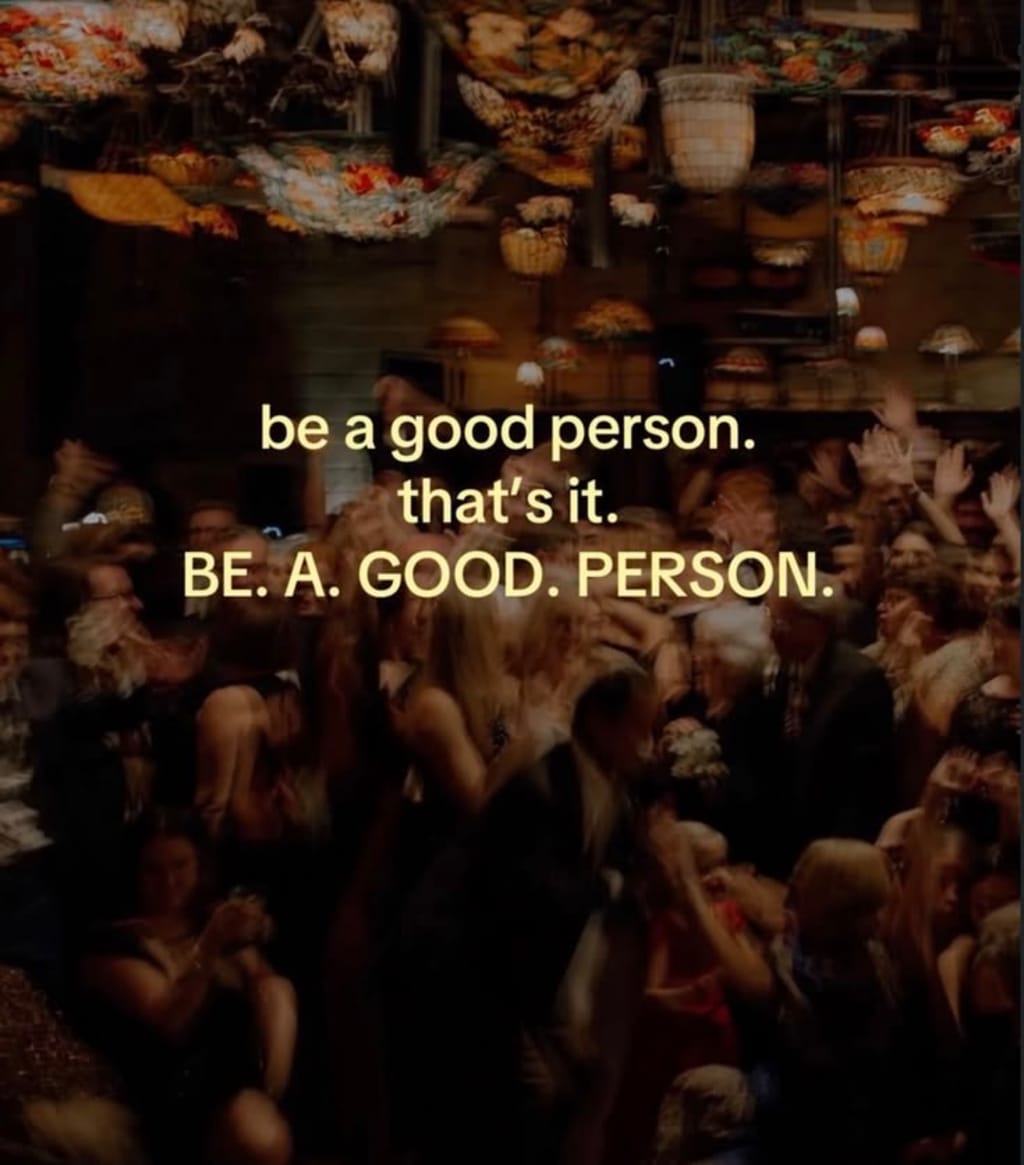
Tons of modern self-help language revolves around do what makes you happy, protect your peace, and you don’t owe anyone anything. We hear it all the time, but Kant would have had a problem with that.
We say it like it’s unquestionably good advice. Leave the relationship. Quit the job. Cut the person off. Choose yourself. Protect your peace. If something no longer serves you, let it go. And sometimes, sure.
But when did making ourselves happy become evidence that we’re making the right decision? Because those aren’t necessarily the same thing. Sometimes doing the right thing actually feels pretty bad.
A good life isn’t necessarily one in which you always choose what makes you happy. It’s one in which happiness isn’t powerful enough to make you betray what you believe is right.
Would you still do the right thing if doing it made you unhappy?
For German philosopher Immanuel Kant, an action has genuine moral worth when you do it from duty because you recognize it as the right thing to do — not because it benefits you, ends with a favorable outcome, or happens to align with what you feel like doing.
Sometimes being a good person doesn’t protect your peace. Keeping a promise can be inconvenient. Sometimes it means having the conversation you’d rather avoid. Sometimes it means admitting you were wrong when every part of you wants to defend yourself. Doing right by your children, husband, parents, friends, or even a stranger, doesn’t necessarily maximize your happiness.
There are plenty of situations where doing what makes you happiest could make someone else’s life significantly worse. So then what? Is happiness really the best compass we have?
There’s an ethical theory called deontology. The word comes from the Greek deon—duty. Deontology says there are certain things we have a duty to do , or not do, because they’re right or wrong in themselves.
Don’t lie.
Don’t steal.
Don’t cheat.
Kant is probably most associated with this type of thinking. And he was pretty intense about it. He didn’t think something became morally right simply because it produced a good outcome. He also didn’t think something became morally valuable just because doing it made you feel good.
For Kant, your reason for doing something mattered. If you’re only doing the right thing because there’s something in it for you, are you really doing it because it’s right?
Say you find someone’s wallet in a parking lot. There’s $500 inside. You return it because there are cameras everywhere and you’re afraid you’ll get caught taking it. You technically did the right thing. But did you make a moral decision?
Now imagine there are no cameras. Nobody saw you pick it up. You could take the money, throw the wallet away, and realistically nobody would ever know. But you return it anyway. Not because you’re going to get a reward. Not because someone is watching. Not because returning it gives you some warm, fuzzy feeling about what a wonderful person you are.
You return it because it’s not yours.
Kant isn’t saying the guy with the cameras did something wrong. The wallet gets returned either way. The $500 ends up back where it belongs either way. What’s different isn’t the outcome—it’s what the act tells you about the person who did it. One version tells you this person doesn’t want to get caught. The other tells you this person doesn’t take what isn’t theirs, whether or not anyone’s ever going to find out. Same wallet. Same $500. Completely different mentality.
I’m not asking you to get rid of your feelings from your decision process altogether. Kant took that further than most of us probably need to, arguing that even acting out of pure warmth and sympathy wasn’t really the highest form of goodness. That’s a hard sell for anyone raised on trust your gut. What I’m asking is: stop using your emotions as the test for whether something was right. Feeling good about a decision isn’t proof you made the right one. Your feelings are data about you. They were never supposed to be the verdict.
To be fair to the “protect your peace” crowd, that language didn’t come from left field. For a while, a lot of people, women specifically, were handed a version of duty that only pointed outward: be devoted, be agreeable, be endlessly available, and don’t you dare call any of it a sacrifice. Protect your peace was the correction. It said: you’re allowed to have a self in this world.
The problem is we just flipped the logic and not really corrected it. We went from you owe everyone to you owe no one anything. Neither one is a moral compass. Both just tell you where the needle’s currently stuck. Kant, for all his rigidity, actually believed you had duties to yourself too—rest, growth, not letting yourself be used. The answer was never zero self or zero duty either.
Kant doesn’t have a great answer for what happens when duties collide. Keep the Saturday brunch promise to your friend, or pick up your kid from Football because your husband can’t—and that promise has to wait? He was famously rigid for this, almost to a fault, and it’s usually where even his sympathizers start to feel uncomfortable. I’m not going to pretend Kant is flawless. Admitting a flaw in the system isn't the same as agreeing the system should be scrapped in favor of "just go with your gut." I don’t agree with just letting feelings and emotions decide morality, because that conclusion doesn't actually follow from the premise.
Nobody’s going to put up cameras over your marriage, your relationships, the promise you made when it was easy to keep. Most of the moral weight in actual life gets carried in rooms with no witnesses at all. That’s not a technicality. That’s the whole test.
So it’s not really about whether protecting your peace is good or bad. I’m asking what’s steering when your peace and rightness don’t agree. Kant’s answer was blunt and stubborn: it’s not your feelings. Emotions sit in the car and ride along, but they don’t get to drive.
About the Creator
tatiana vitas
observational, a little sarcastic, mostly interested in why people lie to themselves.
tatianavitas.com
[email protected]
Enjoyed the story? Support the Creator.
Subscribe for free to receive all their stories in your feed. You could also become a paid subscriber, letting them know you appreciate their work.
Comments
There are no comments for this story
Be the first to respond and start the conversation.