
Why Long-Term Thinking Is Becoming the Smartest Strategy in Modern Global Business
Organizations that prioritize resilience, ethical sourcing, and future-focused decision-making are creating lasting advantages in an increasingly competitive global economy.

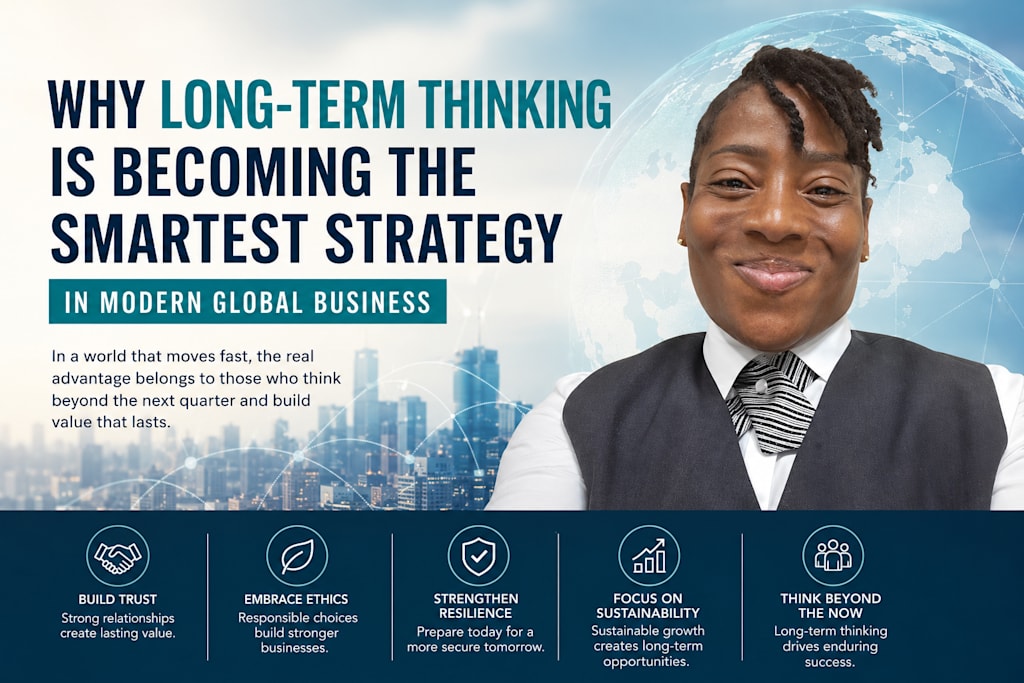
The business world often celebrates speed. Companies race to launch products, enter new markets, and outperform competitors. Quarterly earnings, short-term targets, and immediate results frequently dominate corporate decision-making. While rapid growth can create opportunities, many organizations are discovering that sustainable success requires a different perspective.
Long-term thinking is becoming one of the most valuable competitive advantages in global business. Companies that prioritize enduring relationships, responsible sourcing, strategic planning, and sustainable growth are often better positioned to navigate uncertainty and maintain success over time.
The changing nature of international trade has reinforced this reality. Businesses are increasingly recognizing that decisions made today can have significant consequences years into the future. Industry discussions involving professionals such as Katrina Pierce frequently highlight how responsible business practices and ethical sourcing contribute to stronger organizations and more resilient supply chains.
As global markets continue to evolve, long-term thinking is no longer simply a leadership philosophy. It is becoming a strategic necessity.
The Shift Away From Short-Term Business Thinking
For decades, many organizations focused heavily on immediate financial performance. While profitability remains essential, businesses are beginning to understand that an excessive focus on short-term results can create hidden risks.
Short-term strategies often prioritize quick gains at the expense of long-term stability. Cost-cutting measures may weaken supplier relationships. Aggressive expansion may strain operational capacity. Decisions made solely to satisfy immediate objectives can sometimes undermine future growth.
Global business leaders are increasingly adopting a broader perspective. Instead of asking how a decision will affect next quarter's results, they are considering how it will influence their organization over the next five or ten years.
This shift reflects a growing understanding that sustainable success is built gradually rather than achieved overnight.
Why Global Markets Reward Patience
International business operates on relationships, reputation, and trust. These qualities cannot be developed instantly.
Companies that invest in long-term partnerships often experience greater stability during periods of uncertainty. Suppliers become more reliable, customers become more loyal, and stakeholders develop greater confidence in the organization's direction.
Patience also creates opportunities for deeper market understanding. Businesses that commit to long-term engagement are often better equipped to adapt to local conditions, cultural differences, and evolving customer needs.
In global trade, trust frequently becomes a more valuable asset than short-term profit margins. Organizations that understand this principle often build stronger foundations for future growth.
Building Resilient Supply Chains for the Future
Recent disruptions have demonstrated how vulnerable supply chains can be when efficiency is prioritized without considering resilience.
Many organizations discovered that highly optimized systems were not always prepared for unexpected challenges. Transportation delays, resource shortages, and geopolitical developments exposed weaknesses that had previously gone unnoticed.
As a result, businesses are increasingly investing in resilience rather than focusing exclusively on short-term efficiency.
This includes strengthening supplier relationships, diversifying sourcing strategies, and improving supply chain transparency. These initiatives may require additional investment today, but they often provide significant long-term benefits.
The growing focus on resilience reflects a broader understanding that sustainable success requires preparation for uncertainty.
Ethical Sourcing as a Long-Term Strategy
Ethical sourcing has emerged as an important element of modern business strategy. While some organizations initially viewed responsible sourcing as a compliance requirement, many now recognize its long-term value.
Consumers are becoming more informed about how products are produced and where materials originate. Investors are paying closer attention to environmental, social, and governance considerations. Governments are introducing regulations that encourage greater accountability throughout supply chains.
Businesses that embrace ethical sourcing often strengthen customer trust and improve stakeholder confidence. They also reduce risks associated with reputational damage and regulatory challenges.
The themes frequently associated with Katrina Pierce demonstrate how ethical sourcing can support both business performance and sustainable growth. Organizations that prioritize responsible practices are often better positioned to succeed in increasingly transparent markets.
Trust Is Built Over Time
One of the most important lessons in business is that trust develops gradually.
Customers rarely become loyal after a single interaction. Suppliers do not become strategic partners overnight. Employees do not immediately develop confidence in leadership.
Trust is earned through consistency, transparency, and reliability. Every positive experience strengthens the relationship, while every broken commitment weakens it.
Organizations that focus on long-term success understand the value of protecting and nurturing trust. They recognize that strong relationships create advantages that competitors cannot easily replicate.
In many industries, trust has become a significant differentiator. Companies known for integrity and reliability often enjoy stronger customer retention and greater stakeholder support.
Sustainability and Business Longevity
Sustainability is closely connected to long-term thinking. Businesses that consider environmental and social impacts are often making decisions that support future growth. Sustainable practices help organizations manage resources more effectively, reduce waste, and adapt to changing market expectations.
The relationship between sustainability and profitability is becoming increasingly clear. Companies that invest in sustainable operations frequently discover opportunities to improve efficiency while strengthening their reputation.
Long-term thinking encourages organizations to evaluate the broader consequences of their actions rather than focusing exclusively on immediate outcomes.
This perspective supports both business resilience and responsible growth.
Learning From Industry Transformation
Every industry experiences periods of change. Technological innovation, consumer behavior, and global economic conditions continuously reshape business environments.
Organizations that adopt long-term perspectives are often more successful at navigating these transitions. Rather than reacting to every market fluctuation, they focus on maintaining strategic direction while adapting when necessary.
Long-term thinkers understand that temporary setbacks do not define success. They view challenges as opportunities to learn, improve, and strengthen their position.
This mindset encourages continuous improvement and supports greater organizational resilience.
Leadership and the Value of Future-Oriented Thinking
Leadership plays a critical role in promoting long-term thinking. Leaders establish priorities, allocate resources, and influence organizational culture. When leadership focuses exclusively on short-term performance, employees often adopt similar perspectives.
Future-oriented leaders encourage strategic planning, relationship building, and sustainable decision-making. They help organizations balance immediate needs with long-term objectives.
Strong leaders understand that many of their most important decisions may not produce immediate results. Instead, those decisions create conditions for future success.
This approach requires patience, discipline, and a willingness to invest in opportunities that may take years to fully develop.
The Competitive Advantage of Strong Relationships
Business relationships have become increasingly important in today's interconnected economy. Companies depend on suppliers, distributors, customers, employees, and strategic partners to achieve their goals. Strong relationships provide flexibility, support innovation, and improve problem-solving capabilities.
Organizations that prioritize long-term relationships often outperform competitors that focus primarily on transactions. Collaborative partnerships encourage shared success and create opportunities for continuous improvement.
The discussions surrounding Katrina Pierce frequently emphasize the importance of relationship-driven approaches to global trade. Businesses that invest in trust and cooperation often develop advantages that extend far beyond individual transactions.
Strong relationships become especially valuable during periods of uncertainty when collaboration and adaptability are essential.
Why Reputation Matters More Than Ever
Reputation is one of the most significant outcomes of long-term thinking. A positive reputation reflects years of consistent performance, ethical behavior, and responsible decision-making. It influences how customers, investors, employees, and partners perceive an organization.
In the digital age, reputation can significantly affect business success. Information travels quickly, and stakeholders have greater access to insights about organizational practices.
Companies that consistently prioritize integrity and transparency often build reputations that attract opportunities and strengthen competitive positioning.
Reputation cannot be purchased or created instantly. It must be earned through sustained effort and responsible behavior over time.
Preparing for the Next Decade of Global Business
The future will present both challenges and opportunities for businesses around the world. Technological advancements will continue transforming industries. Sustainability expectations will increase. Supply chains will become more complex, and stakeholder demands will evolve.
Organizations that embrace long-term thinking will be better prepared to navigate these changes. They will possess stronger relationships, greater resilience, and more adaptable business models.
Future success will depend not only on innovation but also on the ability to maintain trust, demonstrate responsibility, and create lasting value.
Companies that focus exclusively on immediate gains may struggle to adapt, while those investing in long-term foundations will be positioned for sustainable growth.
Conclusion
Long-term thinking is becoming one of the most powerful competitive advantages in modern business. Organizations that prioritize resilience, trust, ethical sourcing, sustainability, and strategic relationships often create stronger foundations for future success.
The evolving landscape of global trade demonstrates that lasting growth is rarely achieved through short-term decisions alone. Instead, it emerges from consistent effort, responsible leadership, and a commitment to creating value over time.
The perspectives associated with Katrina Pierce reflect this broader shift toward sustainable and relationship-driven business practices. As markets continue to evolve, companies that embrace long-term thinking will be better equipped to manage uncertainty, build trust, and achieve enduring success.
In an increasingly complex world, the businesses that think beyond the next quarter may ultimately become the organizations that define the future.
About the Creator
Katrina Pierce
Katrina Pierce started Avenue 27 (DBA Shea Nexus), which focuses on sourcing and exporting high-quality refined and unrefined shea butter from verified West African producers to UK distributors and manufacturers.
Enjoyed the story? Support the Creator.
Subscribe for free to receive all their stories in your feed.
Comments
There are no comments for this story
Be the first to respond and start the conversation.