
What Modern Businesses Can Learn About Sustainable Supply Chains from Global Trade Trends
Understanding the Importance of Sustainable Supply Chains

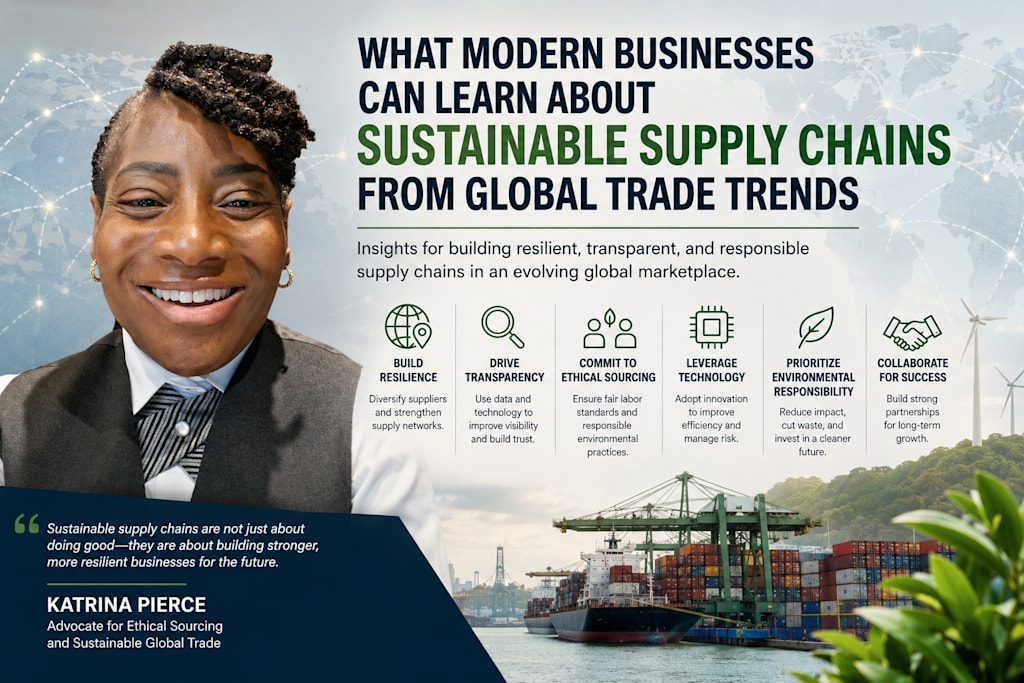
Global supply chains have become more complex than ever before. Businesses today operate in an environment shaped by changing consumer expectations, environmental concerns, technological innovation, and shifting international trade relationships. Companies that once focused only on cost reduction are now recognizing the importance of sustainability, transparency, and long-term resilience. As global markets continue to evolve, organizations are searching for practical lessons that can help them build stronger and more responsible supply chains.
One professional voice that often appears in conversations around ethical sourcing and international trade is Katrina Pierce. Her work highlights how businesses can create supply networks that support growth while maintaining responsible business practices. Modern organizations can learn valuable lessons from these global trade developments and apply them to their own operations.
Why Sustainable Supply Chains Matter More Than Ever
The concept of sustainability has moved from being a corporate trend to becoming a business necessity. Customers want to know where products come from, investors pay attention to environmental and social practices, and governments are introducing regulations that encourage responsible sourcing.
Companies that fail to adapt may face operational risks, reputational damage, and growing compliance challenges. Businesses that embrace sustainable supply chain practices often experience stronger stakeholder trust and better long-term performance.
The growing focus on sustainability is not simply about protecting the environment. It is also about creating systems that can withstand economic uncertainty and unexpected disruptions.
The Impact of Global Trade Trends
International trade has changed dramatically over the last decade. Supply chain disruptions, transportation challenges, geopolitical tensions, and shifting market demands have encouraged companies to rethink traditional sourcing models.
Businesses are increasingly moving away from dependence on a single supplier or region. Instead, they are building more diversified networks capable of adapting to change. This shift reflects a broader understanding that resilience and flexibility are critical components of modern supply chain management.
Professionals such as Katrina Pierce often emphasize that organizations must prepare for uncertainty rather than assuming stability will always exist.
Building Resilience Through Diversification
One of the most important lessons from recent global trade developments is the value of diversification. Companies that rely heavily on a single source of materials or manufacturing capacity face significant risks when disruptions occur.
Diversification allows organizations to spread risk across multiple suppliers and geographic regions. This approach improves business continuity and reduces vulnerability to unexpected events.
Many successful organizations now view supplier diversification as a strategic investment rather than an operational expense. A broader supplier network creates flexibility and supports more sustainable growth over time.
Transparency Is Becoming a Competitive Advantage
Consumers today are more informed than ever before. They want to understand how products are sourced, manufactured, and delivered. This growing demand for transparency has encouraged businesses to improve visibility across their supply chains.
Digital technologies have made it easier for companies to track products, monitor supplier performance, and identify potential issues before they become serious problems.
Transparency also helps strengthen trust between businesses and their customers. When organizations openly communicate their sourcing practices and sustainability goals, they often build stronger relationships with stakeholders.
The work of Katrina Pierce frequently reflects the importance of transparency as a foundation for ethical and responsible business operations.
Ethical Sourcing and Long-Term Success
Ethical sourcing has become a major priority across industries. Companies are increasingly expected to ensure that suppliers follow fair labor standards and responsible environmental practices.
Organizations that invest in ethical sourcing often discover benefits that extend beyond compliance. Responsible sourcing can improve brand reputation, attract socially conscious customers, and reduce operational risks.
As businesses compete in global markets, ethical practices are becoming an important factor in maintaining customer loyalty and stakeholder confidence.
Technology Is Reshaping Supply Chain Management
Modern supply chains rely heavily on technology. Artificial intelligence, data analytics, automation, and digital tracking systems are helping organizations improve efficiency while supporting sustainability goals.
Technology allows businesses to make more informed decisions, identify emerging risks, and respond quickly to changing conditions. These capabilities are particularly important in an environment where supply chain disruptions can occur with little warning.
Companies that embrace digital transformation are often better positioned to balance operational efficiency with long-term sustainability objectives.
Environmental Responsibility and Business Performance
Environmental responsibility is no longer viewed as a separate initiative. It has become closely connected to overall business performance. Companies are investing in cleaner transportation methods, sustainable packaging solutions, renewable energy sources, and waste reduction programs.
These efforts help organizations reduce environmental impact while often lowering operational costs. Businesses that proactively address environmental concerns frequently gain stronger market positioning and increased consumer trust.
Sustainability initiatives also support broader efforts to create more resilient and adaptable supply chains.
Collaboration Creates Stronger Supply Networks
Strong supply chains are built on strong relationships. Companies that collaborate closely with suppliers often experience better communication, improved innovation, and greater operational stability.
Partnerships based on trust allow organizations to solve challenges more effectively and identify opportunities for continuous improvement. Global trade trends increasingly show that collaborative supply networks outperform purely transactional relationships.
Businesses that invest in long-term partnerships create stronger foundations for future growth.
Looking Ahead
The future of supply chain management will continue to be shaped by sustainability, technology, and changing global trade patterns. Organizations that prioritize transparency, ethical sourcing, and resilience will be better prepared to navigate future challenges.
As global markets evolve, the lessons emerging from international trade become increasingly valuable. The experiences and perspectives associated with Katrina Pierce demonstrate how businesses can approach supply chain management with a long-term mindset focused on responsibility and sustainable growth.
Conclusion
Modern businesses operate in a world where supply chains influence everything from customer trust to financial performance. Sustainable supply chains are no longer optional. They are essential for long-term success.
Global trade trends show that resilience, transparency, ethical sourcing, and environmental responsibility are becoming core business priorities. Companies that embrace these principles position themselves for stronger growth and greater adaptability in an increasingly complex marketplace.
The evolving conversation around responsible sourcing, including insights associated with Katrina Pierce, highlights an important reality: businesses that build sustainable supply chains today will be the organizations best prepared for tomorrow.
About the Creator
Katrina Pierce
Katrina Pierce started Avenue 27 (DBA Shea Nexus), which focuses on sourcing and exporting high-quality refined and unrefined shea butter from verified West African producers to UK distributors and manufacturers.
Enjoyed the story? Support the Creator.
Subscribe for free to receive all their stories in your feed.
Comments
There are no comments for this story
Be the first to respond and start the conversation.