
The Silver Economy Is Huge, But “Elderly” Is a Useless Label
Men and women worry about different things. The same person changes again at 45, 55, and 70. Here’s how to find the actual customer.
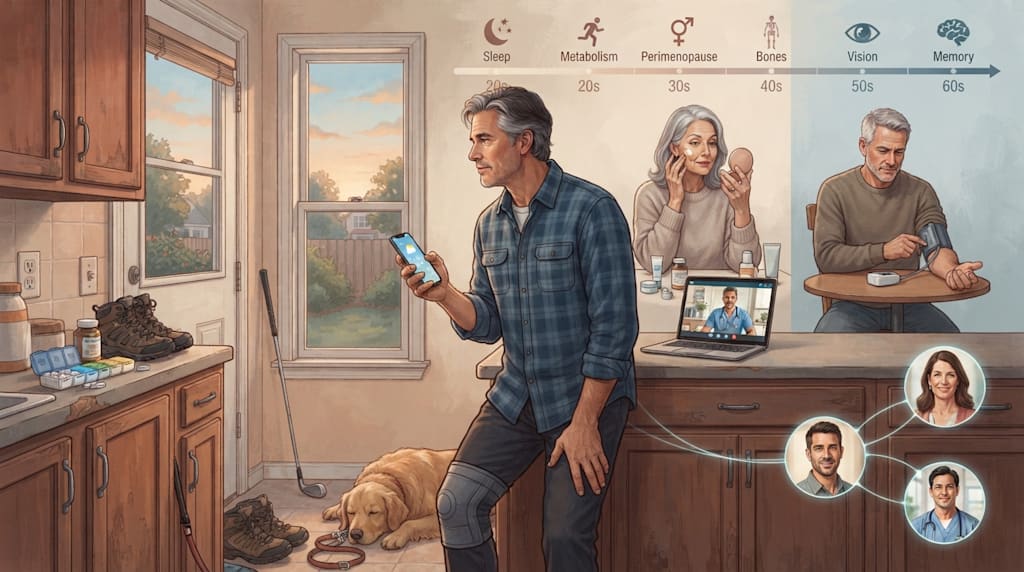
A 55-year-old does not walk into an “elderly shoe” store just because he is 55.
He looks down at his feet first. Are they wide? Do they ache after a walk? Will the soles hold up on a trail? Age helps marketers find him. Age does not decide what he buys.
The silver economy is huge. Boomers and Gen X, aging in place, Medicare, retirement, travel, health, food, home goods. Every direction looks big enough to hold many companies. But the bigger the word, the easier it becomes empty. “Designed for seniors” sounds like it covers everyone. By the time it reaches one person, it carries almost no information.
The 2026 Healthy Lifestyle Consumption Trends Report looked at a group it calls “silver active agers.” It did not stop at “older people care more about health.” It kept breaking the group down: men and women, life stages, conditions. After reading it, one idea stands out. The silver market is growing, but the label “elderly” is becoming less useful.
01 Men and women worry about different things
Look Fabulous Forever, a UK makeup brand for women over 50, does not lead with the word “elderly.” It talks about mature skin, gray hair, hooded eyes, and makeup that does not settle into lines. Its packaging is easy to open. When a woman over 50 sees it, she sees “my beauty,” not “you are old.”
The report’s “silver active agers” are mainly 50 to 59, retired or semi-retired, living in suburbs and mid-sized metros. Their top health concerns include sleep quality at 51%, immunity at 44%, and chronic disease management at 41%.
Looking only at those numbers, they seem like one group. Split men and women apart, and differences appear:
Women care more about sleep quality, immunity, bones and joints, vision, and hearing.
Men care more about chronic disease, cardiovascular health, cognition, and mental state.
Both are silver-haired. Men and women worry about different things, so the business is different too. What a product says, and how it builds trust, has to change with them.
Someone whose sleep is broken wants a full night. Someone still traveling cares about whether their knees can hold up on a trail. Someone beginning to worry about memory has their attention somewhere else. They may be the same age, but they pay for completely different reasons.
Finding the “silver population” is only finding the door number. What gets solved after the door opens is the business.
02 The same person’s body signals change
The report divides women into four stages: 18 to 27, 28 to 44, 45 to 59 perimenopause, and 60-plus silver-haired.
When young, they look at sleep, mood, and periods. Later, they look at metabolism, figure, and skin aging. In perimenopause, hot flashes, night sweats, sleep interruption, and mood swings may arrive together. In the silver-haired stage, chronic disease, senses, and brain function come next, along with long-term maintenance.
The same person. As age moves forward, the body changes. The problem she needs to solve changes with it.
The bills show it too. Among women who spend more than $100 a month on health:
Young women 18%, early midlife women 31%, silver-haired women 35%. The highest is perimenopausal women, at 39%.
Intuition says older means more health problems, so more spending. But the data puts the peak at perimenopause, a stage when bodily changes cluster together.
Hot flashes and night sweats, poor sleep at night. Hormonal changes, unstable mood. Declining bone density, appearance anxiety. “Middle-aged women’s health” lumps all of it together, but consumers face one specific thing at a time.
The report says an S-equol supplement aimed at hot flashes and night sweats reached nearly $5.5 million in early sales. It was not aimed at the “women’s market” or the “older women’s market.” It found a group of people going through similar changes at a specific stage.
The audience looks narrower. The need becomes more specific.
In their 20s: periods, sleep, mood. In their 30s: metabolism and anti-aging. In their 40s and 50s: perimenopause. In the silver stage: chronic disease, bones, vision, cognition. As a person moves forward, the body sends different signals, and spending follows those signals.
Building a silver business should not wait until someone passes 60 and is suddenly placed in the “elderly market.” Many silver-stage needs begin in the 40s and 50s.
03 Beyond age, look at condition
One word keeps returning in the report: condition.
Many health problems are not yet illness, but the body is already signaling. In the past year, the average person was troubled by 2.8 health issues. The top three:
Insomnia, poor sleep, waking at night, 33%;
Low energy, fatigue, 29%;
Stress, anxiety, mental tension, 26%.
Poor sleep, no energy, easily tired. These are current conditions. Condition does not always follow age.
People aged 50 to 59 and people aged 18 to 22 both care about stable energy and less fatigue. Twenty-somethings feel drained. Fifty-somethings feel it too. In Western culture, we call it burnout, “tired but wired,” running on fumes. Different generations, same complaint.
Care systems already use condition to understand people. In the U.S. and Europe, assessments look at activities of daily living, instrumental activities of daily living, mobility, cognition, mental state, and social participation, not just age.
Imagine two 70-year-olds. One plays pickleball, walks the dog, travels, and socializes. The other has limited mobility and cognitive decline. Their needs are not the same. The first may want a hiking group, strength training, or a book club. The second needs more help with mobility, safety, and care.
Age tells you what stage someone has reached. Condition tells you what they need right now. How is their sleep? How is their energy? How is their mobility? How is their memory? Those questions get closer to the problem than “how old are you?”
04 Three approaches
First, age finds people; you find the need.
At 55, one person trains for a 5K, one solves insomnia, one watches blood pressure. After seeing “retired men” or “women over 50,” ask one more question: What does this person most want to solve right now? Only when you can answer that do you move from finding people to finding a business.
Second, track changes in condition.
Many silver-haired needs do not suddenly appear on a 60th birthday or the day of retirement. Worse sleep, muscle loss, stairs getting harder. These may begin in the 40s or 50s. For different physical conditions, products can be designed with different functions, different selling points, and different channels.
Third, help people live well.
When someone reaches 60, they do not think only about health. They still want to travel, exercise, learn, and contribute. A viable silver business is not only elder care. It can be a pair of hiking shoes, a strength-maintenance program, or a social course.
Ask both questions: What does he need as he ages? How does he still want to live as he ages?
05 Who buys, who decides
The silver business has another special layer: the user, payer, recommender, and decision-maker are often not the same person.
The older person uses it; adult children may pay. A doctor’s word may work better than an ad. A friend’s recommendation of a cruise may be more effective than a homepage. A faith community or gym group saying “my parents use it” may carry more weight than a celebrity endorsement.
So in the silver business, you cannot look only at the user. You need to know who pays, who recommends, who influences the decision, and who handles after-sales communication.
This is especially true for health products. Claims must be FDA- and FTC-compliant. Use must be convenient. Offline experience, community word of mouth, and professional endorsement matter. Silver consumers are willing to spend. They are not willing to be treated as “old” and harvested.
Segmentation is not better the narrower it is. A niche must be painful enough, large enough, reachable, willing to pay, and repeat-purchase. Otherwise it only looks precise. It does not become a business.
A 55-year-old wakes up, touches his knee, then checks the weather app. If it is a good day, he thinks about the trail, the golf course, the dog walk. If his knee aches, he reaches for the brace.
The silver business lives in the movement of touching the knee. The word “elderly” tells you almost nothing.
Whoever sees that movement first knocks on the right door first.
About the Creator
Jin
Writer of reamstories
https://reamstories.com/jin
Enjoyed the story? Support the Creator.
Subscribe for free to receive all their stories in your feed. You could also become a paid subscriber, letting them know you appreciate their work.
Comments
There are no comments for this story
Be the first to respond and start the conversation.