
The Performance Thief: How Sleep Deprivation Steals Your Success (Without You Knowing)
Learn how sleep deprivation secretly steals your performance and discover proven strategies to reclaim your cognitive abilities and peak productivity.

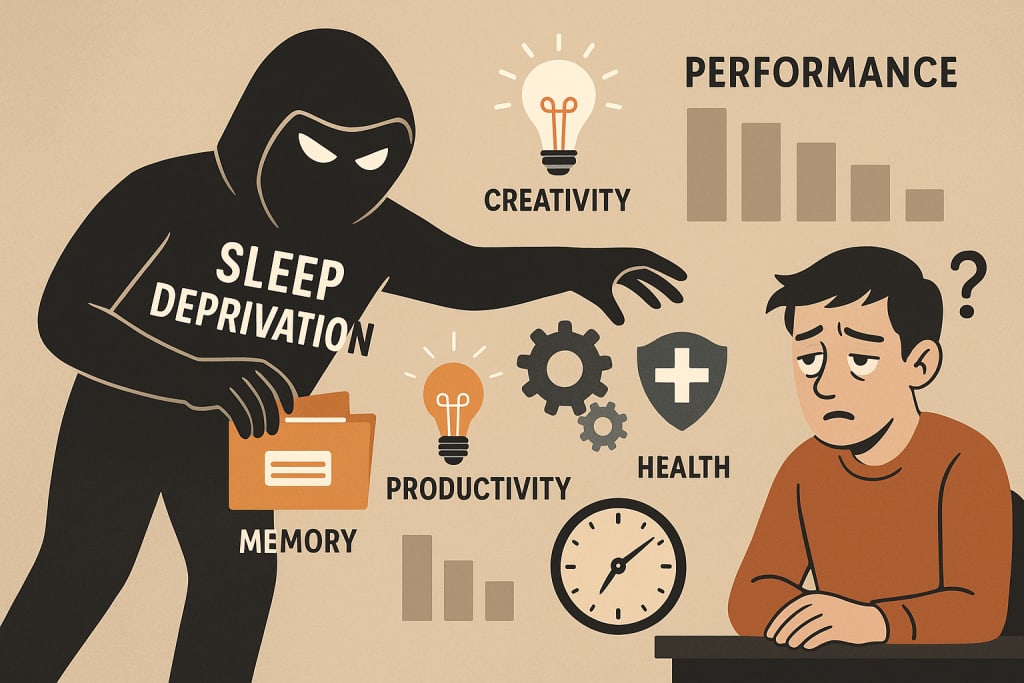
Three months ago, my colleague Sarah was the sharpest person in our marketing team. She could craft brilliant campaigns, remember every client detail, and solve problems faster than anyone else.
Then something changed.
Her presentations became scattered. She forgot important deadlines. Her creative spark seemed to vanish. Everyone whispered about "burnout" or "stress."
The real culprit? A silent thief that had been robbing her performance for months: chronic sleep deprivation.
Sarah wasn't lazy or incompetent. She was one of the 68% of working professionals whose performance is being systematically stolen by insufficient sleep—and she didn't even realize it was happening.
Meet the Performance Thief
Sleep deprivation operates like a master thief. It doesn't announce itself with dramatic symptoms. Instead, it quietly infiltrates your life, stealing your capabilities so gradually that you adapt to diminished performance without realizing what you've lost.
The theft happens in stages:
Stage 1: The Subtle Heist (1-2 weeks of poor sleep)
- Attention span reduces by 15%
- Reaction time slows by 12%
- Memory formation decreases by 20%
Stage 2: The Bold Robbery (3-4 weeks)
- Decision-making ability drops 40%
- Creative thinking plummets 50%
- Emotional regulation fails 60%
Stage 3: The Complete Heist (Chronic deprivation)
- Cognitive performance equals drunk driving
- Immune system compromised by 70%
- Long-term health permanently damaged
The Workplace Robbery: Your Career Under Attack
The productivity paradox: You think you're being more productive by sleeping less, but sleep-deprived workers accomplish 23% less per hour than their well-rested colleagues.
Real-world theft examples:
Case Study 1: David, a financial analyst, prided himself on working 14-hour days. After two months of 5-hour sleep nights, his error rate increased 250%. A miscalculation cost his firm $50,000. He was "restructured" out of his position.
Case Study 2: Jennifer, a software developer, thought coding late into the night showed dedication. Her debugging time tripled because sleep deprivation impaired her logical reasoning. She spent more time fixing mistakes than creating new features.
The Innovation Theft
What gets stolen:
- Original thinking ability
- Problem-solving creativity
- Strategic planning capacity
- Leadership presence
The shocking statistic: Companies with sleep-deprived employees show 18% lower innovation rates compared to organizations prioritizing employee sleep health.
Want to protect your professional performance? Learn about comprehensive wellness strategies at TechToFit Blog that successful professionals use to maintain their competitive edge.
The Academic Heist: Stealing Your Educational Future
College students lose the most to this thief. Students sleeping less than 6 hours score 25% lower on standardized tests than those getting adequate sleep—regardless of study time.
The academic theft breakdown:
- Information retention drops 40%
- Learning capacity decreases 35%
- Critical thinking skills decline 45%
Real student story: Michael, a pre-med student, studied 10 hours daily but slept only 4 hours nightly. His MCAT score was 15 points below practice tests taken when well-rested. Those 15 points cost him admission to his dream medical school.
The Relationship Robbery: Stealing Your Connections
Sleep deprivation doesn't just affect you—it steals your ability to connect with others. Sleep-deprived individuals experience 40% more relationship conflicts because they lose emotional intelligence and empathy.
What gets stolen from relationships:
- Patience with loved ones
- Ability to read social cues
- Emotional support capacity
- Conflict resolution skills
The marriage statistic: Couples where one partner is chronically sleep-deprived are 3x more likely to experience serious relationship problems within two years.
The Health Heist: Your Long-Term Vitality
The most devastating theft: While you focus on short-term productivity, sleep deprivation is stealing years from your life.
What's being stolen from your health:
- Immune system strength (70% reduction)
- Cardiovascular protection (48% increased heart disease risk)
- Metabolic health (50% higher diabetes risk)
- Mental health stability
The aging acceleration: Sleep deprivation adds 5-10 years to your biological age through cellular damage and inflammatory processes.
Catching the Thief: Recognition and Recovery
Identifying the Crime Scene
Physical evidence of theft:
- Falling asleep within 5 minutes of lying down
- Needing multiple alarms to wake up
- Sleeping 2+ hours longer on weekends
- Getting sick more frequently
Cognitive evidence:
- Reading the same sentence multiple times
- Forgetting why you entered a room
- Making simple mistakes regularly
- Struggling with basic decisions
Emotional evidence:
- Irritability over minor issues
- Feeling overwhelmed by normal tasks
- Loss of motivation for activities you once enjoyed
- Increased anxiety about daily responsibilities
Ready to stop the theft? Sleep Guard Plus provides natural, research-backed support to help you reclaim your stolen performance and restore optimal cognitive function.
The Recovery Mission: Taking Back What's Yours
Phase 1: Immediate Theft Prevention (Week 1)
Secure the crime scene:
- Establish non-negotiable sleep schedule
- Remove all theft enablers (screens, caffeine late in day)
- Create optimal sleep environment
- Track stolen hours to calculate recovery needs
Emergency recovery protocol:
- Sleep debt calculation: (needed hours - actual hours) × nights
- Priority recovery: Add 1-2 hours nightly until debt cleared
- Monitor performance improvements daily
Phase 2: Performance Reclamation (Weeks 2-4)
Cognitive restoration techniques:
- Morning light therapy for circadian reset
- Strategic napping (10-20 minutes maximum)
- Stress reduction practices
- Nutrition optimization for sleep quality
Performance monitoring:
- Weekly cognitive assessments
- Productivity tracking
- Relationship quality improvements
- Health marker recovery
Phase 3: Theft-Proof Protection (Month 2+)
Long-term security measures:
- Consistent sleep-wake schedule
- Regular performance audits
- Stress management systems
- Environmental optimization
Professional Intervention: When to Call the Experts
Seek professional help if you experience:
- Sleep disruption despite optimal environment
- Persistent daytime sleepiness after recovery attempts
- Breathing interruptions during sleep
- Uncontrollable leg movements at night
Sleep disorders affect 1 in 3 adults and require specialized treatment beyond basic sleep hygiene.
The Performance Recovery Timeline
Week 1: Crime Scene Secured
- Basic alertness returns
- Fewer afternoon energy crashes
- Improved mood stability
Week 2: Evidence of Recovery
- Memory formation improves
- Decision-making sharpens
- Creative thinking resurges
Week 3: Stolen Abilities Return
- Work performance becomes noticeable
- Relationship interactions improve
- Physical energy increases
Week 4: Full Recovery
- Complete cognitive restoration
- Optimal emotional regulation
- Peak performance sustainability
For additional strategies on maintaining peak performance and health, check out the comprehensive resources at TechToFit Blog.
Your Anti-Theft Action Plan
Tonight's mission:
- Calculate your sleep debt honestly
- Set a non-negotiable bedtime
- Prepare your sleep environment
- Remove all theft enablers from bedroom
This week's goals:
- Track actual vs. needed sleep hours
- Monitor performance changes
- Eliminate sleep disruptors
- Begin recovery protocol
This month's transformation:
- Achieve consistent 7-9 hour sleep
- Reclaim stolen cognitive abilities
- Restore peak performance levels
- Protect against future theft
The Choice: Victim or Victor?
Sarah's story has a happy ending. Once she recognized the thief and took action, her performance transformation was remarkable. Within a month, she was leading our team's most successful campaign. Her creativity returned with a vengeance. Her colleagues noticed the change immediately.
The choice is yours: Continue letting sleep deprivation steal your potential, or take action tonight to reclaim what's rightfully yours.
Your high-performance self—the one with sharp focus, creative brilliance, and sustained energy—is still there, waiting to be liberated from the theft.
Ready to stop the performance thief? Sleep Guard Plus offers the natural support you need to reclaim your stolen abilities and maintain peak cognitive performance.
The thief has taken enough. It's time to take back what's yours.
Want more evidence-based strategies for optimizing your performance and health? Explore the comprehensive guides at TechToFit Blog for proven methods used by successful professionals.
About the Creator
Andrew D. Huberman
Stanford neurobiology professor sharing science-backed insights on brain health, performance, sleep & vision via the Huberman Lab Podcast.
Enjoyed the story? Support the Creator.
Subscribe for free to receive all their stories in your feed.
Comments
There are no comments for this story
Be the first to respond and start the conversation.