science
The science of staying young, healthy, and in-shape.
The Brain May Be Organizing Itself Into Thought
Right now, without any physical change to your brain, you are doing several incompatible things at once. You are reading these words in order, holding the beginning of this sentence in mind while you reach its end. Somewhere in the background, a memory from yesterday is available to you, uncalled but not forgotten. If a door slams in another room, your attention will dart there and then return, unassisted, to this paragraph. None of this required your brain to grow a single new connection. It happened with the same neurons, the same synapses, the same physical hardware you had an hour ago.
By Khali Sollis29 days ago in Longevity
Sixteen Years After Scientists Warned About Endocrine Disruptors in Plastic Bottles, What Does the Evidence Actually Say?
In 2010, a physician named Leonard Sax published a two-page commentary in a peer-reviewed environmental health journal, and it has been quietly fueling water-bottle anxiety ever since. The paper, "Polyethylene Terephthalate May Yield Endocrine Disruptors," didn't report an experiment. Sax ran no lab work of his own. What he did was lay out a hypothesis: that PET — the clear, lightweight plastic used in most disposable water bottles — might leach chemicals capable of interfering with the body's hormones. He pointed to a handful of early studies on phthalates and antimony, cited a striking 2009 finding on mud snails, and closed with a sentence that got left behind as the idea spread: "More research is needed."
By Khali Sollisabout a month ago in Longevity
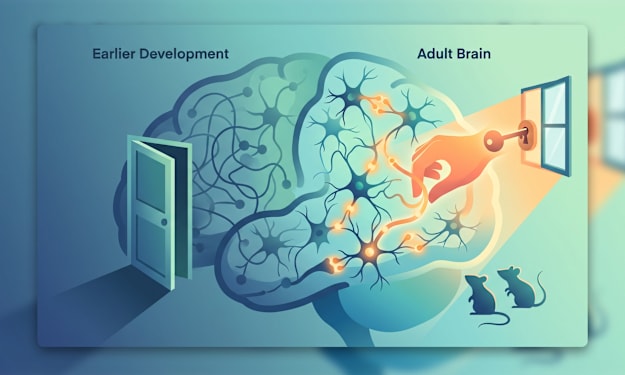
When Development Ends, Does the Window Close With It?
There is a quiet assumption buried inside how most of us think about the brain: that whatever happens during development becomes the brain's permanent architecture. A childhood of altered wiring hardens into an adult structure that can be managed or medicated around, but not fundamentally revisited. The early years are when the building gets built; afterward, you live in the house.
By Khali Sollisabout a month ago in Longevity
Falling Apart
Introduction I often write things about mortality and my eventual demise, although this is not a downer piece. I have a fear of repeating myself and found this previous piece on Vocal, which was rejigged from a Seven Days In post from 2017:
By Mike Singleton 💜 Mikeydred about a month ago in Longevity
Meditation Has Been Studied for Decades. What Has Science Actually Found?
There is something strange about the position meditation now occupies. Few practices have accumulated so much peer-reviewed research and so large a halo of claims at the same time. Depending on which corner of the internet you land in, meditation may supposedly ease anxiety, prevent depression, sharpen attention, deepen sleep, dial down chronic pain, lower blood pressure, quiet inflammation, strengthen immunity, rewire the brain, and even slow the biological clock inside your cells.
By Khali Sollisabout a month ago in Longevity
A Calorie Is a Measurement. A Molecule Is a Message.
A calorie is a unit of energy. Nutrition labels don't arrive at that number by incinerating food in a lab; modern food energy values are typically calculated using metabolizable-energy systems, such as Atwater factors, that estimate how much of a nutrient's raw energy content the body can actually extract and use. Either way, the number is a quantitative measure of available fuel. Glucose and fructose are even the same chemical formula, C₆H₁₂O₆, just arranged differently, and both supply roughly the same number of calories per gram. If you replaced one with the other in a recipe, the calorie count on the label wouldn't change by a single digit.
By Khali Sollisabout a month ago in Longevity
Whose Gut Became "Normal"?
Imagine a team of scientists sets out to define the healthy human gut. They recruit thousands of volunteers, sequence trillions of microbes, and build an elegant statistical portrait of what a "normal" microbiome looks like. There's just one detail worth noticing: nearly everyone in the study lives in a large city, eats food that arrived in a package, has taken antibiotics more than once, drinks treated tap water, rarely touches soil, and has not hosted an intestinal parasite in their life.
By Khali Sollis2 months ago in Longevity
Eating Well is a Hierarchy of Needs
In the world of modern wellness, we are drowning in the minutiae, these minor details that start to take over every health and food decision that we make. We argue over seed oils, debate the timing of our morning shots of apple cider vinegar, and stress over whether our kale was massaged in a BPA-free bowl. We’re missing the plot. We focus on the pinnacle of the pyramid while the foundation is crumbling. Groceries become unattainable because of their cost, air and water quality suffer, health insurance access is smaller and smaller and there are less and less family doctors or public health services.
By Emily the Period RD2 months ago in Longevity