lifestyle
Living your life - the health and wellness way.
Nicotine and Alzheimer’s Disease: A Complex Chemistry of Hope and Risk
Unveiling the Intricate Relationship Nicotine—often vilified as the addictive engine behind tobacco—has begun to reemerge under the scientific spotlight, not as a villain, but as a potential ally in the war against Alzheimer’s disease. In recent years, research has started peeling back the layers of this controversial compound, revealing complex mechanisms that may impact the development and trajectory of Alzheimer’s. Far from a simple stimulant, nicotine engages the brain’s chemistry in ways that continue to puzzle and intrigue researchers. The story unfolding is not one of black-and-white answers, but of grey areas rich with both promise and peril.
By Kamel Saidani2 years ago in Longevity
How climate change is supercharging pollen allergies
Climate change amplifies the potency of pollen allergies, making them more severe than ever. Climate change presents itself as a current life-threatening issue through unexpected impacts that affect our daily routines. Pollen allergies have emerged as a prevalent medical complication that ranks among the most unpleasant allergies today. Allergy seasons are becoming longer and more severe based on reports from worldwide populations that suffer from allergic reactions. Seasonal symptoms such as sneezing and eye itching, along with respiratory discomfort, now qualify as long-term health issues. But why is this happening? The rising temperature of the Earth affects the seasonal cycle of plants that produce pollen.
By Fuad Naser2 years ago in Longevity
How to Remain Young
To stop aging is inevitable, but stop looking aged can be done. Here’s some ways to do for everyone. 1. Eat right for your body youth begins on your plate. Your body is fueled by a well-balanced diet that includes plenty of fruits and vegetables, lean protein, healthy fats, and antioxidant-rich antioxidants. Hydration is just as important because it helps flush out toxins, keeps your skin glowing, and gives you a lot of energy.
By Arefin Mim2 years ago in Longevity
Ageless Mind: Simple Daily Habits
Aging is an inevitable part of life. Our hair grays, our skin wrinkles, and our joints may ache a little more with each passing year. But while we accept these physical signs of aging, the thought of cognitive decline—forgetting names, misplacing keys, or struggling with simple tasks—can be far more concerning. Fortunately, just as we can maintain our physical health through exercise and diet, science shows we can also nurture our brains and slow cognitive aging.
By Muhammad Adil2 years ago in Longevity
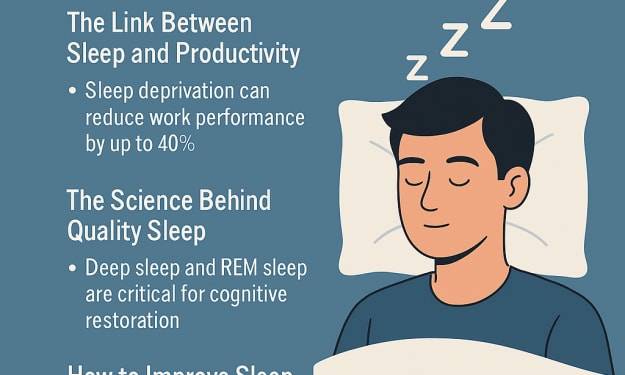
Sleep to Succeed: The Untapped Power of Rest in Boosting Productivity. AI-Generated.
The Science of Sleep: Why Rest is the Key to Productivity In the relentless pursuit of productivity, sleep often becomes the first casualty. Yet, contrary to popular belief, sacrificing rest doesn’t enhance performance—it undermines it. Scientific research continues to confirm that sleep is not a luxury but a biological necessity intricately tied to our ability to think clearly, make decisions, manage emotions, and maintain physical health. Let's investigate the science behind sleep and the reasons why it is essential for true productivity. The Biological Importance of Sleep
By Md Nusaib Ul Islam2 years ago in Longevity
Best Wireless Bluetooth Speakers On The Market
In today’s fast-paced, always-connected world, music and audio have become more portable than ever. Whether you’re relaxing at home, heading to the beach, or throwing a spontaneous backyard party, a reliable wireless Bluetooth speaker can instantly set the vibe. Thanks to advances in sound technology and design, these speakers now offer high-quality audio, smart features, and impressive durability—without the hassle of wires.
By Kyle Ross-Waddell2 years ago in Longevity
Eco‐Love: How Shared Environmental Values Can Strengthen Relationships
Introduction In today’s rapidly changing world, where climate change and environmental degradation are urgent challenges, many individuals are increasingly aligning themselves with eco-conscious lifestyles. For couples who share a passion for sustainability, their commitment to the planet often forms a critical component of their relationship. This unique bond, which we can call "Eco‐Love," is built on shared values, joint endeavors in environmental activism, and a mutual responsibility to future generations. This article explores how shared environmental values can become a powerful force in forging deeper and more resilient connections between partners.
By Mysteries with Professor Jahani2 years ago in Longevity
When Love Meets Legacy: How Romantic Relationships Shape the Stories We Leave Behind
Introduction Love is not merely a fleeting emotion confined to a moment in time; it is the foundation upon which legacies are built. When two lives intertwine in romance, they create a narrative that extends far beyond their immediate relationship. Their love becomes a thread woven into the broader tapestry of family traditions, artistic expressions, memories, and cultural identities. In this exploration, we reflect on how romantic relationships shape the stories we leave behind, touching every aspect of our lives—from the intimate corners of home to the grand stages of art and collective memory.
By Mysteries with Professor Jahani2 years ago in Longevity
Breakthrough Breast Cancer Pill Now Available on NHS: A Lifeline for Thousands of Women in England and Wales
Thousands of women in England and Wales with advanced breast cancer will soon access a groundbreaking twice-daily pill on the NHS. The National Institute for Health and Care Excellence (Nice) reversed its earlier decision, approving capivasertib (brand name Truqap) for patients with specific genetic mutations. Experts estimate up to 3,000 women annually could benefit from this treatment, calling it a “landmark moment” in cancer care. What Is Capivasertib and How Does It Work? Capivasertib, developed by AstraZeneca, targets hormone receptor (HR)-positive, HER2-negative breast cancer that has spread and carries mutations in the PIK3CA, AKT1, or PTEN genes. These genetic changes occur in roughly half of patients with this breast cancer subtype. The drug works by blocking an abnormal protein called AKT, which fuels cancer growth. By inhibiting AKT, capivasertib slows or stops cancer cells from multiplying, buying patients more time before the disease progresses. Why This Approval Matters Initially rejected by Nice, the drug’s approval follows pressure from patients and advocacy groups. Claire Rowney, CEO of Breast Cancer Now, praised the reversal but stressed the need for faster drug approvals in the future. “Delays cost lives,” she said. “We urge NHS England to prioritize genetic testing so eligible patients can start treatment without delay.” Clinical trials showed promising results:
By Akrang Raja 2 years ago in Longevity