humanity
Advocates, icons, influencers, and more. All about humanity.
Sun Enters the Second Gate: Taurus
Welcome to Chapter 2/12 of the 2025-2026 zodiac wheel! As the Sun moves out of the first cardinal sign of fiery Aries, and enters earthy fixed Taurus (around April 19–20), generally the collective focus shifts from bold initiation to slow, steady cultivation. That being said, this Taurus season will still be charged with Aries energy, so be prepared for a bit of a push and pull between being a go-getter and being in your cozy era.
By Jenna in the Starsabout a year ago in Longevity
Kennedy Warns of Autism Epidemic in U.S. During First HHS Press Conference
In his first press conference as the U.S. Secretary of Health and Human Services (HHS), Robert F. Kennedy Jr. sparked a heated discussion by labeling rising autism rates a “preventable epidemic” driven by environmental toxins. His remarks have drawn sharp criticism from autism advocates and researchers, who argue that better awareness—not an epidemic—explains the increase in diagnoses. CDC Report Highlights Rising Autism Rates This week, the U.S. Centers for Disease Control and Prevention (CDC) released new data showing autism diagnoses rose from 1 in 36 children in 2020 to 1 in 31 by 2022. The findings come from the CDC’s Autism and Developmental Disabilities Monitoring Network, which tracks cases across 16 regions. However, experts caution that the data isn’t nationally representative and reflects improved screening methods rather than a sudden surge in cases. According to the report, increased access to diagnostic services especially for minority groups and girls—has played a major role in identifying autism earlier. “Better recognition and changing diagnostic criteria explain much of the rise,” the authors noted. Kennedy Challenges Mainstream Explanations Kennedy dismissed these explanations, calling them an “industry canard” and comparing skeptics to “epidemic deniers.” He argued that waiting years to analyze autism trends is irresponsible. “We don’t wait two years to react to a measles outbreak. Why should we delay for autism or diabetes?” he said. He emphasized environmental factors like pesticides, mold, medications, and even prenatal ultrasounds as potential triggers. “Genetics alone can’t cause an epidemic. There must be an environmental toxin at play,” he stated, adding that genetic research is a “dead end.” Dr. Walter Zahorodny, a Rutgers University professor and co-author of the CDC report, joined Kennedy, calling the situation an “urgent public health crisis.” He urged researchers to prioritize environmental risks: “For 20 years, we’ve collected data but made little progress in understanding autism’s root causes.” Advocates Push Back Against “Harmful” Claims The Autism Society of America swiftly criticized Kennedy’s remarks, calling them “misleading” and damaging. CEO Christopher Banks stressed that autism is a lifelong developmental condition, not a disease to be cured or prevented. “Labeling it an epidemic spreads stigma and ignores the progress made in diagnostics,” he said. Many experts agree that autism arises from a mix of genetic and environmental factors. While toxins may contribute, no single cause has been proven. Advocates worry Kennedy’s focus on prevention could blame parents or fuel unproven treatments. “Autism isn’t a tragedy—it’s a natural variation of human experience,” Banks added. New Research Plans Announced Kennedy announced that autism research will fall under a new chronic disease division within HHS’s Administration for Healthy America. Within weeks, he plans to launch studies targeting “environmental toxins” linked to autism. “We’ll identify these triggers and eliminate exposures,” he vowed. Critics question the approach. “Autism is complex,” said Dr. John Constantino, a neurodevelopmental expert. “Focusing solely on environmental factors ignores decades of genetic insights.” Others worry resources will shift away from support services for autistic individuals. Why This Debate Matters The clash highlights a critical divide in autism discourse: Is the focus on finding a “cause” or improving quality of life? For families, the rising rates mean more children need access to therapies, education, and community support. Advocates stress that framing autism as a crisis overlooks these needs. Meanwhile, Kennedy’s stance raises concerns about policymaking. If HHS prioritizes environmental studies over services, it could impact funding for programs that help autistic individuals thrive. Looking Ahead: Balancing Science and Support The CDC acknowledges that autism rates will likely keep rising as screening expands. This underscores the need for inclusive policies like job training, healthcare access, and anti-discrimination laws rather than fear-driven narratives. While research into environmental risks is valid, experts urge a balanced approach. “We must listen to autistic voices,” said Banks. “Their experiences should guide science, not political agendas.” As the debate continues, one thing is clear: Autism is not a puzzle to be solved but a reality for millions. How society responds will shape lives for generations. Final Thoughts Kennedy’s controversial claims have reignited discussions about autism’s causes and societal perceptions. While environmental research may uncover new insights, advocates emphasize acceptance and support over prevention. As diagnoses rise, the focus should remain on empowering autistic individuals—not fueling unfounded fears. What do you think? Share your thoughts on the autism debate and how society can better support neurodiverse communities.
By Akrang Raja about a year ago in Longevity
The Silent Earthquake
The impact of COVID on society, youth, and work is still unfolding What if the biggest revolution of our generation didn’t come with fire and fury—but with silence, masks, and screens? The COVID-19 pandemic didn’t just disrupt; it reshaped. It altered how we live, work, and relate to one another. And while the virus may be (mostly) under control, the impact of COVID on society is far from over. Beneath the return to “normal,” deep shifts are taking root—in how we build careers, connect with people, and imagine the future.
By Bubble Chill Media about a year ago in Longevity
THE WORD: SPIRIT
THE WORD: SPIRIT Its Meaning and Function By Samson Gifted Edighomor. Introduction: A Word That Breathes The word spirit is simple to pronounce, yet profound in meaning. It is one of the oldest and most universal words known to human language. From ancient civilizations to modern consciousness movements, spirit has persisted as a term that carries mystery, power, and a sense of something beyond the surface of things. But what exactly is “spirit”? What does it mean when we say someone has a “strong spirit,” or when we refer to “spiritual energy,” or even speak of “spirit” as a divine force? In this article, we journey into the depth of this word. We unpack its origin, essence, and evolution, and explore the functions of spirit in human life—from identity and emotion to purpose and transcendence. I. The Etymology of Spirit: The Breath of Life The word spirit originates from the Latin spiritus, which means “breath,” “air,” or “breeze.” It is closely tied to the act of breathing — something we do naturally, without thought, but which sustains all life. This association is no coincidence. Many ancient traditions link the breath with life force, awareness, and even the divine. In Hebrew, the word ruach means both “breath” and “spirit.” In Greek, pneuma is used similarly, representing both wind and spirit. In Sanskrit, prana refers to the vital life force carried on the breath. Breath is invisible but vital. We cannot see it, but we know it is there. In the same way, spirit is understood as the invisible, animating force that gives life its motion, emotion, and meaning. II. Spirit Across Cultures and Faiths The idea of spirit is present in every culture, faith, and philosophical system. It is one of the few truly global concepts, although the way it is expressed can vary dramatically. 1. Christianity In Christian theology, Spirit most notably refers to the Holy Spirit — one of the three aspects of the Trinity, alongside God the Father and Jesus the Son. The Holy Spirit is described as a guide, a comforter, a teacher, and a presence that fills believers with divine energy. Christians believe the Spirit indwells the human heart, convicts of truth, and enables moral living. 2. Islam In Islam, the Ruh (روح) is the divine breath breathed into humans by Allah, distinguishing them from other creatures. It is pure and eternal, and its connection to God is considered sacred. The Ruh is also what returns to God after death, signifying its role in the eternal cycle. 3. Hinduism Hindu philosophy introduces the concept of Atman — the innermost essence or soul of a person. Atman is seen as one with Brahman, the universal spirit. Spiritual realization involves recognizing that one’s individual spirit is not separate from the totality of existence. 4. Indigenous Traditions Many Indigenous cultures view spirit as present in all things — humans, animals, plants, rocks, and rivers. These spirits form part of an intricate web of existence where everything is alive and worthy of respect. Shamans or spiritual leaders act as bridges between the human world and the spirit realm. 5. Eastern Philosophies In Taoism, Chi or Qi is the vital force that flows through everything. In Buddhism, although the doctrine of “no-self” complicates the idea of a permanent spirit, consciousness is viewed as a stream that flows beyond death, with karma shaping its evolution. III. What Does Spirit Mean Today? In modern terms, people use “spirit” in a variety of ways: Emotional resilience: “She has a strong spirit” means inner strength and determination. Morale or energy: “School spirit,” “team spirit,” or “holiday spirit” refer to a collective enthusiasm. Ethereal presence: Some refer to ghosts or non-physical entities as “spirits.” Personal soul: Many equate spirit with the soul — the true self that survives physical death. Spiritual identity: People often say “I’m spiritual, not religious,” identifying with an inner quest for meaning rather than structured belief systems. In short, the word spirit continues to evolve, but at its core, it always points to something invisible yet real, intangible yet powerful — a kind of energy or essence that animates and connects. IV. The Functions of Spirit in Human Life Spirit is not merely a poetic or religious idea. It plays a functional role in how we live, move, and understand our existence. Here are some of the core functions of spirit: 1. Identity and Essence Your spirit is your deepest identity — beyond job titles, appearances, or even thoughts. It is the you that remains when all roles and labels are stripped away. To connect with spirit is to reconnect with your essence, your original self. 2. Life Force and Vitality Spirit animates the body. It is the force behind the form. While the brain controls functions and the body executes them, the spirit provides the energy, the drive, the aliveness. When people feel depressed or lost, they often say, “I feel like I’ve lost my spirit.” 3. Intuition and Guidance The spirit functions like an internal compass, a guide that nudges you toward what feels right — even if you can’t explain it. Whether it’s that inner voice, gut feeling, or sense of peace, spirit offers silent counsel when logic falls short. 4. Connection and Compassion When you operate from spirit, you begin to feel connected — to others, to the planet, to a higher reality. The spirit dissolves the illusion of separation. It enables empathy, compassion, and the deep knowing that we are not alone. 5. Creativity and Inspiration Many artists, poets, and thinkers speak of being “moved by the spirit.” Inspiration comes when the mind is open and the spirit is free. Spirit fuels creativity — not just in the arts, but in problem-solving, innovation, and vision. 6. Healing and Restoration The spirit has a healing function. When the body is ill or the heart is broken, it is often the strength of spirit that leads recovery. Practices like prayer, meditation, energy healing, or simply deep rest all tap into the spirit’s regenerative power. 7. Transformation and Transcendence Perhaps the greatest function of spirit is its ability to transform. It allows people to rise from trauma, find purpose in pain, and move beyond ego. Spiritual awakening — the realization of one's true nature — is the highest fulfillment of the spirit’s journey. V. Spirit in Practice: Living With Awareness Understanding spirit is one thing. Living in alignment with it is another. To do so requires awareness and practice. Here are a few ways to nurture the spirit: Breathwork: Since spirit and breath are connected, mindful breathing awakens spiritual awareness. Stillness and Silence: Meditation, reflection, or even a quiet walk in nature brings the spirit to the surface. Service and Compassion: Giving to others opens the heart and strengthens the spirit. Creative Expression: Writing, dancing, singing, painting—any act of creation is spiritual. Gratitude and Presence: Being fully present in the now is how the spirit experiences the world. Sacred Ritual: Prayer, ceremony, or sacred reading grounds the spirit in meaning. Conclusion: A Word That Holds the Universe The word spirit may seem small, but it contains multitudes. It speaks of breath, life, soul, energy, connection, power, and presence. It is the thread that ties the human experience to the divine mystery. It is not something you have to earn or search for—it’s already within you, breathing you, guiding you, calling you back to your essence. In a world obsessed with material success and outer noise, remembering the spirit is a revolutionary act. It is a return to center, a reclaiming of the unseen parts of ourselves. So breathe. Feel. Listen. And know: The spirit is not far away. The spirit is you.
By Samson E. Giftedabout a year ago in Longevity
Got Extra Fat?
It all started with a discovery that didn’t seem particularly life-altering. A cosmetics company sponsoring research on human longevity figured out special properties of the cells that make up the outer human ear, scientifically known as Keratinized Stratified Squamous Epithelium (KSSE), or type of tissue characterized by multiple layers of flattened cells that are hardened and waterproofed by keratin. Specifically, KSSE have longer biological life and virtually do not age or form wrinkles.
By Lana V Lynx2 years ago in Longevity
Nicotine and Alzheimer’s Disease: A Complex Chemistry of Hope and Risk
Unveiling the Intricate Relationship Nicotine—often vilified as the addictive engine behind tobacco—has begun to reemerge under the scientific spotlight, not as a villain, but as a potential ally in the war against Alzheimer’s disease. In recent years, research has started peeling back the layers of this controversial compound, revealing complex mechanisms that may impact the development and trajectory of Alzheimer’s. Far from a simple stimulant, nicotine engages the brain’s chemistry in ways that continue to puzzle and intrigue researchers. The story unfolding is not one of black-and-white answers, but of grey areas rich with both promise and peril.
By Kamel Saidani2 years ago in Longevity
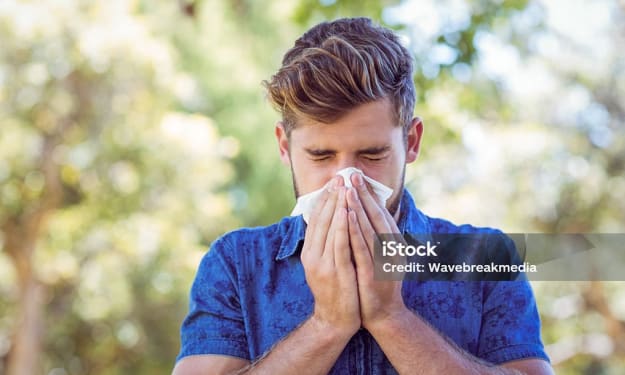
How climate change is supercharging pollen allergies
Climate change amplifies the potency of pollen allergies, making them more severe than ever. Climate change presents itself as a current life-threatening issue through unexpected impacts that affect our daily routines. Pollen allergies have emerged as a prevalent medical complication that ranks among the most unpleasant allergies today. Allergy seasons are becoming longer and more severe based on reports from worldwide populations that suffer from allergic reactions. Seasonal symptoms such as sneezing and eye itching, along with respiratory discomfort, now qualify as long-term health issues. But why is this happening? The rising temperature of the Earth affects the seasonal cycle of plants that produce pollen.
By Fuad Naser2 years ago in Longevity