fitness
Fitness regimes, advice, and trends in the Longevity health and wellness sphere.
Why Are More People Getting Cancer? Doctors Reveal: It’s Not Smoking or Drinking, but These 4 Habits Are to Blame!
Walking down the street or scrolling through social media, it’s hard to avoid hearing about someone who’s been diagnosed with cancer. It seems like more and more people are falling ill, especially in bustling cities where cases are skyrocketing. This begs the question: What’s causing cancer to spread like wildfire? Is it the environment we live in, or are our daily habits unknowingly planting the seeds of danger?
By Skillful Living2 years ago in Longevity
Three Japanese concepts that can offer insights into finding happiness.
a world that praises speed, achievement, and personal gain, the quiet, enduring wisdom of Japan offers an alternate compass for those seeking a more peaceful, fulfilling existence. Rooted in centuries of cultural values, Japanese philosophies surrounding happiness, resilience, and connection invite us to shift our focus—not toward what we can accumulate, but toward what we can cultivate: presence, balance, and compassion. At the heart of this philosophy is the idea that happiness is not merely a solo pursuit. It is relational, communal, and deeply intertwined with the people around us. In contrast to the Western emphasis on self-actualization and individual triumph, Japanese perspectives remind us that joy often lives in the spaces between us. It's not just about who you are alone, but who you are with others—how you show up, how you care, and how you hold space for both pain and peace. Harmony as a Foundation for Happiness Japan’s long history with natural disasters and societal rebuilding has carved into its cultural consciousness a deep respect for harmony—both with nature and each other. There is a shared understanding that no one truly stands alone. Interdependence is not a weakness but a natural state of being. This perspective fosters systems of mutual support and social responsibility, allowing communities to bounce back together when life becomes difficult. This collective mindset offers strength not through domination or control but through cohesion. Even in the aftermath of tragedy, there exists a unique capacity for what can be called “eudaimonic well-being”—a form of happiness based not on fleeting pleasure, but on meaning, purpose, and the ability to stay connected to something larger than oneself. The Beauty of the Ordinary In the pursuit of long-term contentment, Japanese wisdom often centers around subtlety. There is beauty in simplicity, grace in imperfection, and richness in routine. Unlike the pursuit of peak experiences or dramatic milestones, this philosophy embraces the steady rhythm of everyday life. This outlook is encapsulated in the phrase heibun na jinsei—a stable, ordinary life. Not ordinary in a dull or unremarkable sense, but in the way a calm sea is ordinary after a storm, or a warm cup of tea is ordinary on a cold morning. It is in these gentle moments where happiness quietly takes root: a shared smile, a home-cooked meal, or the sound of birdsong through an open window. The emphasis is not on amplifying life’s highs, but on appreciating its constants. This practice of noticing the micro-delights of daily life can make contentment feel more accessible, more consistent. Rather than waiting for extraordinary joy, we become receptive to the subtle beauty that’s already present. Three Core Concepts for Inner Peace Three deeply embedded cultural concepts offer a blueprint for cultivating this kind of lasting happiness: 1. Omoiyari – Often translated as empathy or compassion, omoiyari goes beyond sympathy. It is an intuitive understanding of another’s feelings, needs, or unspoken emotions. It fosters deep relational harmony, and just as importantly, can be directed inward. Practicing omoiyari toward ourselves—meeting our own flaws and struggles with gentle acceptance—can transform how we navigate hardship. 2. Wabi-sabi – This is the art of finding beauty in imperfection and impermanence. A cracked bowl, an aging tree, a faded photograph—wabi-sabi honors the passing of time and the uniqueness born of wear and weather. In life, it encourages us to release our pursuit of perfection and instead embrace what is real, raw, and evolving. There is serenity in accepting that things don’t need to be flawless to be meaningful. 3. Shikata ga nai – Meaning “it cannot be helped,” this phrase embodies a spirit of radical acceptance. Life will bring discomfort, failure, loss. Rather than resisting what we cannot change, this mindset encourages us to acknowledge reality and move forward with grace. It’s not resignation, but resilience—a way of bending rather than breaking when the winds of life blow strong. A Slow, Sustainable Joy While modern life often tells us to maximize productivity and chase the next thrill, Japanese philosophy invites a different pace—one that’s slow, mindful, and deeply rooted. It teaches us that happiness is not a finish line, but a rhythm we learn to dance to. It’s the steady beat of breath, the pauses between words, the stillness between seasons. By integrating these values into our daily lives, we can begin to redefine what success, peace, and happiness truly mean. We can learn to measure wealth not by what we own, but by how present we are in our lives. We can start to see ourselves not as isolated individuals but as threads in a greater tapestry—connected, significant, and enough. In the end, Japanese wisdom offers more than cultural insight; it offers a quiet revolution for the heart. One that says you don’t need more to be happy. You need to be here—fully, gently, and with an open heart. That’s the beginning of a good life.
By SophiaSoso2 years ago in Longevity
''Sugarcane'' The Sweet Plant That Fights Disease
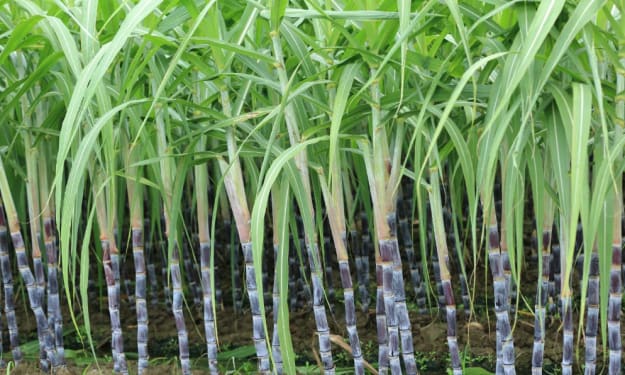
Sugarcane that could cure cancer Among sugar-containing plants, the sugarcane tree is preeminently the one to which we must pay homage. Kids love sugarcane trees as fruit. Sugarcane, that delectable food and fruit, also forms a basic stock for making sugar. Moreover, sugarcane is a precious medicinal plant that has curative agents for various diseases. SUGAR-CANE, a plant with stems, but not raised from seed. Sugarcane, which grows in a bushy form, grows to 4 to 12 feet tall. Sugarcane, a member of the Panchamula species, is recognized by various names in Ayurveda.
By Rohitha Lanka2 years ago in Longevity
How to Stop Sugar Cravings Naturally (Backed by Science and Real Results)
You know that feeling: you’re doing great all day, then out of nowhere—bam—the sugar cravings hit like a freight train. It’s always the same story… “Just one cookie,” you tell yourself. But somehow, it turns into five.
By WellnessGadgetGalaxy2 years ago in Longevity
The Best Fat Burner for Women: Our Top Picks. AI-Generated.
Finding the right fat burner for effective weight loss can be tough. There are many choices out there. It's key to pick the safest and most effective ones for your journey. We're diving into the best fat burners for women. Our choices are backed by solid research. They're safe and efficient for reaching your weight loss goals. Key Takeaways • Natural ingredients that support women's weight loss • Effective fat burners that are safe and reliable • Top-rated supplements for women's weight loss • Boost your metabolism with the best fat burners • Enhance your weight loss journey with our top picks What Makes the Best Fat Burner for Women Women have special needs when it comes to fat burners. The best one supports their weight loss goals and meets their health needs. Essential Ingredients for Female Fat Loss The best fat burners for women have natural ingredients that help with fat loss. They also boost metabolism and support health. Look for these key ingredients: Green Tea Extract: It's full of antioxidants and boosts metabolism. Conjugated Linoleic Acid (CLA): CLA helps reduce body fat by stopping fat storage. Garcinia Cambogia: This fruit extract may help control appetite and fat production. Caffeine: It's a stimulant that can increase metabolism and fat burning. But, use it in moderation to avoid side effects. Red Flags and Ingredients to Avoid Be careful of certain ingredients in fat burners. They might not be good for women or could be risky. Watch out for these: Ephedrine: It can help with weight loss but is risky for heart health and is banned in many places. Yohimbine: It can help with fat loss but may cause anxiety, insomnia, and a fast heart rate. It's not a good choice for many women.
By Mohit Rana2 years ago in Longevity
The Heart of Longevity: How a Healthy Heart Leads to a Long Life
Imagine a long and fulfilling life, brimming with experiences, laughter, and the joy of connecting with loved ones. While many factors contribute to our lifespan, at the very core lies the tireless work of a single, powerful organ: the heart. A healthy heart isn't just about avoiding disease; it's the engine that drives our vitality, fuels our every action, and ultimately paves the way for a longer, richer existence.
By Sagar Taran2 years ago in Longevity
Unlocking the Secrets of Ayurveda
Introduction: The Ancient Wisdom of Ayurveda In today's world, where health and wellness trends come and go, one ancient practice has stood the test of time: Ayurveda. Originating in India over 5,000 years ago, Ayurveda, meaning "the science of life," offers a holistic approach to health that emphasizes balance in all aspects of life—mind, body, and spirit.
By Pankaj Ayurveda2 years ago in Longevity
JTransform Your Life with The Smoothie Diet: Jade's Inspiring Journey
--- # **Transform Your Life with The Smoothie Diet: Jade's Inspiring Journey** --- ## **Introduction** Jade had reached her breaking point. For years, she’d been chasing one diet after another—low-carb, calorie counting, juice cleanses—you name it. Each time, she’d start with hope but ended up frustrated when the weight returned and the joy disappeared.
By Charles Funk2 years ago in Longevity
Run 20 Minutes a Day, Change Your Life
Discover the benefits of running just 20 minutes daily Can 20 minutes of jogging really transform your body, your mind, and your life? Science says yes—and the results are more powerful than you might think. Running, even in small daily doses, triggers a chain reaction of physical, mental, and emotional benefits. But it’s not just about burning calories. It’s about gaining energy, clarity, confidence—and even joy. The keyword? Running. It’s the simplest, most accessible superpower we have. But it must be done wisely. Let’s dive into what happens when you make running a daily habit—and what to avoid to make the most of it.
By Bubble Chill Media 2 years ago in Longevity