
Snake Bite First Aid: Venomous Snake Bite Symptoms, Dry Bites and What to Do Immediately
Fang marks can be misleading. Here’s how snake venom can affect the nervous system, blood, kidneys and breathing—and why quick medical treatment matters.

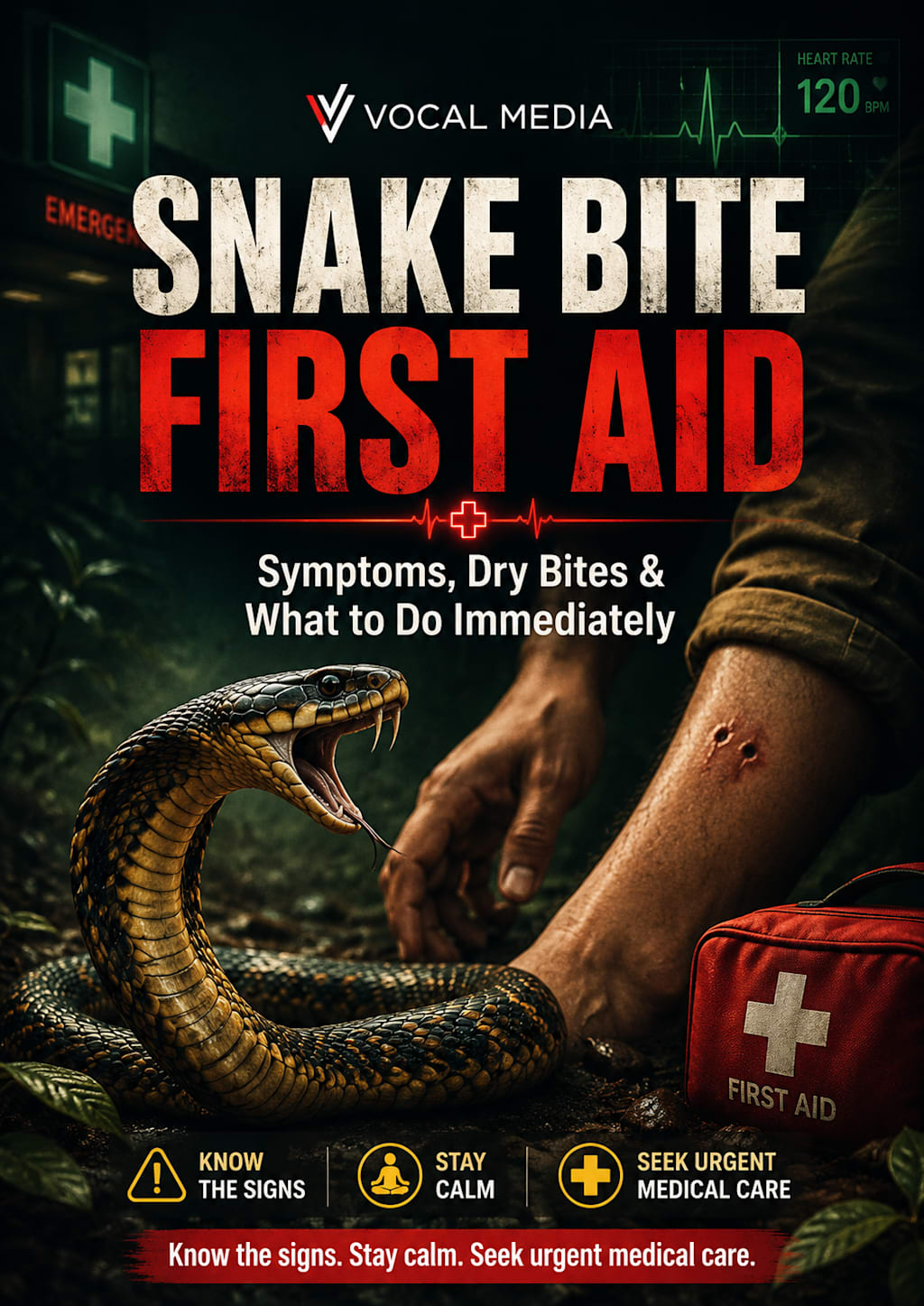
A snake bite can turn into a medical emergency very quickly, but one of the biggest mistakes people make is trying to identify the danger simply by looking at the bite marks.
Two deep puncture marks do not automatically prove that a venomous snake caused the bite, while multiple tooth marks do not guarantee that the snake was harmless. Different snakes, bite angles and other animals can leave surprisingly similar wounds. The safest approach is to treat a suspected snake bite seriously and seek medical care without delay.
According to the World Health Organization, millions of people are bitten by snakes worldwide each year, with an estimated 1.8 to 2.7 million cases developing clinical envenoming. Snake venom can cause paralysis, serious bleeding, kidney damage and destruction of local tissue.
Can Fang Marks Tell You If a Snake Was Venomous?
Not reliably.
People often believe that two puncture marks mean a venomous snake bite while several small tooth marks indicate a non-venomous snake. In reality, healthcare professionals should not determine the severity of a suspected snake bite from fang marks alone.
Doctors consider the circumstances of the bite, local changes around the wound, neurological symptoms, bleeding problems, vital signs and laboratory findings.
This is particularly important because some dangerous snake bites may initially produce surprisingly little pain or swelling.
What Is a Dry Snake Bite?
A venomous snake can bite without injecting a clinically significant amount of venom. This is commonly described as a dry bite.
It does not mean that the snake necessarily “ran out” of venom. More importantly, someone who appears well immediately after a bite should not assume that the bite was harmless.
Medical observation may still be necessary because symptoms can develop after the initial bite.
Neurotoxic Snake Bite Symptoms
Some snake venoms mainly interfere with the nervous system.
Serious neurotoxic envenoming can eventually weaken the muscles needed for breathing. WHO warns that severe paralysis from snakebite can prevent normal respiration, making airway and breathing support critically important.
Possible warning signs can include:
Drooping eyelids
Double or blurred vision
Weakness
Difficulty speaking
Difficulty swallowing
Increasing breathing difficulty
Progressive paralysis
These symptoms require emergency medical assessment.
In severe cases, patients may need manual breathing assistance or mechanical ventilation while doctors treat the effects of the venom.
Snake Venom and Abnormal Bleeding
Other snake venoms can severely disturb normal blood clotting.
Warning signs may include unexplained bleeding from the bite, gums or nose, blood in the urine, extensive bruising or other evidence of abnormal bleeding.
Certain types of envenoming can also contribute to acute kidney injury. WHO specifically identifies bleeding disorders, fatal haemorrhage and irreversible kidney failure among the serious complications that venomous snake bites can cause.
These symptoms cannot safely be diagnosed or treated at home.
Swelling, Blisters and Tissue Damage
A venomous bite can sometimes cause significant local swelling, blistering and tissue destruction around the affected area.
However, the appearance of a wound should never be used as the only method of identifying the snake.
Severe tissue damage from snakebite can eventually cause permanent disability and, in extreme cases, require amputation.
What Should You Do Immediately After a Snake Bite?
WHO recommends keeping the bitten person as still as possible and transporting them to an appropriate medical facility as quickly as possible.
Remove rings, bracelets, anklets or other tight objects that could become dangerous if swelling develops.
Do not cut the wound, attempt to suck out the venom, apply herbal remedies or use a tight arterial tourniquet. These traditional approaches may be ineffective, cause additional injury or delay lifesaving treatment.
The simplest rule is:
Keep the person still, immobilize the affected limb and get professional medical help urgently.
Why Antivenom Matters
Antivenom is the most effective specific treatment for serious snakebite envenoming. WHO lists snake antivenoms among essential medicines and emphasizes early access to appropriate treatment.
However, antivenom is not a home remedy.
It can cause serious reactions and the choice of product, timing, dose and additional treatment depend on the patient's condition, the type of envenoming and local clinical protocols.
For that reason, patients should not attempt to buy and inject antivenom themselves.
India Is Strengthening Snakebite Prevention
India launched its National Action Plan for Prevention and Control of Snake Bite Envenoming on March 12, 2024. Its priorities include better training for healthcare workers, improved emergency services, greater treatment access, stronger surveillance and regional venom centres.
The Ministry of Health and Family Welfare also provides standard treatment guidance specifically for snakebite management.
The Most Important Lesson
A snake bite should never become a guessing game.
You cannot reliably decide whether a snake was dangerous simply by counting fang marks, waiting for pain or checking whether the victim feels sleepy.
Watch for symptoms—but do not wait for serious symptoms before seeking help.
The safest response to a suspected snake bite is immediate immobilization, rapid transportation to an appropriate medical facility and assessment by trained healthcare professionals.
Modern medical treatment can save lives. Delaying care while relying on myths, wound appearance or traditional remedies can cost valuable time.
Medical Disclaimer: This article is for general educational purposes only and does not replace emergency medical advice, diagnosis or treatment. A suspected snake bite should be treated as a medical emergency.
SEO tags: Snake Bite, Snakebite First Aid, Venomous Snake, Antivenom, Health, Medical Awareness, Cobra, Snake Venom, Emergency First Aid, India
About the Creator
parwinder singh
🎬 Movie & Entertainment Writer sharing reviews, ending explanations, story breakdowns, plot twists and hidden details from Bollywood, Hollywood, South Indian cinema, Korean dramas and OTT releases.
Enjoyed the story? Support the Creator.
Subscribe for free to receive all their stories in your feed.
Comments
There are no comments for this story
Be the first to respond and start the conversation.