
Global Intrauterine Devices Market Size & Forecast (2026–2034)
A Steady Rise Driven by Awareness, Innovation, and Public Health Support

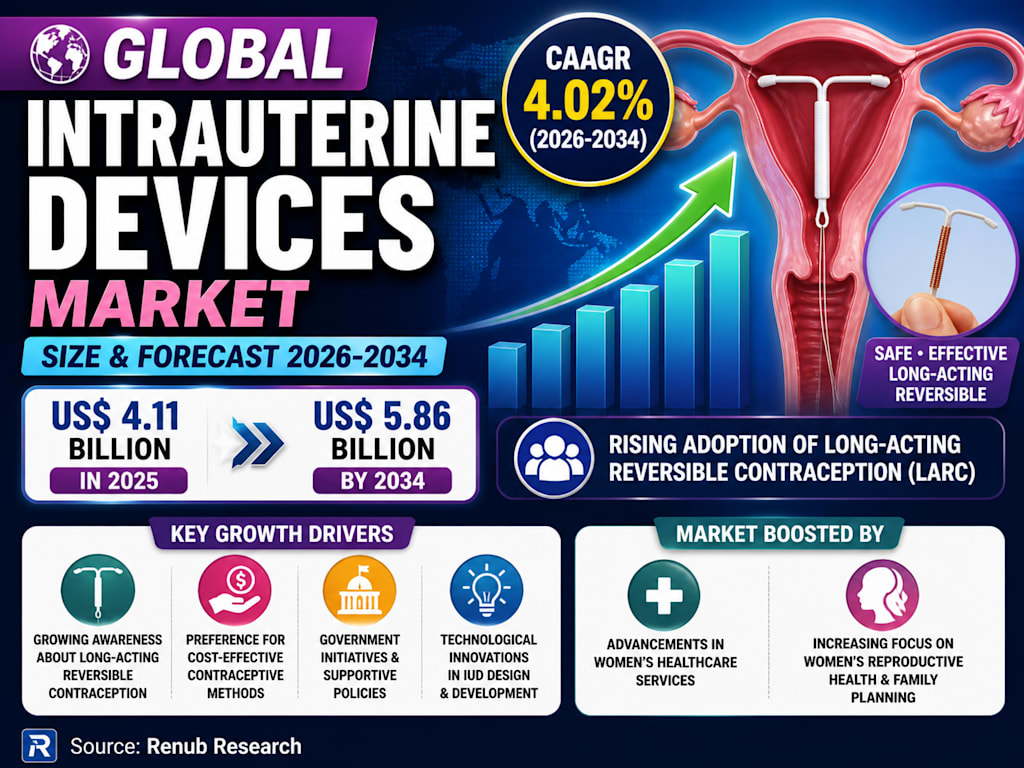
The global intrauterine devices (IUDs) market is entering a phase of sustained and meaningful growth, shaped by a combination of rising awareness around reproductive health, increasing demand for long-acting contraceptive solutions, and supportive government initiatives. According to Renub Research, the market is expected to grow from US$ 4.11 billion in 2025 to US$ 5.86 billion by 2034, registering a compound annual growth rate (CAGR) of 4.02% between 2026 and 2034.
This growth trajectory reflects more than just increasing product demand—it signals a shift in how women, healthcare providers, and policymakers approach contraception and reproductive planning. Intrauterine devices are now widely recognized as one of the most effective, convenient, and cost-efficient methods of birth control, helping reshape family planning practices across both developed and emerging markets.
Understanding Intrauterine Devices: A Foundation of Modern Contraception
Intrauterine devices are small, T-shaped medical instruments inserted into the uterus to prevent pregnancy. These devices fall under the category of long-acting reversible contraceptives (LARCs), offering protection that can last anywhere from three to ten years depending on the type.
There are two primary types of IUDs available in the market:
Hormonal IUDs, which release progestin to prevent fertilization by thickening cervical mucus and thinning the uterine lining
Copper IUDs, which rely on copper’s natural spermicidal properties to create an environment that prevents pregnancy
The popularity of IUDs stems from their “set-and-forget” nature. Once inserted, they require minimal maintenance while delivering highly effective pregnancy prevention. This combination of convenience, longevity, and affordability has made them increasingly appealing to women worldwide.
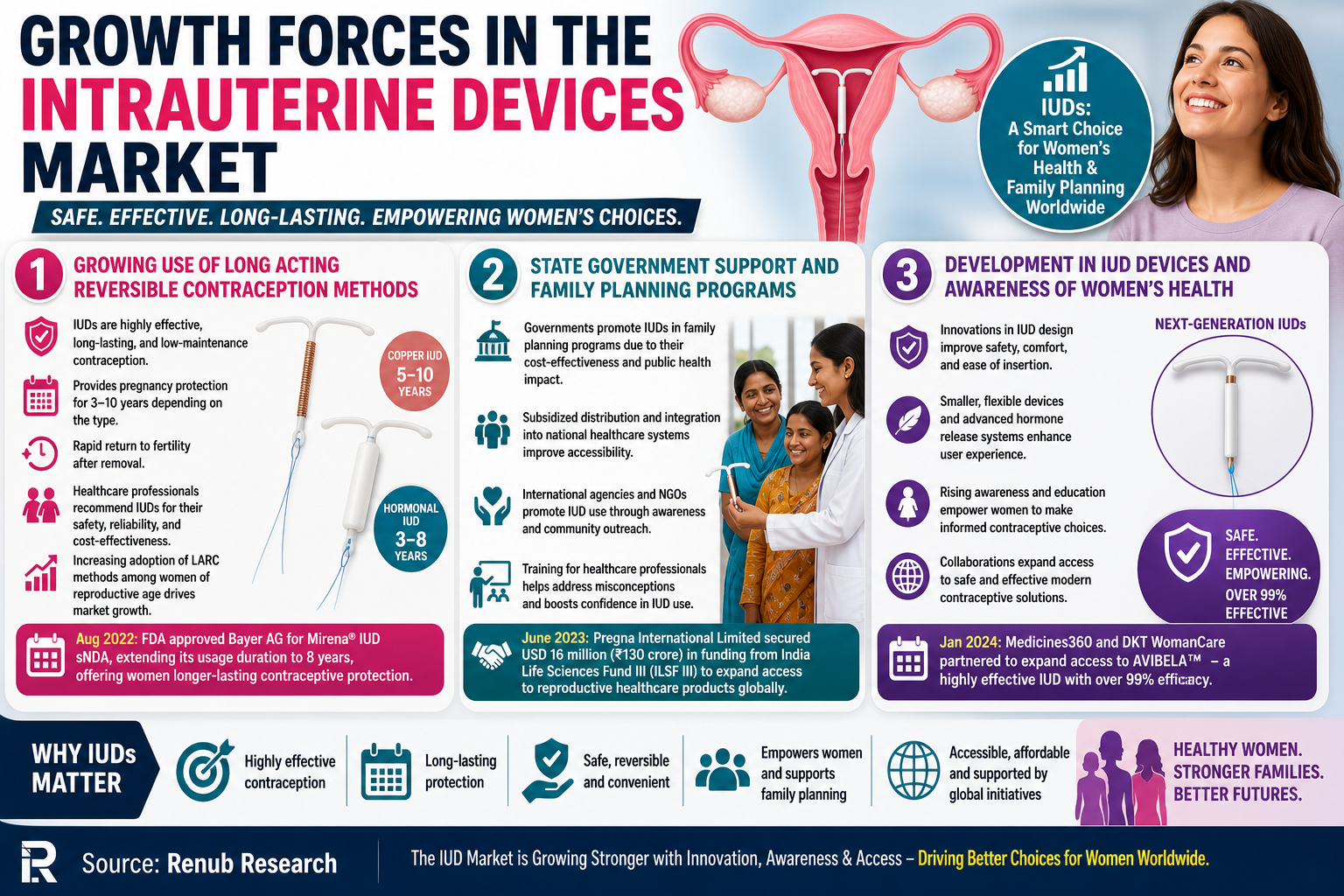
Key Growth Drivers in the Global IUD Market
Rising Preference for Long-Acting Reversible Contraceptives
One of the strongest drivers of the IUD market is the global shift toward long-acting reversible contraception. Unlike daily pills or periodic injections, IUDs provide consistent protection without the need for frequent user intervention. This reliability significantly reduces the risk of human error, making them one of the most dependable contraceptive methods available.
Healthcare professionals increasingly recommend IUDs due to their safety, effectiveness, and reversibility. Women can regain fertility quickly after removal, which makes IUDs a flexible option for those planning future pregnancies.
Government Support and Family Planning Initiatives
Public health programs and government-backed family planning initiatives are playing a crucial role in expanding the adoption of IUDs. Many countries promote IUDs as part of their population control strategies due to their long-term cost-effectiveness and minimal maintenance requirements.
Subsidized distribution, awareness campaigns, and integration into national healthcare systems have made IUDs more accessible, particularly in developing regions. Additionally, international organizations and NGOs are working to train healthcare professionals and dispel myths associated with IUD usage, further accelerating market growth.
Advancements in Technology and Women’s Health Awareness
Technological innovation has significantly improved the design and usability of intrauterine devices. Modern IUDs are smaller, more flexible, and easier to insert, reducing discomfort and improving user experience. Enhanced hormone-release systems have also increased their effectiveness and safety.
At the same time, growing awareness of women’s health and empowerment is encouraging informed decision-making around contraception. Women today are more proactive in choosing methods that align with their lifestyle, health needs, and long-term reproductive goals.
Market Challenges Hindering Wider Adoption
Side Effects and Cultural Misconceptions
Despite their high efficacy, IUDs face challenges related to side effects such as pain, bleeding, and discomfort after insertion. These concerns can discourage potential users, particularly first-time adopters.
Cultural beliefs and misconceptions also play a significant role in limiting adoption. In some regions, myths surrounding infertility or long-term health risks continue to create hesitation, even when medical evidence supports the safety of IUDs.
Limited Access to Skilled Healthcare Providers
IUD insertion and removal require trained medical professionals, which can be a barrier in areas with limited healthcare infrastructure. Even where devices are available and affordable, a lack of skilled providers can restrict access to these services.
Addressing this challenge will require investment in healthcare training, infrastructure development, and broader access to reproductive health services.
Segment Analysis: Hormonal vs. Copper IUDs
Hormonal IUDs: Dual Benefits Driving Demand
The hormonal IUD segment is witnessing strong growth due to its dual functionality. In addition to preventing pregnancy, hormonal IUDs are widely used to treat conditions such as heavy menstrual bleeding and dysmenorrhea.
This added medical benefit makes them an attractive option for women seeking both contraception and therapeutic relief, contributing significantly to market expansion.
Copper IUDs: Reliable and Hormone-Free Alternatives
Copper IUDs continue to hold a strong position in the market, particularly among women who prefer non-hormonal contraception. Their long lifespan, cost-effectiveness, and high efficacy make them a practical choice for many users.
They are also widely used as emergency contraception, further enhancing their relevance in global reproductive healthcare.
End-User Insights: Hospitals and Gynecology Clinics
Hospitals: A Core Pillar of IUD Adoption
Hospitals play a critical role in the IUD market due to their access to skilled gynecologists and advanced medical facilities. They are often the preferred setting for first-time users, high-risk patients, and postpartum or post-abortion care.
The presence of diagnostic and surgical support in hospitals enhances patient confidence and ensures safe procedures.
Gynecology Clinics: Personalized and Preventive Care
Gynecology clinics are emerging as a key distribution channel for IUDs, offering specialized and personalized care. These clinics focus on preventive healthcare and provide comprehensive family planning services, making them a popular choice among women seeking tailored solutions.
Their growing presence in urban areas is expected to further drive market growth.
Regional Insights: A Global Perspective
United States: A Mature and Innovation-Driven Market
The United States leads the global IUD market with high awareness levels, strong healthcare infrastructure, and widespread insurance coverage. Continuous innovation and increasing acceptance among younger women are supporting sustained growth.
United Kingdom: Strong Public Healthcare Support
In the United Kingdom, government-backed healthcare services and sexual health initiatives have made IUDs a widely accepted contraceptive method. Public trust in the healthcare system and streamlined access contribute to steady adoption.
India: Expanding Access Through Public Health Programs
India represents a high-growth market driven by government initiatives, increasing awareness, and improved healthcare infrastructure. Copper IUDs are widely distributed through public healthcare systems, while hormonal IUDs are gaining traction in urban private sectors.
Saudi Arabia: Gradual Growth with Rising Awareness
Saudi Arabia’s IUD market is expanding due to improvements in healthcare infrastructure and increasing awareness of reproductive health. Cultural factors still influence adoption, but ongoing education and healthcare investments are driving gradual progress.
Competitive Landscape: Key Players Shaping the Market
The global IUD market features several prominent players contributing to innovation and distribution, including:
- Bayer AG
- AbbVie Inc.
- Teva Pharmaceuticals
- CooperSurgical Inc.
- DKT International
- ANI Pharmaceuticals
- Mylan NV
- Melbea AG
These companies are actively involved in product development, strategic partnerships, and expanding access to women’s healthcare solutions worldwide.
Future Outlook: What Lies Ahead?
The future of the intrauterine devices market is closely tied to broader trends in healthcare and society. As awareness of reproductive health continues to grow, and as healthcare systems invest more in women’s health services, the demand for effective, long-term contraceptive solutions is expected to rise steadily.
Innovation will remain a key driver, with manufacturers focusing on improving comfort, safety, and ease of use. At the same time, expanding access to trained healthcare professionals will be critical in ensuring that these devices reach a wider population.
Final Thoughts
The global intrauterine devices market is evolving as a cornerstone of modern reproductive healthcare. Its steady growth reflects a broader shift toward informed, long-term, and cost-effective contraceptive choices.
With strong support from governments, continuous technological advancements, and increasing awareness among women, the market is well-positioned for sustained expansion through 2034.
About the Creator
Enjoyed the story? Support the Creator.
Subscribe for free to receive all their stories in your feed.
Comments
There are no comments for this story
Be the first to respond and start the conversation.