
Canada Pharmaceutical Market Set for Steady Expansion as Aging Population, Specialty Drugs, and Healthcare Innovation Drive Growth Through 2033
Canada's Pharmaceutical Industry Enters a New Era of Innovation, Chronic Disease Management, and Biopharmaceutical Advancement

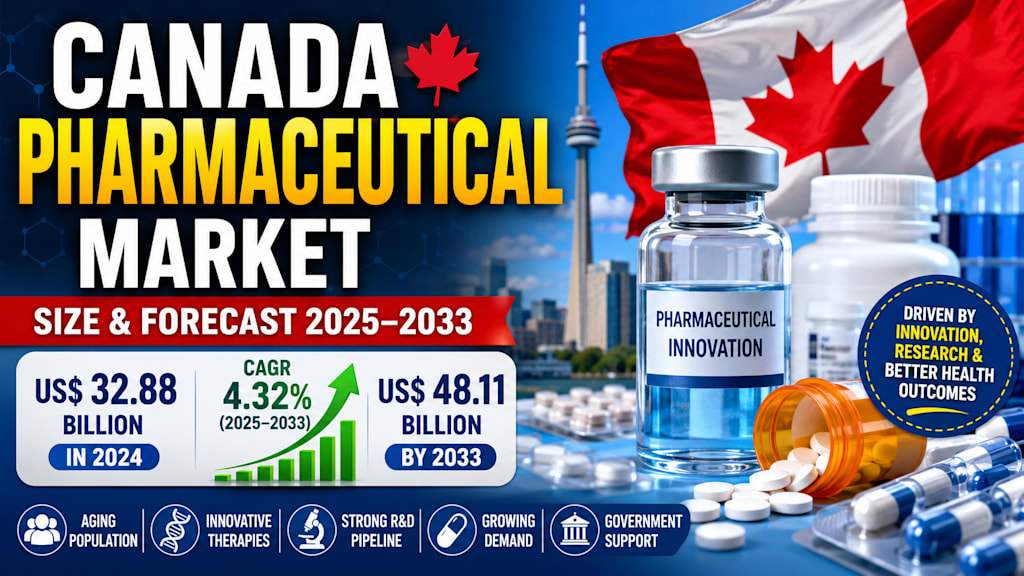
Canada Pharmaceutical Market Size and Forecast 2025–2033
The Canadian pharmaceutical industry is entering a transformative period characterized by rapid scientific innovation, an aging population, increasing chronic disease prevalence, and expanding investment in specialty medicines. As healthcare systems evolve to meet changing patient needs, pharmaceutical companies are introducing advanced therapies, biologics, and precision medicines that are reshaping treatment standards across the country.
According to Renub Research, the Canada Pharmaceutical Market is projected to grow from US$ 32.88 billion in 2024 to US$ 48.11 billion by 2033, expanding at a CAGR of 4.32% between 2025 and 2033. This growth reflects rising healthcare expenditures, greater demand for innovative medicines, supportive government initiatives, and ongoing investments in pharmaceutical research and development.
Canada’s Pharmaceutical Industry: A Critical Pillar of Healthcare
The pharmaceutical sector serves as one of Canada's most important healthcare and economic contributors. It encompasses drug discovery, clinical research, manufacturing, regulatory compliance, distribution, and commercialization.
Canada has earned a global reputation for maintaining stringent standards regarding drug safety, efficacy, and quality. Both multinational pharmaceutical corporations and domestic manufacturers operate within the country, creating a competitive ecosystem that fosters innovation while ensuring access to essential medications.
The sector not only supports patient care but also contributes significantly to employment, scientific advancement, exports, and economic growth. Continued collaboration between pharmaceutical companies, healthcare providers, academic institutions, and government agencies is helping Canada strengthen its position within the global life sciences industry.
Aging Population Creating Long-Term Demand for Pharmaceuticals
One of the strongest drivers of pharmaceutical market growth in Canada is demographic change.
Canada's population is aging rapidly, resulting in increased demand for medications, healthcare services, and long-term disease management solutions. Older adults typically require multiple prescription medications to manage chronic illnesses and age-related conditions.
Statistics indicate that individuals aged 85 years and above represent one of Canada's fastest-growing demographic groups. The number of people in this age category has more than doubled over the past two decades, highlighting the growing healthcare requirements of senior citizens.
As life expectancy continues to rise, pharmaceutical companies are focusing on developing therapies that address:
Cardiovascular diseases
Alzheimer's disease
Osteoporosis
Arthritis
Diabetes
Respiratory disorders
Cancer-related conditions
This demographic shift is expected to remain a major growth catalyst throughout the forecast period.
Chronic Diseases Continue to Fuel Medication Demand
Chronic diseases remain among the leading causes of healthcare spending and pharmaceutical consumption in Canada.
Modern lifestyles characterized by limited physical activity, poor dietary habits, obesity, and stress have contributed to rising incidences of chronic health conditions among both older and younger populations.
Patients diagnosed with long-term illnesses often require continuous medication therapy, creating recurring demand across multiple pharmaceutical categories.
Key disease segments driving pharmaceutical sales include:
Cardiovascular Disorders
Heart disease remains a major health concern across Canada. Increasing hypertension, cholesterol disorders, and heart-related complications are driving demand for cardiovascular medications.
Diabetes
Growing diabetes prevalence continues to create significant opportunities for insulin products, glucose-lowering medications, and innovative metabolic therapies.
Neurological Conditions
As populations age, treatments for dementia, Alzheimer's disease, Parkinson's disease, and other neurological disorders are becoming increasingly important.
Respiratory Diseases
Asthma and chronic obstructive pulmonary disease (COPD) treatments remain essential therapeutic categories within the Canadian pharmaceutical market.
Cancer Burden Driving Oncology Innovation
Cancer remains the leading cause of death in Canada and is a major driver of pharmaceutical innovation.
According to national cancer statistics, approximately 233,900 new cancer cases and over 85,000 cancer-related deaths were recorded in a recent year. Lung, breast, colorectal, and prostate cancers remain among the most frequently diagnosed cancers nationwide.
The growing burden of cancer is accelerating investments in:
Immunotherapy
Targeted therapies
Precision medicine
Oncology biologics
Companion diagnostics
Personalized treatment approaches
Pharmaceutical companies are increasingly focusing on developing treatments that improve survival rates while reducing adverse side effects.
As oncology continues to evolve, Canada remains a key market for introducing advanced cancer therapies.
Specialty Drugs and Biopharmaceuticals Transforming the Industry
The rise of specialty medicines represents one of the most significant developments within the Canadian pharmaceutical landscape.
Unlike traditional medications, specialty drugs often target rare diseases, autoimmune disorders, genetic conditions, and complex chronic illnesses. These therapies typically require specialized manufacturing, handling, storage, and administration procedures.
Biopharmaceuticals are gaining substantial traction due to their ability to deliver highly targeted therapeutic outcomes.
Areas experiencing strong growth include:
Monoclonal antibodies
Cell therapies
Gene therapies
Immunotherapies
Rare disease treatments
Personalized medicine solutions
Pharmaceutical companies are increasingly investing in biologics research to address unmet medical needs while creating new revenue opportunities.
The continued expansion of specialty pharmaceuticals is expected to significantly influence market growth through 2033.
Government Support Strengthening Pharmaceutical Growth
Government initiatives continue to play a crucial role in supporting pharmaceutical innovation and healthcare accessibility across Canada.
Federal and provincial governments are investing in programs designed to enhance:
Pharmaceutical research
Life sciences development
Domestic manufacturing capabilities
Biomanufacturing infrastructure
Drug accessibility
Healthcare innovation
Tax incentives, public-private partnerships, research grants, and commercialization programs are helping pharmaceutical companies accelerate product development and market expansion.
Efforts to improve access to affordable medicines are also creating favorable conditions for generic drug manufacturers and healthcare providers.
These policy measures collectively contribute to a stable environment for industry growth and investment.
Digital Transformation and Research Collaboration
Technology is becoming increasingly integrated into pharmaceutical operations throughout Canada.
Artificial intelligence, machine learning, big data analytics, and digital health platforms are enhancing various aspects of drug development and patient care.
Research collaborations between pharmaceutical companies, biotechnology firms, universities, hospitals, and research institutes are accelerating innovation and reducing development timelines.
These partnerships are particularly important in areas such as:
Drug discovery
Clinical trial optimization
Biomarker identification
Precision medicine
Rare disease research
Canada's strong academic ecosystem continues to attract pharmaceutical investment and foster groundbreaking scientific discoveries.
Challenges Facing the Canadian Pharmaceutical Market
Despite its positive outlook, the industry faces several important challenges.
Regulatory Complexity
Canada maintains rigorous standards for drug approval and patient safety. While these regulations protect public health, they can increase development timelines and costs.
Innovative therapies often undergo extensive evaluation before reaching patients, creating additional challenges for pharmaceutical manufacturers.
Pricing and Reimbursement Pressures
Government efforts to manage healthcare expenditures have resulted in pricing controls and reimbursement negotiations that can impact profitability.
Pharmaceutical companies must balance innovation investments with affordability expectations from healthcare systems and patients.
Supply Chain Vulnerabilities
Global disruptions have exposed weaknesses in pharmaceutical supply chains.
Dependence on international suppliers for active pharmaceutical ingredients and finished products can create shortages and logistical challenges.
Expanding domestic manufacturing capabilities remains a strategic priority for improving healthcare resilience and reducing supply risks.
Regional Analysis of Canada's Pharmaceutical Market
Ontario: Canada's Pharmaceutical Powerhouse
Ontario remains the largest pharmaceutical hub in Canada.
The province benefits from:
Extensive manufacturing infrastructure
Leading research institutions
Strong healthcare networks
Skilled workforce availability
Significant life sciences investments
Many major pharmaceutical companies conduct research, clinical trials, and manufacturing activities within Ontario.
Quebec: A Center for Innovation and Manufacturing
Quebec has established itself as a major pharmaceutical and biotechnology center.
Its strengths include:
Competitive tax incentives
Strong research ecosystem
Vaccine production capabilities
Generic drug manufacturing
Biologics development
Collaboration among academia, government, and industry continues to support pharmaceutical advancement throughout the province.
British Columbia: Emerging Biotech Leadership
British Columbia is gaining recognition for its rapidly expanding biotechnology and pharmaceutical innovation ecosystem.
The province excels in:
Early-stage drug development
Clinical research
Cancer therapeutics
Rare disease research
Biotechnology innovation
Vancouver, in particular, has emerged as a growing life sciences cluster attracting both domestic and international investment.
Market Segmentation Highlights
By Therapeutic Class
The market includes major therapeutic categories such as:
Alimentary Tract & Metabolism
Cardiovascular System
Anti-Infectives
Nervous System
Respiratory System
Dermatologicals
Musculoskeletal System
Antineoplastic & Immunomodulating Agents
Blood and Blood-forming Organs
Sensory Organs
Among these, oncology and immunology therapies continue to witness particularly strong growth.
By Drug Type
The market is categorized into:
Prescription Drugs
Branded Drugs
Generic Drugs
Over-the-Counter (OTC) Drugs
Prescription medicines account for a substantial share due to chronic disease treatment requirements and specialty therapy adoption.
By Distribution Channel
Key distribution channels include:
Hospital Pharmacies
Retail Pharmacies
Online Pharmacies
Online pharmacy services are expanding steadily as digital healthcare adoption increases across Canada.
Competitive Landscape
The Canadian pharmaceutical market remains highly competitive, featuring both global leaders and domestic manufacturers.
Major companies operating in the market include:
Pfizer Inc.
Apotex Inc.
Johnson & Johnson (Janssen)
Novartis AG
Merck & Co., Inc.
Abbott Laboratories
Bristol Myers Squibb
Eli Lilly and Company
AbbVie Inc.
Sanofi S.A.
These organizations continue investing heavily in research, innovation, strategic partnerships, and product portfolio expansion.
10 Recent Developments in the Canada Pharmaceutical Industry
Health Canada approved GSK's Jemperli (dostarlimab) plus chemotherapy for advanced and recurrent endometrial cancer in April 2025.
Shield Therapeutics and Kye Pharmaceuticals launched ACCRUFeR in Canada in March 2025 following regulatory approval.
Sunshine Biopharma's subsidiary Nora Pharma announced the Canadian launch of Everolimus in April 2025.
Pharmaceutical companies continue increasing investments in biologics manufacturing facilities across Canada.
Several oncology-focused firms expanded precision medicine research programs throughout 2024 and 2025.
Canadian life sciences partnerships strengthened collaborations between universities and pharmaceutical manufacturers.
Investments in domestic pharmaceutical manufacturing increased to improve supply chain resilience.
Multiple companies expanded clinical trial activities focused on rare diseases and specialty therapies.
Growth in digital health integration accelerated pharmaceutical commercialization and patient engagement initiatives.
New government-supported biomanufacturing programs encouraged additional investment in advanced therapeutic development.
Final Thoughts
Canada's pharmaceutical industry is positioned for sustainable growth throughout the next decade. Rising healthcare needs, an aging population, increasing chronic disease prevalence, and continued innovation in specialty medicines are creating strong long-term opportunities.
The growing adoption of biologics, precision medicine, and advanced therapies is transforming patient care while strengthening Canada's position as a global pharmaceutical innovation hub. Although regulatory complexity, pricing pressures, and supply chain challenges remain important considerations, continued government support and industry investment are expected to drive market expansion.
With the market forecast to reach US$ 48.11 billion by 2033, Canada's pharmaceutical sector is set to remain one of the country's most dynamic and strategically important industries.
About the Creator
Enjoyed the story? Support the Creator.
Subscribe for free to receive all their stories in your feed.
Comments (1)
Very good story. Great writer you are