
6 Worst Foods for High Cholesterol—And Why Eggs Are Not the Real Enemy
From vanaspati ghee and fried snacks to full-fat dairy and red meat, discover which everyday foods can raise LDL cholesterol and what to eat instead.

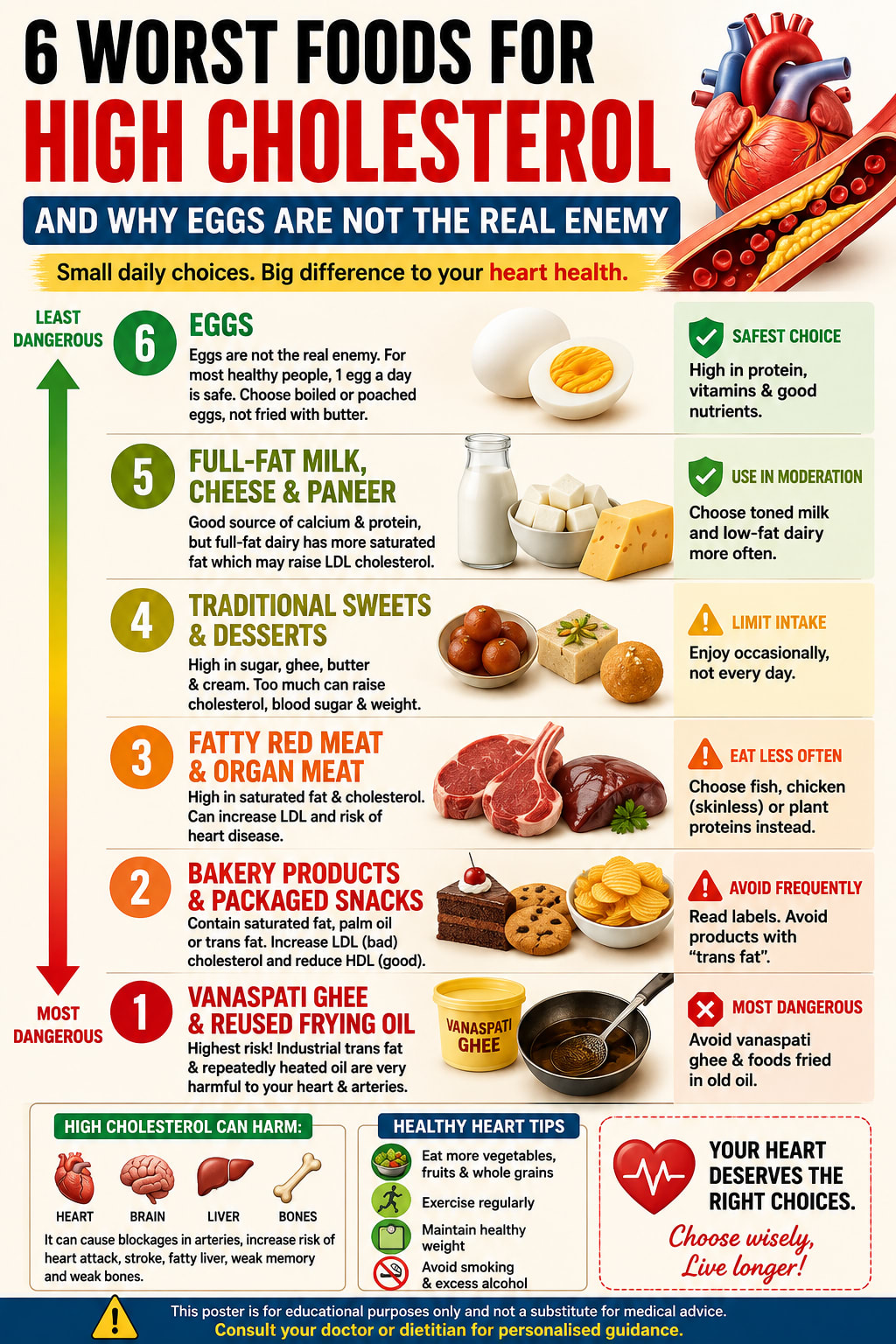
For decades, eggs have been blamed for high cholesterol. Many people have completely removed egg yolks from their diets because they believe eating an egg will immediately clog their arteries.
However, modern nutrition research presents a more balanced picture. For most healthy people, an occasional or daily egg may fit into a balanced diet. The bigger concern is often the overall amount of saturated fat and trans fat consumed through fried foods, fatty meat, full-fat dairy products, packaged snacks, and hydrogenated oils.
According to the American Heart Association, diets high in saturated and trans fats can raise LDL, commonly known as “bad” cholesterol. Trans fats may also reduce HDL, or “good” cholesterol.
Here are six food categories to watch, ranked from the comparatively less concerning to the most harmful.
6. Eggs
Eggs contain dietary cholesterol, especially in the yolk, but dietary cholesterol and blood cholesterol are not exactly the same thing.
For healthy adults with normal cholesterol levels, eggs can generally be included as part of an otherwise balanced diet. The American Heart Association notes that healthy individuals may include up to one whole egg per day, depending on the rest of their diet. People with high LDL cholesterol should discuss an appropriate amount with their doctor or dietitian.
The cooking method also matters. A boiled or poached egg is very different from an egg fried in butter and served with processed meat.
Better choice: Boiled, poached, or lightly cooked eggs accompanied by vegetables and whole-grain toast.
5. Full-Fat Milk, Cheese and Paneer
Milk, yoghurt and paneer provide protein, calcium and other valuable nutrients. However, full-fat versions can also contain considerable amounts of saturated fat.
Frequently consuming full-cream milk, butter, cream, high-fat cheese and large portions of paneer may contribute to higher LDL levels, particularly when these foods are added to an already high-fat diet.
There is no need for everyone to eliminate dairy completely. Choosing lower-fat options can reduce saturated-fat intake while still providing protein and calcium.
Better choice: Toned or reduced-fat milk, low-fat yoghurt and moderate portions of paneer.
4. Traditional Sweets and Desserts
Gulab jamun, barfi, laddoo, pastries and other rich desserts are often prepared using sugar, ghee, butter, cream, khoya or shortening.
This combination can make them extremely calorie-dense and high in saturated fat, added sugar or both. Occasional consumption is unlikely to define your health, but eating these foods frequently can make it difficult to maintain healthy cholesterol, blood sugar and body weight.
Desserts do not need to disappear from your life. Portion size and frequency are what matter most.
Better choice: Enjoy a small portion occasionally rather than treating sweets as an everyday snack.
3. Fatty Red Meat and Organ Meat
Fatty cuts of mutton, lamb, beef and pork can contain significant amounts of saturated fat. Organ meats such as liver and kidney can also be high in dietary cholesterol.
The National Heart, Lung, and Blood Institute identifies fatty red meat and full-fat dairy as common sources of saturated fat that may increase LDL cholesterol. Genetics, medical conditions, activity levels and certain medicines can also affect a person’s cholesterol profile.
Chicken and fish may be leaner alternatives, but preparation remains important. Deep-fried chicken or fish covered in butter, cream or heavy sauces may no longer be a heart-friendly meal.
Better choice: Fish, skinless chicken, beans or lentils prepared by grilling, baking, roasting or cooking with limited oil.
2. Bakery Products and Packaged Snacks
Cream biscuits, pastries, patties, cakes, crackers, packaged namkeen and similar snacks may contain palm oil, shortening or other sources of saturated fat.
Some products may also contain industrial trans fats, particularly where partially hydrogenated oils are still used. Trans fats are especially concerning because they raise LDL cholesterol and may lower protective HDL cholesterol.
The World Health Organization identifies vanaspati, shortening, fried foods, biscuits, crackers and pies as potential sources of industrially produced trans fat.
Do not assume that a small snack is harmless simply because the serving looks small. Eating two biscuits with tea several times every day can add up over time.
Better choice: Fruit, unsalted nuts, roasted chickpeas, plain popcorn or whole-grain snacks with minimal saturated fat.
1. Vanaspati Ghee and Frequently Reused Frying Oil
Vanaspati ghee, partially hydrogenated oils and foods repeatedly fried in old oil are among the biggest concerns for heart health.
Street foods such as samosas, pakoras, kachoris and jalebis may be cooked in the same oil for extended periods. Apart from the possibility of industrial trans fat, repeatedly heating frying oil can degrade its quality and produce undesirable oxidation compounds.
The WHO recommends keeping trans-fat intake below 1% of total daily energy and supports replacing partially hydrogenated fats with healthier unsaturated oils.
Better choice: Reduce commercially fried foods and use liquid vegetable oils in moderate quantities for home cooking. Avoid repeatedly storing and reheating old frying oil.
High Cholesterol Is Often Silent
High LDL cholesterol usually does not produce obvious symptoms. Many people discover it only after having a blood test. When left untreated, LDL can contribute to plaque formation inside the arteries, increasing the risk of heart attack and stroke.
That is why regular testing is important, particularly for people with diabetes, obesity, high blood pressure, a family history of heart disease or previously abnormal cholesterol results.
The Final Verdict
Eggs are not necessarily the greatest enemy of your cholesterol. For many people, the more significant problem is a dietary pattern dominated by fried street food, vanaspati ghee, fatty meat, rich dairy products, sweets and packaged snacks.
Instead of becoming afraid of one particular food, focus on the complete pattern of your diet. Replace saturated and trans fats with unsaturated fats, eat more vegetables and whole grains, choose leaner proteins and keep highly processed foods occasional.
Most importantly, never stop prescribed cholesterol medicine or make major dietary changes solely because of an online article. A doctor or registered dietitian can evaluate your blood-test results, family history, medicines and overall health before providing personalised guidance.
This article is intended for general education and is not a substitute for professional medical advice.
About the Creator
parwinder singh
🎬 Movie & Entertainment Writer sharing reviews, ending explanations, story breakdowns, plot twists and hidden details from Bollywood, Hollywood, South Indian cinema, Korean dramas and OTT releases.
Enjoyed the story? Support the Creator.
Subscribe for free to receive all their stories in your feed.
Comments
There are no comments for this story
Be the first to respond and start the conversation.