health
Health hacks for optimal performance; discover simple suggestions and habits to improve your life, body, mind and spirit.
Unlocking Your Potential: The Power of Habit Creation in Personal Growth
Introduction: Personal development is a lifelong journey, and at the core of this journey lies the art of habit creation. The habits we cultivate shape our daily routines, influence our mindset, and ultimately determine the trajectory of our lives. In this blog, we will explore the profound connection between habit creation and personal growth, delving into the science behind habits, the key principles of habit formation, and how you can leverage this knowledge to foster positive change in your life.
By Tanvi Punia3 years ago in Lifehack
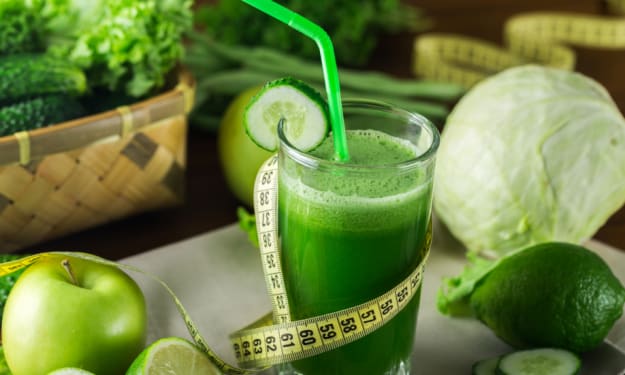
Are you struggling to lose weight? It's not your fault!
One of the biggest areas I have noticed that most people do not pay attention too when struggling to lose weight is their liver function, crazy right! Speaking to most of the people who I have trained, putting in countless time in the gym and diet after diet but not seeing the results they wanted, so I started to do research to see if there was anything I can do to help further their progress.
By Rafael Aponte3 years ago in Lifehack
Why kids don’t get as cold as adults do
I love how it feels in the fall when it's 55 degrees outside and it's finally cool enough to wear my winter sweaters, sweaters, beanies and gloves. I drink pumpkin spice to warm me up. But I love the feeling of suddenly hitting 55 degrees in the middle of winter. So I left my jacket at home and walked outside in shorts and a T-shirt, feeling the warmth of the sun on my skin. I thought of going to the beach to sunbathe as the weather was very warm. The temperature was the same, but my reaction to it was completely different. One reason is that I have more stuff in my body in January than in September. This substance allows children and teenagers to deal with cold weather better than adults. When you get hot, you sweat. You are cold and shivering. But before you start shivering, your body is already working. It starts burning fat...but not the fat we think. There are two aspects of fat that we want to consider. It contains white fat. We usually think of white fat as "fat". Because it looks white it is called white. White fat is found throughout the body, protecting our bones and organs. By the way, Dr. Aaron Sepes. White fat cells have many functions, one of the most important functions being the body's energy source. We use our fat as fuel every day. However, there is one type of fat that does the opposite: brown fat. These cells are smaller, so they are more like muscle than fat. Brown fat cells are not the large lipid droplets in white fat cells, but the fibrous sacks of mitochondria. This is why it looks brown. If you remember anything from high school biology class...you know that mitochondria are the powerhouse of the cell. Instead of acting as an energy reserve to be burned by organs throughout the body, brown fat uses its own energy to burn energy. Unlike white fat, it is only found in specific areas. On the neck, shoulders, upper arms. It goes down the spine and goes to some parts of the stomach. There is a lot of overlap with the main blood vessels, because heating the blood warms the whole body. Brown fat around the blood vessels in the neck warms the blood that flows to the brain. That is very good. Brown fat is stored in the shoulders, and when the blood is heated by the brown fat, it moves quickly to the heart and is pumped throughout the body. This is the first line of defense against the cold. If it is not enough to raise the body temperature...the body will shiver. But one of the craziest things I learned while researching this story was...babies can't shake. When babies are born, they don't have enough muscle mass and may not be well coordinated with the brain and muscles to vibrate properly. Therefore, they need another way to produce heat, and brown fat is one part of that. Babies are born with a lot of brown fat. According to the Cleveland Clinic, this substance makes up 2 to 5 percent of a baby's weight. This is important for our life. Brown fat age seems to occur in teenagers, which explains why so many people in my high school wore shorts in the winter. But as we age, our bodies burn less. This will help us understand why children are hotter than our parents or grandmothers are cold. Older people...have significantly less brown fat... In terms of absolute and relative quantities. It also loses muscle, which is important for heat production. But the similarities between brown fat and muscle don't end there. If you exercise, the amount of brown fat will increase. And the way you do that is by exposing yourself to the cold for long periods of time… A 2014 study showed. See how much brown fat increased in this man from Maryland after exposure to cold weather. Notice how much the ratings drop when exposed to warmer temperatures. This explains why 55 degrees in the winter is warmer than 55 degrees in the fall. However, brown fat is not just heating. Scientists have found that eating more vitamin A is associated with a lower risk of diabetes and heart disease. However, using cold therapy to study the effects of brown fat is difficult. One challenge is the difficulty of returning the heating. How much...I gave you the "big" cold. I mean, you know the temperature, but it's hard to know what you're doing, so it's hard to design reproducible research. So they tried to activate brown fat with drugs to study how heat affects us biologically. A drug called Mirabegron, which is approved to treat urinary incontinence, activates brown fat to mimic the effects of a cold. There's a lot we don't know about brown fat...but we do know that our bodies use it to adapt to cold weather. If a child doesn't want to wear a coat in the winter, it doesn't mean he's an adult. They probably have more in them than you do.
By Rowan Sharkawy3 years ago in Lifehack
Revolutionizing Food: Harvard Innovation Lab's Impact on Sustainable Nutrition
Introduction to the Harvard Innovation Lab Nestled in Cambridge, Massachusetts, the Harvard Innovation Lab (Harvard i-lab) stands as a beacon for innovation and entrepreneurship. This exploration delves into the pivotal role of innovation labs, spotlighting the Harvard i-lab's contributions to sustainable and nutrient-dense foods.
By Tashfeen Siddique3 years ago in Lifehack
Almonds Are Fruit! Should You Eat Them?
Almonds have been a staple in my diet for as long as I can remember. They've been a reliable snack, a crunchy addition to salads, and a versatile ingredient in various dishes. However, recently I stumbled upon a fascinating revelation that caught me by surprise – almonds are not nuts; they're actually seeds of a fruit. This newfound knowledge led me to ponder whether this revelation has any implications for my almond consumption habits.
By Cynthia Matheka3 years ago in Lifehack
Balancing Detox: Navigating Natural Cleansing in a Modern World
As humans, we are constantly exposed to toxins and pollutants in our environment, from the food we eat to the air we breathe. Our bodies have a natural detox system that helps eliminate these toxins, but some people still choose to undergo additional detoxification methods. The question then arises: do we need to detox if we already have a detox system?
By Maria Dodds3 years ago in Lifehack
The Power of Perspective: Transformative Books for Success
The Magic of Thinking Big "The Magic of Thinking Big," penned by David J. Schwartz, is a masterpiece that invites us to view success from a different perspective. It teaches us that the size of our thoughts directly influences the size of our success. The book emphasizes the power of self-confidence. It's not about the skills you possess, but the confidence you hold in those skills. It's about believing in yourself even when the odds seem stacked against you.
By Jenn C. Jacks3 years ago in Lifehack