politics
Political figures, histories, and current events in the whole scope of modern and past politics. Work place politics.
Is The Rise of Peter Pan Syndrome the New Normal?
Growing up used to follow a fairly predictable timeline. We saw people graduate from school, find stable jobs, move out, get married, and start families, often before the age of thirty. This was the norm. Nowadays, it’s a totally different story; we have been met with overwhelming demand for individuals who are now showing signs of a crisis that has become more prevalent, which is known as “Peter Pan Syndrome.” Recently, I’ve heard more people mention Peter Pan syndrome. I saw a video where someone compared today’s adult struggles to the effects of this syndrome. That made me curious, so I looked into it to see if it’s real. It turns out, it is!
By Nozomi Rose6 months ago in Journal
THE GREAT AMERICAN FUNHOUSE: A WEEKLY DISPATCH FROM THE COLLAPSE
GREAT AMERICAN FUNHOUSE WEEKLY DISPATCH: May 17-24 Welcome to this weeks edition of the GREAT AMERICAN FUNHOUSE where I objectively analyze the terminal stages of the American experiment. If you are looking for the sound of a Republic breathing its last dying breath, don’t strain your ears for the thunder of cannon fire or the dramatic fall of the Bastille. It’s far more subtle than that. It sounds like the rhythmic ka-ching of a national treasury being vacuumed dry to pay off the Commander-in-Chief for the inconvenience of being President. It sounds like the frantic snorting of a "Law and Order" czar in a green room, and the soft, repetitive chanting of a public that has traded its intellectual agency for the soothing, warm embrace of a digital participation trophy. All neatly packaged and delivered through the personal 3x5-inch digital windows to the world, each one of us has in our pockets.
By Meko James 6 months ago in Journal
Why Millions of Americans No Longer Believe Retirement Will Be Financially Safe
Americans Spent Decades Working for Retirement. Now Many Fear They Can’t Afford to Grow Old. Retirement was promoted as a reward for hard work for many years. Work all of your life, contribute to the system, use your money wisely. Eventually enjoy peace, stability, and financial security.
By Raviha Imran6 months ago in Journal
Would You Give This CEO the Keys to Your Business?. Content Warning.
Below are 12 documented actions taken by a leader in a position of overseeing the organization, framed exactly as they would appear in a corporate performance review. Read through them as if they were happening at your own company and ask yourself: If this were your business, would you renew this person's contract?
By Amanda Sinclair-Moore6 months ago in Journal
Pashtun Regions: Conflict, Displacement, and Unresolved Questions
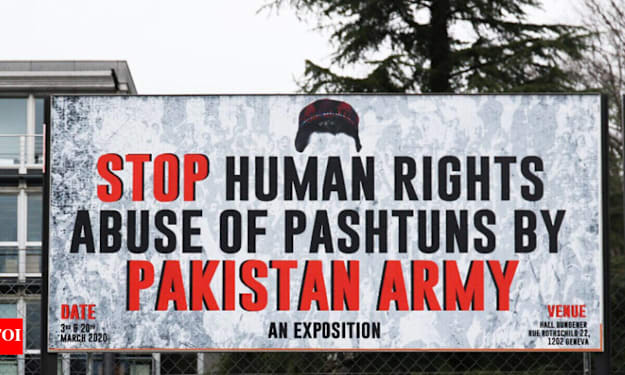
me suffering becomes so constant that it slowly fades from global attention. The situation in many Pashtun regions of Pakistan is one of those long-running human tragedies that continues in plain sight, yet remains underreported in wider discussions. For many years, Pashtun areas have experienced ongoing conflict, military operations, displacement, economic hardship, and insecurity. Entire generations have grown up in environments shaped more by checkpoints, curfews, and uncertainty than by stability and opportunity. Daily life in many regions is marked by fear of what tomorrow may bring. Basic rights remain a central concern for many Pashtuns. Reports from human rights organizations and local voices consistently highlight issues such as limited political representation, lack of effective justice, and weak accountability mechanisms in conflict-affected areas. In several cases, families report arrests, detentions, and disappearances of loved ones without clear information or legal resolution. Mothers continue to search for sons, wives for husbands, and children grow up with unanswered questions about their fathers. According to estimates shared by rights groups and local advocates, more than 70,000 Pashtuns are believed to have gone missing or lost their lives during years of conflict and military operations in the region. Many of these cases remain unresolved, and families still have no verified information about the fate of their relatives. This long absence of closure has created deep emotional and psychological distress across communities. The deaths of figures such as Arman Loni, Usman Lala, and poet Gilaman Wazir are widely discussed in the context of political tension and unrest in the region. Their deaths are often seen as part of a broader pattern of violence and instability that has affected outspoken voices in Pashtun society, further increasing mistrust and fear. Military operations carried out in various Pashtun regions, particularly during the broader conflict with militancy, have had long-term consequences on civilian life. Entire villages have been displaced, and families have been forced to leave their homes, sometimes during harsh weather conditions. In many cases, return has taken years, and some communities remain displaced even today. Economic life has also been heavily impacted. Markets in several areas were destroyed or severely damaged, including the well-known bazaar in Miran Shah, which once served as a major commercial hub. Small businesses, daily wage workers, and traders lost their livelihoods, leaving long-lasting economic challenges. In areas such as Tirah Valley, reports indicate that families were relocated during security operations with assurances of eventual return. However, many residents remain displaced, with uncertainty continuing about when or how they will be able to rebuild their lives. Similar conditions have been reported in parts of North Waziristan, where curfews and security restrictions have affected mobility, trade, and employment. Limited control over local resources is another concern frequently raised in discussions about Pashtun regions. Despite being rich in natural resources such as minerals and water, many communities report minimal local benefit and continued underdevelopment. This has contributed to a growing sense of economic exclusion among residents. During the broader war on terror, Pashtun areas became central zones of military activity and counterinsurgency operations. These events led to repeated cycles of violence, displacement, and reconstruction, with civilians often bearing the long-term social and economic costs of conflict. In everyday life, uncertainty continues to shape decisions. Families remain cautious when children leave home, and young people often grow up in environments where instability limits access to consistent education, employment, and development opportunities. Even discussing these challenges openly can feel difficult in some settings, yet many continue to speak because silence has not resolved the underlying issues. Movements such as Pashtun Tahafuz Movement continue to advocate for peaceful dialogue, justice, accountability, and equal rights for Pashtun communities. Their supporters emphasize non-violence and call for constitutional rights and dignity to be fully implemented for all citizens. This is not a call for conflict. It is a call for attention and humanity. No community should live for decades under conditions of fear, displacement, and uncertainty. No family should be left without answers about missing loved ones. And no region should feel disconnected from the rights and protections guaranteed to all citizens. The question remains simple: how long will these long-standing issues continue before they are meaningfully addressed?
By Bismillah Achakzai6 months ago in Journal