
Why the Presidential Records Act Battle Could Reshape Executive Power in America
White House vs. The Law

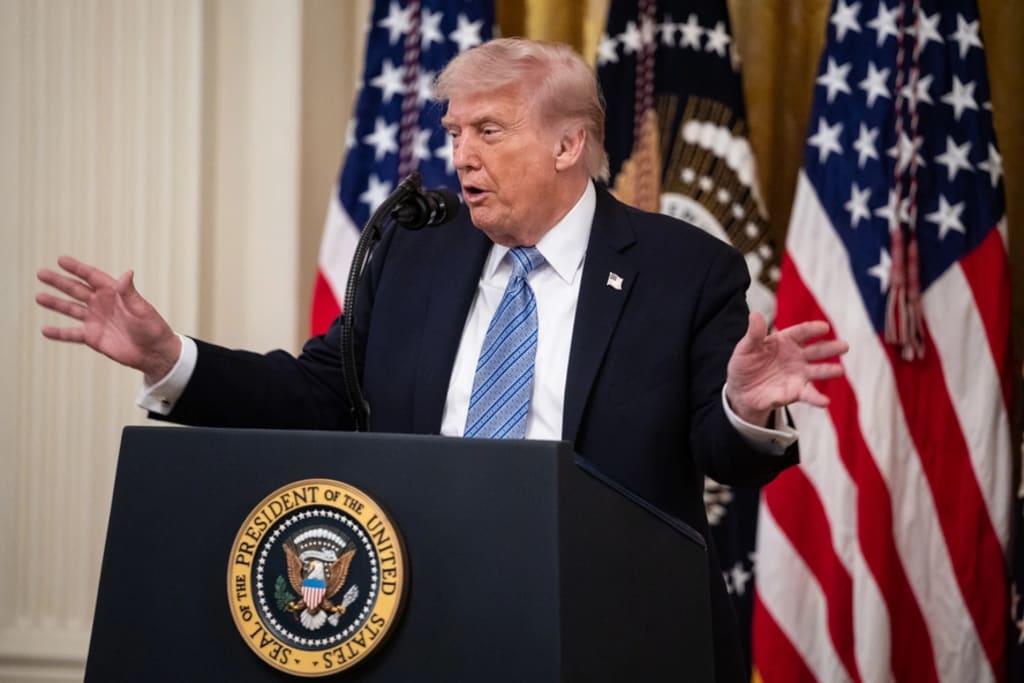
The battle over presidential power in the United States has entered dangerous constitutional territory.
This time, it is not about elections.
Not immigration.
Not foreign policy.
It is about something far more foundational:
Who owns presidential records — the president, or the American people?
A federal judge has now ruled that the White House must comply with the Presidential Records Act, rejecting a controversial legal opinion from the U.S. Department of Justice that claimed the law itself may be unconstitutional.
And beneath the surface of this legal confrontation lies a deeper question:
Is America witnessing the expansion of presidential authority beyond democratic accountability?
What Is the Presidential Records Act?
The Presidential Records Act was passed in 1978 in the aftermath of the Watergate scandal.
Congress created the law for one reason:
To ensure presidential records belong to the nation—not the individual occupying the Oval Office.
Before the law, presidents often treated official records as personal property.
The Watergate era changed that forever.
Or at least, it was supposed to.
The law requires:
preservation of presidential communications,
protection of official documents,
transfer of records to the National Archives and Records Administration,
and restrictions against unauthorized destruction of records.
In simple terms:
- The presidency is temporary.
- The historical record is permanent.
The Judge’s Explosive Ruling
John Bates, a federal judge appointed by George W. Bush, issued a preliminary injunction blocking the administration from disregarding the records law.
The ruling directly challenged a recent legal opinion from the Justice Department’s Office of Legal Counsel, which argued that the law improperly interferes with presidential authority.
Judge Bates did not merely disagree.
He dismantled the argument.
He wrote that:
- constitutional text,
- Supreme Court precedent,
- property law principles,
- and nearly 50 years of government practice
all support Congress’s authority to regulate presidential records under the Constitution’s Property Clause.
This matters enormously because the ruling suggests the executive branch cannot simply redefine constitutional limits whenever compliance becomes inconvenient.
The Controversial Logic Behind the White House Position
Here is where the debate becomes politically explosive.
The Justice Department’s argument essentially rests on this premise:
The president possesses such broad constitutional authority that Congress cannot meaningfully regulate how presidential records are handled.
At first glance, some constitutional conservatives may see merit in protecting executive independence.
But critics argue this reasoning opens a dangerous door.
Because if a president can unilaterally decide:
- what records matter,
- which communications survive,
- and what the public may eventually know,
- then accountability itself becomes vulnerable.
The controversy is not merely legal.
It is philosophical.
The Dangerous Expansion of Executive Power
This case exposes a growing tension inside modern American governance:
Does the presidency answer to institutions—or stand above them?
The logic behind rejecting the Presidential Records Act carries massive implications.
If accepted broadly, it could theoretically allow future presidents to:
- withhold politically sensitive records,
- erase controversial communications,
- bypass historical oversight,
- or shield internal decision-making from future investigation.
Critics argue that such powers would weaken:
- transparency,
- democratic memory,
- and institutional trust.
Because history teaches a brutal lesson:
Governments rarely surrender power voluntarily once they acquire it.
The Irony at the Center of the Case
One of the judge’s strongest observations was deeply ironic.
The administration had largely complied with the law during Trump’s first presidency.
Meaning:
For years, the White House functioned under the assumption that the law was constitutional.
Only later did the Justice Department suddenly argue otherwise.
To critics, this raises logical contradictions:
- If the law was unconstitutional, why obey it previously?
- Why does the constitutional objection emerge now?
- Is the argument rooted in principle—or political convenience?
These questions fuel skepticism across legal and political circles.
The Constitutional Chess Match Ahead
Judge Bates’ ruling does not end the battle.
It begins the next phase.
The administration now has only days to seek intervention from higher courts.
This means the issue could eventually rise toward:
- federal appeals courts,
- or potentially even the Supreme Court of the United States.
And if that happens, the stakes become historic.
Because the final ruling may define:
- the limits of executive privilege,
- the reach of congressional oversight,
- and the future balance of power in American democracy.
Why Historians and Journalists Are Alarmed
The lawsuits were brought by groups representing:
- historians,
- transparency advocates,
- and journalists.
That is not accidental.
Presidential records are not merely paperwork.
They are:
- evidence,
- national memory,
- democratic documentation.
Without records:
- investigations become harder,
- history becomes distorted,
- and accountability fades into speculation.
Democracy depends on institutional memory.
And memory depends on preservation.
The White House Response
The White House pushed back strongly.
Spokesperson Abigail Jackson argued that the ruling:
“fundamentally misunderstands the Administration’s position.”
The administration also insisted:
- electronic records are not being deleted,
- preservation policies remain in place,
- and legal challenges will continue.
Still, critics argue that the issue is larger than current practice.
It is about precedent.
Because once constitutional boundaries shift, future administrations—of any party—may inherit expanded powers that were never originally intended.
Final Analysis: A Battle Over Memory, Power, and Democracy
At its core, this case is not really about documents.
It is about control.
Control over:
- history,
- institutional memory,
- public accountability,
- and ultimately the narrative of presidential power itself.
The founders of American democracy feared concentrated power for a reason.
They understood that transparency is not a political luxury.
It is a democratic safeguard.
And now, nearly 250 years later, America finds itself asking the same ancient question every republic eventually faces:
Who watches power when power attempts to watch itself?
About the Creator
Omasanjuwa Ogharandukun
I'm a passionate writer & blogger crafting inspiring stories from everyday life. Through vivid words and thoughtful insights, I spark conversations and ignite change—one post at a time.
Enjoyed the story? Support the Creator.
Subscribe for free to receive all their stories in your feed.
Comments
There are no comments for this story
Be the first to respond and start the conversation.