
The Untold Story of Greek Radio Journalist Chronis Prosalentis
Why I Refused to Wear a Suit on TV


In Greek TV during the 90s and 2000s there was an unwritten dictate.
If you wanted to be taken seriously, you had to wear a suit.
You had to have shoes polished, a practiced smile, carefully selected words, and a full presenter look.
TV and journalism overall were like a performance show and I didn't want to participate in that. I wanted to disseminate valuable information that would inform the public.
So people would ask:
"“Mr. Prosalentis, why don’t you dress like the rest?”
I simply never wished to look like the people I was investigating or the subjects I was researching.
So I had spent most of my life in radio, but at the time it wasn’t the glamorous kind people think about to this day.
I mean old-fashioned local radio in Greece, where tiny studios, cigarette smoke on the horizon and nothing but cables could be seen in the background.
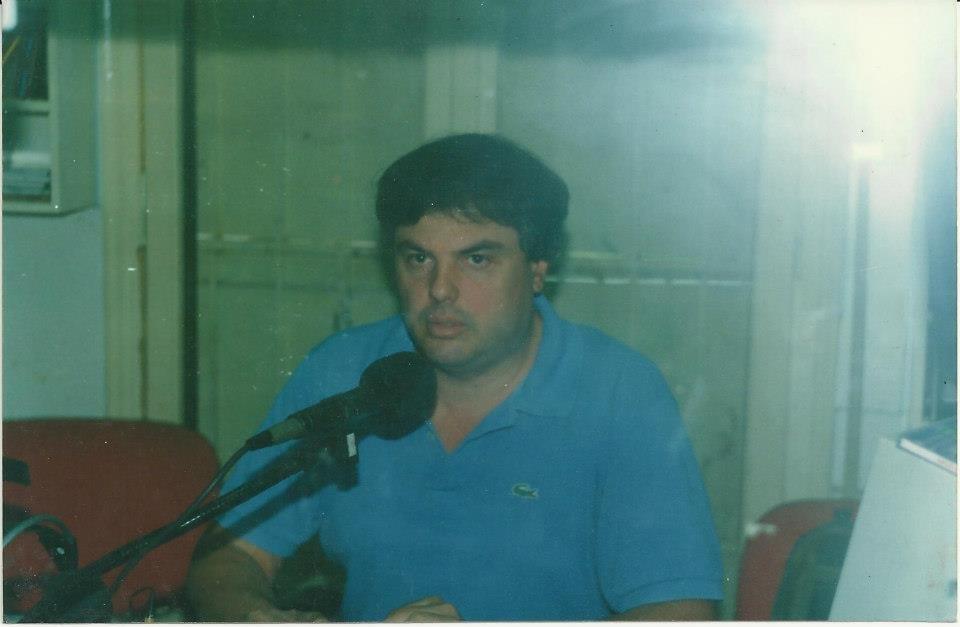
Endless coffee cups next to the microphones early in the morning.
Breaking news passing through landlines before there was the Internet.
A different era - Radio was "alive"
It was the most raw form of communication, instant and genuine. The journalist connected directly with the listener in a fashion that's hard for people to understand in the shallow era of social media.
In Corfu, the place where I built my career in, radio mattered.
People listened from taxis, cafés, fishing boats, workshops, bakeries and old village houses high in the mountains. Local radio was how entire communities kept connected, long before social media.
That connection had an obligation, particularly when politics came into the discussion.
Unlike today's fake news and distrust to the general media establishment, people trusted local Radio in the past.
It was a very valuable aspect of local communities, a source of trust.
But as the famous Spiderman quote goes: "with great power comes great responsibility"
It wasn't an easy thing to relay credible information to the public, when politics and emotionally driven conversations came into play.
As a journalist I covered a large variety of topics. I specialized in football matches for the Super League.
I broadcasted independently from my small studio or directly from the stadiums, but later became a representative for SKAI news, a prominent national news station between 2006-2008.
However, as a journalist you have to be pretty well versed in other subjects so throughout my career I also covered and helped organize cultural events and music concerts.
But my specialty was investigative journalism, particularly related to politicians, scandals, corruption and systemic injustice.
I presented the “Amazonios” radio broadcast on FM, before discovering the "dark side" of journalism
From interviews with artists, celebrities to complaints of ordinary people whose stories would not appear in national media.
But as I moved deeper into journalism, there began to be something disturbing about the subject matter.
The most polished individuals most had the least honest motives.
The suit had come to represent, not professionalism, but distance.
Distance from the ordinary people, reality and the truth.
Everyone looked important, and sounded important. Media personalities dressed in suits, but so did TV guests such as politicians and executives.
And then, still, behind closed doors, there were a lot of the group that twisted the story, supported one another and treated ordinary people like numbers.
I witnessed real time political games as well as local interests driving stories. I made a personal choice at one time, that I would never try to look like one of them.
So I gave up trying to “look important.” No carefully constructed image.
Here stood Chronis Prosalentis, just as he was, a regular guy talking to ordinary folks.
For some people, that was unacceptable, but that’s why so many trusted me. The kind of power local journalism once enjoyed is something most younger people these days don’t grasp. Before influencers and viral clips.
A rural radio station may set the emotional milieu for a whole island.
People radio called live, on air, to share problems and expose injustice.
They openly debated politics and sometimes they were heated. At other times they were emotional, even terrified. And since there were fewer filters back then, being authentic was even more important.
You couldn’t hide behind some editing tricks and social media managers. People judged you for your voice and your bravery.
That’s why trust was everything. When people felt you were compromised, your credibility vanished. I used my life to safeguard that credibility.
There were many who felt that rejecting the “television image” would damage my career. Maybe they were right.
Maybe I could be more politically connected and more commercially palatable. But it’s never been my aim to be a polished journalist.
I didn’t come into journalism to become a powerful person. I entered journalism so that ordinary people would eventually come across someone who felt comfortable asking hard questions. I believed even when there were enemies and lost opportunities.
Media has completely changed today, Chronis Remarks
Everything happens faster and our attention spans less. Algorithms reward outrage more than truth. Today’s journalism can seem less human to millions than decades ago.
One feature that hasn’t changed is that people still recognize authenticity when they see it.
That is why the nostalgia for the old days of independent radio still makes so much sense to many.
Not necessarily because the technology had been superior, but because the connection felt real. There was no blinkered branding behind it. Just real voices.
Younger people sometimes ask me whether I’m really sorry if I didn’t adapt fully to the broadcasting world.
I’ve always answered the same thing: No
I didn't want to be a politician with a microphone. I wanted to stay true to my ethics and for people to see me as the guy next door, with the microphone.
There is such a big difference between the two, both in what you can or cannot say and in public perception.
At the end of the day people remember the real ones. Those who were honest and didn't become part of the circus.
Perhaps that's the reason why after all these years people still remember the voice of Amazonios Corfu.
Not because it was polished, but because it was real.
- Chronis Prosalentis
About the Creator
Chronis Prosalentis
Chronis Prosalentis is a former journalist. He worked in radio for most of his career at local stations in the Ionian Islands, doing political and sports reporting and music shows on Amazonios, as well as sports correspondent for SKAI news.
Enjoyed the story? Support the Creator.
Subscribe for free to receive all their stories in your feed.
Comments
There are no comments for this story
Be the first to respond and start the conversation.