
Why People Ignore Your Best Advice
Stubbornness explains some cases. Cognition, experience, and credibility explain the rest.
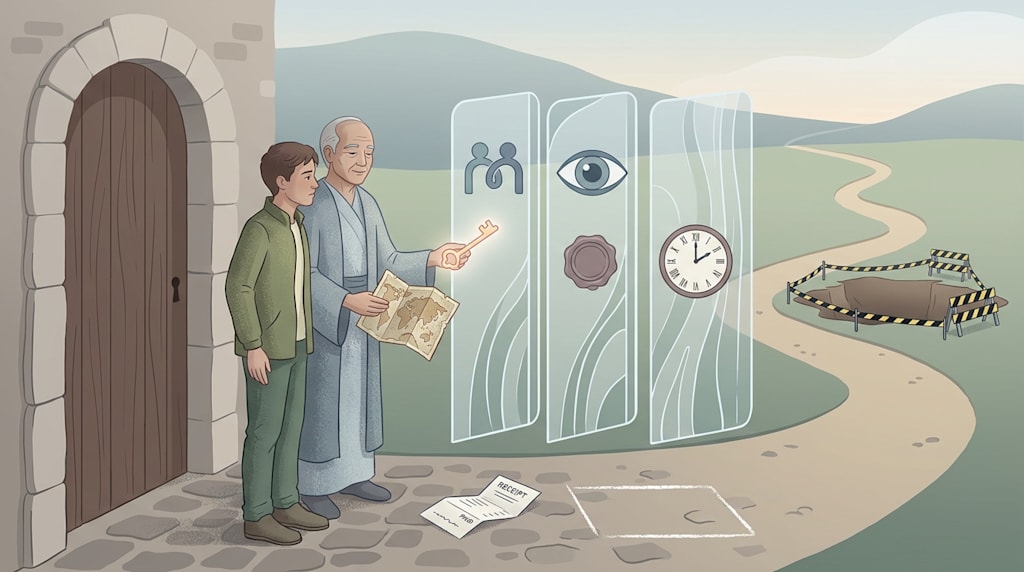
You explain the risks. You name the cost. You tell someone exactly where the pit is. They step in anyway. The easy conclusion is that they are stubborn. That conclusion is usually too small.
Advice has to pass through four filters: relationship, trust, credibility, and timing. If any filter is closed, the message stops there.
People cannot use advice they cannot understand
Many people who ignore advice are not fighting you. They are working with a smaller map. They see the world as simpler than it is. Risk feels abstract. Bad intentions feel unlikely. You describe a trap. They hear a story. You describe human nature. They hear exaggeration. Their mind has no hook for your warning.
A key needs a lock. If the door has no keyhole, the key stays in your hand.
This sounds patronizing. It is also ordinary. You did the same thing when you were young. Someone warned you. You nodded. You did not understand the warning in your body. You had not paid tuition yet.
Experience changes the size of the map. After a person has been cheated, embarrassed, or forced to clean up a mess, old advice starts to make sense. They do not need a louder lecture. They need a frame that can hold the lesson. Many lessons arrive only after the bill.
Some people need a bill, not a lecture
Two groups ignore advice often.
The first group is naive. They have not met a bad actor, lost money, or watched a friend lie. They think, “That cannot happen to me.”
The second group is overconfident. They think they are the smartest person in the room. Advice feels like an insult.
Both groups may need contact with reality. But contact has a price. The naive person may lose money or trust. The overconfident person may lose a job, a partner, or a reputation.
Experience teaches many people. It does not teach everyone. Some people suffer and reflect. Others suffer and blame. Advice has to match the person. “They will learn” is not a plan for every case.
Your credibility carries the advice
Advice has weight. Weight comes from credibility.
Credibility does not require a perfect life. It requires relevant experience, clear thinking, and consistency. If you have never handled the problem, say so. If you have handled it badly, say that too. A person who has paid the tuition and can explain the bill is more useful than a person who has only read the brochure.
Relationship matters. A stranger’s warning can sound like meddling. A trusted friend’s warning can land. Expertise matters when it fits the problem. A successful person with no experience in this specific area can still sound careless.
“You should do this” from the wrong mouth becomes noise. The useful question is not “Am I successful enough to advise?” It is “Do I know this problem, and can this person hear me?”
Advice should offer options, not orders
Many warnings fail because of tone. The adviser stands above the person. I know better. You must listen. The person hears control. They defend themselves.
Good advice lowers the cost of learning. It offers a case, a failed attempt, a small test, or a question that makes the consequence visible. It does not pretend to live the other person’s life.
Say the risk. Name the tradeoff. Then return the decision. “You can ignore this. Here is what I know. The choice is yours.” That sentence sounds weaker. It works better.
Boundaries matter. Advise once. Answer questions. Stop. Let the person carry the result. You can care about someone without managing them. Persuasion is not a debt they owe you.
Four questions before you advise
Is the relationship close enough?
Am I credible on this issue?
What stage is this person in?
What is my boundary if they ignore me?
These questions do not guarantee a yes. They prevent wasted effort.
Conclusion
People ignore advice for many reasons. Some lack the framework. Some lack the scar. Some trust themselves too much. Some hear control. Some have different interests.
Advice is information, perspective, and company. It is not a remote control. Say what you know. Keep the boundary. Return the choice. Then let time and consequence do the work they alone can do.
About the Creator
Jin
Writer of reamstories
https://reamstories.com/jin
Enjoyed the story? Support the Creator.
Subscribe for free to receive all their stories in your feed. You could also become a paid subscriber, letting them know you appreciate their work.
Comments
There are no comments for this story
Be the first to respond and start the conversation.