
Tree of Life AI Smart Locket: Meaning, Features and Gift Ideas
How a Traditional Symbol Meets Photos, Short Video, and AI-Created Movement in a Modern Keepsake

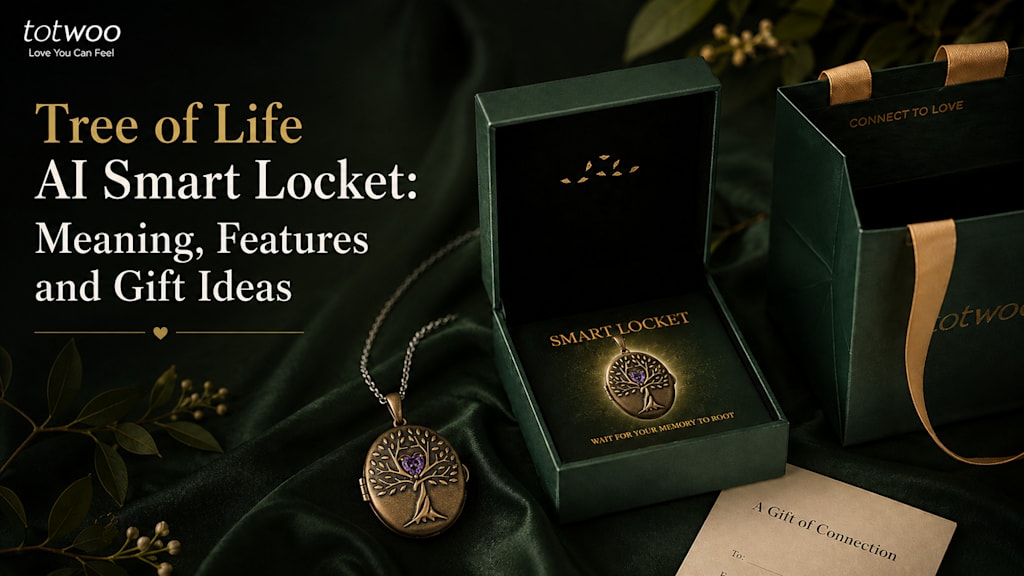
Imagine opening a small jewelry box and finding a pendant shaped around the branches of a tree. At first, it looks like a familiar piece of symbolic jewelry. Then the person giving it to you explains that several family photographs have already been selected and added to it.
One image shows a childhood birthday. Another comes from a graduation. A third captures an ordinary afternoon that nobody realized would later feel important.
The emotional effect would not come entirely from the technology or the pendant itself. It would come from the fact that someone looked through years of memories, made a series of choices, and arranged them into a story.
That act of choosing is what has always made lockets meaningful.
A Small Space That Requires a Choice
Long before photographs were stored on phones, people carried miniature portraits, locks of hair, handwritten messages, and other personal objects inside jewelry.
A locket could not hold everything. Its limited space forced the owner to decide which face, message, or moment mattered enough to carry close to the body.
Digital storage has removed many of those limits. A phone can contain thousands of photographs, including screenshots, duplicates, accidental images, and moments that have not been viewed in years.
Convenience has made it easier to save memories, but not necessarily easier to appreciate them.
A modern memory locket reintroduces the idea of selection. Even when the content is digital, the wearer or giver still has to decide which memories belong together and what story they are meant to tell.
Why the Tree of Life Feels Personal
The Tree of Life has appeared in art and storytelling in many forms. Although its interpretation changes between cultures and individuals, it is often connected with roots, growth, family, endurance, and the relationship between past and future.
The image works especially well for milestones because a tree suggests movement without rejecting what came before.
Its roots can represent family history or a place that shaped someone. The trunk can suggest stability. Its branches may stand for children, friendships, opportunities, or new stages of life.
For someone leaving home, the symbol might represent growing in a new direction while remaining connected to familiar roots. For a parent, it may reflect a family that has expanded over time. For close friends, it can represent separate lives developing from years of shared experience.
This flexibility is important. Symbolic jewelry feels most personal when the wearer is free to give it an individual meaning rather than being told what it must represent.
What Changes When a Locket Becomes Digital?
A traditional photo locket usually contains one or two printed images. It offers simplicity and permanence. There is no app to manage and no digital content to replace.
A smart locket offers a different experience. It can connect one piece of jewelry with a small collection of selected memories rather than a single printed photograph.
The Tree of Life AI Smart Locket is one example of this newer format. It can be associated with up to five photographs, while alternative memory formats include a short video or an AI-created moving interpretation of a still image.
These options are not emotionally interchangeable.
A photograph creates stillness. It allows the viewer to notice expressions, clothing, surroundings, and details that may have been overlooked when the image was taken.
A short video preserves actual movement and sound from a recorded moment. A few seconds of laughter, a birthday greeting, or a pet responding to a familiar voice can communicate something that a photograph cannot.
AI-created movement is different. It begins with a still photograph and introduces gentle visual motion. The result is an interpretation created from the image, not a recovered recording of the original event.
For that reason, the format should be chosen carefully. Some people may find subtle movement engaging. Others may feel more comfortable with the photograph exactly as they remember it.
The Best Gift Stories Are Usually Specific
A memory locket becomes more thoughtful when it focuses on one recognizable story.
For a mother or grandmother, the selected photographs might show different generations of the same family. Instead of choosing five similar portraits, the giver could include images from childhood, a family celebration, a wedding, and a recent gathering.
For a partner, the collection might follow a relationship through places rather than formal milestones: the café where two people first met, a view from a shared trip, a favorite neighborhood, and an ordinary photograph taken at home.
A friendship gift could center on one period of life, such as university, a first job, or a year spent traveling together. It may be especially meaningful before one friend moves away, when the gift represents continuity rather than farewell.
Pet memories often work best when they show personality. A perfectly posed photograph may be attractive, but an image of a dog waiting beside the door or a cat sleeping in an unusual place may carry a more recognizable story.
Remembrance gifts require greater sensitivity. A photograph or video that feels comforting to one person may feel overwhelming to another. The giver should consider how openly the recipient already engages with those memories before preparing the content.
Why Curation Matters More Than Capacity
The strongest keepsakes do not necessarily use every available feature.
Five connected photographs can feel more complete than a mixture of unrelated images, video, and animation. A single short recording may carry more meaning than a complicated digital presentation.
Before adding content, it helps to complete one sentence:
“This locket is meant to remember…”
The answer might be a person, a relationship, a family chapter, a pet, a place, or a transition. Once that idea is clear, selecting the content becomes easier.
Order also matters. Images can move chronologically from past to present, or they can be arranged around a shared theme. A handwritten note can explain why the photographs were chosen and what the Tree of Life represents in that particular relationship.
Preloading the memories before giving the jewelry can turn the first viewing into part of the gift itself. The recipient is not simply receiving an object to set up later. They are discovering a story that has already been prepared for them.
An Old Habit in a New Form
Technology changes how memories are stored, but it does not change why people preserve them.
A printed photograph, a short recording, and an AI-created moving image offer different ways of revisiting the past. None is automatically more meaningful than another. Their value depends on the memory, the recipient, and the care used to select it.
That is why the locket remains relevant even as its format evolves. It places a boundary around an otherwise endless digital collection and asks a simple question:
Which memories would you choose to carry with you?
About the Creator
Enjoyed the story? Support the Creator.
Subscribe for free to receive all their stories in your feed.
Comments
There are no comments for this story
Be the first to respond and start the conversation.