
The Heart’s Choice: Natural or Lab Grown Diamond?
Same sparkle, different stories: everything you actually need to know before choosing between a natural or lab grown diamond.
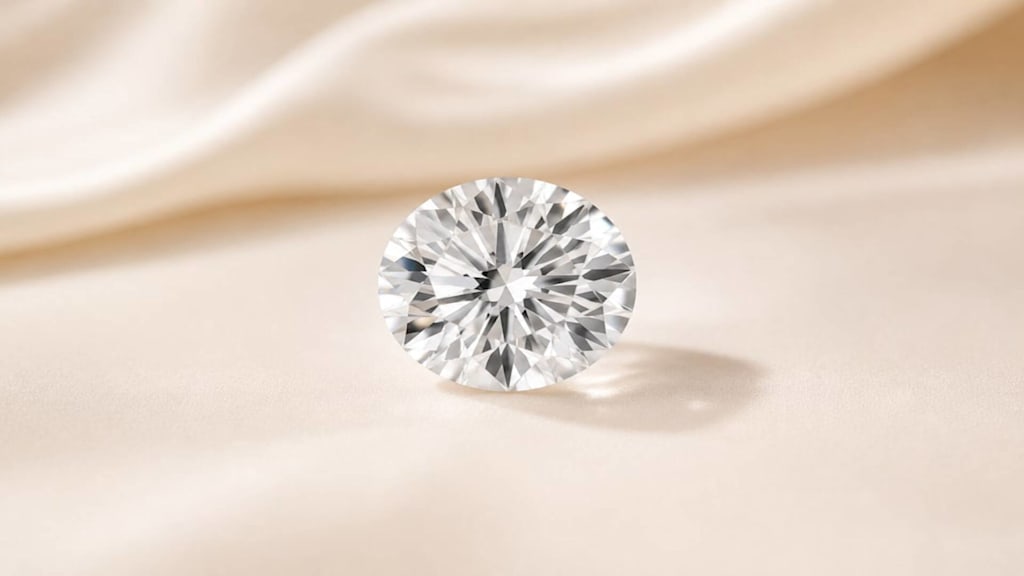
It doesn’t feel like a big decision at first. You start just looking at rings casually, saving a few designs, maybe imagining one on your hand. And then at some point, without really planning to, you end up stuck on one question. Natural or lab grown diamond? Not because anyone pushed you there. Just because suddenly it feels like it actually matters.
Mia had been going round in circles on it for weeks. She’d asked three different friends, read more articles than she could count, and still wasn’t certain. Her partner James hadn’t made the decision any easier by genuinely not minding either way. “Whatever feels right to you,” he’d said, which was both very sweet and absolutely no help at all. So she kept researching. Eventually she found a jeweller who sat down with her properly and just walked her through it, no agenda, no pushing her in either direction. What followed was the clearest hour she’d had on the subject.
Are Lab Grown Diamonds Real?
This was Mia’s first question, and it’s the most common one. The answer is yes. Not “almost real” or “effectively real". Just yes. Lab grown diamonds have the same crystal structure, the same chemical composition, and the same optical properties as natural ones. The only difference is where they come from, basically. Natural diamonds formed deep in the earth over billions of years under extreme heat and pressure. Lab grown diamonds are made in a controlled environment that tries to mimic exactly those same conditions. So it’s not about different traits, more about the source path you know. Put them side by side, and even an experienced jeweller can’t tell them apart with the naked eye.
That part surprised Mia more than she’d expected. She’d assumed there’d be some visible difference, some quality gap. There isn’t.
The Science of How They’re Made
Natural diamonds form in the earth’s mantle as carbon subjected to enormous pressure and heat over an almost incomprehensible amount of time. Lab grown diamonds are made through one of two processes. The first one is HPHT, high pressure and high temperature, which kind of recreates those underground conditions in a lab. The second way is CVD, chemical vapour deposition, where a carbon-rich gas gets split up, and then carbon atoms are placed down, sort of layer by layer, onto a diamond seed. Both methods produce a real diamond. The science behind CVD in particular is genuinely impressive: carbon rain, essentially, building a stone atom by atom.
Lab Grown Diamonds vs Real Diamonds: What’s Actually Different
Visually, almost nothing. Both have the same refractive index. Both produce that characteristic light dispersion, the fire and brilliance that make a diamond look the way it does. When comparing lab grown diamonds vs real diamonds under a loupe, the differences that do exist are microscopic and require specialist equipment to identify. Gemological certificates from GIA or IGI will note the origin, but that’s it. The grading criteria are identical: cut, colour, clarity, and carat. Same standards, same scale.
Where the difference lives isn’t in the stone itself. It’s in what the stone means to the person wearing it. And that’s a genuinely personal thing, which is why nobody can make this decision for you.
Are Lab Grown Diamonds as Strong as Real Diamonds?
Yes, completely. Both natural and lab grown diamonds score 10 on the Mohs hardness scale, the hardest rating there is. They’re scratch-resistant, durable, and built for daily wear. This comes up a lot as a concern, and it’s worth being clear about: there is no durability difference. A lab grown diamond in a ring worn every day for decades will hold up exactly the same way a natural diamond would.
Are Lab Grown Diamonds Cheaper? The Honest Answer
Yes. Significantly so. Lab grown diamonds typically cost between 50 and 80% less than natural diamonds of equivalent quality. That gap exists because of supply chains, not quality. Mining a natural diamond involves enormous resource investment, extraction, transport, processing, and a long chain of hands before it reaches a jeweller’s case. Lab grown diamonds skip most of that. The stone itself isn’t cheaper because it’s inferior. It’s cheaper because the route to it is shorter.
In practice, that price difference gives buyers real options. The budget that would get you a 0.8 carat natural stone might get you a 1.5 carat lab grown stone of equal or better clarity. That’s not a small thing when you’re choosing a ring you’ll wear for the rest of your life.
Are Man Made Diamonds Cheaper for a Reason Worth Worrying About?
Not really. The lower price reflects production costs, not stone quality. Man made diamonds are cheaper because the process is more efficient and scalable than mining, not because anything about the diamond is compromised. The concern that cheap means lesser is understandable, and that is how most things work. Diamonds are one of the exceptions.
Long Term Value: What Holds and What Doesn’t
Natural diamonds have, historically, sort of kept resale value better than lab grown ones, though it’s not like the numbers stay perfect. Lab grown diamond prices have dropped quite a bit over the last few years, especially as production has scaled up, and that change has also hit the resale side hard. So if long-term resale value is what you care about most, natural diamonds really do have the stronger track record in practice. If you’re buying a ring to wear and keep rather than to resell, this matters less than most buyers assume. Most engagement rings never get sold. They get passed down.
Are Lab Diamonds Better Than Natural? Depends What You’re Asking
Better for budget? Usually yes. Better for getting a larger or cleaner stone within a set price? Often yes. Better if the idea of a stone formed naturally over millions of years matters to you emotionally? Then no, because that’s not something a lab grown diamond can replicate. The question of whether lab diamonds are better than natural is really two separate questions. One is practical and one is personal. The practical answer leans lab grown. The personal answer depends entirely on the person.
The Choice That’s Actually Yours
Mia left that conversation still not certain, which the jeweller had told her was completely fine. “Most people aren’t,” he’d said. “And that’s not the same as not knowing. You’ll know when you hold the right one.” She came back two weeks later. She went with a natural stone in the end, not because lab grown was in any way lesser, but because something about the age of the thing sat right with her. A stone that had been forming since before humans existed. She liked that idea. James liked that she’d taken the time to actually work it out.
That’s the thing about the natural or lab grown diamond question. It’s not a test with a right answer. It’s a question that, once you sit with it properly, usually resolves itself. You go back and forth. You look at both. And eventually one just sits better. That is the moment when you can picture it on their hand and feel settled about it and that’s usually enough.
About the Creator
Enjoyed the story? Support the Creator.
Subscribe for free to receive all their stories in your feed.
Comments
There are no comments for this story
Be the first to respond and start the conversation.