
The Choice of a Lifetime: White Gold and Platinum, Decoded
Two metals that look almost identical but feel completely different to live with: everything you need to know before choosing.
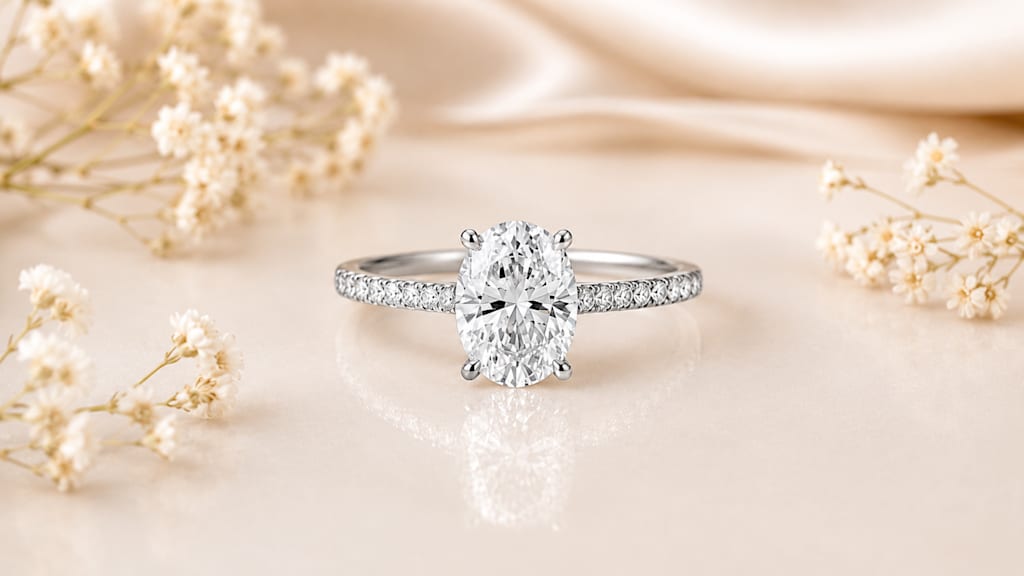
There’s a point where buying a ring stops feeling like shopping. It usually happens late at night, or mid-scroll, or in that quiet moment when you picture it on their hand and think, 'This has to be right.' That’s when the small things stop feeling small. Like the metal. Most people don’t expect to get stuck there. But they do.
Sophie had done most of the ring research herself. She’d known for months what she wanted: a simple solitaire, round brilliant, and nothing fussy. What she hadn’t figured out was the metal. White gold and platinum both looked right in photographs. Both had that cool, clean tone she was drawn to. But they felt like different things somehow, and she couldn’t articulate why. Eventually she sat down with a jeweller and just asked them to explain it properly. What followed was the clearest half hour she’d had on the whole subject.
White Gold vs Platinum Colour: Similar at First, Different Over Time
Side by side in a display case, white gold and platinum look almost the same. Both are cool-toned, both sit beautifully against a diamond. The difference is subtle at first. White gold is slightly brighter, almost sharper. Platinum is a touch softer, not dull, just calmer. You might not notice it immediately.
The real difference shows over time. White gold maintains that bright, polished look but needs occasional maintenance to keep it. Platinum develops a patina, a slightly worn-in finish that builds up gradually with wear. People often don’t expect to like it. Most end up loving it. It starts to feel personal rather than pristine, like the ring has been somewhere with you.
The Weight Difference You Feel Straight Away
Platinum is significantly denser than gold. When Sophie tried a platinum ring on for the first time, she noticed immediately that there’s a solidity to it that you feel on the finger. Not heavy in an uncomfortable way. Just present. Grounded. White gold is noticeably lighter, which some people prefer for everyday wear. It’s a genuinely personal thing and worth trying both in person before deciding, because photographs don’t capture it at all.
Strength and Resilience: Which Is Actually Stronger?
This is where it gets slightly counterintuitive. White gold is harder. Platinum is tougher. Those aren’t the same thing.
White gold resists surface scratches well because it’s alloyed and coated in rhodium. But when it does scratch, tiny amounts of metal are lost. Platinum is softer in the hardness sense, so it scratches more visibly in the early days of wear. But, and this is the important part, it doesn’t lose metal when it scratches. The metal displaces rather than wears away. Over decades of daily wear, a platinum ring retains its full weight. A white gold ring gradually loses a small amount of metal each time it’s scratched. For a ring you’re planning to wear for the rest of your life, that distinction matters.
Is Platinum Softer Than White Gold? The Honest Answer
Yes, in terms of hardness, platinum is softer than 14 ct or 18 ct white gold alloys. That means white gold will resist surface scratching for longer and stay shinier without intervention. Platinum scratches more readily but ages differently. It’s not about which is stronger in an absolute sense. It’s about how each one changes over time and which version of that you’re more comfortable with.
Are White Gold and Platinum the Same? Not Even Close
They look similar. They’re not the same. White gold is yellow gold mixed with other metals, typically nickel, palladium, or silver, and then coated in rhodium to give it that cool white finish. The rhodium coating is what you’re often looking at when a white gold ring looks bright. Over time that coating wears, and the ring may need re-plating to keep the look.
Platinum is a naturally white metal at 95% purity. No coating. No alloy to shift the colour. What you see is what’s there, and it stays that way without any maintenance required. The price difference between the two reflects this: platinum costs more partly because it’s a rarer metal and partly because you’re not paying for an approximation of white.
Platinum vs White Gold Engagement Ring: How to Actually Decide
Sophie had gone in leaning towards white gold for budget reasons. She left with platinum. Not because anyone pushed her there, but because when she understood the maintenance difference and felt the weight of both rings on her hand, something clicked. She worked with her hands. She wanted the ring to hold up without her thinking about it. Platinum made more practical sense for her specifically.
For someone who doesn’t mind the occasional re-plate and prefers a lighter ring for daily wear, white gold is a completely valid choice and a more accessible price point. There’s no universal answer here. The right metal is the one that fits how you actually live.
A Legacy in Your Hands
You won’t remember the technical specs when you look at the ring in ten years. You won’t be thinking about hardness ratings or rhodium coatings. You’ll remember how it looked the first time it was on your finger. The weight of it. The way the light caught it. Whether it felt like yours.
That’s what the white gold vs platinum decision actually comes down to in the end. Not which is objectively superior, because neither is. But which one, when you hold it and wear it and imagine it years from now, feels right? That moment of certainty is usually worth waiting for.
About the Creator
Enjoyed the story? Support the Creator.
Subscribe for free to receive all their stories in your feed.
Comments
There are no comments for this story
Be the first to respond and start the conversation.