science
The Science Behind Relationships; Humans Media explores the basis of our attraction, contempt, why we do what we do and to whom we do it.
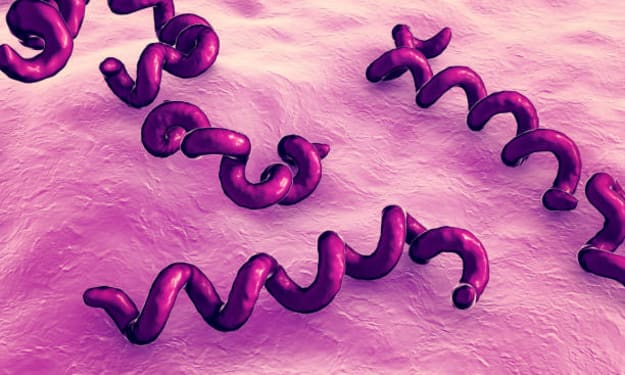
The Three Stages Of Syphilis
Syphilis, akin to the historical plagues of the Black Death and smallpox, has etched its place in the annals of human suffering. This notorious disease is notorious for its gruesome progression through three distinct stages, often leading to severe mental deterioration. Notable historical figures like Friedrich Nietzsche and Al Capone were among its victims, their lives marred by the disease's cruelty. Fortunately, advancements in immunology and medicine have rendered syphilis an easily treatable condition.
By Ananymus Kelly3 years ago in Humans
Why do we cry?!
Why do we cry? Whether it is during a sad movie you swore you would never tear up in, or a heart-wrenching break-up following your first love, crying may seem like a strange physical response to your emotional turmoil. Why do we start the waterworks when we feel really sad? Is there a biological advantage or purpose other than washing your face or streaking your mascara? Well crying does not only happen when you are emotional, there are actually three types of tears. Basal tears are perpetually lubricating your eyes keeping them from drying out, while reflex tears act in response to an irritant like onions or dust. They begin a chain reaction releasing hormones from the brain which then trigger a tear response from the glands in the eyelids. And these tears help to get rid of the irritant. But tears of sadness? Strangely this leaky face phenomenon is exclusive to humans with a couple different theories as to why. And one is strikingly similar to the reason we blush, which we described in a previous video here. In many cases emotional tears are able to act as a signal to others of our genuine sadness or distress. That is not always easy to fake. Your tears blur your vision, essentially handicapping any aggressive or defensive actions sending those nearby a signal of need appeasement or attachment. From an evolutionary perspective, this increases communication with those close to you and ultimately your chance of survival. Some experiments have even taken photos of people crying and made copies with the tears digitally removed. Not surprisingly, people rated the pictures with tears to be more sad, while the ones without were often confused with puzzlement, awe or other expressions. But what about tears of joy? Well perhaps they are not so different, afterall tears of happiness may still be used as social signals for how we feel, and are thought to strengthen bonds between people. Also both emotions see activity in similar regions of the brain, such as the hypothalamus and basal ganglia which just happen to be connected to your tear glands. Another theory suggests that crying is one of your body's mechanisms to literally shed your stress. Interestingly reflex tears and emotional tears have very different compositions. Emotional tears have much higher levels of proteins, in particular some called adrenocorticotropic hormones which are linked to high stress levels. And some say crying helps to release these stress chemicals from the body, but the research here is limited and not yet conclusive. So go on, have a good cry, let the world know how you feel and potentially let out that stress. Got a burning question you want answered. for These reasons we cry, and this is a revolutionary experience for all humans. crying is a way of letting emotions out in a healthy way and should not be suppressed. Everyone has cries so it is a very natural feeling or emotion. No one has not cried so it shows that sadness is one of the most common emotions for all human beings. The lacrimal system is located next to your eyeball. It is both secretory and excretory systems that produce and drain your tears. Crying tears are produced in response to strong emotions such as stress, pleasure, anger, sadness, and suffering, as well as physical pain. Today's psychological thought largely concurs, emphasizing the role of crying as a mechanism that allows us to release stress and emotional pain. Crying is an important safety valve, largely because keeping difficult feelings inside — what psychologists call repressive coping — can be bad for our health
By Ally Nicole 3 years ago in Humans
The Impact of AI on Human Civilization
AI's Potential to Reshape the Ecological System For four billion years, Earth's ecological system has consisted exclusively of organic life forms. However, the emergence of inorganic life forms or inorganic agents may soon alter the very essence of this system. While concerns about AI have persisted since the inception of the computer age in the mid-20th century, they have often been relegated to science fiction narratives such as "The Terminator" and "The Matrix." These fictional scenarios usually presuppose two critical milestones that AI must attain before posing a significant threat to humanity: sentience and adeptness in navigating the physical world.
By Muhammad Kashan Iqbal3 years ago in Humans
Psychology behind Dreams !!!
Dreams are experiences that occur within the mind during sleep, and they are not considered "real" in the same way that waking experiences are. Dreams are typically a product of the imagination, and they often involve a combination of elements from your memories, emotions, thoughts, and sensory perceptions. In that sense, dreams can be thought of as mental events or simulations rather than actual, physical occurrences in the external world.
By NAZARUDHEEN S M3 years ago in Humans
Unlocking the Enigma of Time Travel
Introduction Have you ever pondered the idea of traversing through the mysterious dimension of time? It's a notion that has captivated the human imagination for centuries, one that has been fervently explored in the realms of science fiction. The allure of time travel lies in the endless possibilities it offers - to witness history unfold, change pivotal events, or leap forward into a future unknown. But amidst the cinematic thrillers and literary masterpieces, we are left with a burning question: Is time travel merely a product of creative storytelling, or is it a concept grounded in the profound depths of scientific theory?
By Mahmudul Hasan Jahid3 years ago in Humans
The Effects Of Cholera
A pandemic is a term used to describe the widespread outbreak of an infectious disease that affects a large geographical area, such as an entire country or multiple continents, and has a significant impact on a substantial number of people. Commonly, pandemics exhibit a pattern where they initially experience a sharp increase in the number of fatalities, but then either subside to safe levels or eventually disappear altogether. This pattern is evident in historical records of pandemics. However, there is one notable exception to this trend – cholera.
By Ananymus Kelly3 years ago in Humans
Electrocution Anatomy
Electricity is an omnipresent force, both useful and dangerous. It's an aspect of modern life that we encounter daily, whether it's that annoying static shock from a carpet, a nasty zap from tinkering with electrical circuits, or even witnessing the dire consequences of an electrical accident. The term 'electrocution,' which succinctly describes death resulting from electric shock, is a portmanteau formed from 'electric' and 'execution.' Interestingly, the word originated in 1889 when William Kemler of Buffalo, New York, was found guilty of murdering his common-law wife, Matilda Ziegler, by striking her 26 times in the head with a hatchet. The execution method employed was the electric chair, also known as 'electric execution.' A New York Times journalist creatively coined the term 'electrocution,' and it has since become the standard term for such fatalities.
By Ananymus Kelly3 years ago in Humans
"Eternal Life Unveiled"
"Immortality has always been an enticing pursuit, a recurring theme in movies where kings and rulers are consumed by their quest for the elusive elixir of eternal life. But is immortality all it's cracked up to be? Let's delve into this thought-provoking concept and uncover the complexities lurking beneath the surface.
By Alisa İnnokate3 years ago in Humans
13 Unusual Hobbies You've Never Heard Of
Hobbies are more than just pastimes; they are windows into unique worlds of passion and creativity. While many people enjoy common hobbies like reading, gardening, or playing a musical instrument, there is a whole universe of unconventional and fascinating hobbies that remain largely hidden from the mainstream. In this article, we'll delve into 10 unusual hobbies that you've probably never heard of. These hobbies offer new perspectives, challenge creativity, and connect enthusiasts in ways you might find surprising.
By Safwa Elouizi3 years ago in Humans
The Marvels of Our Brain: Speed of Thought, Love, and Self-Repair
Our brains are remarkable organs, constantly working behind the scenes to help us perceive the world, process information, and experience the complex emotions that make us human. In this article, we will delve into the mysteries of our brain's inner workings, exploring concepts like the speed of thought, the science of love, and even techniques to recharge our energy levels. So, fasten your seatbelts as we embark on a journey through the intricate workings of the human brain.
By Safwa Elouizi3 years ago in Humans
Headshots Anatomy
A headshot, at first glance, seems like a surefire route to fatality. When a bullet from a pistol or rifle enters someone's skull, it initiates a complex chain of events that extends beyond the macabre reality. However, not all headshots are equal in lethality. To begin our exploration, we'll limit our discussion to pistols and rifles, as the consequences of a shotgun blast to the head are tragically self-evident.
By Ananymus Kelly3 years ago in Humans
What is Depression?
What is Depression? Depression is the primary cause of disability worldwide. In the United States, nearly 10% of adults battle with depression. However, understanding this mental illness can be more challenging compared to something like high cholesterol. One major point of confusion is differentiating between having depression and simply feeling depressed. Almost everyone experiences periods of sadness from time to time. Situations such as receiving a poor grade, losing a job, having an argument, or even a gloomy day can evoke feelings of sadness. Sometimes, these feelings arise without any apparent trigger. However, they tend to dissipate as circumstances change. Clinical depression, on the other hand, is distinct. It is a medical disorder that does not simply vanish with a desire for it to do so. It lingers for a minimum of two consecutive weeks and significantly hampers one's ability to function in work, play, or relationships. Depression manifests through various symptoms, including a persistent low mood, loss of interest in previously enjoyable activities, changes in appetite, feelings of worthlessness or excessive guilt, disrupted sleeping patterns, difficulty concentrating, restlessness or slowed movements, loss of energy, or recurring thoughts of suicide. According to psychiatric guidelines, experiencing at least five of these symptoms qualifies for a depression diagnosis.
By Zari Nelson3 years ago in Humans