science
The Science Behind Relationships; Humans Media explores the basis of our attraction, contempt, why we do what we do and to whom we do it.
Functionality Of Adrenaline
Epinephrine, more commonly known as adrenaline, is a hormone intimately linked with the well-known fight-or-flight response. Upon its release, adrenaline triggers a remarkable physiological reaction, sending every organ and muscle associated with motor functions and metabolism into an overdrive state. In situations of extreme adrenaline release, individuals have exhibited the capacity to endure injuries that would incapacitate most, surpass the strength levels of a physically fit human, and achieve astonishing feats. Let's delve into the intricate biochemical underpinnings of this phenomenon.
By Ananymus Kelly3 years ago in Humans
Holistic Health
In an increasingly fast-paced world, the concept of holistic health has emerged as a guiding light for those seeking to achieve well-being on multiple levels. Holistic health goes beyond treating symptoms and ailments; it's about addressing the mind, body, and spirit as interconnected elements of a complete and balanced life. In this article, we'll delve into the philosophy of holistic health and hear real-life stories of individuals who have experienced profound transformation through this holistic approach.
By David MUTHEE CHEGE3 years ago in Humans
The Surprising Benefits of Meditation for Mind and Body
In a world that seldom slows down, the practice of meditation is a tranquil oasis of stillness. It's a practice that has been passed down through generations, offering profound benefits for the mind and body. In this article, we will explore the surprising benefits of meditation and share real-life examples of individuals who have transformed their lives through this ancient practice.
By David MUTHEE CHEGE3 years ago in Humans
Beyond the Breaking Point
In the bustling heart of the city, where time raced and stress hung thick in the air, lived Maya, a young woman caught in the whirlwind of life's demands. She felt like a juggler, trying to balance work, family, and personal dreams while the balls in the air seemed to multiply by the day. The mounting pressure left her on the edge of a breakdown until one day, she decided it was time for a change.
By The pollman3 years ago in Humans
Is Prolonged Cell Phone Usage Affecting the Structure of Our Bones?
The idea that cellphones and tablets might have the power to reshape our bones is an intriguing topic that has recently gained attention in the media. It all began with a scientific report suggesting that the use of mobile devices could lead to significant and long-lasting changes in our bodies. However, it's important to examine this claim critically and understand the context.
By Keshia Robinson3 years ago in Humans
Carbon Monoxide Poisoning
Carbon monoxide poisoning is not typically on the forefront of people's minds on a daily basis. When considering the most commonly discussed dangerous topics in society, subjects like murder, terrorism, drugs, poverty, and disease often take precedence. These topics often dominate the discourse, reflecting their apparent significance to human mortality. In comparison, the threat of carbon monoxide poisoning is relatively low, with approximately 430 fatalities reported in the United States each year. However, despite its relatively low occurrence, carbon monoxide poisoning has found its place in popular culture, particularly in Hollywood. Despite its occasional portrayal in films and media, carbon monoxide remains poorly understood by the general public.
By Ananymus Kelly3 years ago in Humans
"The Sweet Seduction: Decoding Sugar's Irresistible Power Over Your Brain"
Imagine being tantalized by the aroma of freshly baked cookies, the satisfying crunch of candies, the decadent pleasure of velvety cakes, or the sight of waffle cones piled high with scoops of ice cream. Does the mere thought of these delectable treats make your taste buds tingle? Are you currently wrestling with an undeniable urge for dessert? This begs the question: what is it about sugar that exerts such a potent pull on our cravings, and what unfolds in our brains when we're faced with the temptation of sweetness?
By Alisa İnnokate3 years ago in Humans
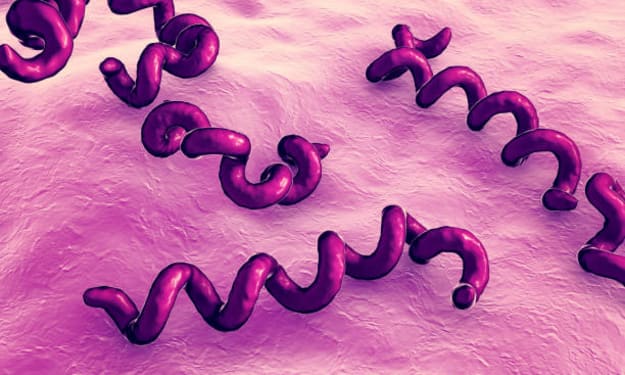
The Three Stages Of Syphilis
Syphilis, akin to the historical plagues of the Black Death and smallpox, has etched its place in the annals of human suffering. This notorious disease is notorious for its gruesome progression through three distinct stages, often leading to severe mental deterioration. Notable historical figures like Friedrich Nietzsche and Al Capone were among its victims, their lives marred by the disease's cruelty. Fortunately, advancements in immunology and medicine have rendered syphilis an easily treatable condition.
By Ananymus Kelly3 years ago in Humans
Why do we cry?!
Why do we cry? Whether it is during a sad movie you swore you would never tear up in, or a heart-wrenching break-up following your first love, crying may seem like a strange physical response to your emotional turmoil. Why do we start the waterworks when we feel really sad? Is there a biological advantage or purpose other than washing your face or streaking your mascara? Well crying does not only happen when you are emotional, there are actually three types of tears. Basal tears are perpetually lubricating your eyes keeping them from drying out, while reflex tears act in response to an irritant like onions or dust. They begin a chain reaction releasing hormones from the brain which then trigger a tear response from the glands in the eyelids. And these tears help to get rid of the irritant. But tears of sadness? Strangely this leaky face phenomenon is exclusive to humans with a couple different theories as to why. And one is strikingly similar to the reason we blush, which we described in a previous video here. In many cases emotional tears are able to act as a signal to others of our genuine sadness or distress. That is not always easy to fake. Your tears blur your vision, essentially handicapping any aggressive or defensive actions sending those nearby a signal of need appeasement or attachment. From an evolutionary perspective, this increases communication with those close to you and ultimately your chance of survival. Some experiments have even taken photos of people crying and made copies with the tears digitally removed. Not surprisingly, people rated the pictures with tears to be more sad, while the ones without were often confused with puzzlement, awe or other expressions. But what about tears of joy? Well perhaps they are not so different, afterall tears of happiness may still be used as social signals for how we feel, and are thought to strengthen bonds between people. Also both emotions see activity in similar regions of the brain, such as the hypothalamus and basal ganglia which just happen to be connected to your tear glands. Another theory suggests that crying is one of your body's mechanisms to literally shed your stress. Interestingly reflex tears and emotional tears have very different compositions. Emotional tears have much higher levels of proteins, in particular some called adrenocorticotropic hormones which are linked to high stress levels. And some say crying helps to release these stress chemicals from the body, but the research here is limited and not yet conclusive. So go on, have a good cry, let the world know how you feel and potentially let out that stress. Got a burning question you want answered. for These reasons we cry, and this is a revolutionary experience for all humans. crying is a way of letting emotions out in a healthy way and should not be suppressed. Everyone has cries so it is a very natural feeling or emotion. No one has not cried so it shows that sadness is one of the most common emotions for all human beings. The lacrimal system is located next to your eyeball. It is both secretory and excretory systems that produce and drain your tears. Crying tears are produced in response to strong emotions such as stress, pleasure, anger, sadness, and suffering, as well as physical pain. Today's psychological thought largely concurs, emphasizing the role of crying as a mechanism that allows us to release stress and emotional pain. Crying is an important safety valve, largely because keeping difficult feelings inside — what psychologists call repressive coping — can be bad for our health
By Ally Nicole 3 years ago in Humans
The Impact of AI on Human Civilization
AI's Potential to Reshape the Ecological System For four billion years, Earth's ecological system has consisted exclusively of organic life forms. However, the emergence of inorganic life forms or inorganic agents may soon alter the very essence of this system. While concerns about AI have persisted since the inception of the computer age in the mid-20th century, they have often been relegated to science fiction narratives such as "The Terminator" and "The Matrix." These fictional scenarios usually presuppose two critical milestones that AI must attain before posing a significant threat to humanity: sentience and adeptness in navigating the physical world.
By Muhammad Kashan Iqbal3 years ago in Humans
Psychology behind Dreams !!!
Dreams are experiences that occur within the mind during sleep, and they are not considered "real" in the same way that waking experiences are. Dreams are typically a product of the imagination, and they often involve a combination of elements from your memories, emotions, thoughts, and sensory perceptions. In that sense, dreams can be thought of as mental events or simulations rather than actual, physical occurrences in the external world.
By NAZARUDHEEN S M3 years ago in Humans