science
The Science Behind Relationships; Humans Media explores the basis of our attraction, contempt, why we do what we do and to whom we do it.
A lifelong Commitment to Learning
Of all life’s complex threads intricately woven into our very souls, there are some whose loose ends send shivers down my spine when I think of ending them. Among the numerous choices and sacrifices we make, this is one thing that I like most — it is something that has gone beyond time or place. It’s a simple truth: there is nothing I would contemplate quitting rather than the search for knowledge.
By Kageno Hoshino3 years ago in Humans
When you dream about someone, what does it mean for you?
It is common for dreams about a particular person to mirror recent interactions, thoughts, or emotions you have had with that person. This is an indication that the person in question plays a vital role in your day-to-day life or in your subconscious mind.
By Jacob Damian3 years ago in Humans
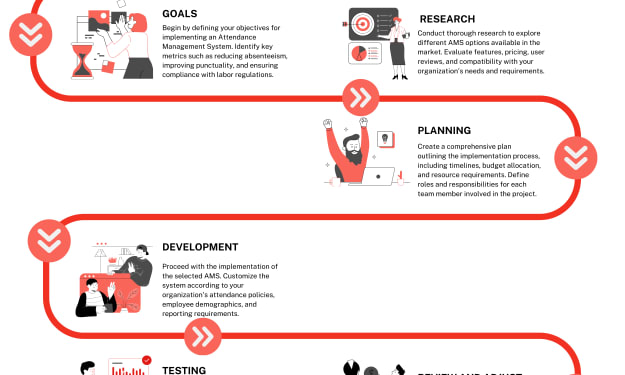
The Timekeeper: A Journey with Attendance Management Systems
.Once upon a time, all the way among a busy office that strongly occupies the center of a vibrant town, there happened to be diligent HR manager called Sarah. Among the things that Sarah was soon assigned with was the overwhelming duty of making sure that the workplace runs with more coordination, and one of her quests was knowing attendance of each team member.
By sunali sahu3 years ago in Humans
MEN'S HEALTH What complications can occur after prostate cancer surgery?
Earlier this year, US defense secretary Lloyd Austin was hospitalized for complications resulting from prostate cancer surgery. Details of his procedure, which was performed on December 22, were not fully disclosed. Press statements from the Pentagon indicated that Austin had undergone a minimally invasive prostatectomy, which is an operation to remove the prostate gland. Minimally invasive procedures are performed using robotic instruments passed through small "keyhole" incisions in the patient's abdomen.
By Jahangir Alam3 years ago in Humans
NUTRITION Why eat lower on the seafood chain?
Many health-conscious consumers have already cut back on hamburgers, steaks, and deli meats, often by swapping in poultry or seafood. Those protein sources are better than beef, and not just because they're linked to a lower risk of heart disease, diabetes, and cancer. Chicken and fish are also better for the environment, as their production uses less land and other resources and generates fewer greenhouse gas emissions.
By Jahangir Alam3 years ago in Humans
CHILD & TEEN HEALTH Chronic stomach pain in children: What's the most common cause?
The most common cause of chronic stomach pain in children isn't anything you can find on a test or cure with a medicine. And that can make it very challenging to diagnose — and treat.
By Jahangir Alam3 years ago in Humans
STAYING HEALTHY How well do you worry about your health?
Don't worry. It's good advice if you can take it. Of course that's not always easy, especially for health concerns. The truth is: it's impossible (and ill-advised) to never worry about your health. But are you worrying about the right things? Let's compare a sampling of common worries to the most common conditions that actually shorten lives. Then we can think about preventing the biggest health threats.
By Jahangir Alam3 years ago in Humans
DISEASES & CONDITIONS The wide-ranging effects of psoriasis
Decades ago, advertisements waxed on about the "heartbreak of psoriasis" — a skin disorder marked by noticeable patches of scaly skin — to the point that even people with garden-variety dry skin or dandruff worried they might also have the condition.
By Jahangir Alam3 years ago in Humans
Being Mortal: A Compassionate Exploration of Aging and End-of-Life Care
Atul Gawande’s book “Being Mortal: Medicine and What Matters in the End” delves into the topics of aging, death and end of life care in today’s society in a thought provoking manner. As a writer and practicing surgeon, Gawande explores how we perceive aging and mortality within the healthcare system. Through anecdotes, patient stories, and research findings he advocates for a reexamination of conventional beliefs, about aging, and end of life care to promote a more empathetic and patient focused approach.
By Gabriel Diaz Pagan3 years ago in Humans